From the Diary of
Vicki Zingiris
Training gives frontline staff the skills to act. Only the organisation can give them permission. The Safety Pact founder on the four sides of workplace safety, and who owns each one.
“Safety is the terrain. Agency is the win.”
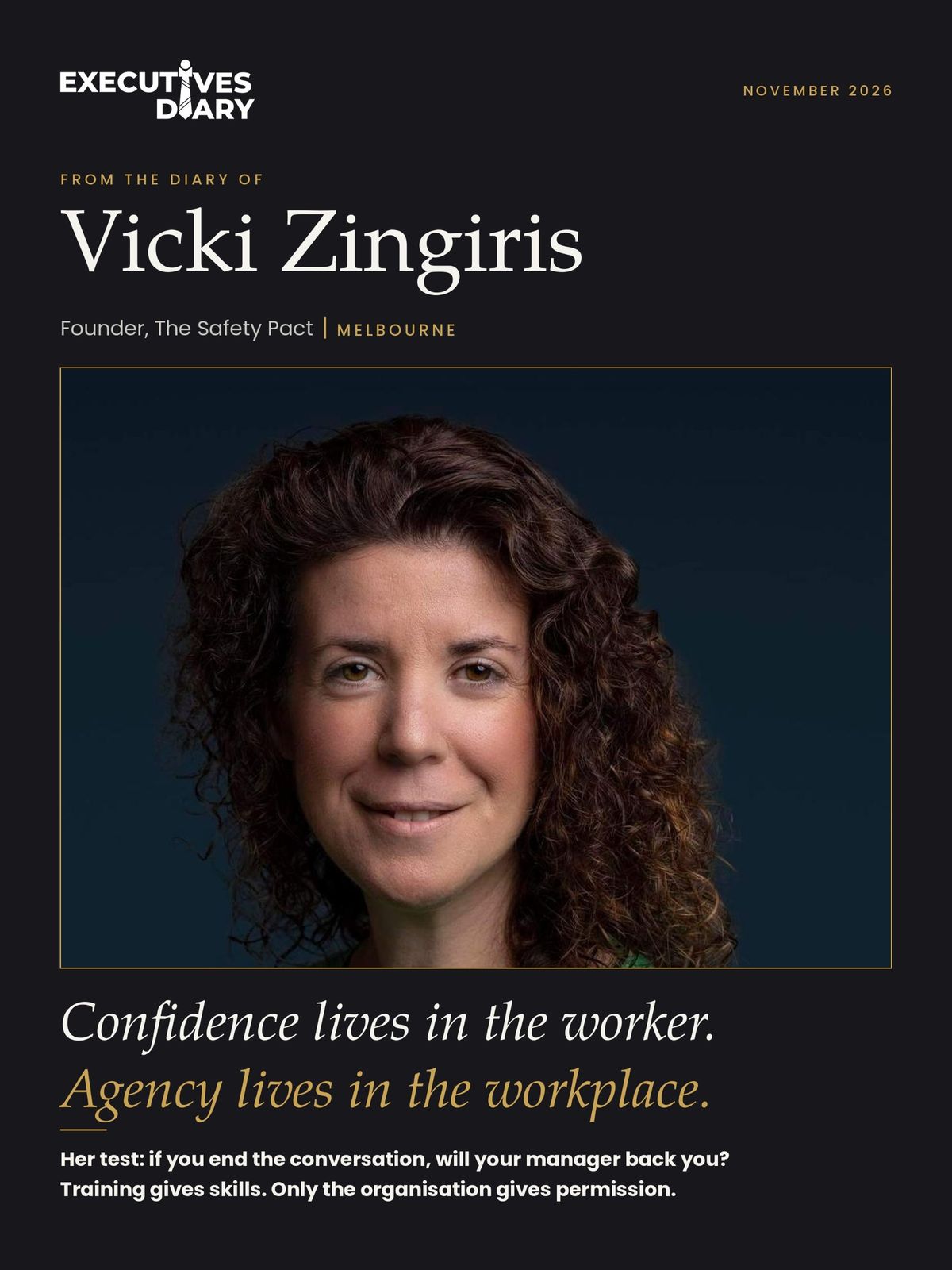
Vicki Zingiris has a test for any workplace where staff meet difficult customers. Ask a frontline worker, “If you end this conversation right now, will your manager back you?” If they hesitate, she says, “they don’t have agency yet, no matter how good the training was.”
In a 2025 survey of about 3,000 members of the SDA, the union for retail and fast food workers, 88% had experienced verbal abuse in the past year, and 25% had faced physical violence, double the rate in 2023. Safe Work Australia’s 2024 report, which covers all industries, states: “Clients and customers were the most common source of work-related violence.”
Vicki is the founder of The Safety Pact, which she started in 2025 to train frontline teams to handle aggressive and unpredictable customer behaviour. Her clients are the safety, OH&S, HR and wellbeing leaders who want their teams to deal with conflict in a way that reduces its mental and physical toll. She says customer aggression is all too common on the shop floor, at the bank branch, at neighbourhood houses, in homes that care workers visit and across healthcare.

Agency, not confidence
Vicki chose the word agency over confidence, and she is exact about the difference. “Confidence is the belief that you can handle a challenge. Agency is the ability to act on that belief and have it make a difference.” “Confidence lives inside the worker. Agency depends on whether their workplace actually allows them to act on that confidence.”
You can train someone to feel confident, she says, and “watch that confidence drain away the first time they set a boundary with a customer and a manager overrides them.”
Confidence without agency is fragile. In some ways it’s worse than no training at all, because the worker now knows what good looks like and can see they’re not allowed to do it.

On an actual shift, she says, agency looks like a worker who can recognise escalation early and choose how to respond, rather than reacting on instinct or freezing. That worker can set a boundary and hold it without checking whether they’re allowed. They can end an interaction, walk away or call for support when it becomes unsafe, without fearing they’ll be seen as failing. They can name unacceptable behaviour for what it is instead of absorbing it as “part of the job.” And they can reset after a hard interaction, debrief with the team and recover rather than carry it home.
Every one of those actions, she says, needs permission from above to be real rather than theoretical.
The four sides of the terrain
Vicki’s name for everything that permission depends on is the safety terrain. “Safety is the terrain. Agency is the win,” she says, and a terrain has to be defended on every side. A client once told her, “We’ve run de-escalation training before and it didn’t move the needle.” Her view is that most de-escalation training is packaged as “one session, covering one line of defence,” while frontline staff are “actually fighting across several.” She counts four sides, and names an owner for each.
The first is the physical environment, which belongs to whoever controls the space: facilities, property or the operations manager. It covers layouts, exits, counter heights, sightlines, duress alarms, lighting, signage and lone-worker arrangements. “Often, the team also has a strong sense of what’s needed on this side,” she says, “because they have learnt through personal experience where the physical safety vulnerabilities exist.” The typical challenges here are staff who aren’t consulted until something goes wrong, no budget for prevention, and revenue programs that outrank worker welfare. She says safety should be an intrinsic part of setting your workers’ physical environment, and regular consultation with the team can play a significant role in reducing the overall cost of customer aggression in the workplace, sometimes with more creative and cost-effective workarounds.
The second is staff skills. These usually sit with learning and development and often with an external provider like her. “The real owners, though, are the team leaders.” The training may be an annual event, she says, but a safety-conscious team leader reinforces, debriefs and models the behaviour “every other day.” The common failures are training treated as a one-off and scenarios that are generic. Her answer is to build training around scenarios from the team’s own experience, and to equip team leaders to run short refreshers and post-incident debriefs.
The third is reporting systems. WHS, risk or quality own the system, but whether people use it depends on frontline managers and the culture they create. “A report that disappears into a form teaches workers that reporting is pointless,” she says, “and the organisation slowly loses its view of what’s really happening on the floor.” Verbal abuse and near-misses get normalised as “part of the job” and go unreported, and workers never hear what came of the reports they do file. Her fix is to make reporting quick and to close the loop every time, “even if the answer is just ‘we’ve read your report and we’ll be in touch via your manager in the next few weeks.’”
The fourth is organisational response, which belongs to senior leadership. It covers restricting or banning abusive customers, backing workers who call out unacceptable behaviour, and supporting wellbeing before, during and after an event. This is the point, she says, where workers decide whether safety is a duty of care or a compliance exercise. Leadership can sometimes be reluctant to act against customers when revenue or reputation is involved, she says, especially since customers have digital right of response with online reviews and feedback channels. Too often, the response depends on which manager is on shift, or a “zero tolerance” message doesn’t match what actually happens when a customer crosses the line. Her answer is a clear policy that defines unacceptable behaviour. Alongside it, she helps workers recognise the difference between feeling uncomfortable, feeling unsafe and being in crisis.
A neighbourhood house next to an encampment
Several months ago, Vicki and her team ran de-escalation training for a neighbourhood house and its adjoining café. The neighbourhood house sits next to an encampment, and she says many of the residents are dealing with drug use. Staff regularly face people trying to use the toilets to inject, and people coming into the café demanding money from the cash box.
The training was one side of the work. Alongside it, she says, her team worked with the house to find low-cost changes across the rest of the terrain: safety monitoring technology, changes to the front desk, and updated policies on unacceptable behaviour. The house has since put them in place. Staff now say they “feel significantly safer at work.”

Before, during and after
The work starts with a question: “What does your Safety Look and Feel like?” Teams then get knowledge, skills and techniques for three stages: before an incident (preventative), during it (responsive) and after it (post-incident).
What does your Safety Look and Feel like?
She teaches conflict as a continuum. Understanding the early signs that a person is anxious or uncomfortable, dealing with that in the right way, reduces the likelihood that behaviour escalates. She has written that when a management team calls her in, “the conversation almost always starts at the far right of the spectrum: the verbally aggressive customer, the situation that escalated badly.” What frontline people navigate every day, she wrote, is “far more pervasive”: customer incivility. A customer who ignores physical or personal boundaries, or who talks down to, talks over or berates a staff member. None of it sits at the far end of the continuum, she wrote, “but they do take a toll on frontline teams.”
What the dojo taught her
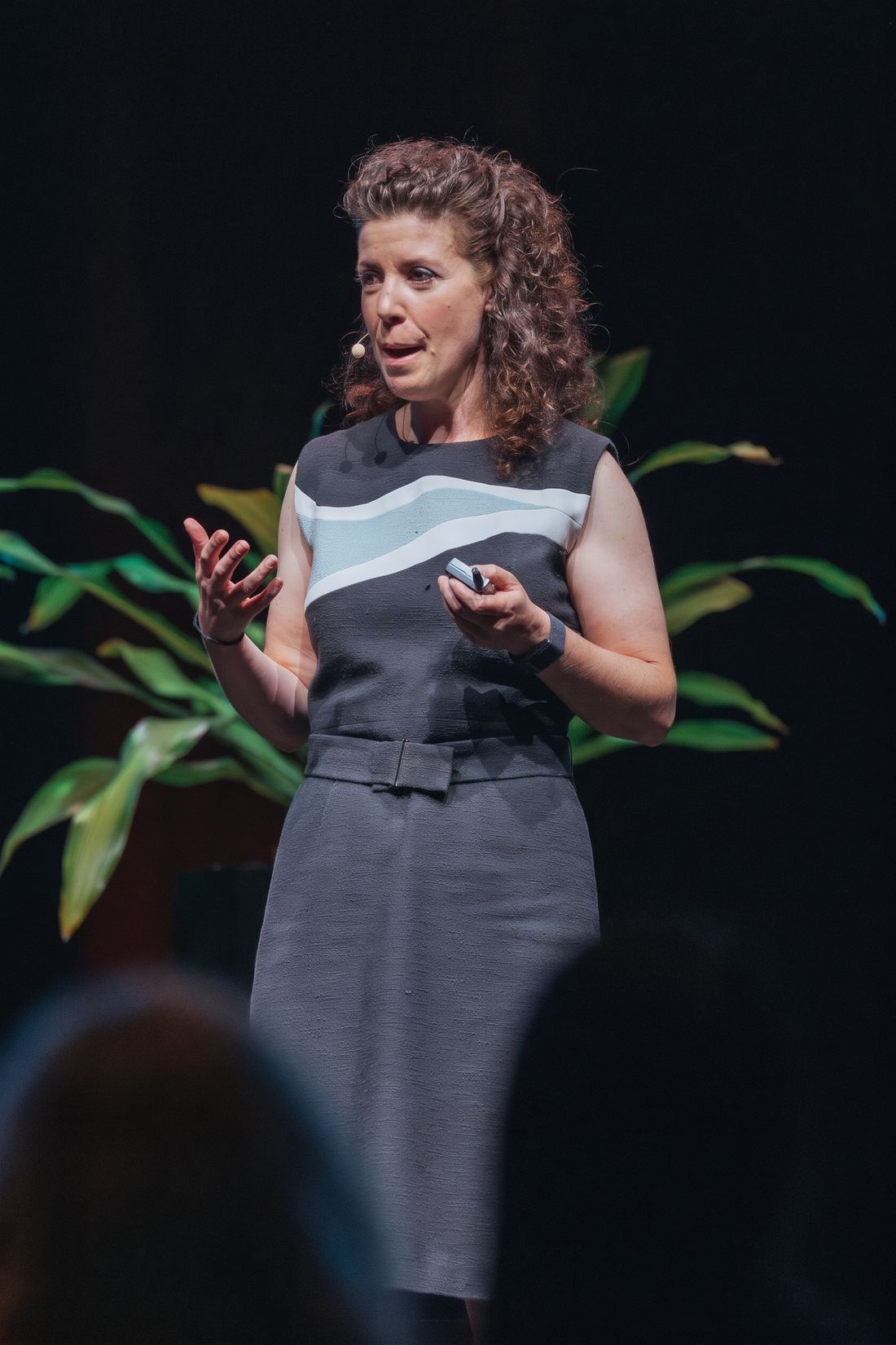
Before The Safety Pact, Vicki spent more than a decade teaching martial arts. She watched people walk in wanting to learn how to fight. “What they were really looking for was safety, and they believed the way to feel safe was to learn how to punch and kick.”
She trained alongside many of them, including black belts, who “trained like beasts in the dojo, then went home to lives that oftentimes included emotional or physical abuse.” “Their physical skills were real, but those skills weren’t enough to make them safe.”
So I started asking a different question: what actually makes someone feel safe? What knowledge and skills does a person really need?
The answer became The Safety Pact. She says it is built on situational awareness, psychological safety, de-escalation, physical self-protection and technology-facilitated abuse. The Safety Pact also works with schools and community groups.
Her training includes certification with SAFE International as an instructor in violence prevention and self defence, a CTRI qualification in de-escalating potentially violent situations, an RMIT course on recognising and responding to sexual violence, and MARAM training in working with adults who use family violence. Her earlier career was in technology: Global Head of Business Solutions at Cloudera, and roles at LimePoint as an Account Executive and at CGI as an Account Manager.
Where Vicki Is Now
Vicki has run workshops for retail, banking and community services across Australia. What she wants next is to get all owners in the same room. Training usually lands with L&D alone. Her goal is to work with safety, OH&S, HR and wellbeing leaders who are willing to look at the whole terrain as a system of building staff agency.
Her sessions are, as she puts it on her profile, “deliberately uncomfortable in the best possible way.” Her own habit is the same: “Lean into the discomfort.” She says the programs aim to balance a contrast of ideas, find connection, common ground and dignity in the work you do with your customers and, when required, hold your boundaries and act in a way that keeps you and your coworkers safe.
Lean into the discomfort.
“Training gives workers the skills to act. The organisation gives them the permission. Agency only exists when both are in place.”
The Playbook
Five Reflections from Vicki
- Ask the question. If a frontline worker ended this conversation right now, would their manager back them? If they hesitate, the training has not yet become agency.
- Name the owners. Can you say who owns the physical environment, staff skills, reporting systems and organisational response in your workplace?
- Ask the floor. Your team often knows where the physical safety vulnerabilities are. When did you last ask them?
- Close the loop. Does every report get a response?
- Check who carries the consequence. When behaviour crosses the line, do the warnings, restrictions or bans land on the customer or on the worker?
Sources
SDA (Shop, Distributive and Allied Employees Association), No One Deserves A Serve survey, 2025. https://www.sda.au/campaigns/no-one-deserves-a-serve/
Safe Work Australia, Work-related violence and aggression in Australia, August 2024. https://data.safeworkaustralia.gov.au/sites/default/files/2024-08/Work-related-violence-and-aggression_Report_August2024.pdf