

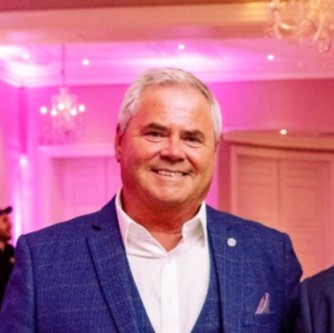
Who is Who
Steve Freer is the CEO, Co Founder and Chief Sustainability Officer of Tempus Novo, an award winning UK charity transforming rehabilitation through sustainable employment. A former senior prison officer and Leadership Fellow at St George’s House, Windsor Castle, Steve is recognized for pioneering a person centered model that breaks cycles of reoffending, strengthens communities and restores opportunity for people often overlooked by society.
The Day Gratitude Sparked a Revolution
It began with a look. Not anger, defiance or resignation, but something rare inside a prison environment: gratitude. Near the end of his three decades in the Prison Service, Steve Freer found himself helping coordinate a project that placed serving prisoners into work opportunities. As he observed the men stepping into those roles, he saw a spark he had not witnessed often in custody. Their excitement was real, their commitment unmistakable and their appreciation undeniable. Dozens more lined up, eager for the same chance. In that moment, Steve experienced a realization that would alter the trajectory of his life. The problem was not that people could not change. The problem was that society was unwilling to give them the opportunity. That insight planted the first seed of what would become Tempus Novo, one of the most innovative and successful rehabilitation models in the United Kingdom.
Foundation: A Life Built on Understanding People
Steve’s ability to see people for who they truly are was shaped long before he founded Tempus Novo. Raised by a single mother, he grew up with a firm grasp of right and wrong, but he also witnessed people around him struggling with life due to circumstances they did not choose. Many lacked guidance, stable parental support or the kind of nurturing environment most children take for granted. He often remembers seeing kids who acted out not because they were inherently troublesome, but because they had never been loved consistently. Years later, inside the prison system, Steve recognized those same patterns. According to the Ministry of Justice, a significant portion of people entering custody come from poverty, trauma or the care system. For many, crime was not a lifestyle choice. It was their norm, a reflection of what life had taught them to expect.
This early understanding shaped his unwavering belief that there is good in everyone. People who worked alongside him saw this quality clearly. One colleague of 25 years described him as someone with unparalleled work ethic and unwavering integrity, while another leader noted that Steve is a principled and courageous leader committed to making his vision for progress a reality for the benefit of society. These sentiments grew not from extraordinary speeches but from decades of showing up, listening and treating people as individuals rather than case files.
Ascent: Building a Model That Had Never Been Tried Before
When Steve co-founded Tempus Novo with fellow senior prison officer Val Wawrosz in 2014, they were not trying to reinvent rehabilitation simply for innovation’s sake. They were responding to a crisis that repeated itself every year. Steve and Val had spent more than six decades combined watching the same individuals return to custody, sometimes followed by their own children. The cycle was no longer a theory. It was generational trauma unfolding in real time.
During his research, Steve discovered that many people with convictions were shut out of employment not because they lacked capability, but because of the stigma attached to their past. Without a job, many fell back into familiar routines and returned to crime. He knew that the solution required something unconventional. Employers might listen if they were offered a model that felt safe, structured and trustworthy. His plan focused on excluding high risk individuals while highlighting the resilience and discipline he had witnessed among the majority.
That approach became the foundation of Tempus Novo. The charity embraced three core values that remain central today: Personal, Bespoke and Sustainable. Steve often explains that the model succeeds because it is built around relationships. Trust, honesty and transparency are the glue, he says. Many of the people Tempus Novo serves have never experienced those qualities consistently in their lives.
The impact of this model quickly gained recognition. A policy consultant who worked with Steve described him as one of the most dedicated and compassionate people she had ever known, while a business partner expressed deep appreciation for his commitment to placing individuals in roles where they could succeed. She noted that working with Steve was always a privilege, because the men he prepared were consistently exceptional.
Impact: Changing Lives, Changing Communities and Changing Systems
Today, Tempus Novo has helped more than 1,300 people rebuild their lives through sustainable employment. Individuals who were once considered too risky by some businesses have become loyal and dependable team members through the charity’s rigorous and supportive process.
The broader social impact is equally powerful. Graduates of Tempus Novo’s employment model have contributed significantly to the economy and to community safety through reduced reoffending. Families are stabilizing, workplaces are gaining committed employees and communities are benefiting from fewer victims and stronger support systems. These achievements are the result of consistent long term support rather than short term intervention.
Tempus Novo’s success also brought Steve recognition far beyond the prison gates. His contributions earned him a place as a Leadership Fellow at St George’s House in Windsor Castle. The experience was transformative. While attending leadership sessions there, Steve learned a lesson that shaped his entire philosophy. Kindness is usually how we get the best out of people. That belief became a defining principle of Tempus Novo’s culture.
Steve’s peers consistently describe him as a force for good within the criminal justice system. One senior professional who worked with him noted that Steve is a decent and principled person who says what he believes and works tirelessly to make a difference for those who matter. Another described him as someone capable of inspiring those around him to reach their fullest potential.
Vision for the Future: The Courage to Take Risks for What Matters
Steve’s personal mantra, No risk, no progress, has shaped Tempus Novo from day one. Reforming deeply rooted systems takes courage, and Steve never shied away from challenging outdated practices. Introducing a model that connected prisons, employers, probation services and communities required conviction and persistence. Building a movement that now attracts global interest required a belief in people that went far deeper than their past mistakes.
His favorite book, Start With Why by Simon Sinek, continues to shape his leadership journey. He believes that when individuals discover their purpose, they begin to make meaningful change. His own purpose is simple and powerful. To change people’s lives. He often reflects on something Sir Iain Duncan Smith said during a Tempus Novo awards evening. When you change someone’s life, you change the world. This insight guides him as Tempus Novo prepares to expand its model across the UK. The goal is not only to support individuals leaving custody but to transform rehabilitation into a national success story. For Steve, the mission has always been larger than employment. It is about restoring dignity, rebuilding families and creating safer, stronger communities.
Editorial Note: A Call to Lead With Humanity
Steve Freer’s journey shows that leadership is not defined by authority but by empathy and courage. His story reminds us that people do not fail because they cannot change. They fail because society often denies them the opportunity to try. Tempus Novo stands as proof that when barriers are removed and replaced with trust, support and meaningful work, transformation becomes possible.
His work invites today’s leaders to rethink their assumptions about potential and progress. It challenges businesses and communities to recognize that opportunity is not a privilege but a responsibility. And it reminds us that the most profound change often begins with a single moment of clarity, a willingness to act and the belief that every person deserves a chance to rewrite their story.