

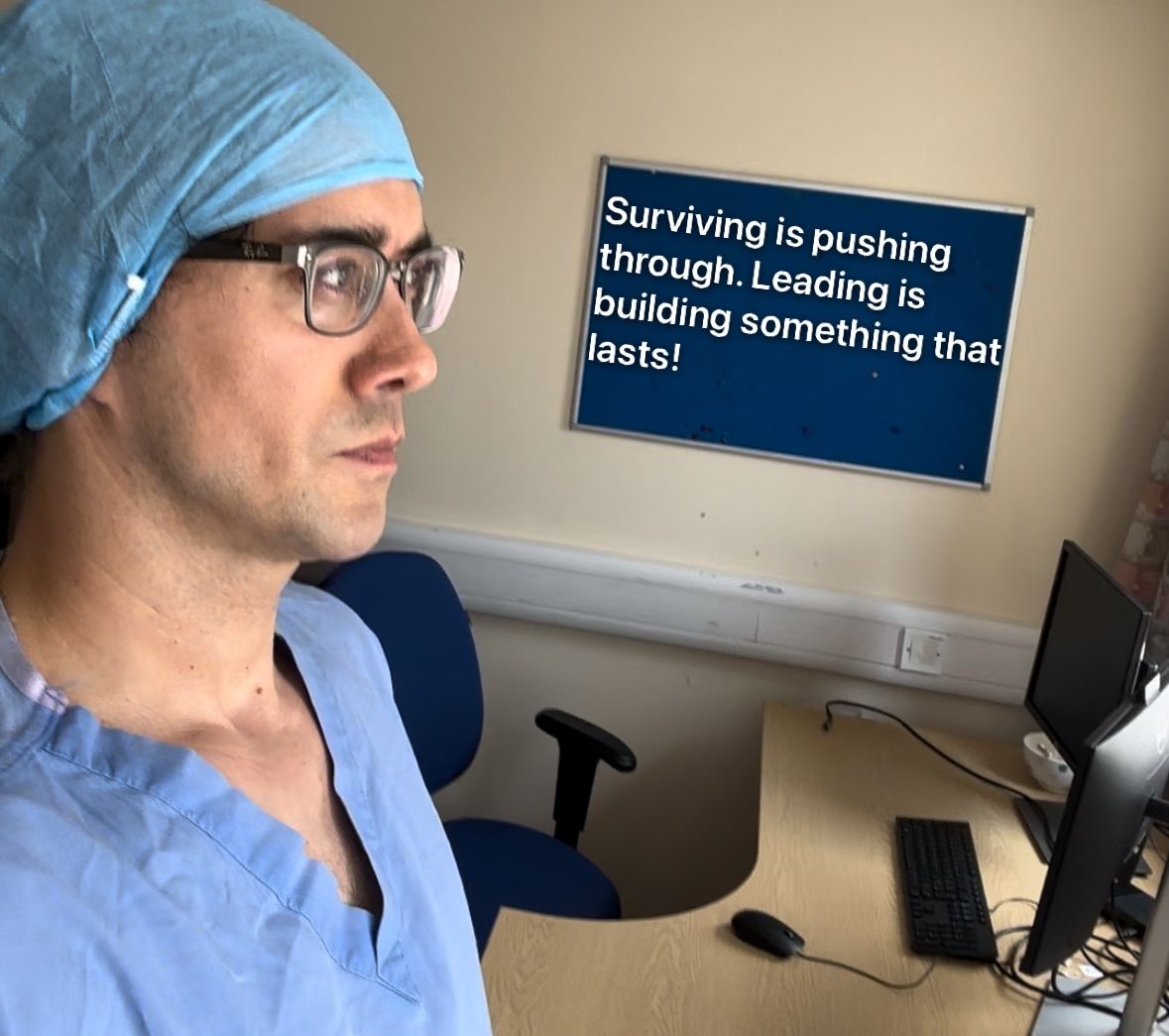
Who is Who
Roy Byers is a seasoned healthcare leader with more than two decades of experience in perioperative services, surgical operations, and system transformation. Known for his clarity, compassion, and ability to stabilize high-pressure environments, he blends clinical expertise with strategic insight. Roy’s work continues to influence healthcare teams through his leadership philosophy, reflective writing, and commitment to supporting people in demanding care settings.
When the Pace of Care Meets the Weight of Humanity
There are moments in healthcare that stay with a leader long after the shift ends.
For Roy Byers, one of those moments surfaced in a quiet corridor where a whispered reminder revealed something deeper about the system he had dedicated his life to strengthening.
“Make sure he’s comfortable. He’s a private patient.”
It was never written into strategy or taught during training, but everyone understood its meaning. Conversations softened, explanations lengthened, and the environment changed. Meanwhile, a patient nearby was moved along much more quickly. Not because anyone cared less, but because the system had quietly taught its people a different set of invisible rules.
These observations shaped Roy deeply. To him, they were not merely operational gaps. They were human truths about the pressures healthcare workers carry and the emotional cost of caring. This understanding became the foundation for his twenty-year journey in perioperative leadership, operational recovery, surgical transformation, and team resilience. His story reflects clinical depth, strategic leadership, and an unwavering belief that humanity should never be treated as an upgrade in healthcare.
Foundation: Clinical Roots That Shaped a Leader
Roy began his career as an HCPC-registered Operating Department Practitioner, building a strong clinical foundation in anesthetics and surgery. These early frontline years taught him the pace of care, the strength of teamwork, and the fragile balance required to deliver safe, compassionate treatment under pressure.
As he progressed into leadership roles across NHS hospitals, including positions at the Isle of Wight NHS Trust and Oxford University Hospitals, Roy learned how teams respond when standards slip or when clarity fades. These experiences helped him understand how deeply people depend on consistent leadership, especially in high-stress surgical environments.
Colleagues often described him in ways that revealed both his character and influence. One team member shared that “Roy’s facilitation skills are second to none. He doesn’t just direct. He guides, coaches, and encourages.” Another highlighted his approach, saying he consistently demonstrated “excellent work ethics, patient-centered decision making, and leadership that inspires staff to deliver their full potential.”
These reflections reveal the foundation of a leader who carried both operational strength and human awareness into every stage of his career.
Ascent: Driving Surgical and Diagnostic Transformation
Roy’s career took on new dimensions when he moved into surgical and diagnostic transformation work. His focus expanded to surgical flow redesign, diagnostics modernization, governance improvement, and large-scale operational recovery across NHS and private systems.
He supported organizations through some of their most challenging periods. His work helped stabilize perioperative services, strengthen pathways, improve theatre productivity, and rebuild team confidence in environments under significant pressure.
As a consultant and strategic advisor, he partnered closely with COOs, surgical directors, transformation leads, and clinical teams. He supported major hospitals including Royal Papworth, Oxford, Jersey General Hospital, Manchester University FT, RNOH, and several NHS trusts navigating recovery programs.
What made Roy particularly effective was not just his technical experience. It was his ability to see the emotional and psychological layers beneath failing systems. He often noted publicly that “Most staff aren’t burning out from patients. They’re burning out from everything in-between.” His insights into the daily realities of healthcare helped organizations address deeper issues rather than surface-level problems.
Within high-stakes surgical and transplant environments, Roy played key roles in strengthening team culture, restoring standards, and delivering measurable improvements in scheduling, flow, governance, and operational stability. Throughout these engagements, he remained grounded in the belief that people perform at their best when leaders provide clarity and presence.
Impact: Leadership Grounded in Clarity, Courage, and Humanity
Roy’s leadership philosophy centers on directness, early conversations, and the belief that silence can be more harmful than difficult truths. His writing reflects his lived experience in challenging environments. He often shares insights such as “Clarity isn’t control. Clarity is care.” and “You don’t earn trust by disappearing. You earn it by showing up, especially when it’s hard.”
These beliefs shaped how he approached team conversations, operational issues, and moments that required accountability. He learned early that avoiding important conversations damages teams more than the conversations themselves.
Colleagues recognized this in him. A senior surgical leader who partnered with him described Roy as “bright, honest, hardworking, and exceptionally responsive to duty, with the ability to interpret complex needs and deliver outstanding results.” They emphasized that he earned respect from clinicians and managers alike because of his authenticity and his commitment to doing what was right for patients and teams.
These testimonials reflect the heart of Roy’s leadership. His decisions were never detached from the realities people faced. He understood that high standards protect teams and that honest communication builds trust even during periods of tension and change.
A Period of Reflection and Renewal
In early 2025, Roy experienced a sudden retinal injury that required him to step back from frontline roles. This unexpected life event became a period of recovery, reflection, and reconnection with purpose.
During this time, he began to write more openly about the emotional realities of healthcare work. His reflections resonated because they were honest, lived, and grounded in two decades of firsthand experience. He shared lessons about invisible standards, emotional fatigue, leadership presence, and the need for systems that support people rather than drain them.
His writing emphasized truths such as “People don’t leave because they’re tired. They leave because they’re stuck.” He also reminded leaders that “Courage in leadership isn’t volume. It’s presence.”
These reflections continue to help healthcare professionals see the deeper forces that shape team culture, resilience, and purpose.
Leadership Principles Shaped by Experience
Roy’s leadership philosophy blends clinical grounding, operational expertise, and human connection. His career teaches that operational excellence is strongest when people feel supported. Strategic clarity has more impact when leaders understand the realities on the ground. Resilience grows when individuals feel seen, valued, and guided. Mentorship is essential for building strong, empowered teams. Meaningful change takes root when leaders stay present and hold both the details and the larger mission with care.
Conclusion: A Leader Centered on Humanity and Purpose
Roy Byers’ story is a powerful demonstration of healthcare leadership built on clarity, courage, and unwavering dedication to people. His journey brings together clinical experience, operational depth, and reflective insight into what pressure does to individuals and teams.
His work continues to remind healthcare professionals that systems improve when leaders show up early, speak honestly, and create environments where humanity is not sacrificed for efficiency. Through his voice and experience, Roy encourages teams and leaders to consider how they shape their environments, how they support one another, and how they build spaces where care can thrive even in the most demanding settings.