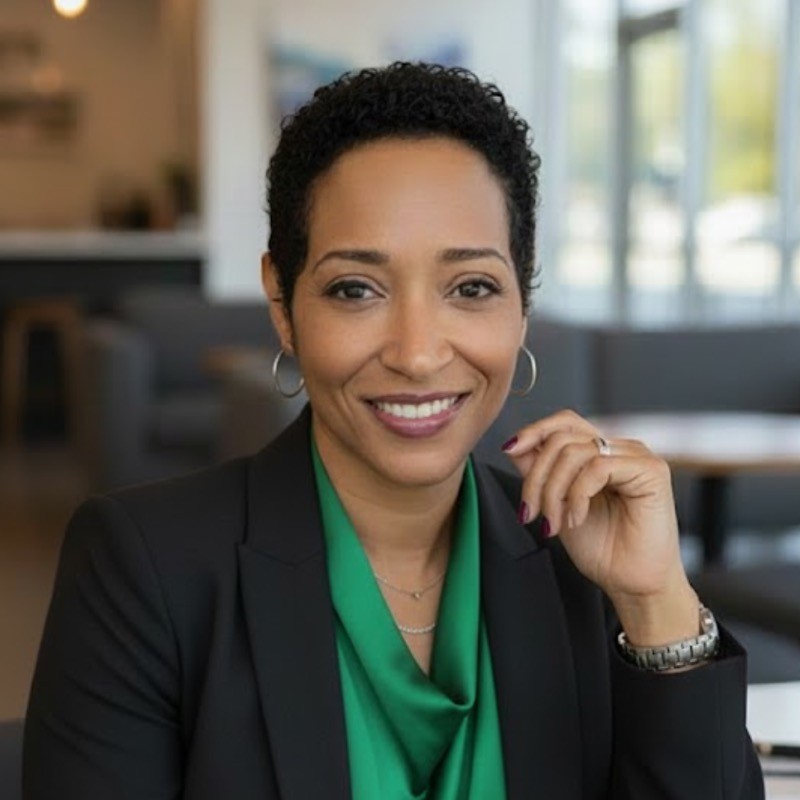
Meet Kimila Daniels
Kimila Daniels is a seasoned HR executive, board advisor, and ICF-certified leadership coach with more than 20 years of experience aligning people strategy with business growth across highly regulated and complex environments. The founder and principal consultant of Infinite Ubora Consulting & Coaching, Kimila is known for building inclusive, high-performing cultures, designing scalable people systems, and advising CEOs and boards on talent, leadership, and organizational effectiveness. With a career spanning healthcare, insurance, entertainment, nonprofit, and education sectors, she brings a rare combination of strategic rigor, human-centered leadership, and deep expertise in Diversity, Equity, Inclusion, and Belonging, grounded in a clear mission to build the structures she wishes had existed and to make leadership more accessible for those who come after her.
A Leadership Lesson Learned Early
Long before Kimila Daniels held executive titles or advised boards, she learned a formative lesson about leadership simply by paying attention. As a young girl, she noticed how authority figures shaped culture, not through grand gestures, but through everyday behavior. Teachers shortened her name for convenience. Others followed their lead. What seemed small carried weight. The message was clear: when leaders overlook people, even unintentionally, others do the same.
That early awareness would later define Kimila’s career. It shaped her conviction that leadership is not about position or perfection, but about responsibility, how power is used, whose voices are heard, and whether people feel seen. It is also where her lifelong commitment to excellence, rather than perfection, began.
Becoming a Student of Systems and People
Kimila did not stumble into human resources. She chose it with intention.
Guided by her mother’s simple but enduring rule, if you’re going to complain about something, you must also contribute to the solution, Kimila pursued formal education in business and organizational development. She earned her bachelor’s degree in Business and Organizational Behavior from Greenville College, followed by a master’s degree in Management and Organizational Development from Benedictine University. These disciplines gave her language for what she had long observed: culture is not accidental; it is designed, either deliberately or by neglect.
Early in her career, Kimila worked in a corporate benefits compliance role within the property and casualty insurance industry. It was there that she first witnessed how easily employees could become abstractions when decisions were made far from their daily realities. During a regional meeting where significant benefits changes were announced, Kimila sensed the tension in the room before a single slide appeared. When it was her turn to speak, she abandoned the script and acknowledged what employees were feeling.

She named the truth. She listened. She asked for partnership.
The response was immediate. Resistance softened into dialogue. Frustration turned into ideas. That moment confirmed something Kimila has carried ever since: even when decisions are final, how leaders communicate determines whether people respond with resistance or trust.
Another foundational influence came from an early mentor, Janette, who challenged Kimila’s pursuit of flawlessness with one sentence: “You could be more impactful if you weren’t trying to be perfect.”
It was the first time Kimila realized that perfection, especially for those who feel they must prove themselves, can become a barrier rather than a strength. Excellence, she learned, is sustainable. Perfection is not.
Leading at Scale and Advising at the Highest Levels
Over the next two decades, Kimila rose steadily through executive leadership roles across complex, highly regulated industries. She served as Vice President of Organizational Development at a publicly traded, multi-line insurance company, partnering directly with the CEO and board on executive compensation, succession planning, and performance strategy. She later led compensation strategy at a global entertainment company, advising executives on decisions that balanced talent, risk, and long-term value.
Her most defining corporate chapter began in 2013, when she joined Quartz Health Solutions as Vice President, Chief Administrative Officer, and Chief Human Resources Officer. Over nine years, Kimila led enterprise-wide people strategy for a multibillion-dollar health insurance organization. She oversaw organizational design, talent management, compliance, and human capital planning, while advising both the CEO and board of directors.
In that role, she operated at the intersection of strategy, regulation, culture, and leadership. She guided a complex organizational merger, unifying compensation systems, benefits structures, and leadership teams while retaining 98 percent of critical talent. The lesson was clear: if people don’t trust the process, they won’t trust the outcome, even when the strategy is sound.
When COVID-19 disrupted every assumption about work, Kimila co-led the organization’s response with disciplined clarity. Her approach was steady and human-centered: communicate consistently, acknowledge what was known and unknown, and never allow silence to create uncertainty.
“Here’s what we know. Here’s what we don’t know yet. Here’s how we’ll decide. Here’s when you’ll hear from us next.”
That cadence anchored the organization through uncertainty. Engagement increased, even as operations shifted rapidly to remote and hybrid environments.
A Defining Executive Moment: Alignment, Power, and Voice
The most personally defining executive moment in how Kimila thinks about alignment came years earlier during a board discussion on diversity and inclusion strategy.
When a board member questioned the need for inclusive practices, believing he already understood what diverse employees needed, silence filled the room.
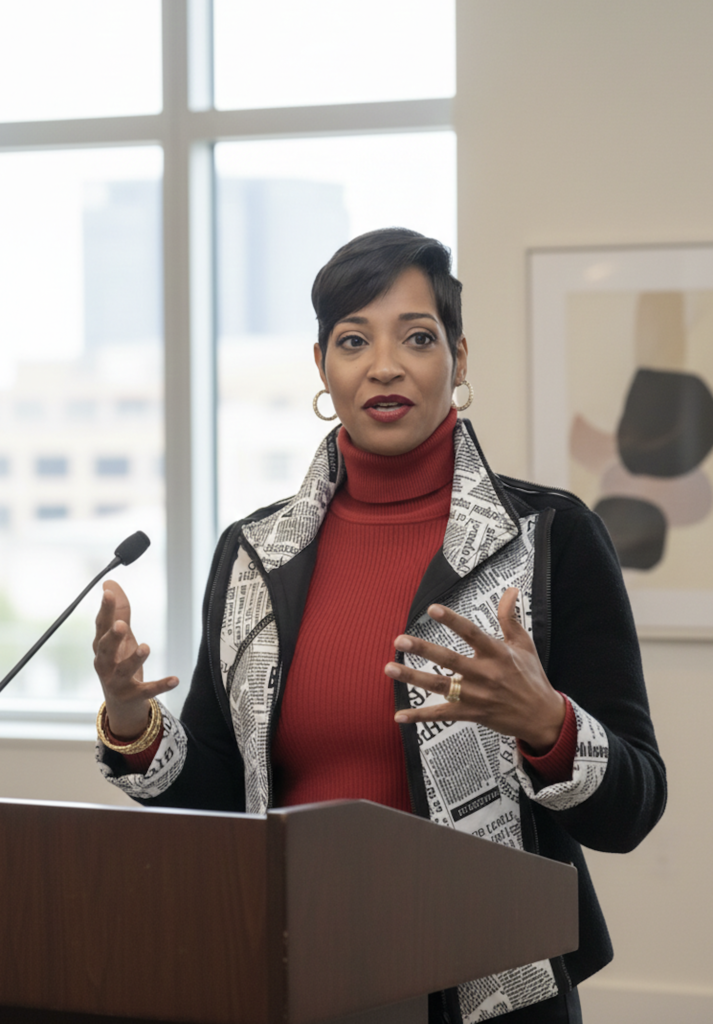
Kimila recognized the moment for what it was: a small group making decisions for people they hadn’t consulted, and a reminder of why misalignment matters. Decisions made without lived experience or meaningful dialogue create blind spots that push talent away. That moment solidified her purpose, to ensure leaders build systems that include voices beyond their own.
It clarified her work at the highest level: alignment is not consensus among those in power; it is coherence between strategy, systems, and the lived realities of the workforce.
Designing Cultures Where People and Performance Rise Together
After more than 20 years of executive leadership, Kimila Daniels reached a point where success—by every traditional measure, felt incomplete.
She had advised CEOs and boards. She had guided organizations through mergers, regulatory shifts, and moments of profound uncertainty. She had built people strategies that delivered results in complex, highly regulated environments. Yet every achievement lived within the boundaries of a single organization. And across industries, Kimila kept seeing the same patterns repeat: leaders making decisions without consultation, talent overlooked because it did not fit expected packages, and systems designed in ways that excluded the very voices capable of solving the most pressing problems.
“I reached a point where I had to ask myself, what else can I do to make an impact?” Kimila reflects. “How can I use the skills and talents God has blessed me with to make a meaningful difference beyond one company?”
That question marked a turning point.
Leaving corporate was not about walking away from leadership or influence. It was about walking toward a larger purpose. In a corporate role, Kimila could reshape one culture at a time. Through her own firm, she could equip leaders across industries to design healthier systems, build inclusive structures, and avoid repeating the missteps she had witnessed for decades.
That conviction gave rise to Infinite Ubora Consulting & Coaching.
The name itself reflects her philosophy. Ubora, Swahili for excellence was chosen intentionally. Kimila does not believe in perfection. She believes in excellence that is grounded, adaptive, and human-centered. Excellence that recognizes people as whole individuals and creates conditions for them to contribute fully.
“I want to make it easier for those who come after me,” she explains. “I’m building the structures I wish had been there. I’m developing the leaders I needed when I was navigating rooms where I was the only woman, the only person of color, or both. That’s the strategy.”
Through Infinite Ubora, Kimila has become known for building infrastructure where none exists. She has transformed small or transactional personnel functions into strategic HR departments, designed scalable people systems from the ground up, and developed leadership frameworks tailored to organizations that lacked the internal expertise to create them on their own. Her strength lies not only in vision, but in execution—designing systems that work in practice, not just in theory.
Equally powerful is her impact at the individual level.
Her coaching goes far beyond surface problem-solving. Clients often come seeking help with a specific leadership challenge and leave with a deeper understanding of themselves and how they show up in their work and lives. One government leader reflected on the experience:
“Working with Kimila helped me uncover a pattern I had not been aware of, one that was affecting more than the issue I initially brought to coaching. Rather than focusing on surface solutions, she guided me toward deeper self-awareness and more intentional choices. I became clearer on what energizes me, what drains me, and how to advocate for work that aligns with my strengths. The shift went beyond professional clarity; it gave me permission to prioritize myself.”
Those who have worked closely with Kimila describe her influence as both powerful and deeply human.
“She pushes people to see their potential and doesn’t let anyone settle,” shared one former colleague. “Her desire for excellence is matched by patience, kindness, and compassion.”
The relationships Kimila builds endure. Leaders she coached, developed, or partnered with years earlier continue to seek her guidance, not out of obligation, but trust. They return because she invested in them, challenged them with purpose, and helped them see what they were capable of becoming.
“Nothing gives me more joy than helping leaders become not just good business leaders, but excellent human-centered leaders,” Kimila says. “Leaders who can build trust, face change, embrace diverse perspectives, and lead with both confidence and vulnerability.”
This is not simply the next chapter of her career. It is her life’s work—and it is deeply personal.
Excellence, Visibility, and Agency
One of Kimila’s most meaningful areas of work is coaching women, especially women of color. Many of these leaders have been navigating systems that were not built to recognize their expertise, and it is difficult not to internalize that invisibility. Kimila is deliberate about how she frames this work: the problem is not the women; it is the systems.
Helping these leaders see what they have already proven, claim the authority they have earned, and step fully into leadership is deeply personal, and deeply purposeful. She works with them as resilient, strategic navigators who have succeeded despite constraint, not because of it.
Kimila is also expanding her work internationally, with a growing focus on Africa. After traveling to Tanzania, she observed how structural barriers limit women founders and emerging executives. Her vision is to partner with institutions and entrepreneurs to strengthen leadership capacity, build practical people systems, and support values-driven cultures that unlock opportunity.
At the core of everything she does is a belief shaped early and reinforced often: leadership behavior shapes culture, and culture determines who thrives.
Editorial Note
Kimila Daniels’ journey is a reminder that excellence does not require perfection. It requires intention, courage, and accountability. Her work challenges leaders to listen more deeply, design more thoughtfully, and lead with clarity—especially when it would be easier not to.
For executives, board members, and founders navigating growth and complexity, her story offers a clear takeaway: alignment is built when people are treated as contributors, not abstractions. The future of leadership belongs to those willing to design systems where excellence, and humanity, rise together.