For the founder or CEO whose next breakthrough depends on the right introduction: how 45 years of coaching wrestlers led one entrepreneur to build Palladium Edge, a confidant and a gateway to opportunities most businesses never see.
“The higher people rise, the fewer people they can speak honestly with.” He arrived at that line after decades spent coaching wrestlers, advising companies, founding businesses, hosting hundreds of podcast conversations and raising capital, when he began to notice a common pattern. “Leaders were surrounded by advisors yet increasingly isolated,” he says. “Everyone wanted to tell them what to do. Very few were willing or able to walk beside them through uncertainty.”
The research points the same way. When academics at HEC Montréal, the University of Ottawa and the University of Canterbury surveyed 109 chief executives of major Canadian organizations, they found that CEO loneliness came not from a shortage of people around the leader but from the weight of leadership and decision-making, as they reported in Harvard Business Review in 2024.
C. Peter Cimoroni built Palladium Edge on a simple observation: the greatest opportunities in business rarely arrive through traditional channels. They emerge, he says, through trusted relationships, shared intelligence, strategic introductions and access to people, technologies and ideas that most businesses never encounter. “People rarely need another advisor,” he says. “They need a confidant. Someone who can help them see opportunities they didn’t know existed and navigate challenges before they become obstacles.” The reader he has in mind leads a company of between $1 million and $100 million in revenue and has discovered that the greatest bottleneck is no longer capital, strategy or operations. “It’s leadership,” he says.
What a confidant does that an advisor doesn’t
“In practice, it means my first responsibility is not providing answers,” Peter says. “It’s understanding the person.” His reasoning starts from what the leader already has. “Most leaders already know more about their business than any consultant ever will,” he says. What they often lack, in his words, is “an environment where they can think clearly, challenge assumptions, pressure-test ideas,” and talk through fears, ambitions and uncertainties without judgment.
So Palladium Edge doesn’t arrive with a binder of recommendations. He describes the work as helping leaders “clarify the signal from the noise, identify the most consequential decisions, align actions with values,” and build organizations capable of creating enduring value. The name comes from the ancient symbol of protection and stewardship. “That’s exactly what we strive to be for our clients,” he says.
“A confidant doesn’t simply provide recommendations. A confidant helps a leader discover better questions.”
C. Peter Cimoroni, CEO, Palladium Edge
“After forty-five years as a wrestling coach and decades as an entrepreneur, I’ve learned that transformation occurs when people arrive at truth themselves,” he says. “My role is helping them get there more quickly and with greater clarity.” He adds one trait to that. “Curiosity is one of the greatest traits a leader can possess,” he says.
Two further parts of Palladium Edge show what that looks like in practice.
Inside Palladium Edge
The first is the founder’s exit. Every founder, Peter has written, eventually arrives at the same question: what will become of the company they spent their life building? For many Baby Boomer founders and CEOs, he wrote, the answer is approaching faster than expected. Palladium Edge works alongside them to increase enterprise value, strengthen operations, improve EBITDA, elevate strategic positioning and prepare the company for a successful liquidity event. “We are not brokers chasing a transaction,” he wrote. “The best time to prepare for an exit is before you need one.”
The second is the people around the firm, which Peter calls the Constellation of Champions: a carefully curated alliance of founders, CEOs, investors, developers, operators, technologists, professional athletes, coaches, advisors and innovators whose expertise spans nearly every stage of business growth. “We are intentionally building something different,” he wrote. “Not a network. Not a directory. Not a consulting firm.” Inside it, opportunities often move before markets recognize them. A founder seeking capital may be introduced to the right investor. A developer may gain access to new construction technologies. A manufacturer may find efficiencies through emerging AI platforms. An owner preparing for succession may meet the experts who can raise enterprise value years before a transaction. “We aren’t interested in being the smartest people in the room,” Peter says. “We’re interested in assembling the right people in the room.”
That, in his view, is where the firm’s real value lies: as confidant and connector at once. “The most valuable opportunities I’ve ever encountered weren’t being advertised,” he says. “They were shared by someone who understood the challenge, recognized the opportunity, and made the right introduction.” The firm keeps looking for what others have yet to see, from new building materials and AI platforms to capital relationships. “The future belongs to the curious,” he says. “Those willing to ask better questions, build better relationships, and explore possibilities others dismiss.”
Forty-five years in the wrestling room
Peter has coached wrestling for 45 years, and it has shaped how he views leadership, accountability, resilience and human potential. “The wrestling room is one of the last places where effort and character cannot be outsourced,” he says. “That lesson applies everywhere.”
The athletes who taught him the most, he has written, were not always the champions. They were the young men who lost difficult matches, questioned themselves and came back to the mat anyway, and many of them went on to become leaders, entrepreneurs, executives, fathers and mentors. They learned how to respond when life didn’t go their way. “They learned to be curious,” he wrote. “In many ways, failure is life’s greatest coach.”
For 45 years he has heard some version of the same sentence: “Coach, I want to be like you someday.” He has written that at first he never knew how to receive it. “I never set out to become someone others would emulate,” he wrote. “I set out to become someone who served.”
The bond between athlete and coach was also the subject of The Blood Time Podcast, which he created and hosted, about the transformation between the two at the interscholastic and intercollegiate levels and what came after it. He took the same lessons into business.
From a kitchen table to 160 companies
“CoughPops was my biggest moment as an entrepreneur,” Peter says. CoughPops, a cough drop on a stick, was invented by his team, he says, and taken from the kitchen table to international distribution, sold in every major retailer in all 50 states, Canada and Mexico.
It also became the start of his first significant entrepreneurial chapter, Razor Marketing. “We carried that success into Razor, expanding on the same processes and foundational platform to help more than 160 companies achieve similar success,” he says. Razor taught him the fundamentals of business growth, sales, branding and positioning. “Most importantly, it taught me that every business challenge is fundamentally a leadership challenge.”
The Protocol came from a wish to solve more complex business and leadership problems, using blockchain. It took him deeper into systems, human performance, organizational design and new technology. “The work reinforced my belief that companies rarely outperform the quality of their leaders,” he says.
The data on teams says something similar. Gallup’s 2026 State of the Global Workplace report finds that managers account for at least 70% of the variance in team engagement. The venture that tested those beliefs hardest was AVOGO Foods.
The hard chapter at AVOGO
“AVOGO may be the most ambitious venture of my career,” Peter says. He invented the products, developed the recipes, built the brand, raised the capital, negotiated the partnerships and led the company, which makes avocado-based guacamole, dressing and marinade, and guacamole dough with the least amount of ingredients possible.
The outcome did not unfold as he planned. “Winding down AVOGO Foods after investing years of work, raising capital, creating products from scratch, and pouring immense personal effort into the business was extraordinarily difficult,” he says. “But leadership isn’t tested when things are working. It’s tested when they aren’t.”
“Success is never guaranteed, but growth always is.”
Peter, CEO, Palladium Edge
He doesn’t treat the chapter as closed. “Yet we may not be done yet,” he says of AVOGO. What carried him through it, and through every venture before it, is a philosophy with a name.
Benevolent Capitalism
Benevolent Capitalism is the title of a book Peter wrote and the name he gives to the thread running through his work: “The belief that businesses can create extraordinary value while simultaneously elevating employees, customers, investors, communities, and future generations.” His other book, I Am Beauty, is a collection of short stories and poems drawn from his experiences.
“That philosophy is the common thread connecting every venture I’ve built, every athlete I’ve coached, every book I’ve written, and every leader I advise today.”
Peter, CEO, Palladium Edge
The line he lives by is shorter. “Greatness is never built alone,” he says. Every meaningful achievement in his life, in coaching, business, writing and leadership, has in his account depended on people coming together around a shared vision and purpose.
The influence he names first is his father’s. “My father had a profound influence on me,” he says. “Not because of grand speeches or extraordinary accomplishments. Because of consistency.” His father taught him that responsibility matters, that your word matters, “and that showing up every day is often more important than being extraordinary once.” He has spent much of his life trying to honor those lessons, and Palladium is where he puts them to work now.
Where Peter Is Now
Today, Palladium Edge works where capital, technology, business development, strategic partnerships and leadership meet, serving clients through advisory engagements, introductions, coaching and mentoring. “The firm is still in the early stages of what I believe it can become, but the mission is clear,” Peter says. That mission, in his words, is “to become the premier confidant and strategic growth partner for founders and leaders who aspire to build something enduring.”
Its focus today is helping organizations grow responsibly, develop leaders, navigate complexity and create lasting value for all stakeholders. He describes Palladium Edge as the culmination of everything that came before it, bringing coaching, entrepreneurship, capital raising and leadership development into one mission: “Helping leaders build businesses worthy of becoming legacies. Being there step by step.”
The leaders he wants to hear from are the founders and CEOs who have found that their bottleneck has moved to leadership. They don’t need another framework, in his view. “They need a trusted confidant who has sat in the chair, carried the burden, built organizations, made payroll, raised capital, navigated crises,” he says. What Palladium Edge adds is access: to the relationships, technologies, capital sources and strategic advantages they are unlikely to uncover on their own.
Success, as he describes it, is not something a leader takes. “It’s something you build, steward, and ultimately share.”
Five Lines from Peter’s Diary
“Leadership isn’t tested when things are working. It’s tested when they aren’t.”
“We’re interested in assembling the right people in the room.”
“Curiosity is one of the greatest traits a leader can possess.”
“A confidant helps a leader discover better questions.”
“Greatness is never built alone.”
Palladium Edge, in brief
What it is:A strategic advisory and opportunity platform that acts as confidant and connector for leaders, pairing counsel with access to a curated alliance of operators, investors and specialists.
Who it is for:Founders, executives, investors, developers, family offices and business owners, typically leading companies of $1 million to $100 million in revenue, who want both counsel and access.
What you get:
– Strategic growth advisory, leadership coaching and executive mentoring
– Capital sourcing and investor introductions
– Business development, channel partnerships and strategic alliances
– Mergers, acquisitions, succession planning and exit preparation
– Relationships across commercial real estate, construction and emerging building technologies
– AI and operational efficiency solutions
– Speaking, thought leadership and market positioning
Where it stands:Serving clients through advisory engagements, introductions, coaching and mentoring, alongside a growing alliance Peter calls the Constellation of Champions.
In their words:“Help clients identify the opportunities that others overlook.”
From the Diary of C. Peter Cimoroni
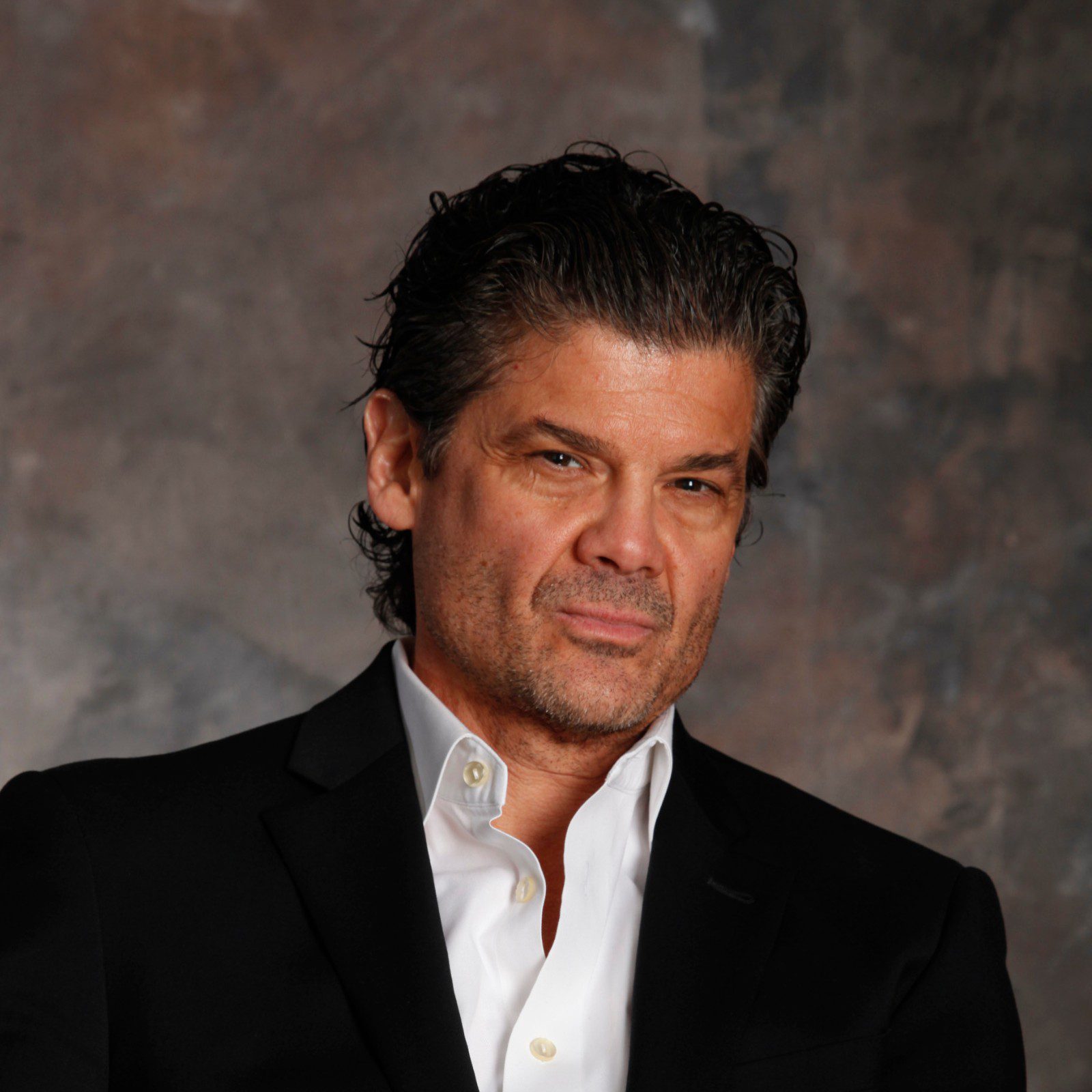
C. Peter Cimoroni is a Laguna Beach, California-based entrepreneur and the CEO of Palladium Edge.
“People rarely need another advisor. They need a confidant.”
Editor’s Note
Executives Diary features C. Peter Cimoroni for one idea, held across 45 years of coaching wrestling and several companies of his own: that the people at the top need a confidant more than another advisor. He tells the venture that did not unfold as planned in his own words, beside the ones that did, and draws the same lesson from both. His answers put the philosophy ahead of the record, and the piece follows them. Through Palladium Edge, he pairs that idea with access: a curated alliance that puts leaders in front of the people, capital and technologies they need next.
Executives Diary, Editorial
Sources
Harvard Business Review, Alaric Bourgoin, Sarah L. Wright, Jean-François Harvey and Saouré Kouamé, “CEOs Often Feel Lonely. Here’s How They Can Cope.”, 2024
Gallup, State of the Global Workplace (2026 report)