From the Diary of
Arantza Danes Vilallonga
For leaders who wonder why younger employees leave so quickly, or why feedback lands as frustration: a way to look at the gap that starts with the people in the room rather than the label.
“How people relate at work shapes both organizational performance and wellbeing.”
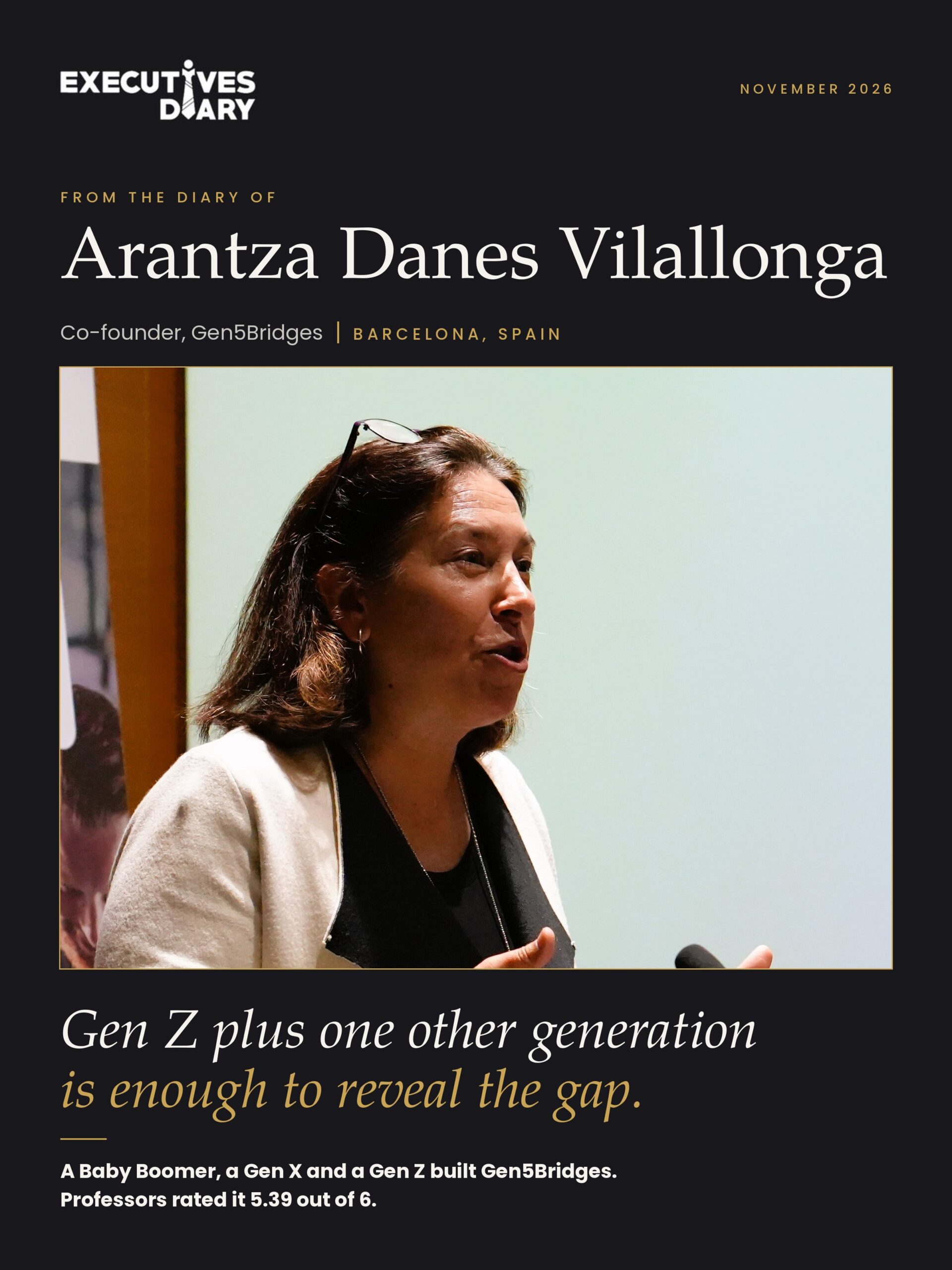
The first workshop did not go well. Arantza Danes Vilallonga and Laia De Tera, a former student of hers, had designed a workshop to help faculty at the Universitat Autònoma de Barcelona (UAB) better understand and connect with their Gen Z students. It was not a Gen5Bridges workshop. A debate emerged very early and took over the room. “We became stuck in different positions and never managed to put into practice the activities we had prepared,” Arantza says.
“It was uncomfortable, but also extremely valuable.” What she took from it was that asking professors to understand Gen Z was not enough. “They also needed a process that allowed them to explore their own assumptions, expectations and ways of communicating.” The workshop that did not work showed her why a more systemic approach was needed, and it was one of the triggers for bringing the Gen5Bridges approach to the faculty: assumptions made visible, different perspectives recognized, the conversation translated into practical experiments. Once they did that, she says, the dynamic changed significantly. In the later UAB programs, participants gave Gen5Bridges an average score of 5.39 out of 6 for applicability to the workplace and 5.48 out of 6 for facilitation.
The leaders Arantza most wants to reach are asking their own versions of the professors’ question, and she lists them: “Why are younger employees leaving so quickly?” “Why do we seem to misunderstand each other?” The first is more than an impression. In Deloitte’s 2025 Gen Z and Millennial Survey, which covered more than 23,000 people in 44 countries, nearly one-third of Gen Z respondents said they plan to switch employers within two years.
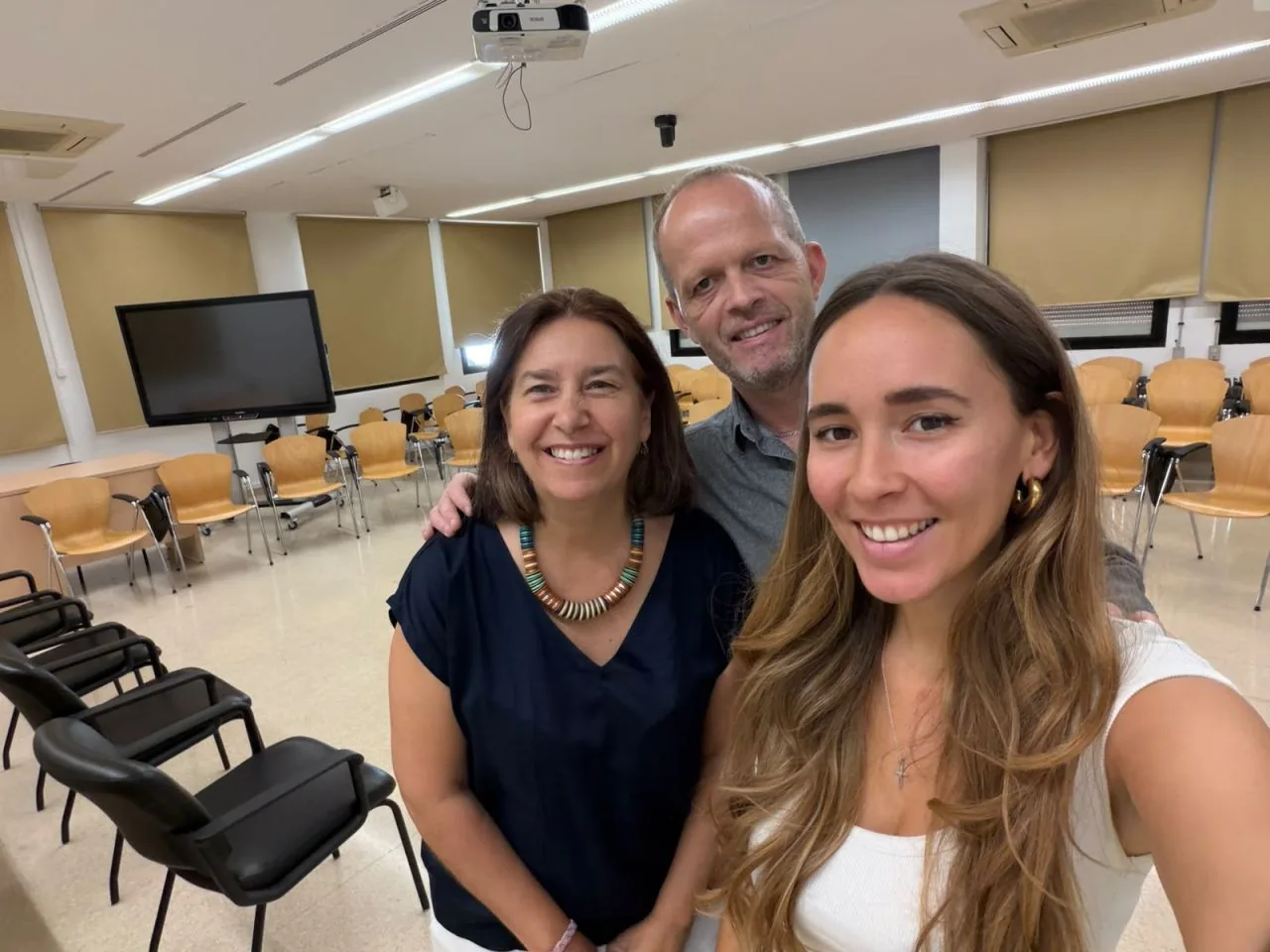
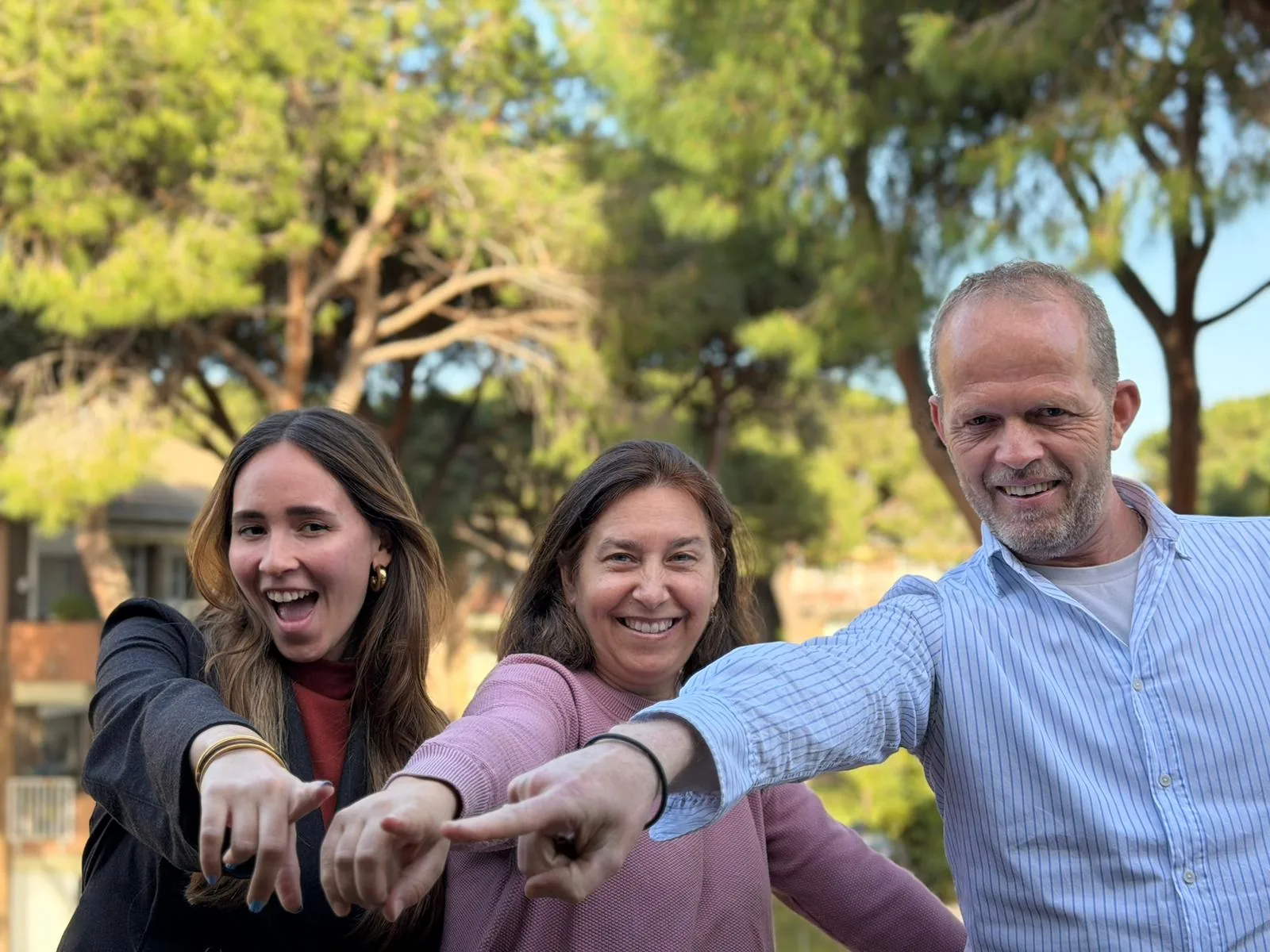
The approach she turned to is Gen5Bridges, which she co-founded and which she, Damien Duby and Laia De Tera developed and deliver together. She describes it as “an experiential, systemic methodology that helps multigenerational teams turn generational differences into stronger relationships, better collaboration and practical ways of working together.” It grew out of the systemic work on relationships, leadership and team dynamics that she and Damien had been developing through Worktimist. Arantza is a Barcelona-based professional coach and senior consultant at Worktimist, an associate professor at UAB and a former Director of Communications at Vueling Airlines. The three of them are a Baby Boomer, a Gen X and a Gen Z.
What the Label Hides
Arantza doesn’t wave away the appeal of generational shorthand. “I think stereotypes are appealing because they make complexity easier to explain,” she says. The risk, in her words, is that “once we label a behavior as generational, we can stop being curious about the person in front of us.”
So Gen5Bridges uses generational differences as a starting point for conversation, not as an explanation in themselves. What may at first seem like a problem of attitude, motivation or commitment can sometimes be, she says, a gap in expectations, context or communication between generations.
Our objective is not to decide which generation is right, nor to teach Gen Z how to adapt to the existing system or vice versa. It is to build the bridge in both directions, helping people understand one another’s context, expectations and communication codes and then decide together how they want to work.
Two observations from the work shape who she thinks this is for. The first is that the gap isn’t equally distributed. Baby Boomers, Gen X and Millennials differ, she says, but they often share a significant amount of workplace context and assumptions, what she calls a common “register.” The noticeable gap appears with Gen Z, who are entering organizations with different reference points and expectations. The second follows from the first: an organization doesn’t need five generations for any of this to be relevant. “Gen Z plus one other generation can already reveal a meaningful generational gap.”
That is also why she wants the work within reach of smaller organizations. Large ones often have dedicated People, L&D or organizational development teams. Small and mid-sized organizations experience many of the same dynamics with fewer internal resources, less time and fewer formal programs. “We are also here for those organizations,” she says.
There is a second, separate part of the story: before Gen5Bridges went into any organization, the three of them went through it themselves.
Tested on Themselves First
At the time, Arantza was working separately with two very different collaborators. With Damien, a Baby Boomer, she was facilitating systemic team coaching processes and workshops on diversity and inclusion through Worktimist. With Laia, Gen Z, she was working on the workshops UAB had asked her to develop for its faculty and administrative staff. Laia was there for a reason. Arantza’s systemic mindset, she says, made it very difficult to imagine a process about Gen Z “without Gen Z having a voice in the room.”
Very quickly she realized the work could become much more powerful if the three of them did it together. Both liked the idea, and there was some resistance on both sides. Neither could completely see what the other would add to projects that were already working well. “Nobody was openly saying, ‘I do not want to work with this person,’” Arantza says. “The assumptions were much subtler.”
The important point is that our differences did not disappear. We became better at recognizing them, talking about them and using them.
That was exactly the kind of dynamic Gen5Bridges was meant to address, so before asking other teams to do the work, the three crossed the five bridges themselves. They found areas where they were much further apart than expected in the way they communicated, made decisions and approached work, and areas of alignment much stronger than they had assumed. Instead of asking “Who needs to adapt to whom?”, they explored how to work together in a way that made sense for all three. “We moved from being three people collaborating on projects to becoming a cohesive team.”
Five Bridges, Ending in Something to Try
Gen5Bridges is experiential, participative and grounded in systemic theory and systemic coaching practice. It doesn’t give people a theoretical description of each generation. They work with what is really happening in their own team, across five bridges: Awareness, Identity, Trust, Collaboration and Future. The work starts by observing what is actually happening in the system. Perceptions and misunderstandings are made visible. The group then recognizes what each person or generation brings, explores what is needed to build trust, identifies how the differences can become complementary, and finally translates the learning into concrete actions. The Gen Z perspective is brought into the room and the perceptions are compared, not to find out who is right but to see what each side can contribute.
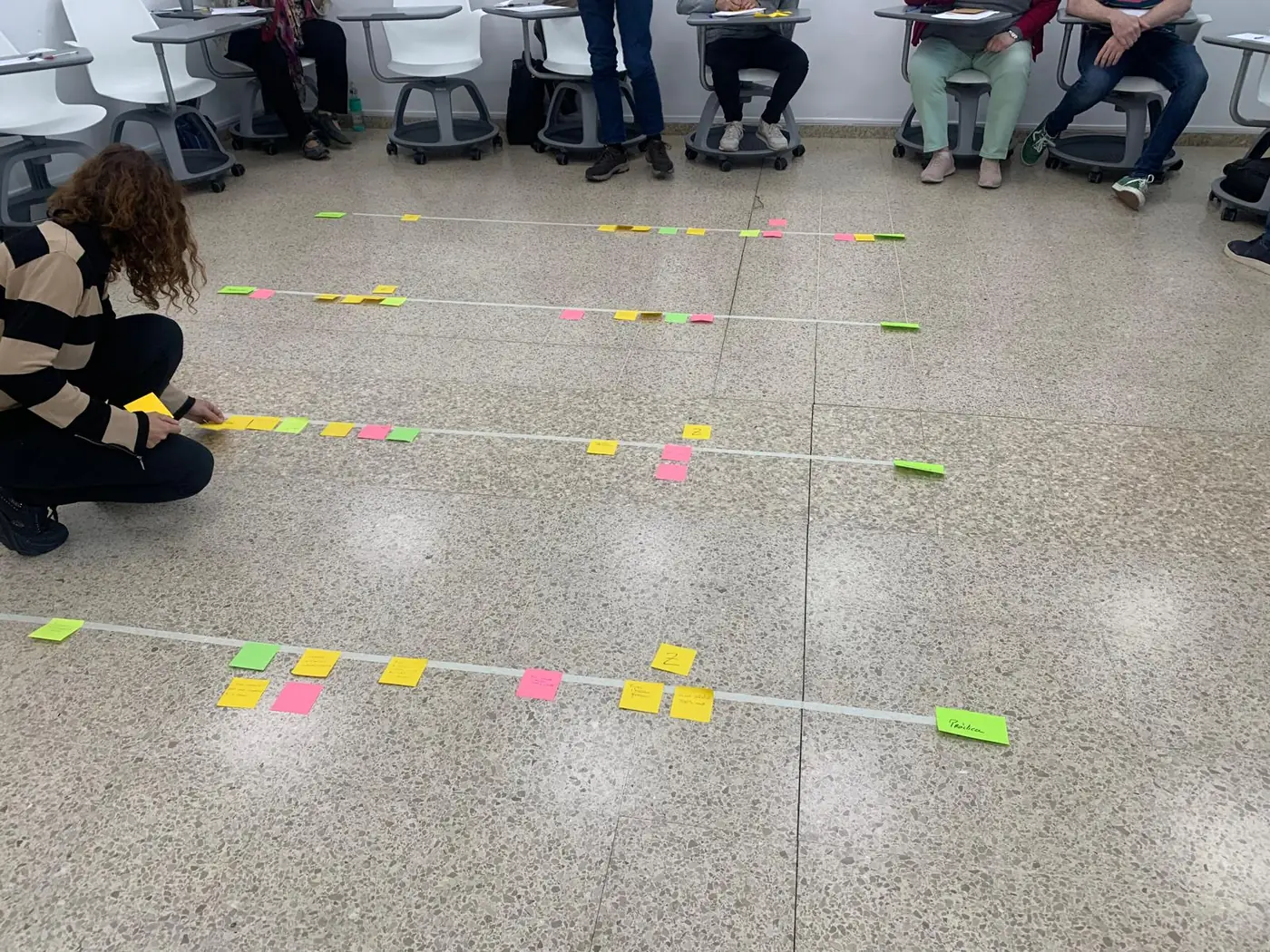
It always ends in application: participants identify a concrete change or experiment they can take back into their daily work. In the later UAB programs, people left each session with a change to test in their own classroom, and the following session started with what they had tried, what had worked and what they would do differently. Most of the work with organizations is confidential, and UAB is the example Arantza has permission to describe. Professors, she points out, are used to questioning, analyzing and challenging ideas, “which makes them a particularly demanding audience.”
For me, the most important evidence is not simply that people enjoy the experience. It is that they leave with something specific they are prepared to do differently.
Her wider argument is that generational diversity can contribute to greater productivity when relationships across generations are intentionally developed and not left to chance. Research points the same way. A 2024 survey of 1,450 employees in finance, technology and professional services in the UK and US, by the London School of Economics with Protiviti, found that 87% of employees reported high productivity in firms with intergenerationally inclusive work practices, against 58% in firms without them.
Her attention to how a message lands comes from the career she started in.
What Crisis Communication Taught Her
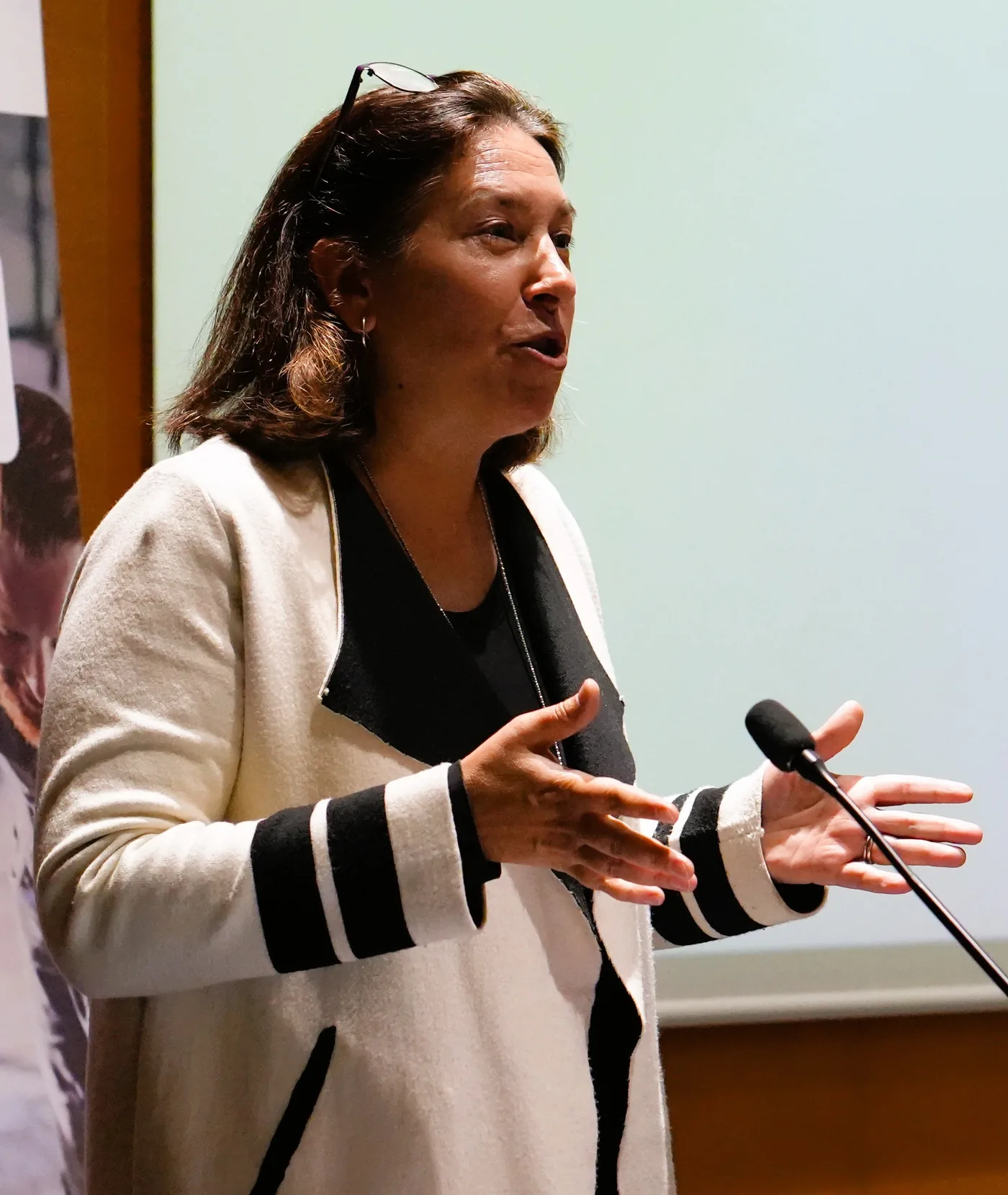
Arantza’s career started largely in corporate communication, reputation and crisis management. At Vueling Airlines she was Director of Communications during the airline’s early growth stage. As Deputy Public Relations Director for the Barcelona 2004 Forum of Cultures she created and led the public relations department, managing a team of nearly 100 people. She worked in institutional relations at FC Barcelona, and in San Francisco with Pacific Union. As a communications consultant she was a partner at Zelig Comunicació and worked at The Blueroom Project with international clients including Qatar Airways in Spain and Portugal.
What that background taught her, she says, is that in difficult situations what a team says, what it does and what people outside the room perceive are all part of the same system. It made her very aware of the impact of what is said or left unsaid, how it is said and when, and of the gap between intention and impact. Leaders rarely have complete information when they need to decide, she says, and “every delay, inconsistency or silence also communicates something.”
Alongside that career she has taught. She has been an Associate Professor at UAB since 2013, teaching leadership, negotiation, crisis communication and people management, and the university has given her, she says, a direct view of the generations now entering the workplace. She is completing a PhD there on the links between organizational culture and wellbeing at work in Spanish SMEs.
The Person Who Saw It First
José Manuel Toledano was her People Director at Vueling. Many years ago, he told her she was good at developing people. She found that difficult to believe. “I saw myself as a communications professional,” she says. “That was my expertise and a very strong part of my professional identity.” Her verdict now: “He saw something in me before I could see it myself.”
He saw something in me before I could see it myself.
He has continued to support her professional development over the years, and the two co-created Worktimist, where, in her words, “we encourage the people in your organization to bring the best of themselves to work.” She is a PCC-certified professional coach (ICF), a Certified Professional Co-Active Coach (CPCC) and an Organizational and Relationship Systems Coach (ORSC). Looking back, she says, that conversation was important because what she does today is about helping people grow.
Where Arantza Is Now
This year’s work is Gen5Bridges, alongside her consulting and coaching at Worktimist, her teaching and the PhD. The work with professors continues with new groups. She has also been on television to talk about the UAB workshops, and wrote afterward that after many years of helping spokespeople and leaders prepare for interviews, it still felt strange to be the one on the other side.
The people she most wants to hear from are HR and People leaders, learning and organizational development professionals, and the CEOs and founders of SMEs and mid-sized organizations, particularly those experiencing rapid growth, generational transition or difficulty attracting and retaining younger professionals. She sees the methodology as useful not only for teams already experiencing conflict, but for those that want to strengthen collaboration and prevent issues before they arise.
Asked for a habit a colleague would call very her, she offers this: “I am naturally optimistic. I tend to look for what can be learned or what can become possible, even when something has gone wrong.”
Outside work, she travels. Her parents gave her that curiosity about the world from an early age. She has lived in Barcelona, Boston, San Francisco and Geneva, her husband is French, and it’s a passion the two of them try to pass on to their children. Traveling, she says, reinforces something central to her work: “curiosity about people whose context, assumptions and ways of seeing the world may be very different from my own.”
What’s next, as she wants it quoted: “To keep learning, to keep serving others, and to keep creating opportunities for us to grow together.” And the sentence she wants to be remembered by sits under all of it: “How people relate at work shapes both organizational performance and wellbeing.”
The Playbook
Five Lines from Arantza’s Diary
- “Communication is often where organizational culture becomes visible.”
- “The process always ends in application.”
- “Sometimes you need to listen to what the system is telling you and redesign the process.”
- “Being a Co-Active coach changed the way I listen, relate and understand human potential.”
- “Some of my happiest family memories come from travelling together.”