

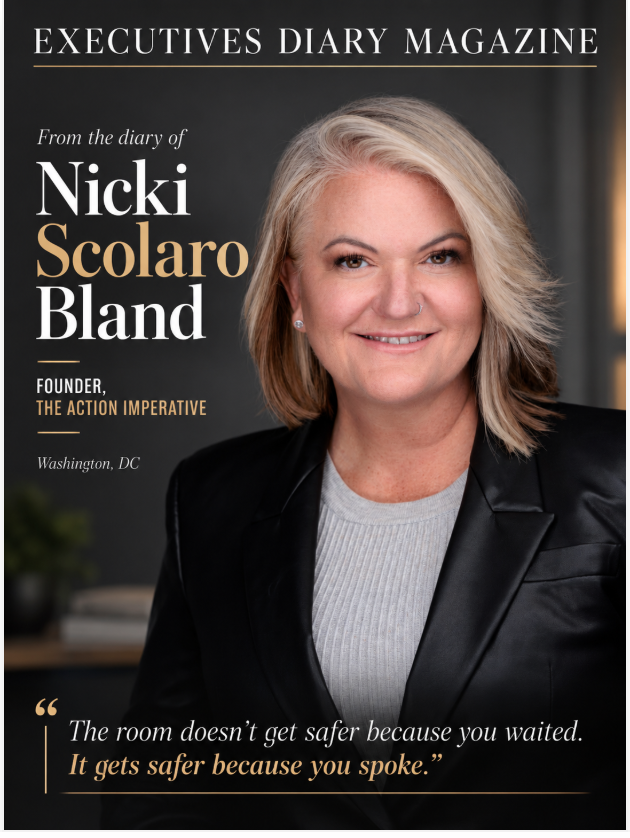
From the Diary of
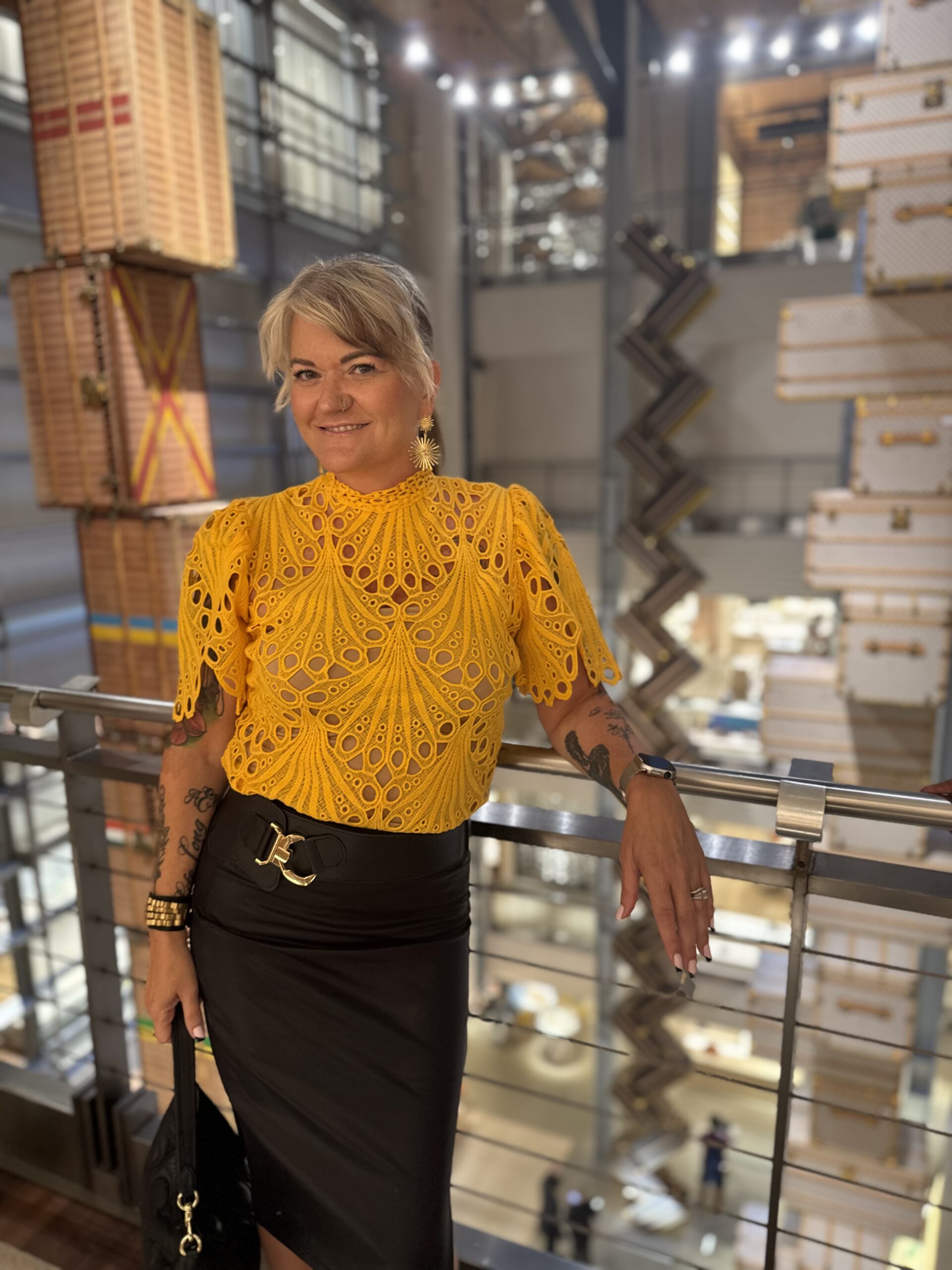
Nicki Scolaro Bland
Women speak up as much as men until the room turns. The fix was never the woman.
“The room doesn’t get safer because you waited, it gets safer because you spoke.”
You said the thing in the meeting. Afterward someone told you how it landed. Too direct, too blunt, too much. You took the note, and the next time you said a little less.
Research published in Harvard Business Review found the deciding variable was not the woman. It was the room. Nicki Scolaro Bland has sat on both sides of it.
Two studies covering more than 3,000 participants found that women contributed ideas at the same rate as men when a group behaved civilly, and withheld them when it did not, held back by the prospect of gender backlash. The pipeline data says something similar. Women hold 29 percent of C-suite roles, a figure that did not move between 2024 and 2025, the eleventh consecutive year of underrepresentation at every level, and only about half of the companies surveyed rank women’s career advancement as a high priority.
Bland spent twenty-five years inside defense contracting, building the operating systems that decide who speaks in a program review. She now sells the opposite of what most leadership programs sell. Here is the method, and the moment it came from.
The Advice That Teaches Women to Say Less
Most leadership development sold to women starts from a premise: something in her needs adjusting. Her presence. Her tone. Her confidence. The industry has a vocabulary for it: executive presence, imposter syndrome, gravitas. It has a shelf of programs to match.
Bland thinks the premise is the error.
For too long, women in leadership have been told to ‘fake it until they make it.’ That approach turns performance into pretending, and causes women to believe the lie that they can simply get over the imposter syndrome they feel. Imposter syndrome is simply a lie we have accepted to keep others comfortable and to prevent people from challenging both spoken and unspoken expectations. Women don’t have to change to belong in the room and have a seat at the table. The room is different as soon as we enter it visibly, authentically, and unafraid.
She has an image for the alternative product. She wrote about disliking blueberries, the texture of them, the way they burst, and about eating blueberry pancakes happily, because batter hides the thing you object to. Leadership development does the same to a woman’s bluntness, she wrote. It “coats it in polish. Serves it back so smooth she swallows her own nature without recognizing it.”
The word she uses for her own practice is the refusal. “I don’t do batter.”
What Twenty-Five Years in Contracting Taught Her About Voice
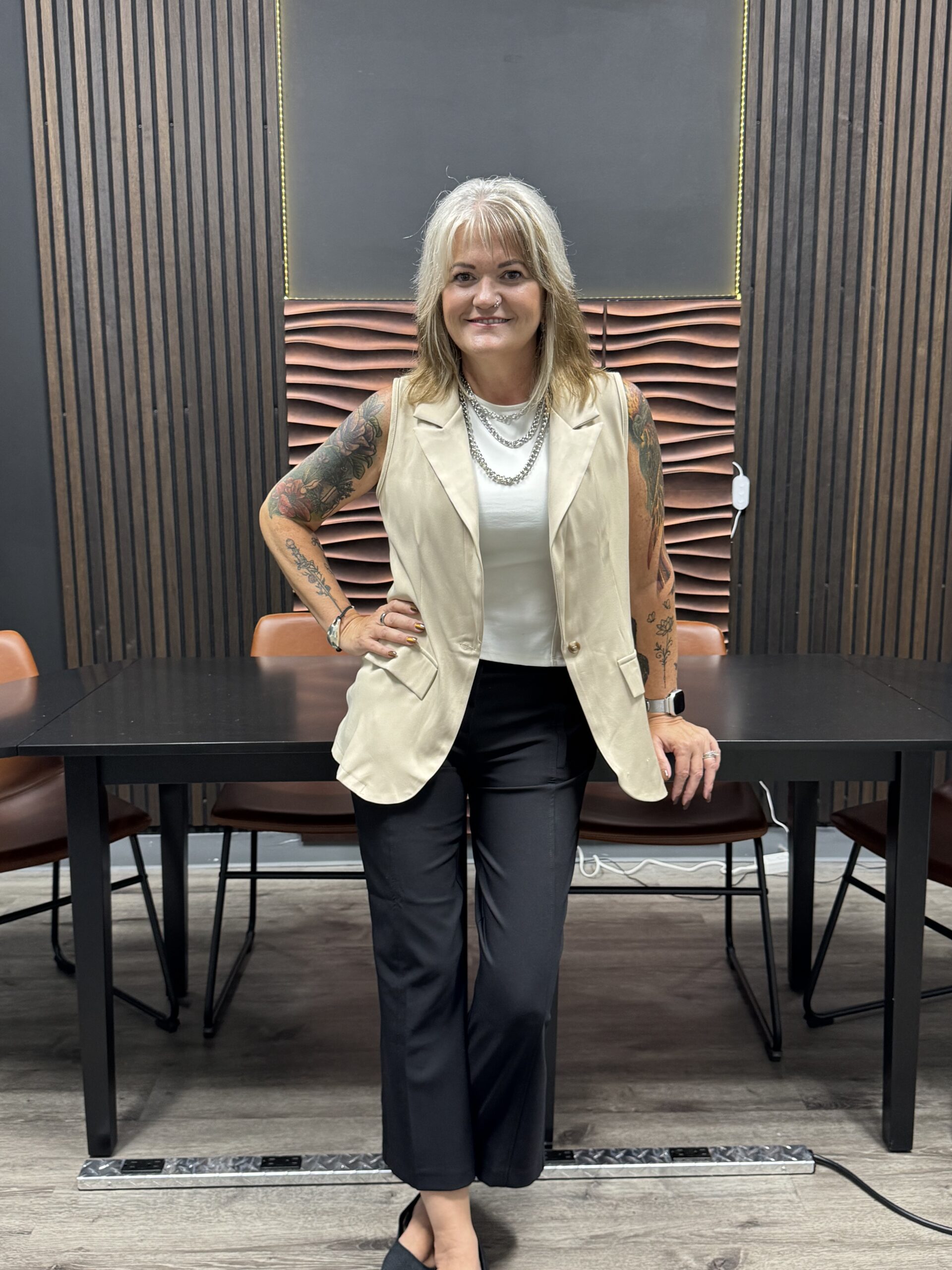
Bland did not arrive at this through coaching. She arrived through org design.
Across two decades she built contracts and capture organizations at Northrop Grumman, Leonardo DRS, a newly formed $2B+ sector at Peraton, and now the corporate capture function at Serco. Her job was to decide who sat in which meeting and what they were allowed to say once they got there.
She watched the same failure repeat.
Emerging leaders, she says, get “groomed to fit into a growth pipeline that is shaped by others’ experiences, assumptions, and expectations,” while the leaders above them rarely spend any time working out what those people actually brought. Companies write job postings for candidates who do not exist, hire someone remarkable anyway, then set about turning her into what they expected. She reaches for Steve Jobs’s point about hiring smart people so they can tell you what to do, and observes how rarely anyone means it.
Her framing is commercial, not moral. An organization that filters its own strategy conversations by who looks like a leader is discarding the innovation it says it wants.
She has also been the one filtered. “Too often in my career, I would be ‘coached’ on what not to say, particularly when speaking with senior leaders,” she says. Usually, in her reading, because full transparency was inconvenient upward.
Reclaiming, Rising, Reckoning: What the Twelve Weeks Actually Do
The Phoenix Leader Path runs twelve weeks across six dimensions: Voice and Presence, Power Literacy, Visibility and Self-Advocacy, Cognitive Clarity, Somatic Intelligence, Courage and Readiness. Clients start with a Leadership Archetype Assessment that sorts them into one of four patterns: Truth-Teller, Bridge-Builder, System Breaker, Strategic Insider. The phases build on the result.
Phase one is diagnosis, drawn in ink rather than watercolor. Women map the power actually operating around them: who holds informal authority, whose comfort their silence protects, where their voice went quiet. The archetype gets named here, so that a woman sees her own pattern instead of feeling, as Bland puts it, “a vague, unlabeled discomfort.”
Phase two moves into the body. Nervous-system and somatic practices are used to keep a woman regulated and visible under pressure rather than sliding into the fawn or freeze responses that got her silenced in the first place. Her line on the mechanism: “Once you understand that automatic responses controlled by our amygdalas can be rewired, you can overcome imposter syndrome and the idea that you have to fake it until you make it.” She is explicit about the sourcing: personal experience, neuroscience coursework in her MBA, self-study. She is equally explicit that this is coaching and not clinical work.
Phase three is the invoice. The conversation not had. The credit not claimed.
One client’s proof turned up outside the office entirely. Asked to plan an event, then handed an unrequested change of plan, she calmly told the person they were welcome to take that on themselves. No pivot, no apology.
Bland practices the regulation she teaches. She wrote about the friendships that keep a nervous system steady when building something eats the calendar, and named Glorya, a friend whose relationship survived distance without keeping score. Her instruction is a text, sent now: no need to respond, just thinking of you.

The Conversation She Had at the End of the Day
Early in her career, Bland found evidence that a manager was taking risks serious enough to cost him his job and expose the organization. He knew she knew. She waited until most people had gone home, walked into his office, and said it.
He could have fired her.
Speaking the truth can be a daunting prospect when the potential outcome is bad. But to me, not saying something was worse. I knew that my voice mattered in that moment, to me more than anyone, and because I believed that I was able to speak with authority and authenticity. Twenty years later, I have a good relationship with this person and earned his respect that day.
He acknowledged it, apologized, and as far as she knows never repeated it.
Why Her
The credential that matters here is not the coaching certificate. It is that she has run the systems her clients are trying to survive.
At Leonardo DRS she inherited a contracts organization doing its paperwork correctly and holding no seat at the table on performance. Her fix was structural and slightly brutal: every contracts person attends program reviews, meets regularly with finance and procurement, documents where they are excluded, and no program manager speaks to a customer counterpart without them. She added centralized tracking of every award and modification, from document receipt through both signatures. Award cycle time went from as long as four weeks to as few as two days.
A simple solution can make a meaningful impact on an organization’s performance.
The same method traveled. As Board Chair of the Virginia Women and Family Support Center she took the budget from $200,000 to more than $1M, raised $100,000 in three weeks against an urgent gap, and paid the Executive Director a living wage for the first time in the organization’s seven-year history. Volunteers are essential, she notes, but bake sales do not fund rising demand.
I believe anyone can have a seat at the table and bring value based not only on their expertise, but also based on who they are. Beyond our technical know-how, we each bring unique perspectives and experiences that shape our beliefs and assumptions. By limiting who participates in strategy-shaping conversations and decision-making because of preconceived notions of who fits our definition of a good leader, we are really silencing others who we are actually afraid will challenge our expectations and make us uncomfortable.
A former colleague’s assessment, from her recommendations: she brings people together, listens with intent, and makes everyone feel their voice counts regardless of position.
Where Nicki Is Now
Bland works from the Washington, DC area, where she runs The Action Imperative alongside her Serco role and expects to complete the Global C-Suite Program at Wharton’s Aresty Institute of Executive Education in September 2026. She works with women executives one at a time and on stage, and keynote speaking is where she is pointing next. She sits on the boards of the Washington National Opera and the Casa Brumar Foundation.
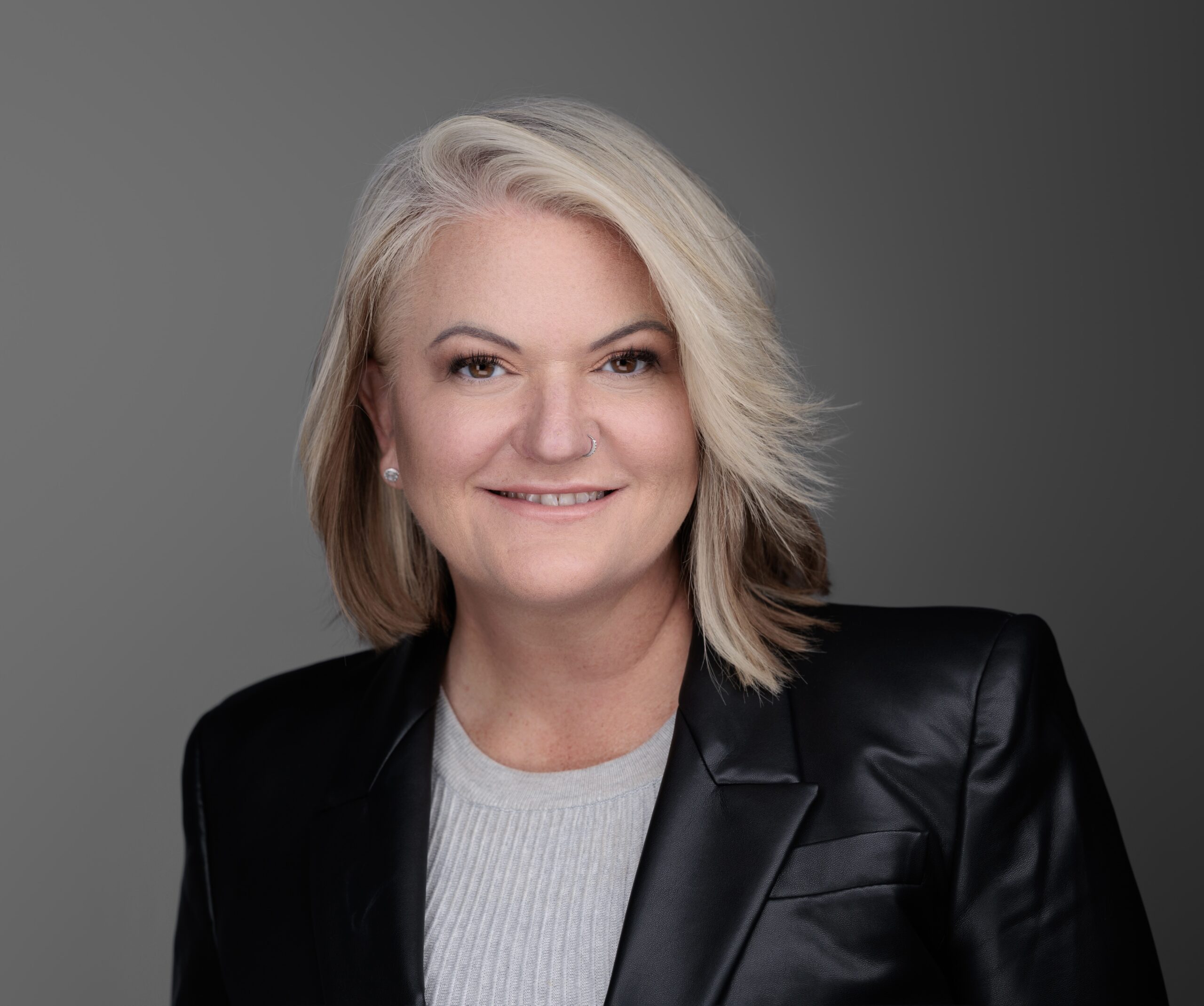
In New York recently for a speaking weekend, her daughters came along, Maggie holding purses, phones and coffee for the speakers, Abbey directing the photographs.
Her stated ambition is not a client roster. “I have a generational goal that sees a different C-Suite for my kids,” she wrote. “And for your kids.”
The Nicki Scolaro Bland Playbook: Five Moves for the Woman Deciding Whether to Speak
- Map who your silence protects. Before changing anything about yourself, work out who holds informal authority in the room and whose comfort is preserved when you say nothing.
- Name the pattern, not the shame. A discomfort you can name (the Truth-Teller, the System Breaker) stops working as a personal defect and starts working as information.
- Regulate the body before the meeting. Fawn and freeze are physiological rather than moral, so treat them at that level instead of talking yourself into confidence.
- Put your function in the room. Attendance at reviews, direct access to the customer, cross-functional standing: authority follows presence, and presence is a structural decision someone has to make.
- Say it while it still costs. Waiting does not reduce the risk, it only moves the cost onto the next person who has to raise it.
Nicki Scolaro Bland develops women leaders at The Action Imperative, LLC. Connect with her on LinkedIn.
