

From the Diary of
Vanessa Kunz
For leaders who want more than a flawlessly organized event, Vanessa Kunz explains how dramaturgy, hospitality and creative direction turn an occasion into an experience guests keep.
“I don’t create events for people to attend. I create experiences they carry with them.”
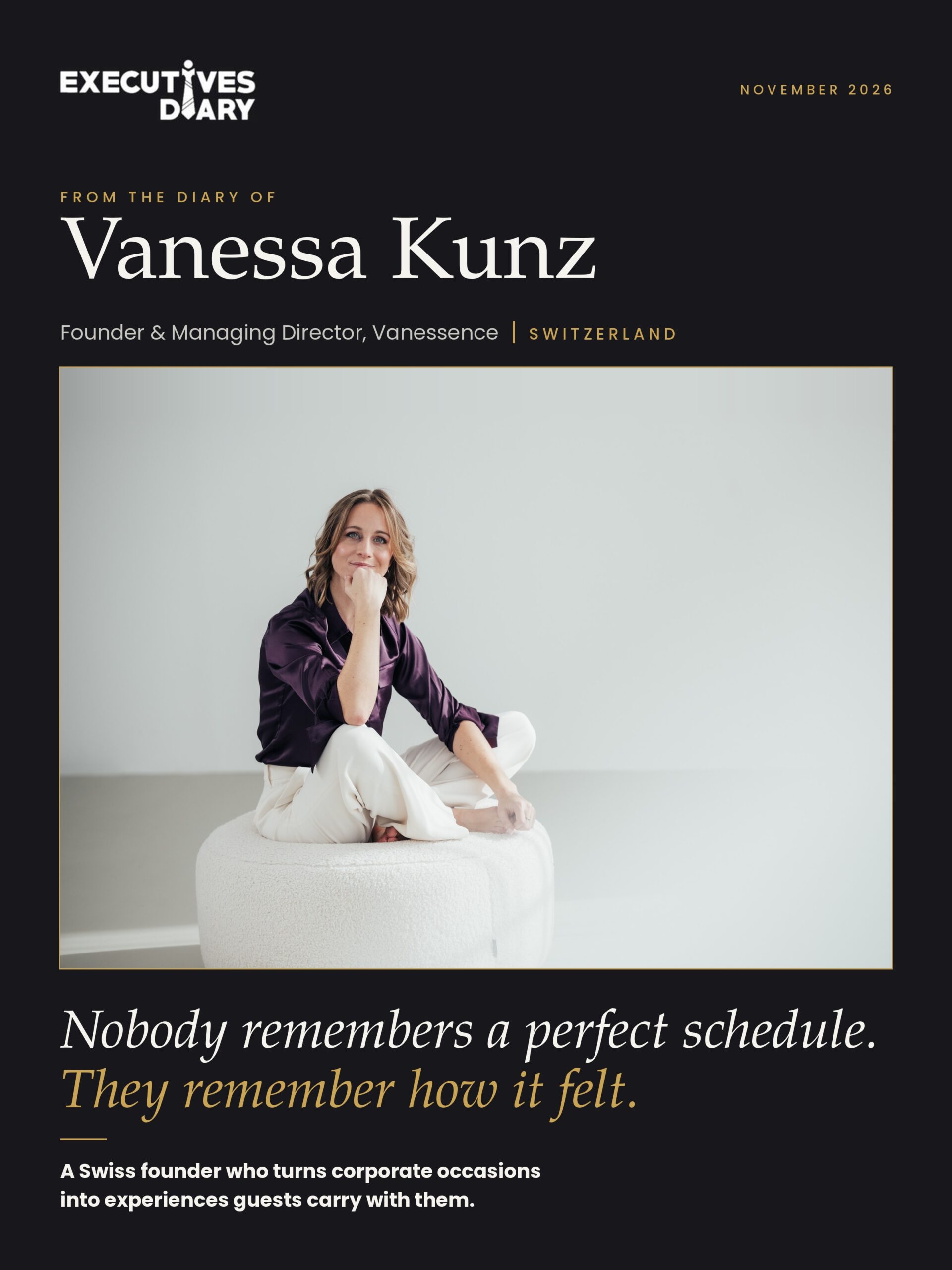
An event can be perfectly arranged and still be one that “nobody remembers six months later,” says Vanessa Kunz. For her, the measure is different: “Success is when people felt something.”
The proof she trusts arrives years afterward. Guests have come back to her five years after an event and still remembered it. This year, one woman got in touch because she remembered an event from years ago, told Vanessa how much she had loved it and asked whether she could recommend her to someone else.
Attendees do report feeling. In a 2025 Freeman survey, run by the Harris Poll among 1,824 US professionals who had attended an in-person business event, 96 percent of attendees expressed positive feelings afterward.
Through Vanessence, the company she founded and leads as managing director, Vanessa creates event experiences for companies. Her approach combines a curator’s eye with creative direction, dramaturgy, hosting and moderation. She is based in Switzerland and has curated and organized events internationally, as she continues to do. The client she most wants to reach is a decision-maker who knows the next event should be more than well run. That person wants an experience that reflects the brand, connects emotionally with the guests and leaves a lasting impression, but may not yet know how to turn that ambition into an actual event. “That is where my work begins,” she says.
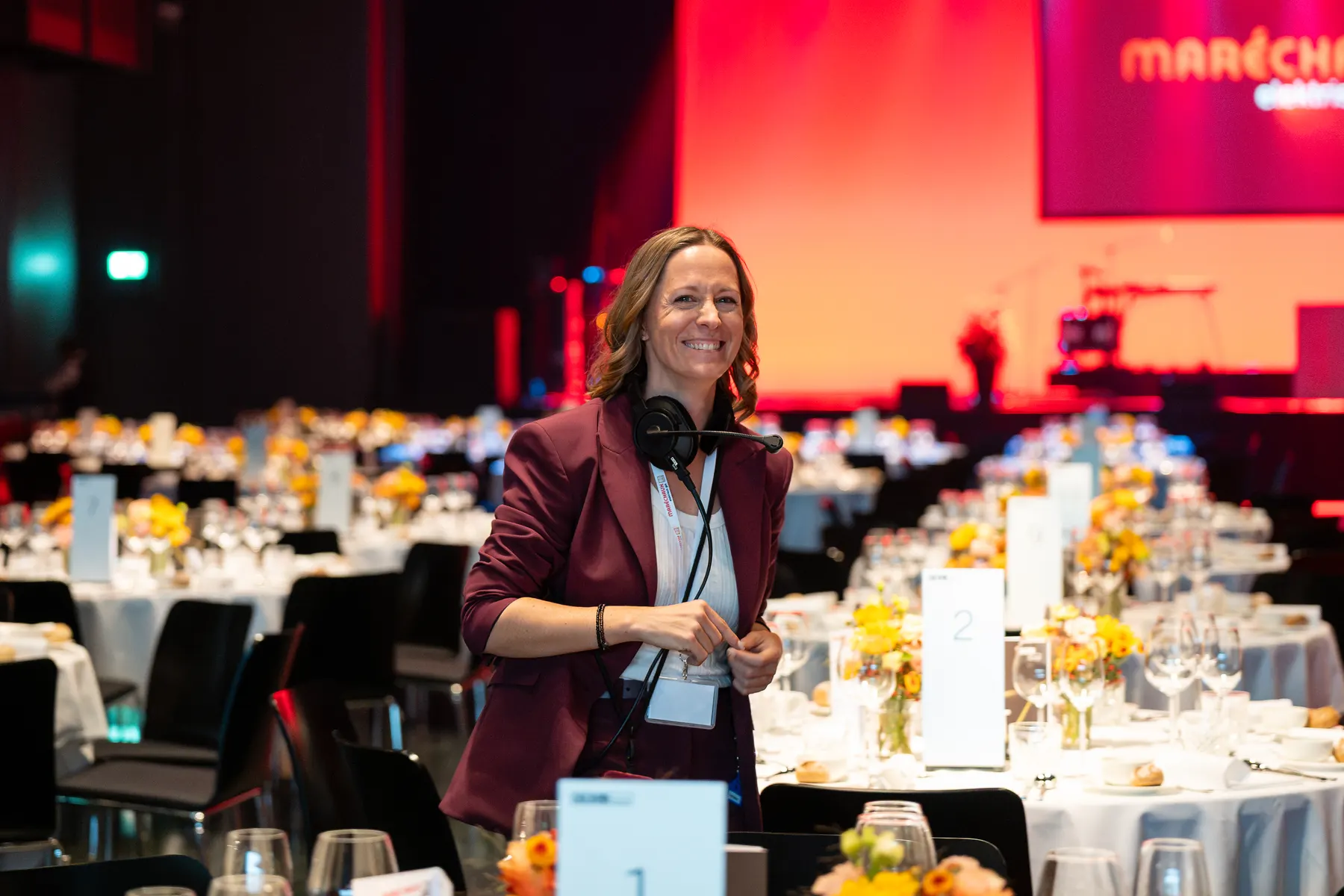
What Clients Arrive With
Many clients come to her with the same challenge, she says. An important occasion is coming up, “perhaps an anniversary, a customer event or an employee event,” and they know it should feel special. But they “do not necessarily know what ‘special’ means yet or how to turn an event into a coherent story.” Often there is a program, a venue and some first ideas, and what is missing is the underlying story.
Over 13 years, Vanessa has shaped her approach around three connected pillars: a strong foundation, seamless execution and lasting impact. The foundation brings together the purpose, the audience, the message and the creative concept. Seamless execution depends on precise coordination, dramaturgy and the ability to respond when plans change. Lasting impact is about what guests feel, remember and take away. She works through all three with the client, “from the bigger story and dramaturgy down to the smallest details.”
Once that work is done, she says, the event is no longer a collection of separate program elements. “Everything starts to belong together and becomes an experience for the guest.”
She describes a second change as “a kind of insurance.” Clients know there is “someone there who sees the whole picture, anticipates what could happen and knows what to do if something changes.” On the day itself, she says, that feeling is valuable: “Instead of managing their own event, they can actually be hosts and enjoy it with their guests.”
Where Curation Fits
One misconception in her field, Vanessa believes, is that an event is mainly about organization and administration. Planning and project management remain essential, but they are the foundation rather than the goal. She still identifies with the term event curator: someone who selects and connects the right people, ideas, sensory details and moments into a coherent whole. Curation, though, is one part of her work. Through creative direction, dramaturgy and precise coordination, she turns those elements into an event experience that feels authentic to the company and meaningful to its guests.
An event is an experience, and experiences are created through nuances. How does a room feel when you enter it? What do you hear? How loud is the music? What is the temperature? What do you smell?
Her list goes on to the lighting and what happens at which moment, to where anticipation builds and where a surprise belongs. “And most importantly: how do we want people to feel?” she asks. “All of these details affect our senses and emotions.”
How She Measures an Event
Other measures matter too, she says, depending on what an event is for: “customer retention, feedback, sales opportunities or engagement.” But “when somebody remembers how an event made them feel several years later, that tells me we created something with real impact.”
She sees a similar change in her clients. At the beginning there can be uncertainty, because they can’t yet picture what the individual ideas will become. At the end, she says, there is often “a real sense of pride.” They look around and realize: “this represents us. This is ours.” She names that change as one of the reasons she loves what she does, and the instinct behind it goes back to the house she grew up in.
Where the Hosting Comes From
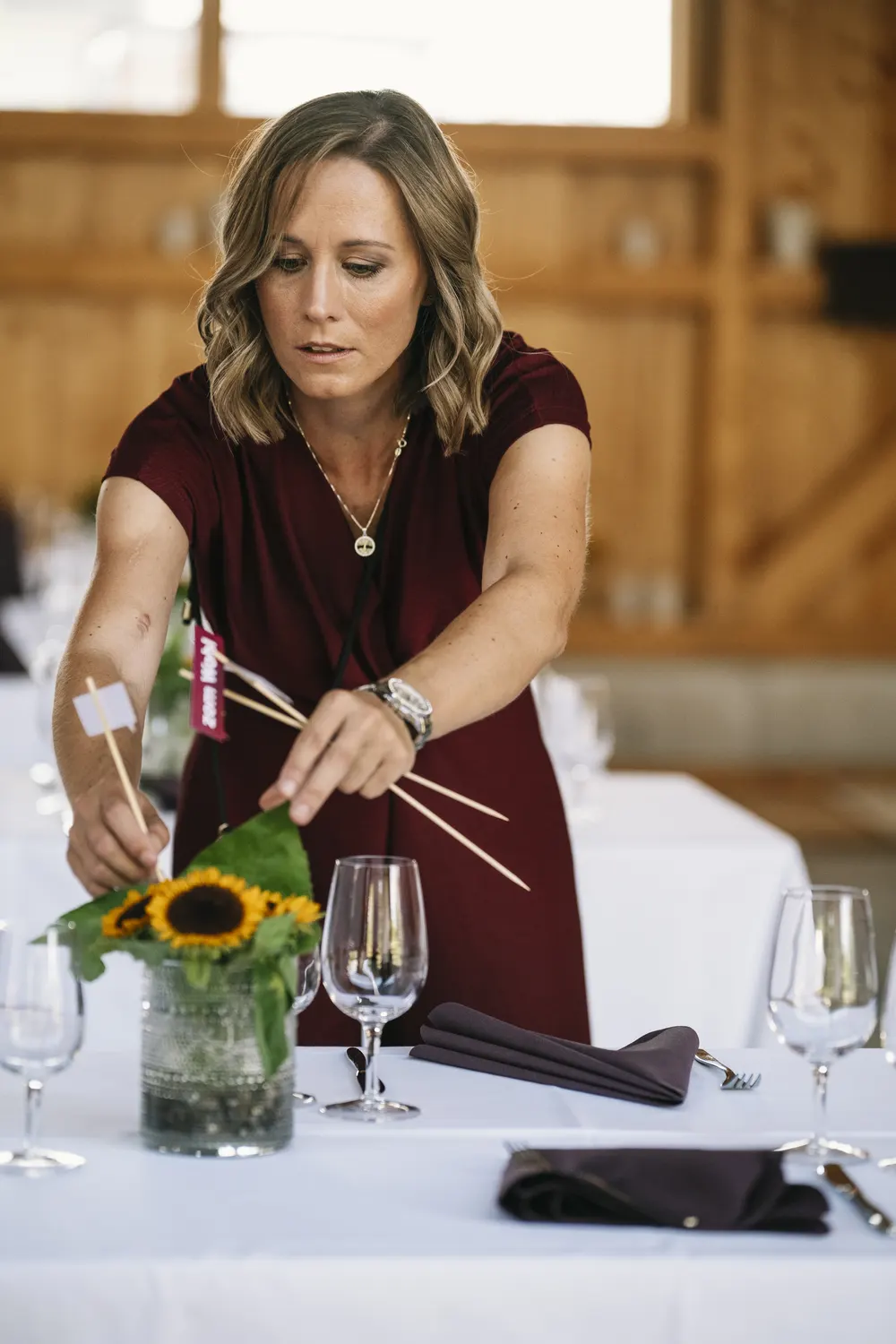
Asked who shaped her, Vanessa doesn’t name one person. She names her family. She grew up on a farm in a multigenerational household, with her parents, siblings, grandparents and great-grandmother. “Our home was always a place where people came together,” she says. “We regularly had guests, and welcoming people was simply a natural part of everyday life.” The family also put on gatherings and celebrations of its own, so bringing people together was something she knew from a very young age. Without realizing it at the time, she says, she learned many of the principles that still define how she works.
Hospitality was simply part of life. So were reliability, responsibility, being hands-on and going the extra mile when something needed to be done.
Looking back, she sees the values of her work today already present in that childhood: hospitality, responsibility, attention to detail and making people feel genuinely welcome. They are still at the center of how she works with clients. “Hosting is not a role you switch on at an event,” she says. “It is an attitude.”
“In a way,” she says, “my passion for creating experiences started long before I ever worked in the event industry.”
How She Got Here
Once she did enter the industry, she names three turns. The first was choosing tourism: “I have always been fascinated by experiences, people and hospitality,” she says, and studying tourism gave her a foundation in an industry where all of those come together. The second was working as a project assistant at WOEHRLE PIROLA, which gave her practical experience and showed her what professional project work looks like. It also helped her realize quite early that she wanted to “take responsibility for my own ideas and create things in my own way.”
The biggest turn came in 2013, when she started her own agency at 23, directly after her studies. Looking back, she says, she probably had less fear than she would have had if she had waited another ten years. “I simply started.”
I simply started.
Over the following 13 years her work evolved with every project. Her real strength, she came to see, was not simply organizing events.
It was seeing the story, reading a room, understanding what an audience needs and bringing all the individual elements together into one experience.
That realization led her to focus more deliberately on creative concepts, event experiences, dramaturgy, curation and hosting. Vanessence reflects that evolution. The “essence” in the name is intentional. It stands for “the layer I bring to an event that goes beyond logistics”: atmosphere, storytelling, emotion and the details that make an experience feel coherent.
The Hardest Stretch
COVID, she says, was undoubtedly the hardest professional period. The event industry came to “an almost complete standstill,” and the effects lasted longer than many people outside the industry realized. Even when events became possible again, “budgets had disappeared and companies were cautious about bringing them back.”
She had to “adapt, stay flexible and keep moving instead of waiting for the old world to return.” It also made her think much more deeply, she says, about “where my real value lies and what kind of work I want to do.”
Where Vanessa Is Now
Today her focus lies increasingly in creative concepts, storytelling, dramaturgy and the development of event experiences, with curation, creative direction and hosting as part of that work. She still loves being involved during the event itself. “Reading a room, sensing the atmosphere, adapting to unexpected situations and fine-tuning the experience in real time are essential parts of my work,” she says. “This is also where my experience makes a real difference.”
What she would increasingly like to move away from is managing every operational detail. Her ideal role combines creative direction and event dramaturgy with hosting or moderation, while making sure the original vision truly comes to life. Her experience in planning and directing complex events is what lets clients be present with their guests.
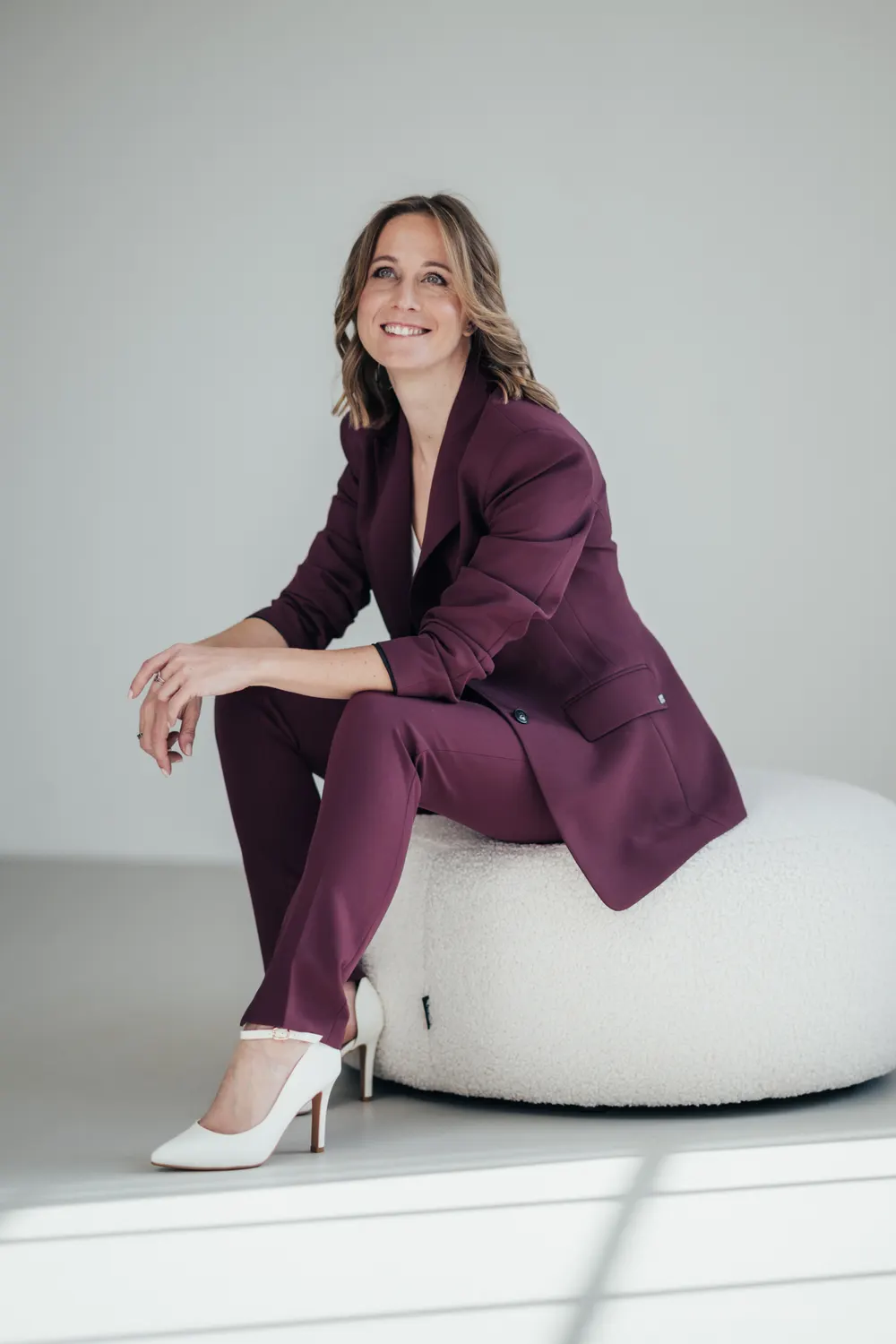
Over the next twelve months, she would like this article to introduce Vanessence to more companies and premium brands that want to create something distinctive with their events. Her ambition is to develop more bespoke event experiences in which concept, atmosphere and execution work together.
She makes room for inspiration on purpose. She goes to concerts and cultural events, spends time in nature, listens to music, reads and watches films. A film, she says, can teach you a great deal about dramaturgy: “when to create tension, when to slow down, when to surprise someone and how to make people feel something.” For her, creativity doesn’t happen at the desk by telling herself to be creative. “I need to experience things myself in order to create experiences for others.”
She puts her philosophy in one line: “I don’t create events for people to attend. I create experiences they carry with them.”
The Playbook
Five Lines from Vanessa’s Diary
- An event is an experience, and experiences are created through nuances.
- And most importantly: how do we want people to feel?
- Success is when people felt something.
- Hosting is not a role you switch on at an event. It is an attitude.
- I need to experience things myself in order to create experiences for others.