

From the Diary of
Justine Brogna
How a clinician grew a mental health practice to six clinics without leaving the consulting room, and what that asks of anyone building something around people.
“I want to build something that changes lives without losing sight of the individual life in front of me.”

Growth pulls a founder towards the operational side of an organisation: onboarding, finances, governance, and the run of decisions it takes to keep a business working well. In most companies that’s simply the job. In a business built on care, it carries a quieter risk. The person who started it can end up a long way from the work it was built to do.
TreeHaus is a medical and allied health practice for mind, body and movement, with six clinics across Melbourne and Victoria, more than 50 practitioners, and care for children, adolescents, adults, couples and families. Its founder and CEO, Justine Brogna, still consults with patients three days a week. Through TreeHaus, she has developed a multidisciplinary model of care, bringing together mental health, medical and allied health professionals to support individuals and families across the lifespan.
“The biggest challenge is ensuring that the organisation’s growth never distances me from the clinical realities that inspired me to build it in the first place,” she says. She’s an Accredited Mental Health Social Worker and Registered Psychoanalyst with more than two decades in clinical mental health, and she founded TreeHaus, she says, because “I wanted to contribute to something bigger than my own clinical practice.”
Six Clinics, Three Days a Week
Continuing to see patients is how she keeps that connection. When you’re working directly with people, she says, “you are constantly reminded that mental health is not an abstract concept, a business metric or a service category.”
She doesn’t dismiss the other side of the job. Onboarding practitioners, finances, governance and growth are essential, she says, “because a sustainable organisation creates opportunities for practitioners to do their best work. But I never want the business to become more important than the purpose behind it.”
The other half of the answer is trust. “You cannot build a sustainable organisation by trying to be the person who does everything,” she says. “You have to create an environment in which skilled professionals feel supported, respected and able to exercise their clinical judgement.”
For me, leadership is not about being the most important clinician in the room. It is about helping create the conditions in which excellent clinical work can happen across the organisation.
Values don’t make every decision easy. Building a “values driven” organisation, she says, “does not mean every professional relationship or business decision will unfold as you hope.” “I return to the facts, consider my responsibilities, seek the appropriate advice and focus on what needs to happen next.”
Her training sits under all of it. “My background as a mental health social worker and my postgraduate training in psychoanalysis have shaped the way I lead,” she says.
Her understanding of mental health didn’t start in a clinic, though.
Both Sides of the System

“I’ve spent my life on both sides of the system,” as she puts it on her profile, “first as a daughter caring for a mother with a serious mental illness, and later as a clinician working in public psychiatry.”
Before social work, there was dance. In 1996, at 16, she started her own dance business as a sole trader, and until 2003 she worked as a choreographer and commercial dancer in Melbourne’s entertainment clubs and as a back-up dancer for Australian singers and performers.
She studied psychology and disability studies at Deakin University and social work at the University of Melbourne, finishing in 2002. From 2002 to 2009 she worked at the Inner West Area Mental Health Service, in both hospital and community based services. Her graduate post was on the psychiatric inpatient ward at the Royal Melbourne Hospital, and in the community she carried a case load of more than 30 patients with serious and chronic diagnoses. From 2007 she led a team of 11 clinical case managers for two years.
In 2006 she opened her own private practice, Wellness by the Bay, across practices in Hobsons Bay. She began her psychoanalytic studies at the Australian Centre for Psychoanalysis in 2009, worked with adolescents and their families at Headspace, and founded TreeHaus in Williamstown in 2014. She was a national finalist for Social Worker of the Year in 2024 and 2025.
The person who shaped her work life most was a loved one.
Lucy
Justine founded Walk a Mile in My Shoes in 2018 in honour of her mother, Lucy, “who lived with schizophrenia for 22 years and died in 2019, aged 62.” “Her experiences gave me a deeply personal understanding of the realities of serious mental illness,” she says, “not only for the person experiencing it, but also for their family and the people who love them.”
My mother was more than her diagnosis. She was a person with a life, relationships, experiences and a place in our family.
Lucy’s story shaped her determination to challenge the stigma around mental illness and to make room for people to speak openly about their experiences. Both TreeHaus and Walk a Mile in My Shoes, she says, grew out of a wish to honour those experiences and to create a community of services people could reach when they needed them, “as I saw services were often unavailable to her when she needed them.”

“For me, this work is about turning something deeply personal into something that can benefit others,” she says. “Her legacy is woven into the reason I do this work.”
Green in Williamstown
Walk a Mile in My Shoes is a TreeHaus community development project. Each October, for Mental Health Month, more than 1,000 people walk in Williamstown wearing green, the colour for mental health. Funds go to primary and secondary schools to build wellbeing retreats, spaces students can go to in times of distress, anxiety or sensory overwhelm, and the project has raised more than $250,000 since 2018. This year’s walk, on 18 October, raised another $31,000. It set off from the Williamstown Italian Social Club along the Esplanade, and the morning closed with a cheque presentation for an outdoor sensory calm space for school students.

It began as a way to honour Lucy, with broader aims as well: “to help reduce the stigma often associated with mental health issues and with the hope to improve mental health service delivery in Australia by raising awareness and much needed funding.”
“One of the most important things it has taught me is that mental health cannot be addressed by clinicians alone,” she says. Families, schools, workplaces, friendships and local communities, in her view, “can either reinforce stigma or they can significantly help people feel understood and included.” When people share lived experience, “Someone who has felt alone may realise that they are not the only one.”
“I bring that understanding into TreeHaus by recognising that people do not exist in isolation,” she says. “Their relationships and environments matter, and effective care often requires us to think beyond an individual appointment.”
What Patients Expect From Treatment
One misconception she encounters, she says, is “the belief that mental health treatment is simply about identifying a problem and finding a technique to make it disappear.” She doesn’t dismiss practical strategies, symptom management or evidence-based interventions, which “can be incredibly valuable. But human distress is rarely as simple as a problem that can be isolated from the rest of a person’s life.”
Many people arrive believing they should already be coping better, or that needing help means they’re somehow failing. Others have spent years managing alone before they reach a point where they can’t. National figures point the same way. Of the 4.3 million Australians aged 16 to 85 who had a mental disorder in the previous 12 months, the Australian Bureau of Statistics found in its 2020–2022 study that fewer than half, 45.1 per cent, saw a health professional for their mental health.
“I think we need to change the way we talk about mental health so that seeking support is not viewed as a last resort or a sign of weakness,” she says. “It should be understood as a legitimate and sometimes necessary part of being human.”
It should be understood as a legitimate and sometimes necessary part of being human.
Symptoms, she says, need to be understood in context. “Our multidisciplinary model allows us to consider the person more broadly and connect them with appropriate practitioners and services,” she says.
Her psychoanalytic training adds a further belief, she says, that “people deserve to be understood, not simply managed.”
The same thinking applies, she says, to the people doing the work.
Supervision, a Run, a Dance Class
“I think it is important to acknowledge that working in mental health does not make you immune to the pressures of being human,” she says. She has a long-standing commitment to her own psychotherapy and to regular clinical supervision, which give her a space to reflect on her experiences and, in her words, “prevent myself from burn out as much as possible.”
Leaders, she believes, need to be willing to acknowledge their own limitations. Capacity, she says, “is not unlimited, and constantly pushing beyond it is not a sustainable model of leadership.”
If the business can only function when one person is carrying everything, then the structure itself may need to be reconsidered.
Alongside supervision and therapy, she makes time for a run, a walk or a dance class, which she says “help me immensely to release the many pressures that can become pent up or held within the body.” She takes a mind-body approach to her own health, and it is the premise on which she built TreeHaus, a multidisciplinary practice for mind, body and movement.
“For me, this is an ongoing practice rather than something I have perfected,” she says.
Where Justine Is Now
TreeHaus now has clinics in Williamstown, Newport, Albert Park, Forest Hill, Altona and Werribee, and was named Victorian State Winner in the Telstra Best of Business Awards. Her aim is to keep growing the reach of both TreeHaus and Walk a Mile in My Shoes “while ensuring that growth never comes at the expense of the values that underpin them.”
She’d like this piece to open doors to “meaningful collaborations, broader conversations about mental health, and opportunities to influence how organisations and communities understand psychological wellbeing.” She speaks on mental health leadership and lived experience. She is also developing a book about her experience as both clinician and carer.
The reader she has in mind is a founder, executive or decision-maker “who wants to build something commercially successful without losing sight of the people, purpose and values that make it worthwhile.” “Ultimately, I want to demonstrate that commercial leadership and compassion are not opposing forces,” she says. “You can build a successful organisation while remaining deeply committed to the human beings at its centre.”

Outside work, the centre is her family. “My family is central to who I am outside work,” she says. “I am ambitious and deeply committed to what I have built, but I also want a life in which I am present for the people I love. I believe success should create a richer life, not simply a busier one.”
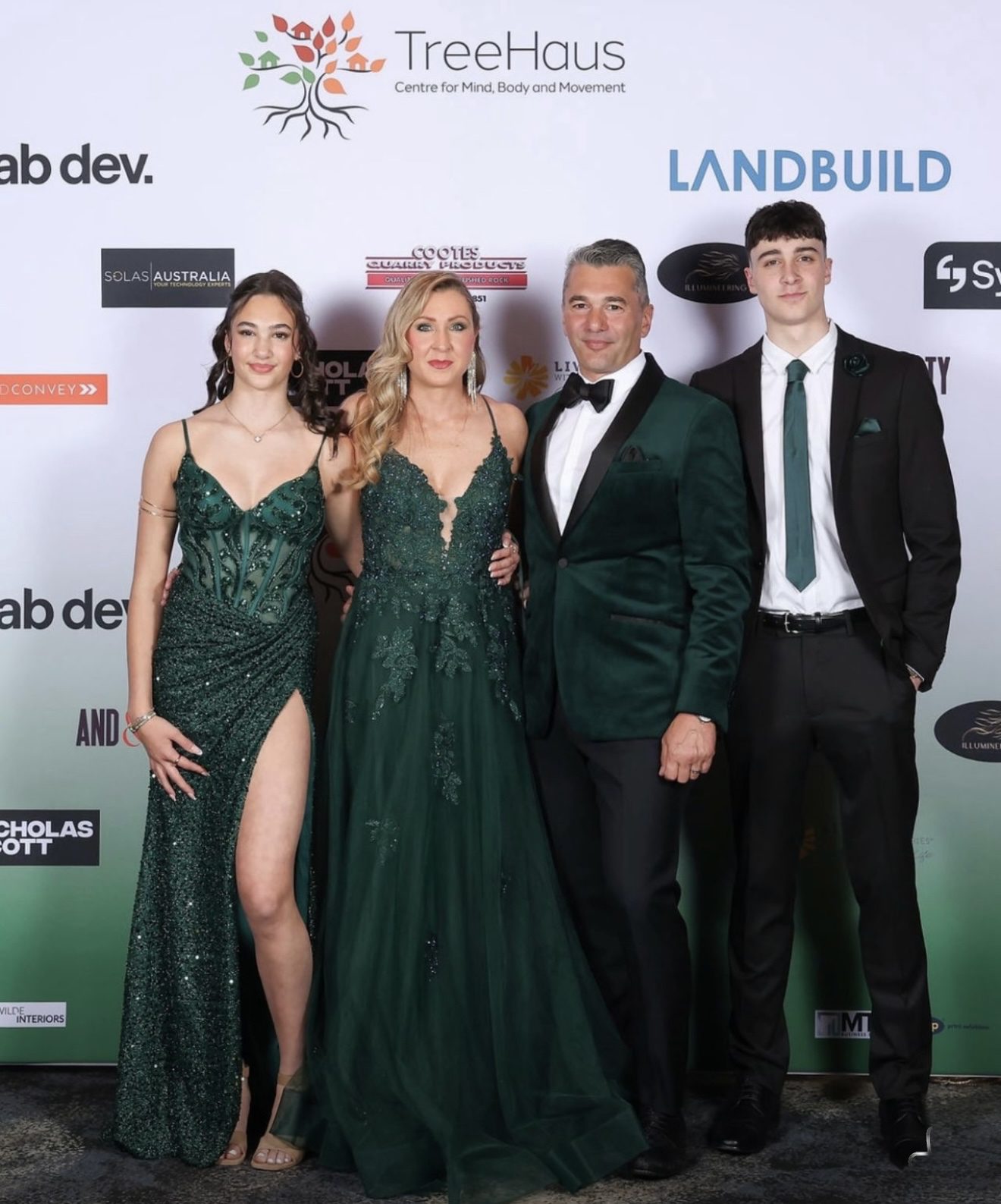
I believe success should create a richer life, not simply a busier one.
Then there is the sea. “The ocean has always been my place of restoration,” she says. “Whether I’m walking along the beach or simply sitting at the water’s edge, being near the sea allows me to reconnect with myself and with nature. It’s a time when I can slow my thoughts, calm my body and nervous system, reflect, and simply be present in the moment without needing to do or achieve anything.” “For me, the sea is more than a place I enjoy visiting; it’s a place where I find balance, clarity and a sense of connection to the bigger picture of life,” she adds.
She sums up the work in one sentence of her own. “I want to build something that changes lives without losing sight of the individual life in front of me.”
The Playbook
Five Lines from Justine’s Diary
- Leadership requires the ability to learn from difficult experiences without losing sight of the values that guide you.
- Clinical expertise and lived experience are different forms of knowledge, and both can contribute something important.
- Two people may present with similar symptoms but require very different approaches to treatment.
- I don’t think protecting your mental health means you will never feel overwhelmed or experience periods of difficulty.
- I need to extend some of the same compassion to myself that I encourage others to extend to themselves.

