

From the Diary of
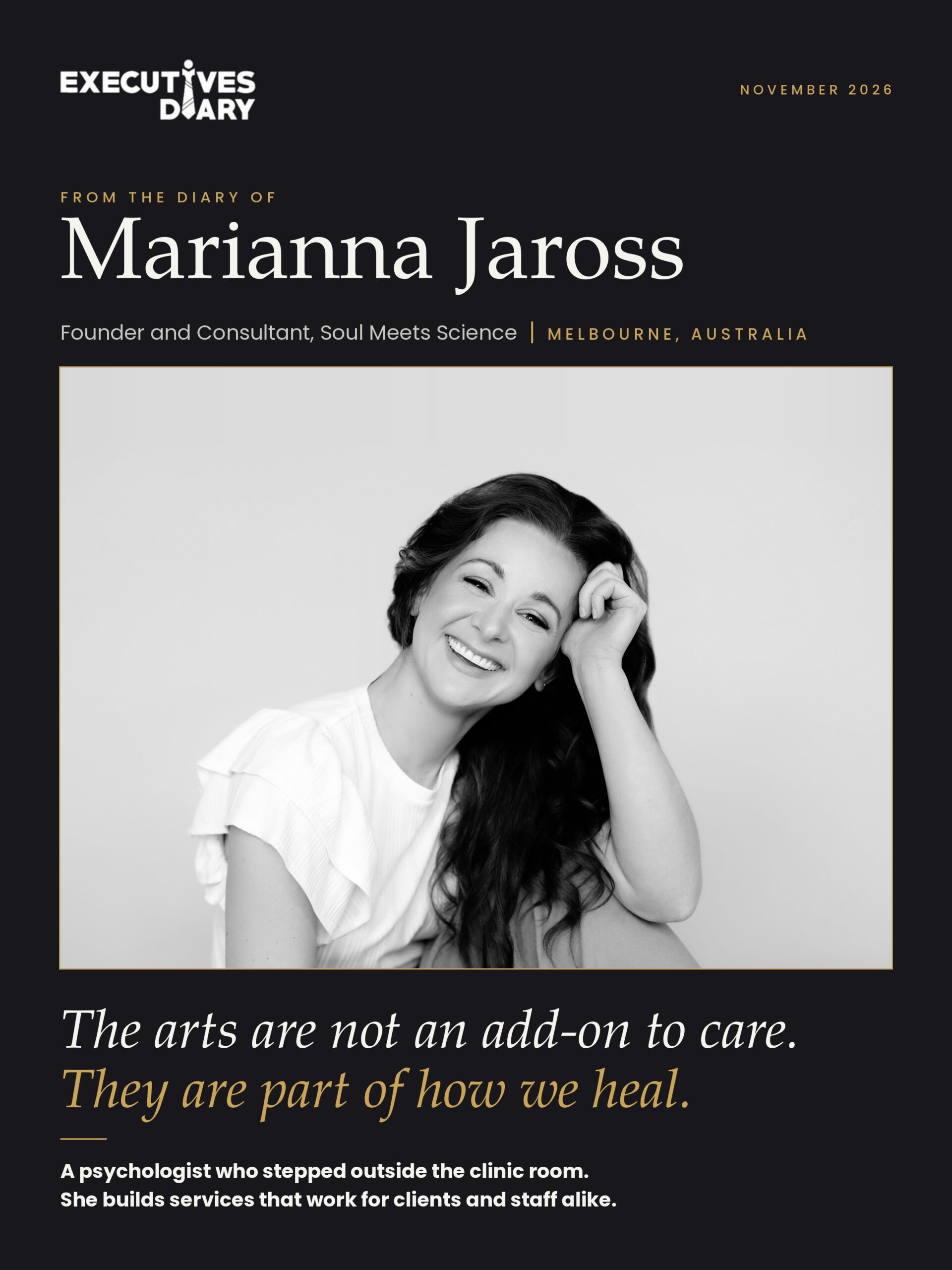
Marianna Jaross
For organisations building wellbeing services that have to work for clients and staff alike: a psychologist’s case for trauma-informed care with creativity built in.
“Community, connection, and creativity are forces that can help us heal and live well.”
“Perhaps another course? Perhaps another training program or interest area? Perhaps if I open my own practice, it will feel different? Perhaps perhaps perhaps.”
That is how one Melbourne psychologist describes the bargaining phase she has seen in colleagues who are burnt out and tired, sometimes for years before they give up their practice. She doesn’t dismiss the value of taking a break and recalibrating. “But I think there is a deeper need to recognise the magnitude of what therapists, counsellors and psychologists are holding; and whether this is sustainable for decades to do this work,” she wrote recently.
The research suggests the pattern is real. In a survey of 469 registered psychologists in late 2022, researchers at the Australian National University found 26.4% reported burnout, with a further 34.5% in danger of it. Almost half (44.8%) had changed job sectors or roles since 2019.
The psychologist is Marianna Jaross, founder and consultant at Soul Meets Science. Through it she works with purpose-driven organisations on content, research, program and service design, and collaborative projects, helping them build trauma-informed and holistic practice. The aim, as she puts it on her profile, is services that “feel supportive for clients and sustainable for staff.” Her argument, made across her writing, is that the arts belong in that work as an essential part of our health infrastructure, not only as therapy.

Outside the Clinic Room
Marianna completed a Master of Psychology (Professional) at Curtin University. With the training, she says, came a sense that her work extended past it. “I completed my training as a psychologist, and also felt that I had more to say and do outside of the clinic room in terms of advocacy, the patterns I was noticing, and where I think we need to move towards in healthcare and in our approach to healing.”
Her profile traces the roles. She worked as a psychologist at Ovarian Cancer Australia from 2022 to early 2024, and as Knowledge Translation Lead at Blue Knot Foundation in the first months of 2024. She has worked as a writer and consultant under her own name since 2023, the same year she completed a Certificate of Art Therapy at the College for Educational and Clinical Art Therapy. In July 2024 she founded Soul Meets Science, which, she says, “initially started as a telehealth service to provide clinical care, and has since evolved; and will potentially evolve again.” In 2025 she spent several months as Student Wellbeing Manager at Collarts (Australian College of the Arts).
All of the turns mattered, even if they only made sense retrospectively: I am still making turns!
She doesn’t present the path as a plan that worked out. “My career has been less conventional than I thought it would be, but I’m learning a lot as I go!”
One of those turns she names above the others.
Letting Go, for a While
The turn that mattered, she says, was an acceptance: “accepting that clinical practice is not where I see my career long-term at this stage, moving further into writing and advocacy, and holding the vision that I have in my heart for what I would like to create moving forward.”
She is just as plain about her hardest moment. “A hard moment for me was letting go of my registration as a psychologist for a few months: I felt so lost in my career that I did not know where to take it.” She picked it back up, she says, and is “continuing to try to find a way of work that works for me.” She has written about this publicly, and has spoken about it in a podcast interview that is still to be released.
Among her favourite things, she wrote in September, are psychologists talking about their lived experience. “We are also human.” Another is workplaces that are curious and supportive about psychologists contributing in ways outside of the clinic room.
Her advocacy reaches the shape of the profession too. In a November post on the Soul Meets Science site, she argued that compressing psychologists’ training into a single degree would not on its own fix the workforce shortage, which she links to a lack of supervisors, poor retention in regional and remote areas, and existing mental health professions being underused. Her call is for a cross-profession approach rather than change made in silos.
“You Should Try It”
During her first Master’s degree, Marianna had a supervisor who, she says, “was always encouraging of my varied interests and supportive of my career.” Other people were telling her the opposite. He encouraged her to keep thinking outside the box and to pursue her interests.
“He tended to have an approach of ‘you should try it,’ and would point out if I was beginning to talk myself out of opportunities that came my way,” she says. “I was very lucky that our paths crossed.”
I was very lucky that our paths crossed.
Her consulting work today begins somewhere practical.
How She Builds a Program
Asked about one organisation she has worked with, Marianna describes a mental health and wellbeing program that had to meet multiple needs in a thoughtful and trauma-informed way. There was no comprehensive service in place.
She started with what already existed: an analysis of what had been done before, the relevant data, and conversations with people across the organisation to gather feedback from “on the ground” about service gaps, alongside the longer-term vision for a new program. From there she set up processes, formed partnerships with external referral supports, advised executive leadership and worked across teams. The program she worked towards was trauma-informed, with “the elements of safety, choice and consistency,” and holistic, “viewing people through a humanistic lens, and offering a range of support options that could meet their needs.”
She has written about the principles more broadly too. “I believe trauma-informed care is about safety, connection, and choice,” she wrote in September. “I also think the next stage of the evolution in this space is about creating opportunities for creativity, and healing on a deeper level.”
Creativity is where her argument goes next.
The Arts as Infrastructure
Marianna separates two ideas. Creative arts therapies, she says, have an evidence base and can include music, art, dance and drama therapy. She has written that she has witnessed the impact of expressive arts therapies across the lifespan, and that “there is enough research to justify such programs and positions as not merely add-ons or adjunct supports, but as an integral part of healing.”
Arts as health infrastructure is broader: “having access to the arts; services, programs, and initiatives where we can engage with the arts, and potentially reap the positive benefits of this in our health and wellbeing.” The wider evidence points the same way. A 2019 World Health Organization scoping review drew on more than 3,000 studies and identified a major role for the arts in preventing ill health, promoting health, and managing and treating illness across the lifespan.
I believe that community, creativity, and connection have the power to heal and bring us together; and the arts can be a beautiful way to facilitate this.
She sees the field moving. “Arts and health is moving!” she wrote in September, and combined with trauma-informed care, “I think we have a real opportunity to create new supportive spaces.”
Where Marianna Is Now
Marianna has had some challenges figuring out what goes where within her services, and finds her ideas expanding quickly.
Soul Meets Science started off as telehealth, and turned to consulting working with purpose-driven organisations and individuals on content, research, program and service design, and collaborative projects. She has dreams of turning Soul Meets Science into a bigger service working with others across the arts and health intersection with a physical location bringing the pieces of the puzzle together. Her own site, mariannajaross.com.au, is about to be refreshed to bring all of her independent work and interests under one umbrella. She has also written a book, and has been raising support for it.
The readers she hopes this piece reaches are people curious about what she is building: organisations that want to hire her for consulting or short-term project work, people who want to include her in their arts-health initiatives, and partners for her “bigger picture vision.”
That vision is specific. “I am wondering when we’re going to start building clinics and practices that integrate all of this into one place, and provide avenues for healing and connection,” she wrote in August. “If you’re doing something in this space, please reach out. I can’t hold the dream by myself!”
Outside work, she says, she is learning to keep a healthy routine during hard seasons of life, and to nurture her friendships. “I think no matter how important our work is or how passionate we are about it; our relationships also need to be tended to.”
The line she lives by is the one her work keeps returning to: “community, connection, and creativity are forces that can help us heal and live well.”
The Playbook
Five Reflections from Marianna
- What are the people doing this work holding? Marianna’s question for her own profession is whether the weight of it is sustainable for decades.
- Who have you asked on the ground? Her program work began with what had been done before and with feedback from people across the organisation about service gaps.
- Is there safety, choice and consistency? These are the elements she built towards in a trauma-informed wellbeing program.
- Where are the arts in your service? She sees access to arts services, programs and initiatives as part of health infrastructure, not only as therapy.
- Are you talking yourself out of it? The supervisor she was lucky to have usually answered with “you should try it.”

