

From the Diary of
Christian Steiner
The independent owner of Home Instead’s Manhattan franchise has built his agency around the day after a hospital discharge, and the professionals who trust him with it.
“A referral is never just a name. It carries your client’s trust and, in many cases, your reputation.”
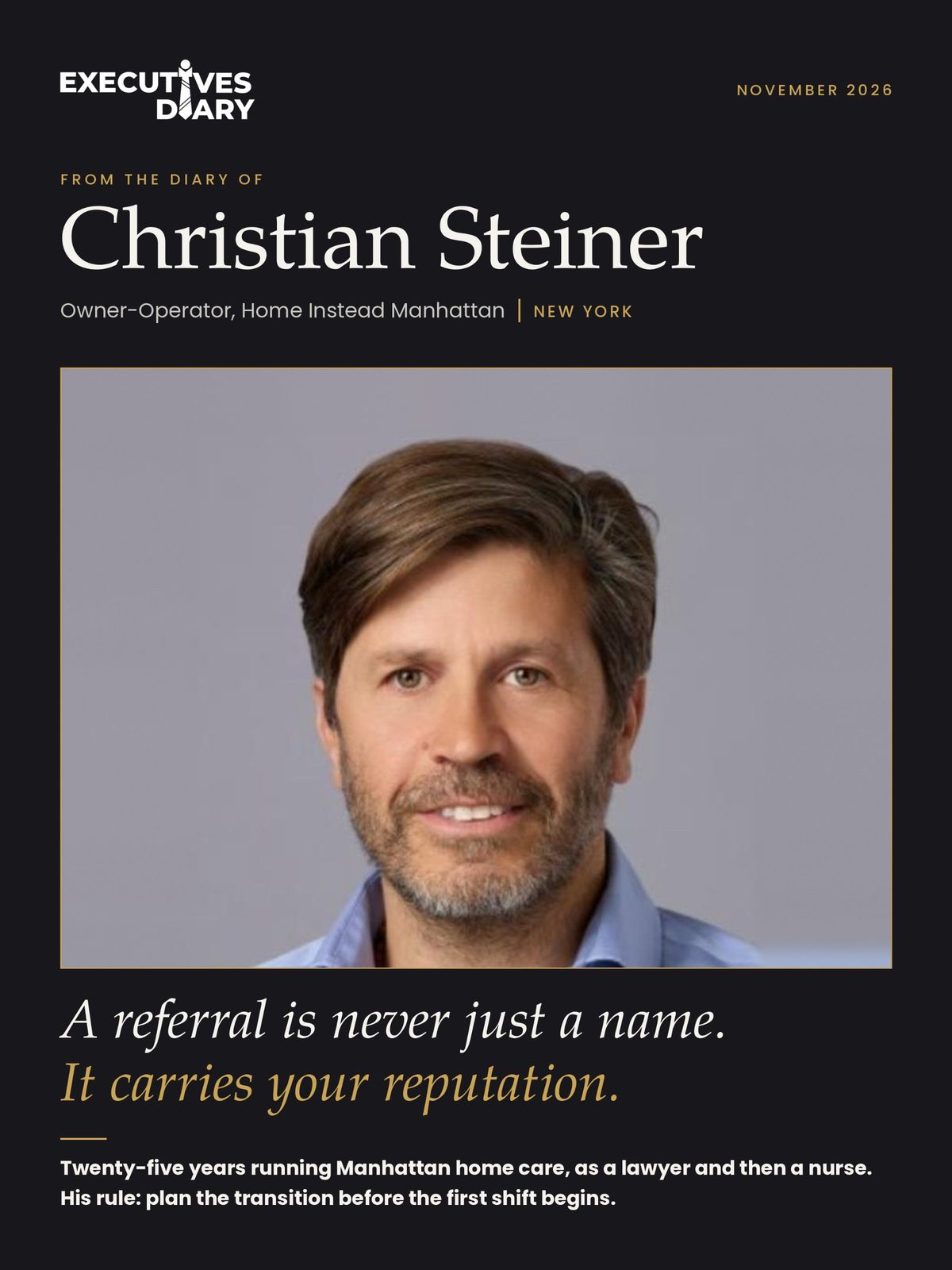
Christian Steiner often talks about the day after discharge. The emergency may have passed. The hospital may say an older adult is ready to go home. But for the family, that can be the moment when the questions multiply: Who is managing medications? Who is coordinating follow-up appointments? Is the home safe? Who will notice if something changes tomorrow, or three days from now?
Research underscores the vulnerability of that transition. A large cohort study of older adults found that falls at home were most likely during the first week after an acute-care hospitalization.
Christian has spent much of his career thinking about what should happen next. He’s the independent owner-operator of the Home Instead franchise serving Manhattan, a New York State Department of Health-licensed home-care agency he opened in 2002. Today the agency serves well over one hundred clients at any given time, around the clock, supported by Care Professionals, nurses and a multidisciplinary service team. For him the work is about becoming a trusted resource when families, and the professionals advising them, need confidence that someone will take ownership of what happens next.
When a Referral Carries a Reputation
Families come to Home Instead Manhattan directly through word of mouth, Google, online reviews and other consumer channels. The agency is rated 4.8 on Google and 5.0 on Caring.com and AgingCare.com (as of Nov 2026). Christian describes relationships with professional advisors as an important part of the agency’s work: elder-law attorneys, Aging Life Care Professionals and geriatric care managers, physicians, nurses, fiduciaries and wealth advisors. He believes those referrals carry an added responsibility.
“When a professional refers a client to us, they are entrusting us with both that client’s well-being and, in many cases, their own professional reputation,” he says. He made the same point in a post on LinkedIn:
A referral is never just a name. It carries your client’s trust and, in many cases, your reputation.
His background helps those relationships develop naturally. Having practiced as an attorney, earned an MBA in finance from NYU Stern and later trained as a nurse, Christian often finds a common professional language with the attorneys, financial advisors, nurses and other professionals involved in a client’s care. “It makes the conversation easier,” he says. “There is often an immediate understanding of the issues they are concerned about, whether they are clinical, financial, legal or operational.”
The goal isn’t simply to receive a referral. It’s to become a resource those professionals can trust with complex situations, handled with discretion and accountability. For Christian, the value the agency offers them often comes down to two words: peace of mind.
Planning Before the First Care Professional Arrives
Christian believes a successful transition home begins before the first shift. The agency’s intake process is designed to understand not only the requested schedule but the broader circumstances around the client: individual care needs, home-safety considerations, medications, family dynamics and practical risks that could get in the way.
“A successful transition home requires much more than simply arranging for a caregiver,” he says. “You have to understand the full picture, anticipate risks and establish the right plan from the outset.” It reflects a philosophy he returns to repeatedly: being proactive rather than waiting for a problem to become a crisis.
Active Nursing Oversight From Start to Finish
That proactive approach continues throughout every shift. At Home Instead Manhattan, our nursing team stays actively connected throughout each shift. Care Professionals provide real-time updates from the home, which lets the nurse stay connected to the care being delivered, recognize developing concerns, provide guidance and help coordinate intervention when appropriate. Christian sees an important distinction between monitoring care after the fact and overseeing it while it is happening.
“Our goal is to provide value while the care is happening,” he says. “The best problem is often the one you identify early enough that it never becomes a crisis.”
The best problem is often the one you identify early enough that it never becomes a crisis.
That lets the clinical team anticipate concerns rather than review an end-of-shift report and respond after something has already gone wrong. “Our philosophy is proactive rather than reactive,” he says. For families and professional advisors, a thorough intake and real-time nursing oversight add another layer of confidence.
A Connection to Older Adults That Started at Home
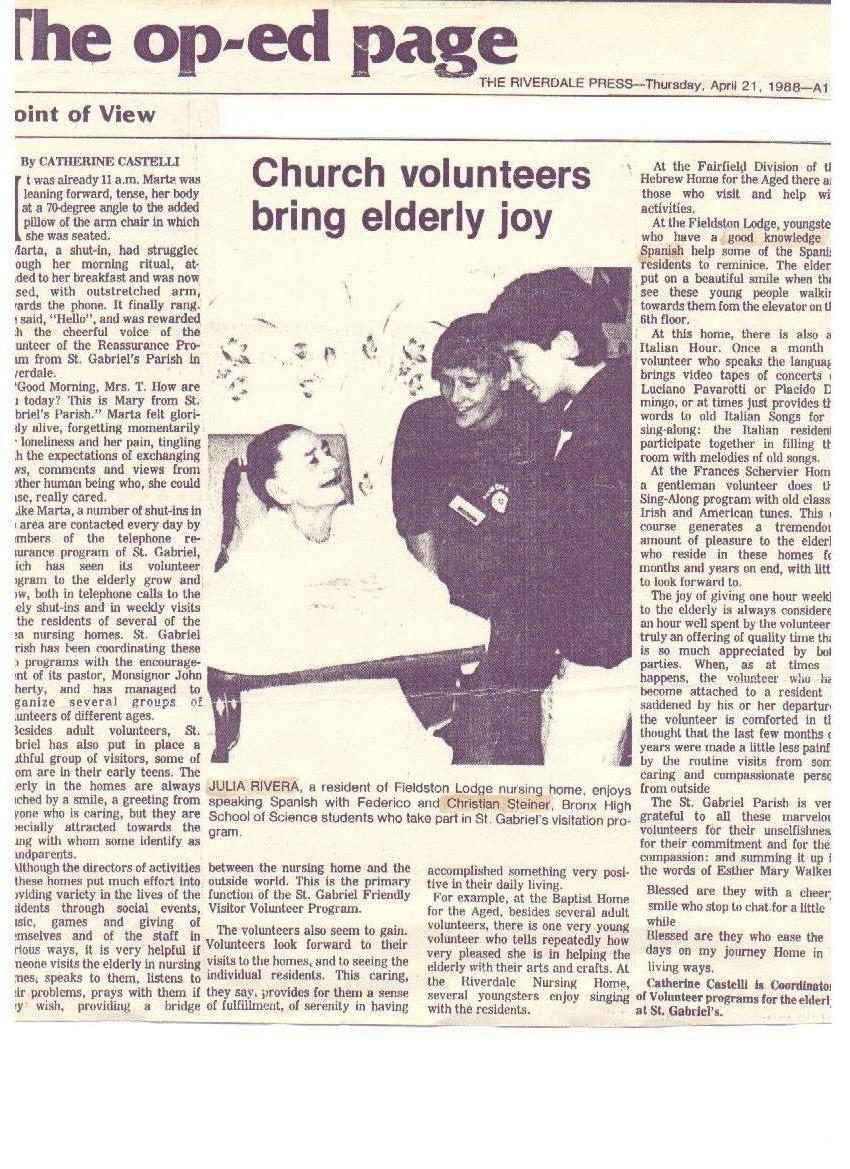
Christian’s relationship with older adults began decades before he entered the home-care industry. His parents immigrated from Argentina, and his grandmother lived with the family throughout his youth and well into his adult years. Growing up with her gave him an early appreciation for helping older adults remain connected to family while keeping their dignity and independence. As a teenager, he volunteered in a nursing home through his church.
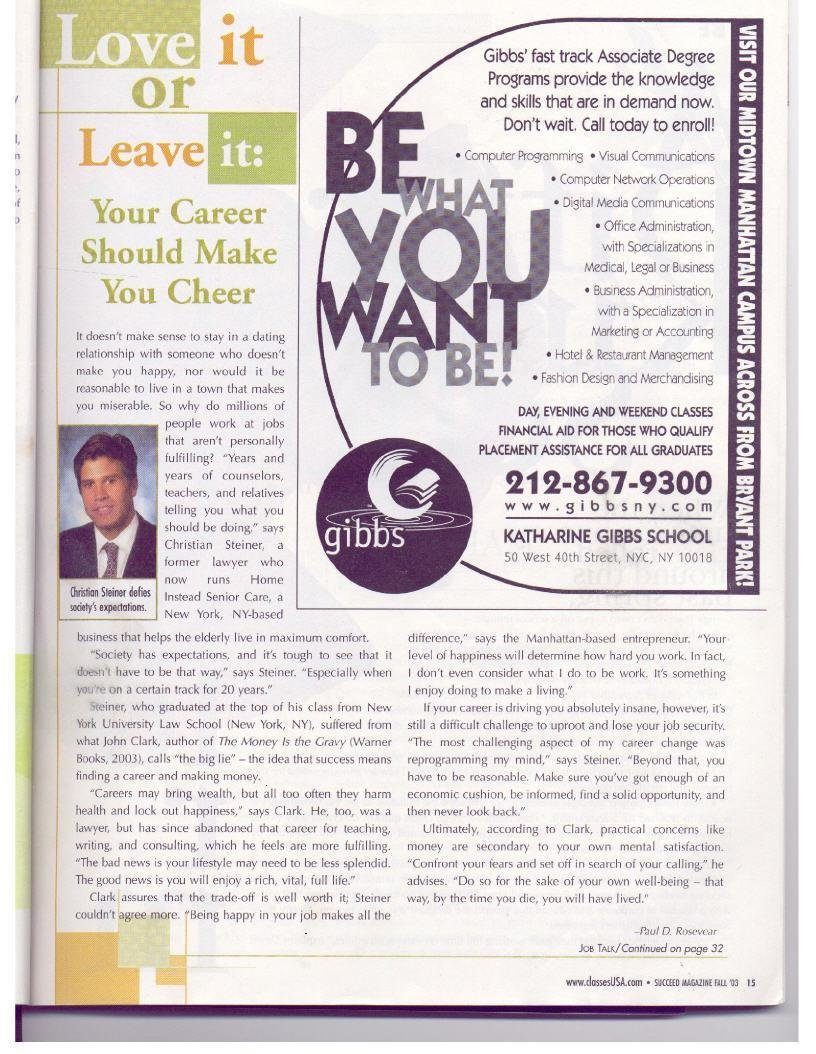
He expected healthcare to become his profession in another way. He attended the Bronx High School of Science and entered New York University as a pre-med student with plans to become a physician. His path changed, and he earned a JD from NYU School of Law and an MBA in finance from NYU Stern before starting his career as an attorney. Over time he realized he wanted to build and lead an organization rather than spend his career advising others about theirs. In 2002, he opened the Manhattan Home Instead franchise.
About ten years later, while continuing to run the growing agency, Christian decided that leading a healthcare organization at the level he envisioned required a deeper clinical perspective. He returned to school and became a nurse. “It was challenging, but it was one of the most rewarding decisions of my career,” he says. The experience gave him another lens on risk, changes in condition, clinical oversight and the relationship between what happens in a client’s home and the larger healthcare system.
An Independent Owner in a Larger Network
Christian independently owns and operates the Manhattan Home Instead franchise, which is part of the larger international Home Instead network. Home Instead, Inc., the franchisor, is an Honor company. He sees the structure as a strength: local ownership and accountability, combined with the experience, resources and technology of a much larger organization.
The People Who Walk Through the Door
Inside the agency, caregivers are called Care Professionals, and Christian says the term is intentional. “It reflects the skill, responsibility, compassion and professionalism we believe this work deserves.” Management can create systems, training, technology and clinical oversight, he says, but the Care Professional is the person who walks through the client’s front door, whether to help an older adult begin the day, support someone living with dementia or notice a subtle change that could become clinically important.
“Everything we do behind the scenes is ultimately there to help them succeed in the home,” he says.
The same philosophy applies to his management team. Several members have worked alongside Christian for more than fifteen years, and some for more than twenty. “I may be the owner, but this organization has never been built by one person.”
I may be the owner, but this organization has never been built by one person.
The Attorney and the Nurse
Operating home care in New York means balancing highly individualized client needs with substantial clinical and regulatory responsibilities. Christian, who brings the perspective of both an attorney and a nurse, doesn’t see those obligations as competing priorities.
Our responsibility is to honor both. My legal background gives me a deep respect for regulatory integrity, while my nursing background provides the insight to understand what care looks like at the bedside. I see it as my duty to honor, uphold, and fulfill both aspects fully.
He sees the ability to remain flexible and solution-oriented while maintaining rigorous legal and clinical standards as part of being a trusted professional partner. Compliance, safety, client choice and individualized care aren’t separate goals in his view.
The Blackout, the Storms and COVID
One lesson of running a twenty-four-hour home-care organization in Manhattan is that care doesn’t stop when New York does. Christian has led the agency through the 2003 blackout, major snowstorms, severe weather and the COVID-19 pandemic. Those events require preparation long before the first emergency call arrives: staffing contingencies anticipated, constant communication with families and Care Professionals, and an all-hands-on-deck response when circumstances turn difficult. “Those are often the moments when an organization proves why families trust it,” he says.
COVID reinforced another lesson that permanently affected his approach to leadership. The physical and emotional health and well-being of the agency’s Care Professionals had to be treated as seriously as the health and well-being of its clients, which took an extraordinary investment of time, attention and compassion from the management team.
You cannot sustainably care for clients without caring for the people who care for them.
For Christian, that principle extends well beyond a crisis. Supporting Care Professionals isn’t separate from providing high-quality client care. It’s one of the conditions that makes that care possible.
High Tech and High Touch
Christian describes the central challenge for the future of senior care as finding the right balance between high tech and high touch. Artificial intelligence, better data, remote monitoring and improved communication systems have the potential to make home care safer, more responsive and more clinically connected. Being part of the Home Instead network, he says, gives the Manhattan agency a way to benefit from that innovation while keeping the relationship-based approach the brand was built on.
Technology, however, isn’t the objective. “If automation saves a nurse an hour of administrative work, that should create more time to support clients, families or Care Professionals,” he says. If better technology lets a Care Professional enter a home more informed and better prepared, he considers that progress. He’s equally conscious of the opposite risk. “The balance between high tech and high touch is delicate. I don’t think any organization permanently gets it right. We have to keep recalibrating.” Technology, he says, should “support human connection, not replace it.”
The balance between high tech and high touch is delicate.
Where Christian Is Now
The agency is in its twenty-fifth year, and Christian says he’s as excited about what it’s building and where the industry can go as he was when he opened in 2002. He expects the distinction between traditional healthcare and home care to keep narrowing. A physician may spend a limited time with an older adult, while a Care Professional may spend eight, twelve or even twenty-four hours in the home, where changes in mobility, cognition, appetite, mood or routine may first become visible.
He believes the opportunity is to combine those human observations with active clinical oversight and increasingly effective technology, so that important information reaches the clinical team earlier. His goal is to keep advancing the Manhattan agency clinically, operationally and technologically while protecting the human relationships at the center of the work. In his words, “the best technology should ultimately help us provide better care and give our people more time to focus on the individuals and families we serve.”
The Playbook
The Christian Steiner Playbook: Five Principles for the Day After Discharge
- Start before the first Care Professional arrives. Understand the client, assess the home environment, review medications, coordinate with prescribers and anticipate risks from the outset.
- Stay actively connected to the care. Use real-time nursing oversight from the beginning to the end of each shift to identify concerns early and prevent avoidable problems.
- Treat every professional referral as a responsibility. The advisor is entrusting you with both a client and the reputation they have built with that client.
- Care for Care Professionals as seriously as clients. Sustainable client care depends on supporting the people who deliver it.
- Hold individualized care and professional standards together. Understand what matters to each client and family while maintaining the clinical, regulatory and safety standards that protect them.
Sources PubMed, National Library of Medicine. “Risk of Home Falls Among Older Adults After Acute Care Hospitalization: A Cohort Study.” 2024. Checked 31 October 2026. pubmed.ncbi.nlm.nih.gov/39808766

