

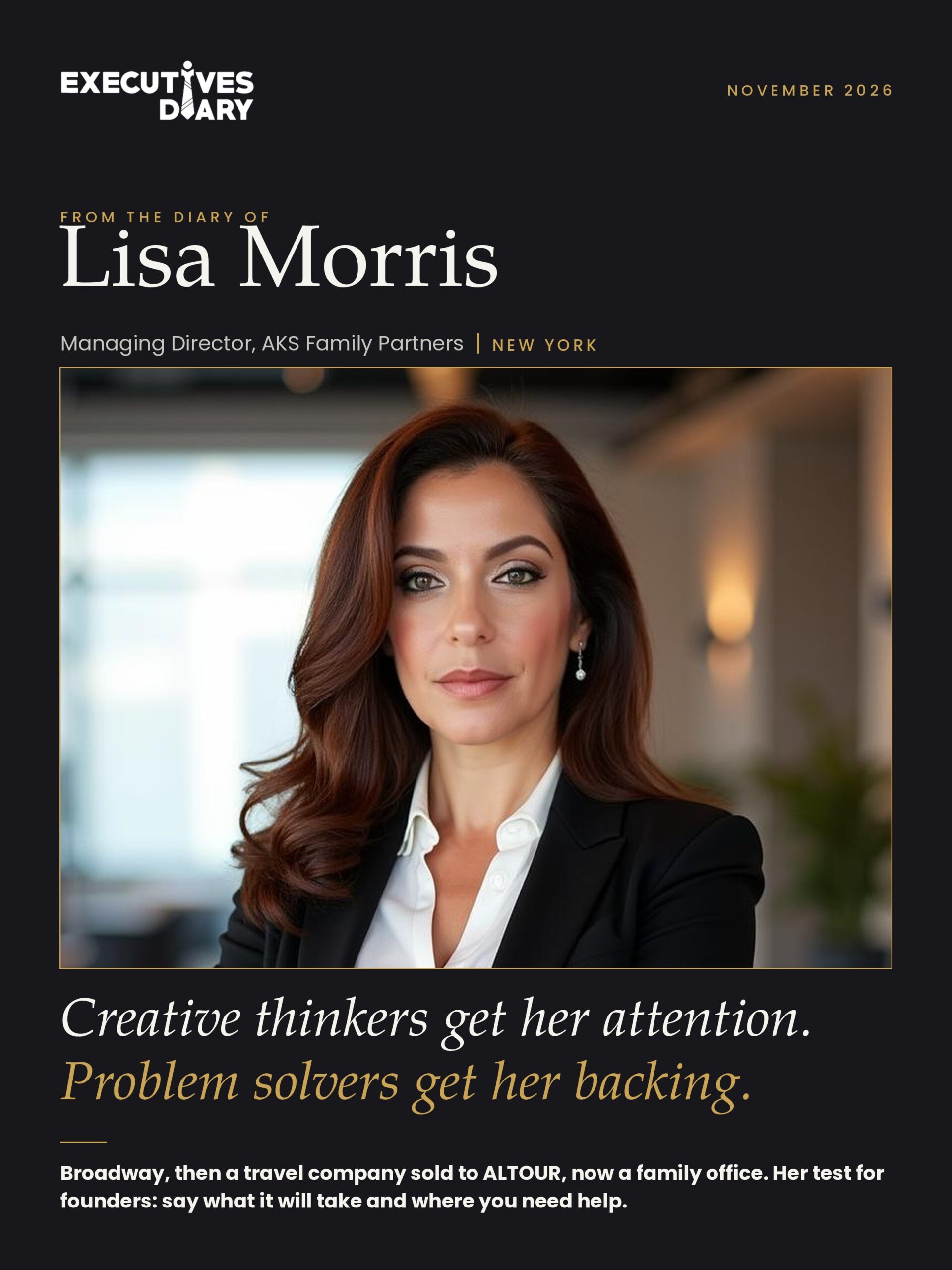
From the Diary of
Lisa Morris
Sometimes the opportunity does not appear until you are already moving.
“The most important thing anyone who is feeling stuck can do is to make a move.”
The Opportunity Was Hiding in a Problem
Lisa Morris did not set out to become an entrepreneur. While working in theater and traveling on tour, she noticed a problem with the travel arrangements and decided to fix it. That practical response led her to discover a skill she had not set out to develop: negotiating hotel deals. As the idea gained traction, what began as an attempt to solve an immediate problem became a business opportunity.
There was no elaborate plan to leave Broadway behind. Lisa acted on what she could see, learned from the experience, and gradually recognized that the opportunity could become something more substantial. Eventually, she made the decision to leave the industry that had been part of her life for years and build Road Concierge.
The company went on to serve the entertainment industry before being acquired by ALTOUR. It is now part of the ALTx Collective within Internova Travel Group, and Lisa remains actively involved. Her employees joined the new organization as well, allowing the expertise developed within Road Concierge to continue.
For Lisa, the lesson is not simply that careers can change direction. It is that people often wait for certainty when what they need is a reason to take the next practical step. As she explains, “It is about recognizing when it is time to lean into trying something outside of your comfort zone.”
It is about recognizing when it is time to lean into trying something outside of your comfort zone.
That distinction shapes how Lisa approaches her work today. She did not need to know exactly where her first step would lead. She needed to recognize a problem, try to solve it, and stay open to what the experience might make possible.

Ambition Needs a Practical Plan
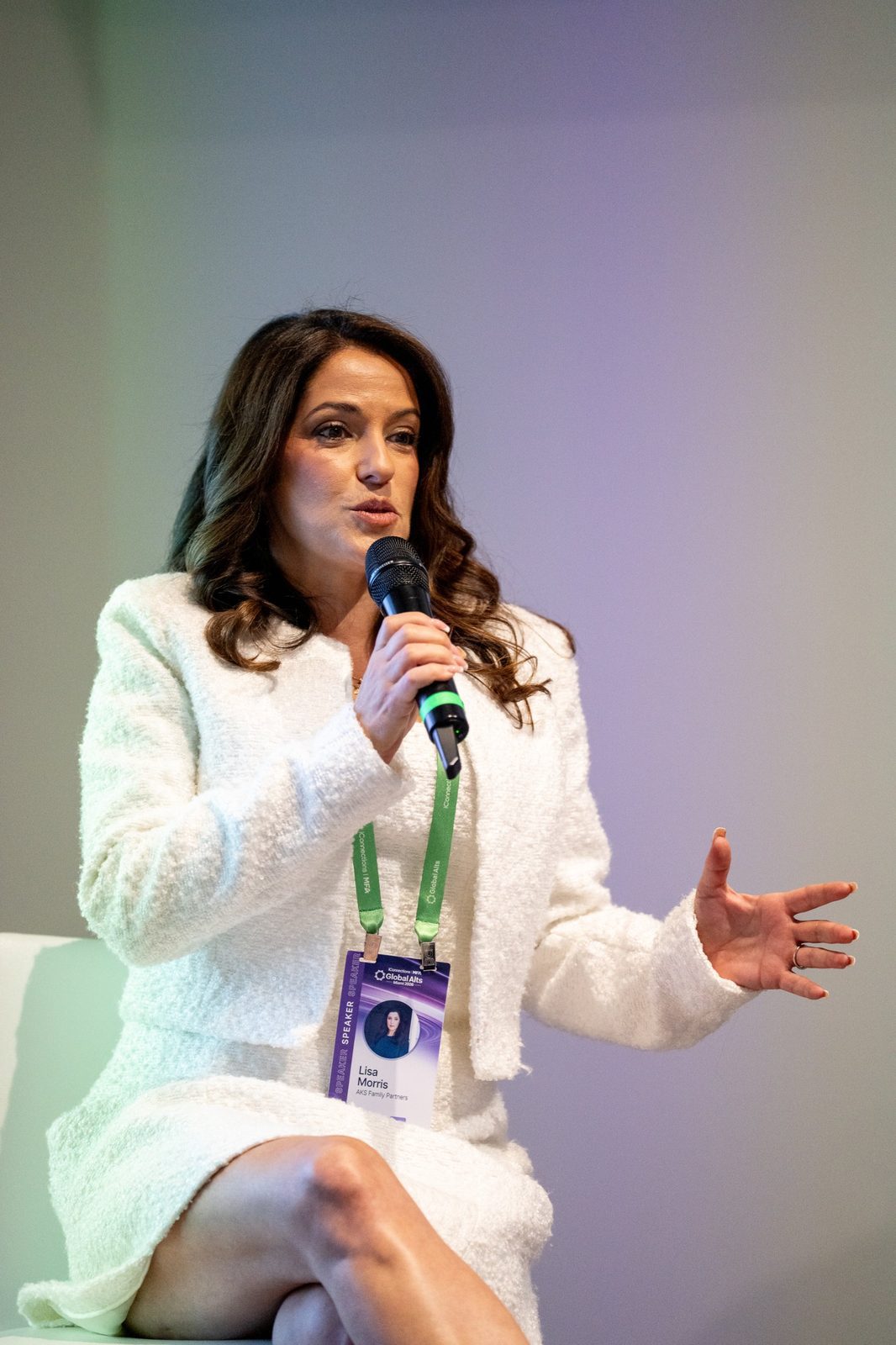
Lisa’s move from entrepreneurship into investing and philanthropy followed a similar pattern. After building a successful business, she began looking for ways to put her resources toward causes and people she believed in. She started with small steps, supporting the arts and female founders, then learned by spending time with people who could teach her, connect her with others, and introduce her to new opportunities.
Her experience has made her attentive to the difference between having an ambitious idea and being prepared to act on it. In her role as Managing Director of AKS Family Partners, she encounters founders and people building businesses or pursuing causes. She looks for creativity, drive, and a clear sense of purpose, but she also wants to understand how someone intends to turn an idea into something real.
I love creative thinkers, but I love problem solvers even more.
The distinction is central to Lisa’s approach to supporting others. She values big ambitions, but she does not believe that believing in an idea is enough. A person should be able to explain what they want to accomplish, what it will take, and where they need help.
Lisa connects this view to her earlier work as a talent agent. Recognizing someone’s potential was only the beginning. The individual still had to do the work required to build a career. That principle remains relevant when she considers where to offer her time, capital, or network.
Her role is not to do the work on someone else’s behalf. It is to recognize people who are prepared to take responsibility for their own progress and determine whether a useful introduction, investment, or other form of support could help them move forward. For founders and executives, the message is clear: support has the greatest value when it meets preparation and action.
A Return Can Be Financial and Human
Lisa’s investment philosophy brings together two questions that are often treated separately: can an investment generate a meaningful return, and can it also contribute something valuable beyond the financial outcome?
She is clear that investment and philanthropy serve different purposes. An investment should carry a reasonable expectation of financial return or another defined return. Philanthropy has a different role. For Lisa, the distinction does not mean that financial discipline and social benefit must compete with each other.
I always weigh ROI (return of investment) and ROH (return on happiness/heart).
The idea of return on happiness or heart reflects Lisa’s belief that financial results do not capture every consequence of a decision. She cites Helfie AI as an investment she believes can produce a financial return while expanding access to healthcare. She also sees potential in investments related to treatments for ovarian cancer, where commercial success could coincide with the possibility of helping patients.
Her experience in theater also shaped her understanding of value beyond financial returns. As a co-producer of a Broadway production that did not make money, Lisa saw how a show could have a profound effect on its audience despite its financial performance. Young audience members wrote to say that the production had helped them feel seen and reconsider suicide. For Lisa, that response represented a form of impact that a balance sheet could never fully capture.
That experience gives her philosophy a concrete foundation. It does not mean that financial performance is irrelevant, or that every socially beneficial idea should be treated as an investment. Rather, it asks decision-makers to be clear about the kind of return they expect and to recognize when a project’s value may extend beyond its balance sheet.
For leaders allocating capital, Lisa’s perspective offers a useful discipline: define the financial case, understand the intended human benefit, and assess both honestly. Purpose is most meaningful when it is connected to what an organization or investment can realistically deliver.
Why She Wants More People to Make a Move
Lisa’s first book, Can You Rollerskate?, grows out of a belief she has tested repeatedly in her own life: people do not always need to feel ready before they begin. They need to be willing to try, learn, and make the next move.
The experiences she draws on range from auditioning for a dream show after being rejected to leaving show business to build a company. She has traveled alone, taken on public speaking about unfamiliar subjects, and attempted things for which she had no formal credentials. She is also candid about failure, including her own shortcomings in the kitchen. Her point is not that every attempt works. It is that waiting until failure feels impossible can prevent people from discovering what they are capable of doing.
The most important thing anyone who is feeling stuck can do is to make a move.
Lisa has seen how easily people talk themselves out of change by deciding they lack the right credentials, money, talent, or experience. They postpone action until a future moment when they imagine they will feel more prepared. Yet many of the opportunities that shaped her life appeared only after she had taken a step into unfamiliar territory.
One example came from spending time with Richard Branson. Lisa recalls falling off a paddleboard and finishing last in nearly every physical activity, but she kept showing up. By being there, she had the opportunity to learn directly from someone whose experience she valued. The story captures her approach without pretending that confidence or competence must come first.
The book extends this idea beyond Lisa’s own experiences, including accounts of other people who made significant personal or professional changes without feeling fully prepared. It is available for purchase through Amazon, the Kindle Store, Barnes & Noble, Waterstones, and Books-A-Million, with copies shipping from November 2.
The project also supports a cause close to her heart. Lisa has pledged 100% of the book’s profits to Bridging the Gap, a nonprofit that helps match rescue dogs with military veterans. The commitment reflects her belief that a project can have value beyond its immediate commercial purpose.
Making Room for People and Purpose
Lisa’s charitable work includes serving on the board of Camp Papillon, a no-kill animal rescue. Its Winston’s Rescue Room, named in honor of her late dog Winston Jones, temporarily fosters dogs belonging to people who need short-term support, including people experiencing domestic violence or requiring hospitalization. Winston also appears on the cover of Can You Rollerskate?

She also serves on the advisory board of CellxLife, a company working on treatments for ovarian and pediatric cancer. These commitments sit alongside her work in family office leadership, investing, and entrepreneurship, but they are connected by a consistent question: where can resources, relationships, or practical assistance make a meaningful difference?
For Lisa, purpose is not a substitute for execution. Whether she is considering an investment, supporting a founder, or contributing to a nonprofit, she looks for a clear need and a credible way to address it. That combination of ambition and practicality is also what she seeks in the people she chooses to support.
Her work reflects a view of leadership that is less concerned with having a perfect plan than with making considered decisions, taking responsibility, and remaining open to what action reveals. It leaves room for uncertainty without treating uncertainty as a reason to stand still.
The First Step Changes What Comes Next
Lisa Morris’s career has crossed Broadway, entrepreneurship, investing, and philanthropy, but the connection between those fields is not simply a willingness to change. It is her habit of moving toward an opportunity before she has every answer, then using judgment and experience to decide what comes next.
That approach is not a call to take risks without thinking. Lisa’s emphasis on pragmatism, realistic strategies, and the work required to follow through makes clear that action must be paired with responsibility. The first step opens a possibility; preparation, persistence, and sound decisions determine what can be built from it.
Her message to people who feel stuck is direct. You do not have to be the most qualified person in the room, or wait until every doubt has disappeared. You do have to be willing to show up, learn, and try.
Sometimes the opportunity does not appear until you are already moving.

