

From the Diary of
Jo Virdi
For founders, CEOs and board chairs who need more than good bookkeeping: how a CFO begins a new mandate, and what she wants left behind when it ends.
“Know the value you bring to the table, even when somebody else hasn’t recognised it yet.”
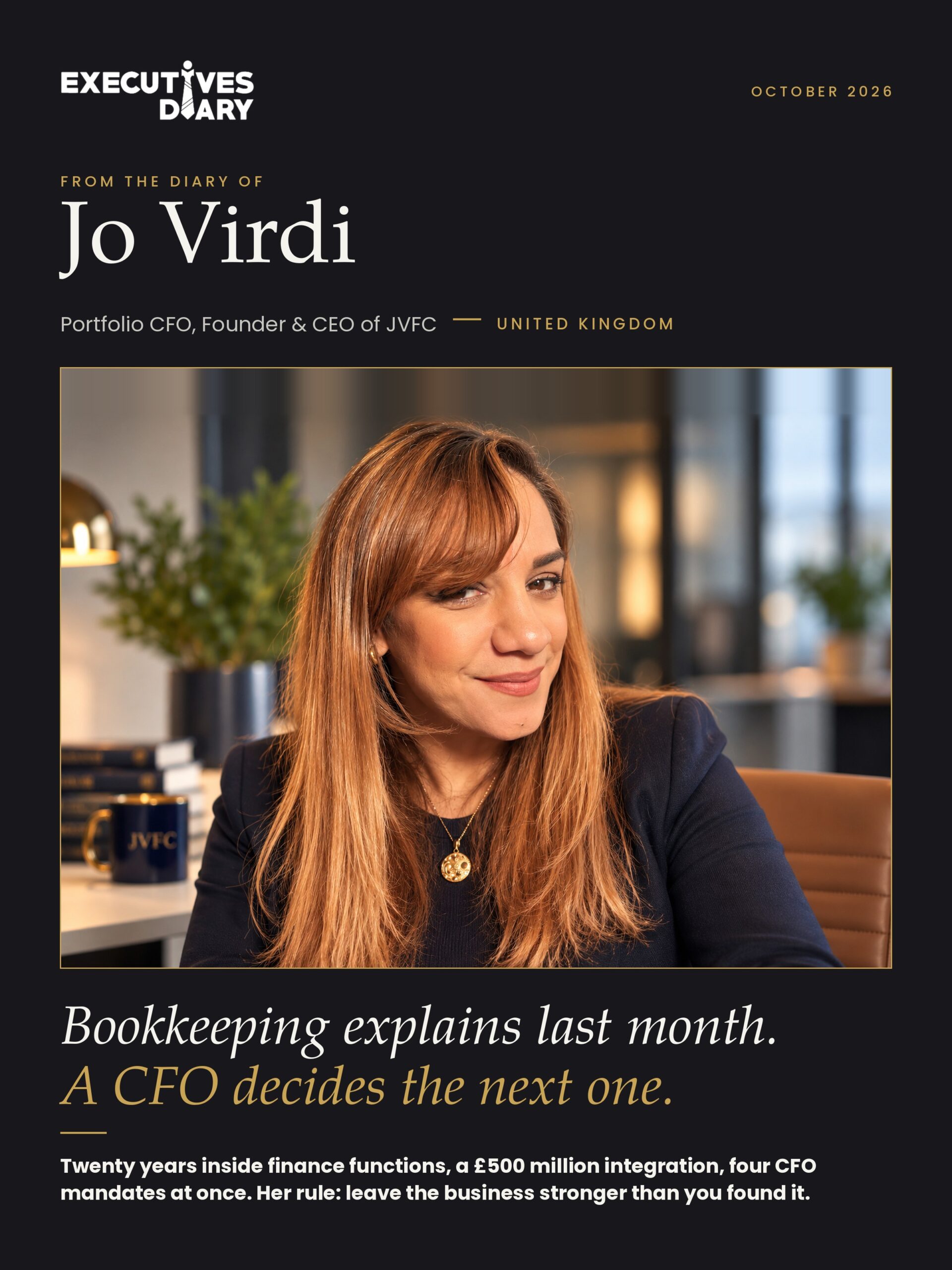
“Businesses rarely struggle because people don’t care,” Jo Virdi says. “They struggle because too much sits in too few heads.”
Processes that worked when a company was smaller come to depend on individuals, she says. Reporting evolves organically, systems don’t necessarily speak to each other and knowledge isn’t always documented. She doesn’t think growing businesses get finance leadership wrong deliberately. Often, she says, the business has simply grown faster than its finance infrastructure, and the finance function can become “very good at telling the business what happened last month without necessarily helping it decide what to do next month.”
Jo is the founder and CEO of J Virdi Financial Consultancy Ltd (JVFC), a strategic finance consultancy, and she holds several CFO mandates at once, as Group CFO across Breukr Group, Residium and Threasury and as CFO of FilmTailor AI. The reader she most wants to reach is the founder, CEO or board chair who knows the business has reached a point where good bookkeeping and historic reporting are no longer enough. For that reader, she says, the modern fractional or portfolio CFO model becomes particularly valuable.
What a Handover Looks Like
One recent engagement is the example Jo gives. She came into an organisation with committed people and plenty of knowledge, but much of the finance operation needed to be brought together, documented and structured so that it wasn’t reliant on individuals knowing how things worked. The work covered understanding the existing operation, identifying gaps, developing clearer processes and controls, creating an operational finance calendar and building out a library of standard operating procedures.
The objective, she says, “wasn’t to make finance more complicated. It was the opposite: create clarity, ownership and something sustainable that could ultimately be handed over to the permanent finance leadership.” The engagement finished in late September with the final handover to the team.
For me, that’s an important part of consultancy: the aim shouldn’t be to make a client dependent on you. You should leave them stronger and better equipped than when you arrived.
The businesses may be completely different, she says, but her starting point is remarkably consistent.
What She Asks First
Before changing anything, Jo wants to understand the business. What does it do, and how does it make money? Who are the people? What does the finance function look like, what systems are in use and where does information sit? What is management currently looking at? “And, crucially,” she says, “what decisions are the CEO and board actually trying to make?”
She doesn’t believe in walking into a business “with a predetermined answer simply because something worked somewhere else.” She usually looks at the financial position, cash, reporting, controls, systems and processes, and she spends time talking to the people who operate them. “There is often a significant difference between how a process is supposed to work and how it actually works,” she says.
There is often a significant difference between how a process is supposed to work and how it actually works
With business owners, she says, the most valuable conversations don’t start with numbers. They start with questions: what are you trying to achieve, what is stopping you, what don’t you know, what decision are you trying to make? “The numbers then help us answer those questions.” On LinkedIn she has written that such conversations often begin with uncertainty, with questions like “Can I afford to take this opportunity?” and “What would you do in my position?”
Holding several CFO mandates means moving between very different contexts. She can be discussing strategic growth and governance in one business, systems and operational finance in another, and financial modelling or fundraising in another. The common thread, she says, is translating financial information into something useful.
A CFO shouldn’t simply produce numbers. The role is to help people understand what those numbers mean, what they need to pay attention to and what decisions follow from them.
That’s what she means when she describes her approach as commercially grounded and pragmatic. “Finance has to work in the real business, not just in a spreadsheet.”
Finance has to work in the real business, not just in a spreadsheet
Fractional and Portfolio CFO Work
“Not every growing business needs, or can justify, a full-time CFO sitting in the business five days a week,” Jo says. “But that doesn’t mean it doesn’t need CFO-level thinking.”
The founder, CEO or board chair in that position needs, in her words, “someone who can challenge, provide perspective, create financial clarity and help turn that into better decisions.” JVFC describes itself as “a strategic finance consultancy providing fractional CFO, board advisory, finance transformation, systems and controls, governance and reporting, M&A and investor readiness, and emerging AI-for-finance advisory to growing and changing businesses.”
The way she works is shaped, she says, by more than twenty years operating inside businesses.
More Than Twenty Years Inside
Before building JVFC, Jo spent more than twenty years working inside finance functions, progressing into senior finance leadership and Finance Director roles. Her experience spans transformation, integration, governance, M&A and board-level decision support.
More recently, she says, she was involved in the integration following the approximately £500 million acquisition of a group of insurance brokerages. “An acquisition of that scale isn’t simply a transaction that completes and everyone moves on,” she says. “In many respects, the real work begins afterwards: bringing businesses, people, systems, reporting and controls together while the underlying operation still has to function.”
Whether in a large corporate environment or with a growing business through JVFC, she doesn’t particularly believe in going into an organisation simply to maintain what is already there. “I look for what can be improved, simplified or made more useful,” she says. If she can see that something could work better, she finds it “very difficult to simply leave it alone.” She suspects colleagues who have worked with her would recognise that immediately.
I look for what can be improved, simplified or made more useful
The lesson she draws from those years is a short one.
Reading a Board Pack
What those years taught her, Jo says, is that “the technically correct answer isn’t always the commercially useful answer.” Decisions, she says, aren’t made in isolation. There are people, customers, deadlines, systems, politics, competing priorities and imperfect information, and sometimes a board has to decide before finance has every piece of information it would ideally like to have.
She also understands what it feels like to own the outcome. “It’s relatively easy to review a board pack and say what could be improved,” she says. “It’s different when you’ve been responsible for producing that information, standing behind it in the boardroom, answering the questions and then helping the business execute whatever decision follows.” So, when she reads a board pack, she isn’t only asking whether the numbers are correct. She’s asking what it is telling her, what it isn’t telling her, where the risk is, what decision the board needs to make and whether the information is actually helping them make it.
Sometimes the most valuable thing a CFO provides, she says, “isn’t another spreadsheet. It’s being the person who says, ‘Have we thought about this?’, challenges an assumption, or gives a CEO somewhere to test their thinking before making a decision.” She has written that the same is true of her conversations with business owners: the value isn’t always in preparing accounts, reviewing forecasts or analysing cashflow, and occasionally it’s “simply being available when a business owner needs someone they trust to pick up the phone.”
One meeting in 2024 stays with her.
A Meeting in 2024
In 2024, Jo walked into a Senior Leadership Team meeting as the only female director in the room and was asked whether she “would be taking the minutes”. She had more than twenty years of finance experience by then and was there as a Finance Director. “It was one of those moments that stays with you,” she says, “not because it made me question whether I belonged in the room, but because I knew that I did.”
“I didn’t need to make a speech about it,” she says. “I carried on, contributed at the level I was there to contribute at and let my experience and work speak for themselves.” Moments like that, she says, reinforce something she has learned throughout her career: “know the value you bring to the table, even when somebody else hasn’t recognised it yet.”
She names her Father as the person who shaped how she works. “He worked incredibly hard and instilled that work ethic in us from an early age, but it wasn’t simply about working hard,” she says. “He gave us the confidence to go out and try things because we knew that if we fell, he had our backs.” She thinks she has carried both parts with her throughout her career: work hard, take responsibility and don’t expect things simply to happen for you, but don’t be frightened of taking a risk or changing direction either. Knowing that somebody believes in you, she says, “gives you an extraordinary foundation from which to build your own confidence.”
Where Jo Is Now
Over the next twelve months, Jo wants to keep building JVFC into a recognised strategic finance consultancy, with a portfolio of CFO and advisory mandates where she can make a tangible difference to the businesses she works with. Her own line on what comes next:
Building JVFC deliberately: growing the right portfolio of CFO and advisory mandates, expanding my board and non-executive work, and continuing to explore how technology and AI can change what good finance leadership looks like.
She is increasingly interested in non-executive and trustee roles, she says, “where the combination of financial expertise, commercial experience and independent challenge can add value at board level.” In a post, she wrote that she is interested in such roles particularly within SMEs, scaling businesses and private equity-backed organisations.
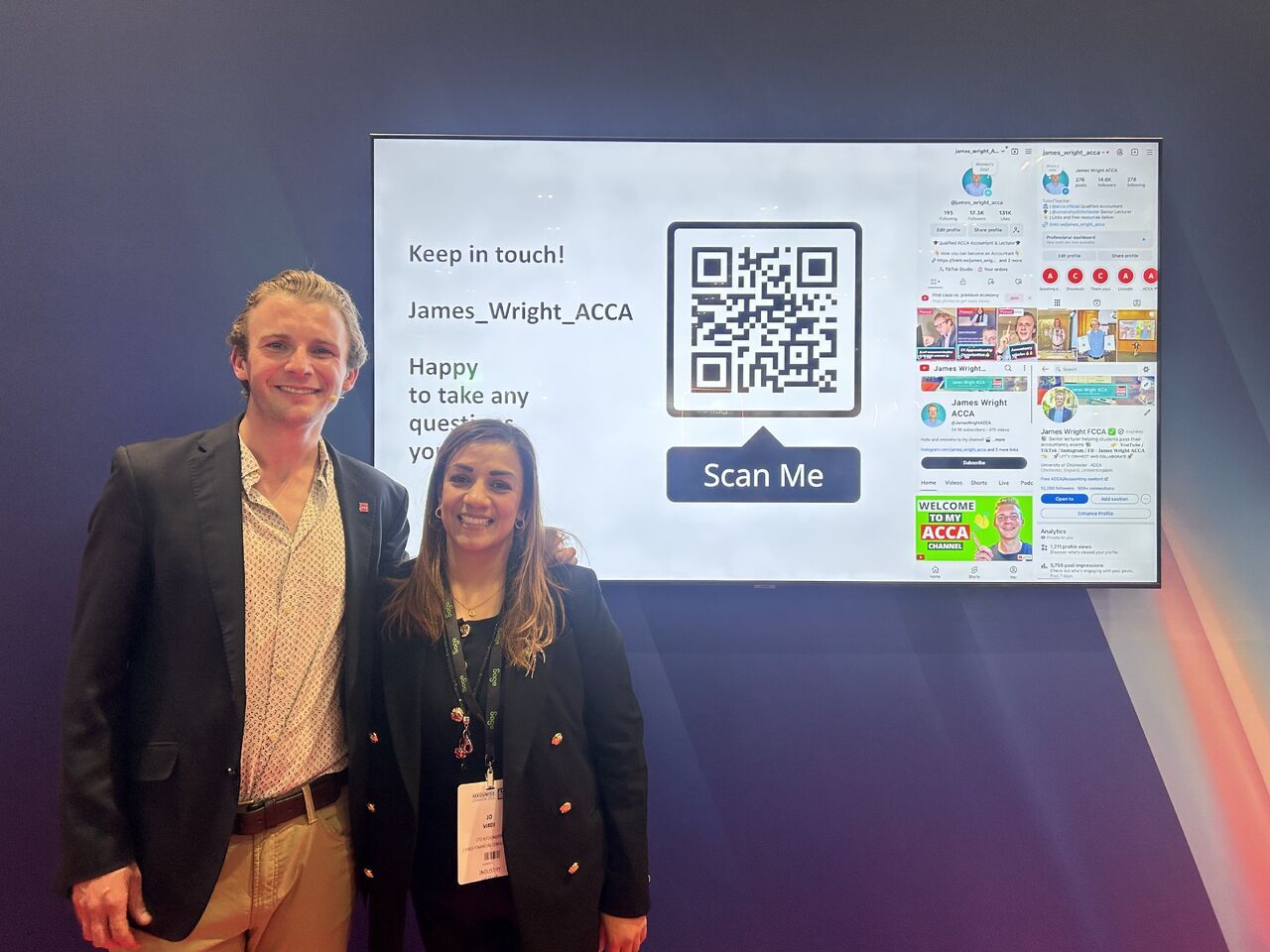
She is also exploring what technology and AI mean for finance leadership. She joined a panel at the National Film and Television School on AI, entrepreneurship and what it takes to build in film and television, and wrote afterwards that the gap between a great idea and a viable production is increasingly defined by “how well the numbers stand up.” As she puts it on her profile, she is always open to connecting with “organisations and individuals navigating growth, transformation or governance requirements, as well as those interested in the evolving role of AI within finance.”
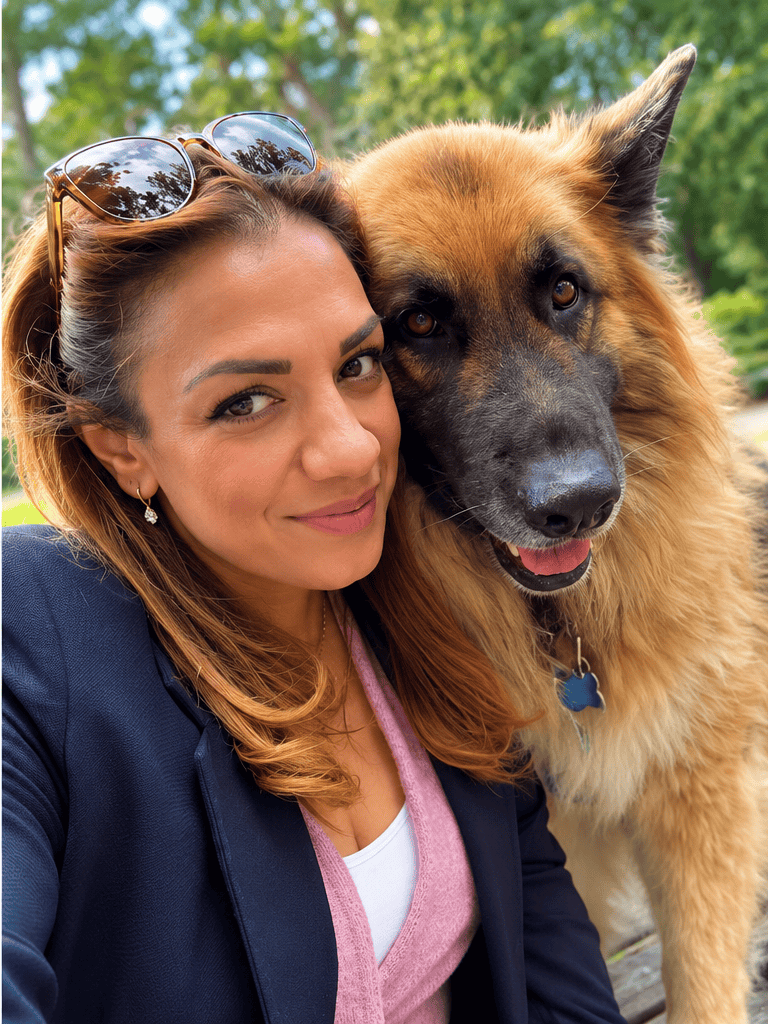
Outside work, there is Maximus, her German Shepherd. “Whatever is happening professionally, he makes sure there is still a world outside the laptop,” she says. Walking him gives her “space to think, reset and, quite often, solve whatever problem I’ve been staring at for hours without getting anywhere.”
She has written that she is increasingly drawn to ongoing advisory relationships rather than one-off pieces of work. “Because businesses don’t experience challenges once a year,” she wrote. “They experience them every day.”
The Playbook
Five Reflections from Jo
- What are you trying to achieve? Jo says the most valuable conversations with a business owner start here, not with the numbers.
- What is stopping you? The numbers come afterwards, she says, to help answer it.
- What don’t you know? She asks it of business owners, and asks of a board pack what it isn’t telling her.
- What decision are you trying to make? When she starts a mandate, she calls the board’s and the CEO’s decisions the crucial question.
- Is the information actually helping? She puts it to a board pack after asking whether the numbers are correct.

