

From the Diary of
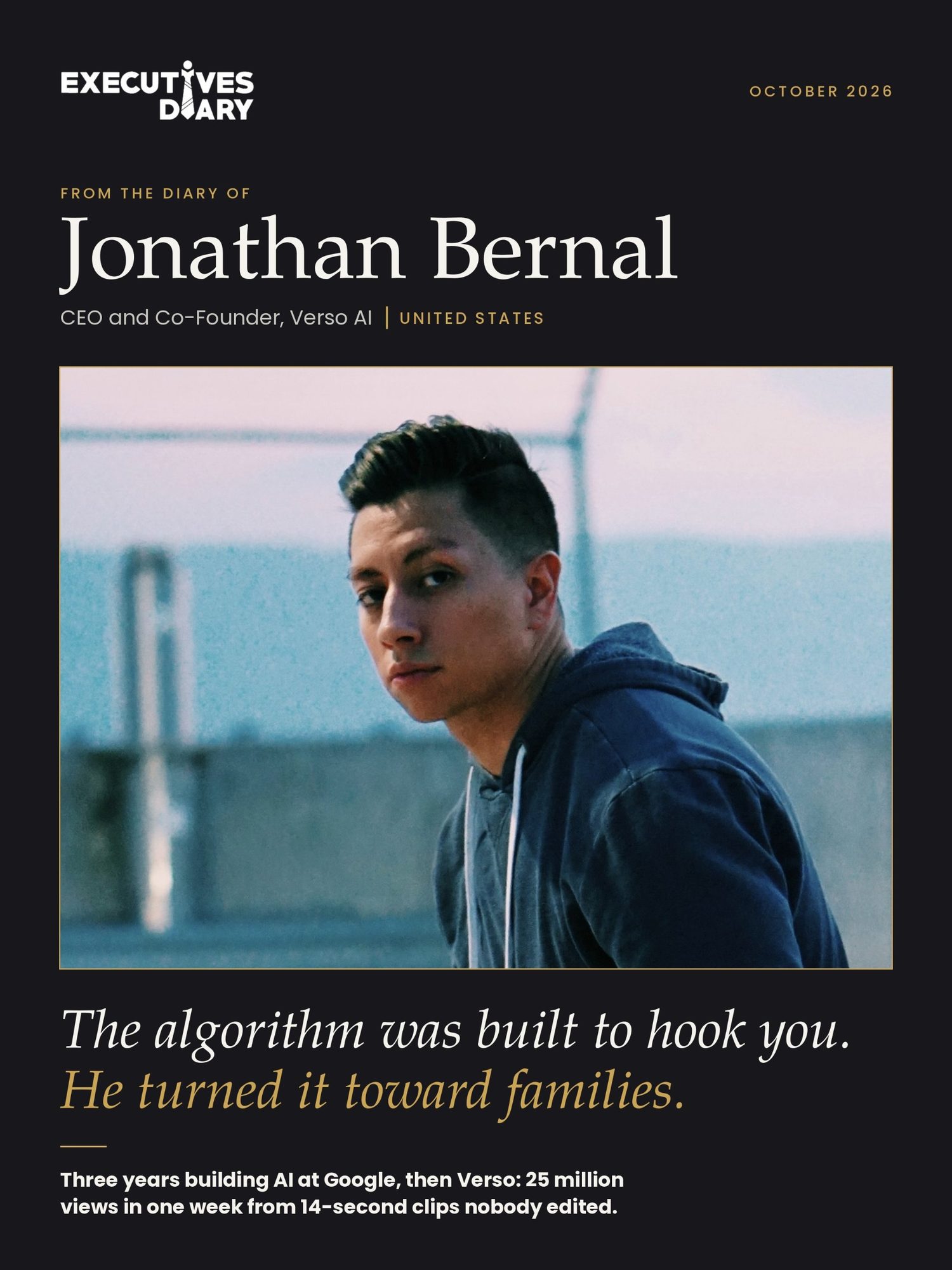
Jonathan Bernal
A former Google product lead on why families, not platforms, should hold the dial on the algorithm, and how Verso reached 100 million views without editing a single video.
“Build a world where families control the content and the algorithm.”
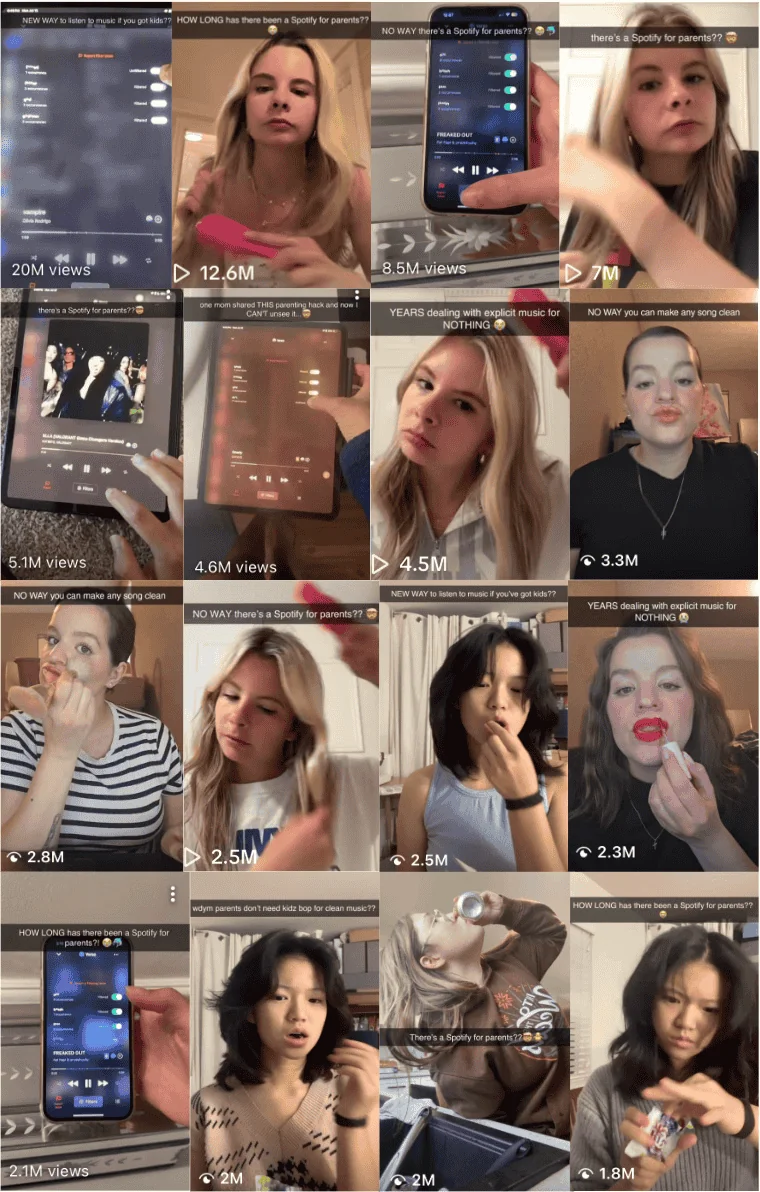
In a single week, by Jonathan Bernal’s count, the videos his team posted did 25 million views, and three posts drove most of the traffic. “Videos are raw, completely unedited, and took 14 secs each to film via snapchat,” he wrote. The format, as he described it, was a two- to three-second hook and then a straight demo of the app.
Behind the views are the numbers he wants used: Verso has done 100 million views in four weeks and 6,000 hours of music streamed, and it currently ranks as the number one result in the App Store for the “clean music” category. The audience isn’t the one most consumer apps are chasing. “While everyone is bombarding Gen Z, we are targeting millennial parents,” he wrote. “Why? Because it’s a massively underserved + untapped market.”
While everyone is bombarding Gen Z, we are targeting millennial parents
Jonathan is the CEO and co-founder of Verso AI, Verso to the people who download it, an app that lets you customize any song and make it family friendly before you or your family ever hear the explicit content. He came to it after three years at Google, the last of them as Product Lead on Chrome Gemini, and a spell at Microsoft shipping Surface laptops. The argument the company rests on is one he brought out of those years: the models trained to make people consume more can be turned around to give them control.

A Feed You Cannot Control
Ask him why most content algorithms end up working against the people using them and he doesn’t start with the technology. He starts with what shows up. A feed today can be addictive, sexually suggestive or plain misinformation, he says, and the person scrolling has no dial to turn.
You as an adult cannot control the recommendations, how can you control your children’s?
Parents put the same worry at the top of their own list. In a 2022 Pew Research Center survey of US parents of teenagers, exposure to explicit content on social media was the concern most often rated extremely or very worrying, at 46 percent, ahead of time-wasting, bullying or anxiety.
His example of the impact is the courtroom: platforms, he says, are “being sued by dozens of states for knowingly addicting children to toxic feeds.” In August 2026 Meta agreed to pay up to $17.1 billion to settle claims from 51 states and territories that it designed Instagram and Facebook to addict children, the largest state consumer protection settlement since the tobacco cases of the 1990s.
He spent years inside the companies that build these systems, and what he took out isn’t that the models are the problem. “I learned that families and users need more control over content, and in the world of consumer, they do not have enough control about what content their children are exposed to,” he says. “The same models and intelligence deployed to get them to consume more can be deployed to give them more control than ever.”
That second sentence is the product.
What Verso Does
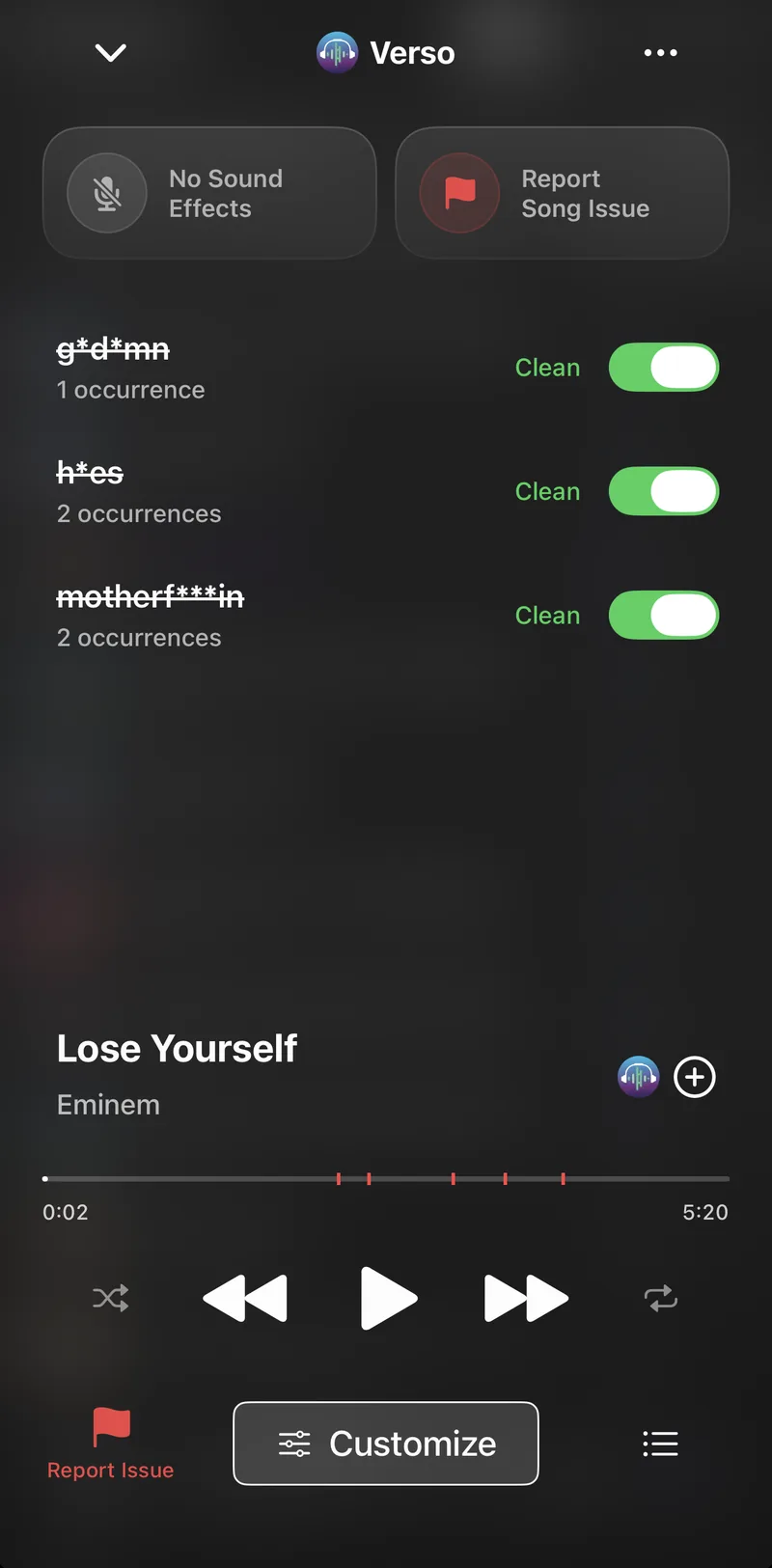
Verso does one thing a parent can explain in a sentence. It lets you intelligently customize any song and make it family friendly before you or your family ever hear any explicit content. His profile puts the category in two phrases, real-time song customization and family-controlled recommendation algorithms, and one of his posts puts it in one: “Building the Suno AI for the family space. Instead of song generation, real-time song customization for families.” In the bio he sent the magazine, he described it as applying “the same AI content-transformation technology to audio, helping families adapt music to their values.”
The views have come from accounts that didn’t exist a few weeks before. Twitter Tech, he wrote, is doing case studies on Verso: 15 million views in a week and a half from one account created from scratch, 20 million in two weeks across a couple of new accounts. Verso is in Afore Capital’s summer Founders-in-Residence cohort, building out of the firm’s South Park office, where Jonathan works alongside co-founder Drew Carson. And the day after he presented Verso at the Investors Choice Conference, a Utah Money Watch piece named it, as he put it, the number one startup.
Getting there was the part he had never done.
Volume
The hard moment, when he’s asked for one, isn’t a launch that failed. It’s a skill he didn’t have. “At Google I had no understanding how to go viral from 0-1,” he says. “It was something that was difficult to learn, and a hurdle we had to overcome.”
Grateful I didn’t outsource it, understanding how to create mindshare is more valuable than ever in a world where everyone can now build.
What he learned, he has written down in public, because, as he put it, “i dont believe in gatekeeping.” Find a format that explicitly shows the product. Tweak it until the first three seconds are strong enough that the target market is too curious to scroll. Tweak the demo until it’s novel enough that people comment and go looking for it. Then post mid-day, get at least one video to 10,000 to 30,000 views, and as soon as it does, get five to ten people to flood the comments. “If you act fast enough, the video will go to 100k,” he wrote. “Exact same strategy for 100k-1M.”
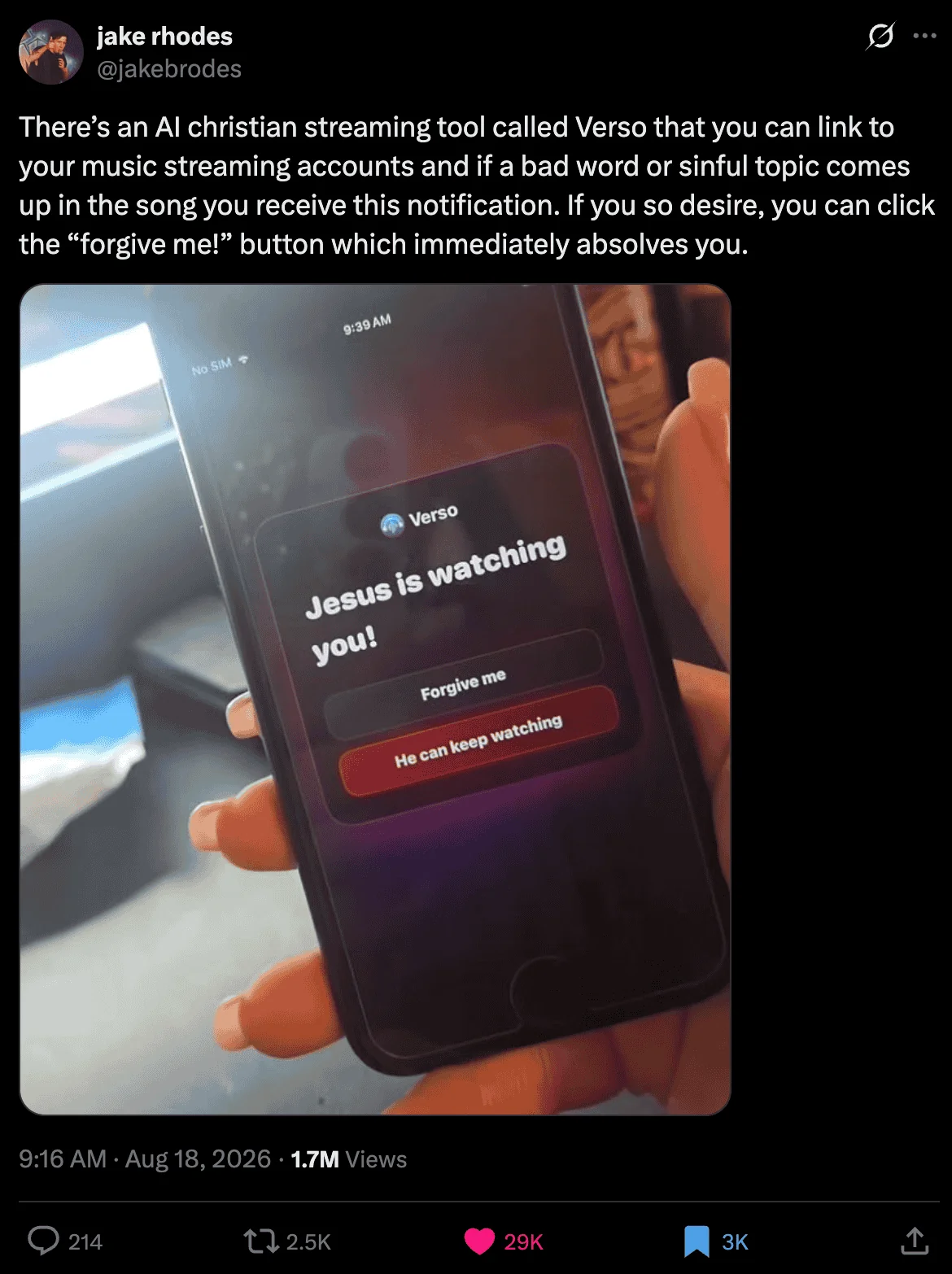
The engine under all of it is repetition. “how did we get here? volume,” he wrote after the 25 million week. “the more you do something, the less you suck at it.” At his last count the accounts were averaging a million views a day across Instagram and TikTok, which, he wrote, is how Verso holds the number one spot in its niche. Sometimes the engine runs without him. “you’re building something viral when someone makes random post about it and hits 1.5M views in a couple hours,” he wrote. “how did we do this? we did nothing.”
the more you do something, the less you suck at it.
The habit of not stopping predates Verso.
Chrome, Surface and 14 Patents
Jonathan trained as a mechanical engineer at Brigham Young University, on a Preston Hughes Foundation full-tuition scholarship alongside the Crocker Innovation and Davenport International scholarships. He co-founded an IoT startup at a venture-backed incubator, and from 2020 to 2022 was Head of Growth at Project 1B, a podcast with more than a million listeners. At Microsoft, as Platform Product Lead, he shipped flagship Surface laptops his profile puts at more than $100 million to market.
He joined Google in 2022 as Lead Product Manager, Machine Intelligence, working on AI vision model research, generative voices and consumer AI, and in 2024 became Product Lead for Chrome Gemini. His profile lists the record plainly: consumer AI products at $500M+ ARR, 14 patents and defensive publications, an “Adobe Pro killer” he pitched and built natively in Chrome, with an AI vision model that made some 400 billion scanned PDFs on the web editable and interactive, and the Face Control AI in Chromebooks, for which he secured the funding and led the AI research team, shown at Google I/O.
Outside the day job he sat on the board of Elevate Utah, which serves immigrant low-income families in the Utah area, and was its Vice Chairman from 2023 to 2025. Since 2024 he has advised startups in Utah through Sandbox. He left Google in 2025 and started Verso the following month.
Ask what shaped how he works and he doesn’t name a manager.
Massive Swings
The person, he says, was two people. “My mother and my father. It was less what they said and more what they did.”
My mother took a massive risk pushing to move our family to the US for a better future. She taught me about taking massive risks and massive swings. My father is the hardest working man I know.
“Both of those attributes have made me who I am today,” he adds. The habit a colleague would call very him is the same one under the growth posts. “Never give up,” he says. “People know me by my stubbornness and perseverance when facing difficult problems. I don’t quit, intensity doesn’t decrease. It’s a double edge sword but has gotten me to where I am.”
The one thing outside work that belongs in the piece is, in his words, “My family.” He goes further: “My mission to build Verso and the vision comes from a deeply held belief that we need to build a world for families and solve problems for the every day household. That is the foundation of our society.”
Where Jonathan Is Now
This year the work is Verso, and the vision is the one he signed off on in a sentence: to build a world where families control the content and the algorithm. Over the next twelve months he wants three things from the piece, and says so: more users for Verso, partners who can put it in front of families, and investors for the next stage. The people who most need to read it, in his words, are investors and the millennial parents Verso is already reaching.
He shows up at Utah’s startup events, Silicon Slopes and the Investors Choice Conference among them, and writes afterward about the support there. “more wood to the fire” is how he signed one of those posts. What’s next, as he wants it quoted: “Sprint to build the most capable models and experiences to serve families.”
Sprint to build the most capable models and experiences to serve families.
The biggest lesson he has learned about solving for traction, he wrote, takes two words. “don’t quit. that’s it. Most people quit RIGHT before it blows up.”
The Playbook
The Jonathan Bernal Playbook: Getting to a Million Views a Day
- Find a format that explicitly shows the product. Not the brand, not the mission. The app, doing what it does.
- Tweak the hook until the first three seconds win. Strong enough that the target market is too curious to scroll.
- Post mid-day, get one video to 10,000 views, then flood the comments. Five to ten people, fast. If it can get to 30,000, it can get to a million with a nudge.
- Film raw. Fourteen seconds on Snapchat, completely unedited, did 25 million views in a week.
- Don’t quit. Most people quit right before it blows up.
