

From the Diary of
Joseph R. Bronson
What 50 years of golf and decades in Silicon Valley taught one writer about the most useful conversation in the game: the honest one you have with yourself.
“Golf is a mirror of life.”
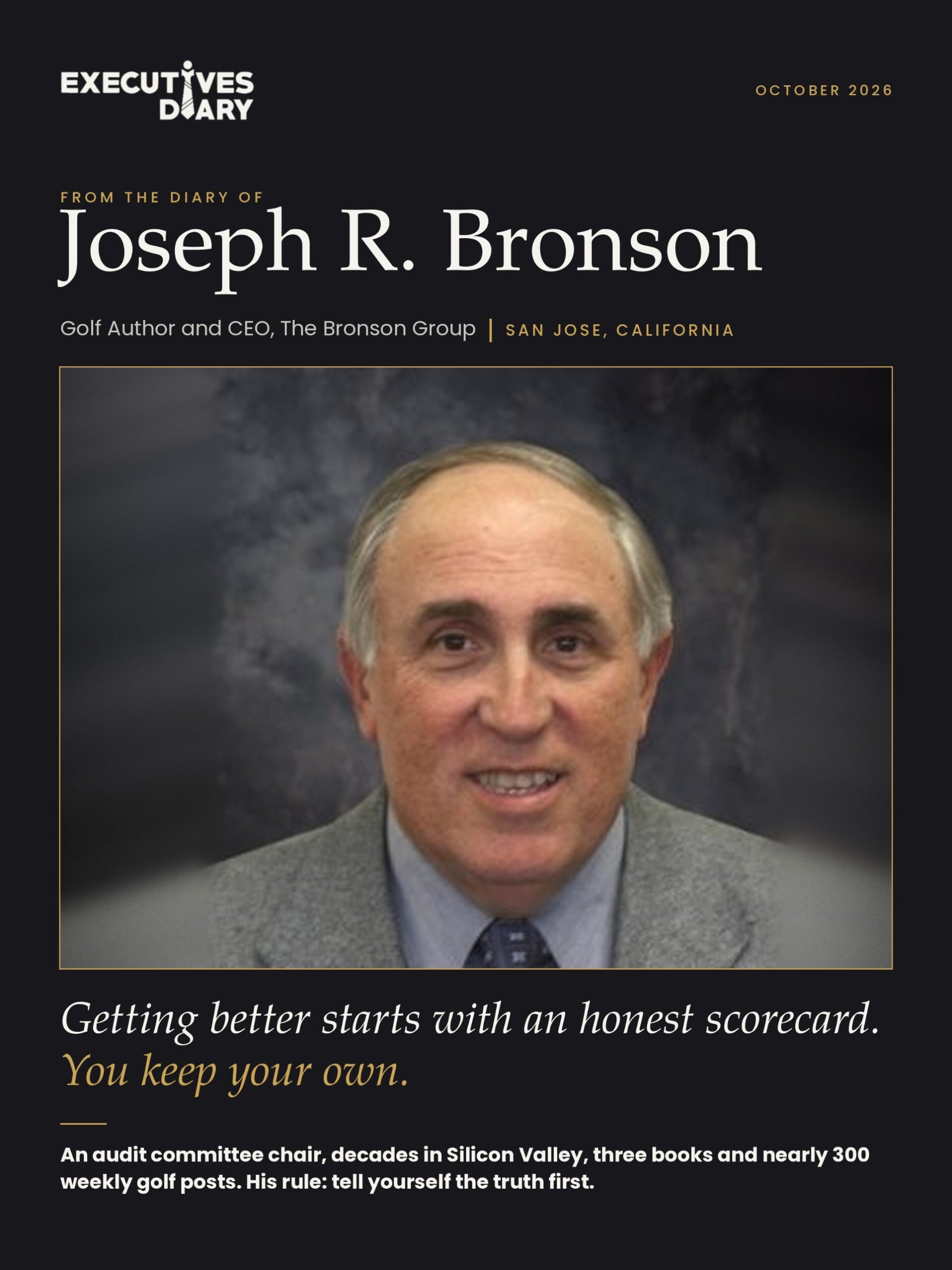
Joseph R. Bronson used to need 230 yards off the tee. Some days now, he wrote this month, he can barely reach 200. He has played golf for more than 50 years, and he puts the problem this way: “the mind still knows exactly how to turn the hips and get the club back, but the body replies, ‘I don’t do that anymore.’”
So after his left hip replacement, he made a decision he had resisted for decades. He moved up a set of tees. “Not to surrender the single digit I’ve been guarding,” he wrote, “but to protect it.” His own summary was shorter: “I moved up a set of tees, and my ego survived it.”

He also wrote, “There’s a formula for which tees are actually yours.” The PGA of America has one. Its Tee It Forward guidelines, introduced with the USGA in 2011, match course length to driving distance, and a golfer whose drive averages 200 yards is pointed to a course of 5,200 to 5,400 yards. At Ballybunion this year, in a wind that blew 30 to 40 mph all day, Joe (as he signs himself) played it short, under 5,600 yards, and wrote that there’s a reason “a 70-something with a rebuilt hip” does that.
That kind of honest accounting is what Joe writes about every week. His blog, The 20th Hole, runs on his website, Golf Chronicles, at josephbronson.com, and is nearly 300 weekly posts in. He has published three books, Golf Chronicles, Through the Green and PARdon Me, and every dollar goes back to The First Tee and university golf programs. “No instruction,” as he puts it on his profile. “No ‘I know this and you don’t.’ Just stories that make you nod and say, ‘I’ve done that too.’” Before golf took over, he spent decades as a Silicon Valley technology executive, and he still runs The Bronson Group, a business advisory firm.
What the Best Players Say After They Win
Joe points to the post-round interviews at any major. Jack Nicklaus, Tiger Woods, anyone who has dominated the game: not one of them, he has written, will tell you how good they are. They say the same three words. “We gotta get better.”
We gotta get better.
He sees the other side of that in business. “In business, certain people are satisfied reaching a level of achievement and do not establish the next set of goal posts to sustain and improve their competitive position,” he says. Companies fall from leading market positions too, and in some cases, he says, “the lack of improvement can be devastating.” He asks readers to remember the Xerox copier. “You have to be able to adapt to changes in markets and consumer preferences.”
In golf he reads the problem differently. “I don’t think that excellent golfers are ‘coasting’ but they may be in denial of how to get to a level where their performance can be sustained,” he says. His example is David Duval, at one time the No. 1 player in the world, who “felt he needed to bulk up his body to sustain performance and completely fell from grace.”
Joe’s answer to that denial is the idea his blog is named for.
The Conversation at the 20th Hole
“In order to get better, the first thing that is required is accurate, frank and truthful self assessment,” Joe says. That idea is built into The 20th Hole, where, as he describes it, “you have this conversation with yourself to come to grips with what needs to improve and how to go about doing it.” Then he adds: “The operative word is ‘truthful.’”
You have to admit to your weaknesses in order to try to overcome them.
Honest assessment, for Joe, includes knowing when to bring in help, “whether it be a golf professional instructor or study guide on investment statistics.” He talks about hard moments in the same practical terms: learning “how to accept failure and responding to it,” and then to “recognize the failure and develop the remediation plan.”
At 64, he went back to studying. He had joined an investment bank as a managing director, and was told he couldn’t be paid until he passed the regulatory exams, “The same FINRA exams a 25-year-old gets when starting out.” His family asked, “Why are you doing this??” He spent an entire summer studying, alongside people a third his age. “I aced them,” he wrote. His firm told him he was only supposed to pass, and added, “You take things too seriously!” His reply, on the page: “Maybe I do.”
The day you start coasting on what you already know is the day you start falling behind.
He writes, in his words, about “golf, business, and the discipline both demand.” The business half of that has a long record behind it.
Decades in Silicon Valley
Joe’s training is in accounting and finance. He earned a BS in Accounting at Fairfield University, became a Certified Public Accountant in New York State in 1973, and took an MBA in financial management at the University of Connecticut School of Business.
He spent decades as a Silicon Valley technology executive. In 2010 he wrote a two-part analysis for EE Times, “The Challenge Facing the Front End Semiconductor Equipment Industry.” One name comes up when he talks about his business life: Dan Maydan, the former President of Applied Materials, who “knew how to challenge and ignite my creative juices in business.” Examples of that skill, Joe says, “could be the basis for another book,” and “the stories are incredible.”
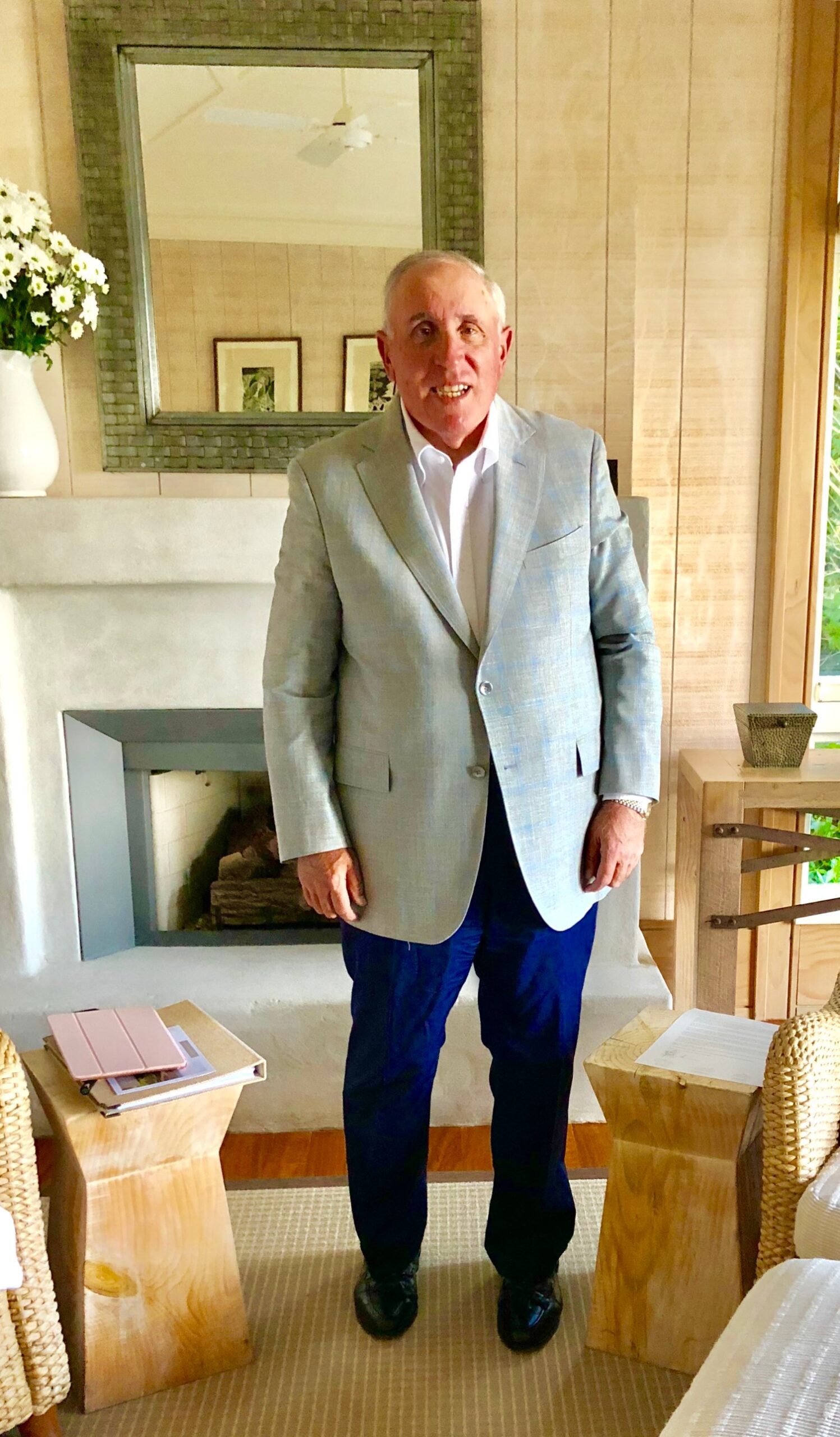
He served as a director of Maxim Integrated Products, where he chaired the audit committee, and as a director of SDC Materials. Today, as Principal & CEO of The Bronson Group, he works on investment banking, capital structure, mergers and acquisitions, divestments and strategic positioning, along with financial and operating business consulting, and he still advises companies in the industry.
“Those decades shaped how I see the game,” he has written. “Golf sharpened how I see everything else.” The boardroom also gave him the phrase he now applies to the game.
Tone at the Top
Audit committees, Joe says, “monitor the ethics and integrity of the company, which is usually labeled as the ‘tone at the top.’” He calls the concept all important in golf, because it reinforces the principal foundation of the game.
The “tone” is the foundation for playing the game with integrity and conformance to the Rules of Golf.
The idea runs through the blog. One post, which he describes as controversial, called for the end of the Ryder Cup. A reader wrote back that “integrity has been shoved aside in favor of money,” and closed: “It’s a new world and not necessarily a better one.” Joe is clear about where that view sits: “this blog post represents a significant minority opinion among professional golf fans, but the reader recognized the situation for what it currently is.”
Reviewing another writer’s book on the blog, he put the game’s lesson plainly: “You keep your own score. You make your own decisions and you answer for them, alone, every time.” He describes himself as focused and determined to succeed “in the right way,” which he defines as “being respectful and understanding people through effective listening and collaboration.”
You keep your own score. You make your own decisions and you answer for them, alone, every time.
All of it shows up in the stories.
Stories, Not Instruction
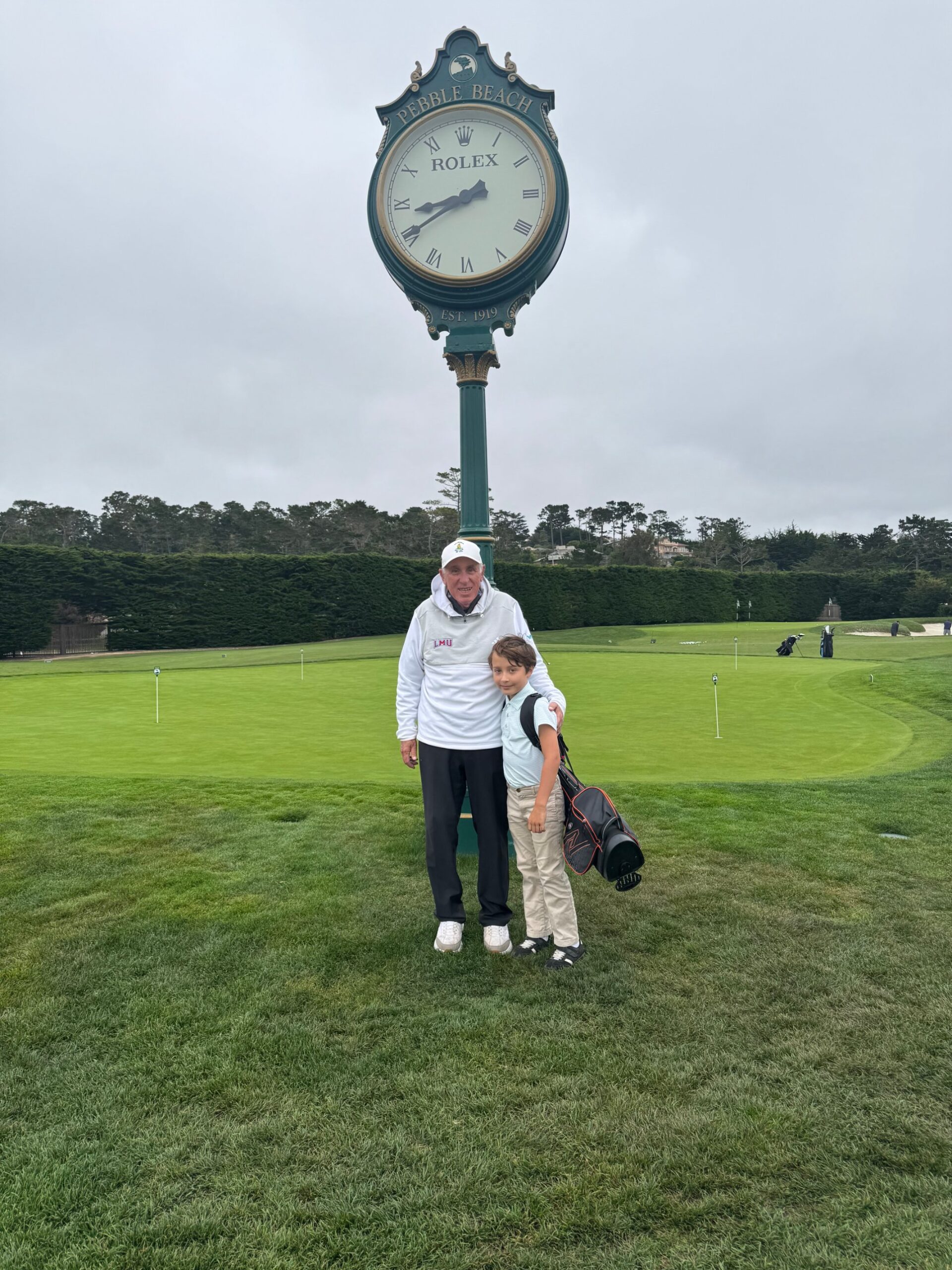
Joe writes in moments. The tee shot on the 4th at Spyglass Hill in 1986 that found the ice plant through the fairway: six shots to get out, four putts, a 13 on the card. The morning at Pebble Beach when he walked into the pro shop expecting a corporate event and was told, “Mr. Palmer’s waiting for you down by the driving range.” Arnold Palmer introduced himself and handed Joe his pin with the famous umbrella. “I still have it.” After lunch, a thousand people had gathered around the first tee, and Palmer handed him the ball. “Show us the way.” Joe wrote: “I somehow put it right down the middle. The only shot I remember from that entire round.”
Some of the stories are about the shot he didn’t take. At Lahinch, on the 5th, a 148-yard par 3 with the green hidden behind a mound, into a 35 mph wind, he faced a carry of at least 160 yards to a target he couldn’t see. “I chickened out,” he wrote. He found a smidge of green 85 feet from the hole, two-putted for par, and ranked the course last for the week while most of his group walked off effusive. “A course can be iconic and still not be for you.”
A course can be iconic and still not be for you.
The books gather these stories. Golf Chronicles and Through the Green won Indie Silver Awards in Sports and Recreation, and PARdon Me won a Non Fiction Writing Award. PARdon Me also takes up the pandemic’s effect on golf’s resurgence, and the numbers bear that out: the National Golf Foundation counted a record 48.1 million Americans aged six and over playing golf in 2025, 29.1 million of them on a course. That is the audience Joe wants to reach, at every level of the game.
The evidence he points to is the reply. Readers sign up on his website for the weekly posts, and they write back with their comments.
Where Joe Is Now
Joe is in his 70s. He once got down to a 1 handicap, and he is now, he has written, “desperately hanging onto single digits while my body refuses to cooperate with my brain.” He played basketball at a high level into his late fifties and gave it up to protect his Achilles and his knees. “You give up the game to keep walking,” he wrote. “Golf asks a gentler version of the same question.”
Over the next twelve months, his aim is “to become a recognized and credible golf author” who “stays current with all aspects of the game of golf” through josephbronson.com and The 20th Hole, and to help develop the game by donating all commercial proceeds of his work to university golf programs and The First Tee. He wants to reach “all levels of golf participation,” and golfers at every level can sign up for the weekly blog on his website. The Bronson Group continues alongside it. Outside golf and work, there are the arts, art collecting and opera, and he is a huge baseball fan, with basketball and football close behind.
“I am determined to become a recognized golf writer as a continuous objective in life, but I will continue to write irrespective of what eventually occurs,” he says, and adds: “The game of golf provides the level of challenge combined with the integration of good friends, family and business associates for a great slice of life.”
Five Lines from Joe’s Diary
- “Golf as a mirror for life. That’s what I write about.”
- “The operative word is ‘truthful.’”
- “The day you decide you have arrived is the day you start going backward.”
- “A course can be iconic and still not be for you. Both things stay true at the same time.”
- “The body changes. The determination doesn’t.”

