

From the Diary of
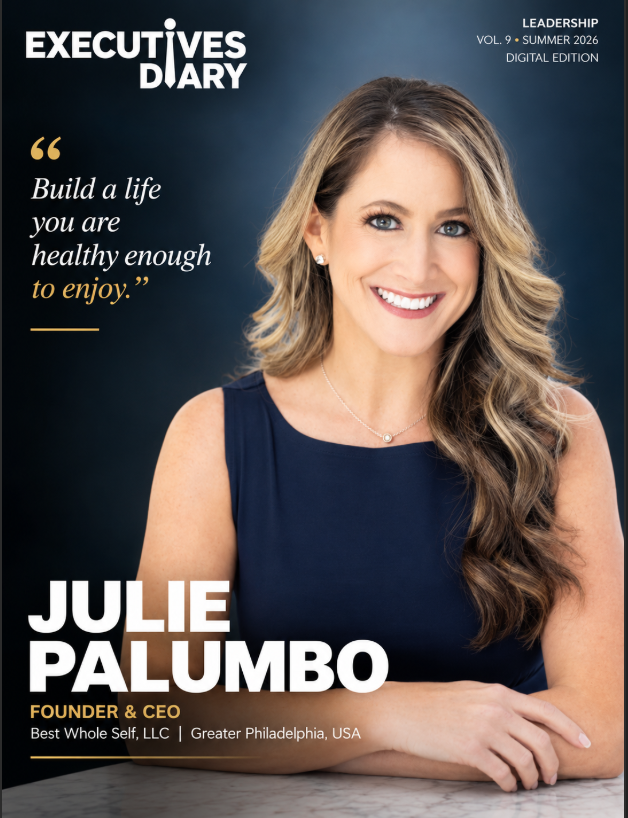
Julie Palumbo
Build a health plan that survives the week you actually have.
“A person can appear successful and capable while managing challenges that others never see.”
You have a plan for your career. You have a plan for your money. Your health gets whatever is left at the end of the day, which most days is nothing.
Eight in ten adults in midlife now report at least one chronic condition, and among younger adults the figure has climbed seven percentage points in a decade. Julie Palumbo has watched that arithmetic from both sides of the table. For a decade she sat across from clients as a financial advisor, building the plans that were supposed to make the future comfortable. She was also living with Crohn’s disease, so she knew what those plans left out: the future you are funding arrives in a body, and the body keeps a ledger of its own.
The advice she gives now runs against most of what the wellness market sells. In a 2023 American Psychological Association survey, 77 percent of workers reported work-related stress in the previous month, while only 29 percent said their managers encouraged them to look after their mental health. That gap, between the message and the conditions, is where most health plans die.
What follows is how Palumbo closes it, starting with the question she asks before she asks about a single habit.
Nobody Fails at Health Because They Did Not Want It Enough
The standard prescription for a burned-out professional is more effort. Track the macros, download the app, book the 6am class, and if none of it lasts, try harder in the new year.
Palumbo’s diagnosis starts somewhere else. “We have normalized a version of professional success that leaves very little room for self-care. Skipping lunch, answering emails late at night, and running on too little sleep can become signs of dedication. Then we expect people to solve the consequences on their own, often by adding an ambitious wellness routine to an already overwhelming schedule.”
There is now evidence that the popular fixes do very little on their own. A study of 46,336 workers across 233 organizations, published in the Industrial Relations Journal, compared people who took part in mindfulness sessions, resilience and stress management training, relaxation classes and wellbeing apps with people who did not. It found no sign that participants ended up better off. What the author pointed to instead was scheduling, management practice, staffing levels and job design.
We have normalized a version of professional success that leaves very little room for self-care. Skipping lunch, answering emails late at night, and running on too little sleep can become signs of dedication.
Which is another way of saying that a plan fails because of the week it was dropped into, not because the person who made it lacked conviction.
The Question She Asks Before She Asks About Habits
Palumbo begins with the same move a good financial planner makes. You do not open a retirement conversation with the monthly contribution. You open it with what the money is for.
“That guides how I work with every client. Before we talk about habits, we talk about what they want their health to make possible. It might be having energy for their children after work, feeling more present in their relationships, or being able to travel comfortably.”
Only then does the plan get built, and it gets built around the person’s actual responsibilities, preferences and constraints rather than an idealized week. As a National Board Certified Health and Wellness Coach, she describes her role as helping people “find an approach they can sustain and develop confidence in their ability to care for themselves.”
Find an approach you can sustain, and develop confidence in your ability to care for yourself.
Confidence is the word to notice. Most people arrive with a long history of plans that collapsed, and read that history as proof that they are the problem.
Build the Plan Around the Week You Already Have
Three things a reader can do this week without buying anything: name the outcome in plain language, fit the habit to the week you actually have, and treat a broken habit as information rather than a verdict.

Build the Plan Around the Week You Already Have
Name the outcome in plain language first. Not a weight, not a step count, but the thing the health is for: getting through bath time without wanting to lie down, sitting through a long flight, being present at dinner.
Fit the habit to the week you have. The school run, the standing 7am call and the travel schedule are not obstacles to the plan. They are the plan’s actual shape.
When a habit does not hold, treat it as information rather than a verdict. “When someone struggles to follow through on a goal, I want to understand what got in the way,” Palumbo says. This is the practical edge of the value she names as the bedrock of her identity, compassion, learned from years of appearing well while managing something invisible.
When someone struggles to follow through on a goal, I want to understand what got in the way.
As she puts it, “A person can appear successful and capable while managing challenges that others never see.”

Compassion is the practical edge of the method: understand what interrupted the behaviour before turning the interruption into a judgment about the person.
The Workshop Is Not the Problem. The Hour After It Is.
Palumbo also works the other side of this, leading wellness workshops for the corporate wellness company Exubrancy, which builds programs for HR and people teams. She is unusually direct about the limits of what a workshop can do.
“There is a gap between telling people their health matters and creating conditions that allow them to act on it. Individuals need realistic strategies, and workplaces need to consider whether their expectations and culture support the wellbeing they promote. A wellness workshop can start a conversation, but employees also need room to put those ideas into practice.”
Employees also need room to put those ideas into practice.
For a leader, that turns the wellbeing budget into a different question. Not which vendor, but whether anyone on the team could act on the advice at 4pm on a Thursday without falling behind.
The workplace version of the argument is straightforward: wellness advice only becomes useful when the surrounding expectations leave people enough room to act on it.

What She Did Before She Coached Anyone
The credentials arrive late here on purpose, because the argument should stand first.
Palumbo spent a decade in financial advising, and has run Best Whole Self since 2017. She has a marketing degree from Saint Joseph’s University, completed the Coaching Intensive Practicum at the Institute for Integrative Nutrition, and holds national board certification in health and wellness coaching.
She wrote for Health Union, the patient community publisher, for close to seven years, and coached patients at Oshi Health, a virtual clinic for gastrointestinal conditions, which is to say she has coached people through the exact category of illness she lives with.
She has also sat on the board of the Crohn’s & Colitis Foundation for nine years. That combination is the whole proposition: someone who understands what a comfortable future costs to build, and what it costs to be too unwell to use it.
Where Julie Is Now
She works out of Philadelphia, with professionals one to one and with teams through The B.E.S.T. Strategy™, which applies the same order of operations to a workforce that she uses with a single client. Her ambition for the field is a change in default expectations rather than a change in products.
“I want taking care of our health to become an expected part of a successful life, something we make room for throughout our careers instead of postponing until retirement or a health crisis.”
The Julie Palumbo Playbook: Leading Your Health the Way You Lead Your Work
- Start with the outcome, not the habit. Decide what you want your health to make possible before you decide what to change.
- Plan health like you plan money. Health compounds and it depletes, and it does both while you are busy with something else.
- Build around your real week. A plan that assumes an easier schedule than the one you have is not a plan.
- Treat a broken habit as data. Ask what got in the way instead of asking what is wrong with you.
- Fix the calendar, not just the coaching. If you lead people, check that your expectations allow anyone to act on the advice you are funding.
Julie Palumbo coaches professionals and organizations on sustainable health at bestwholeself.com. Connect with her on LinkedIn.