

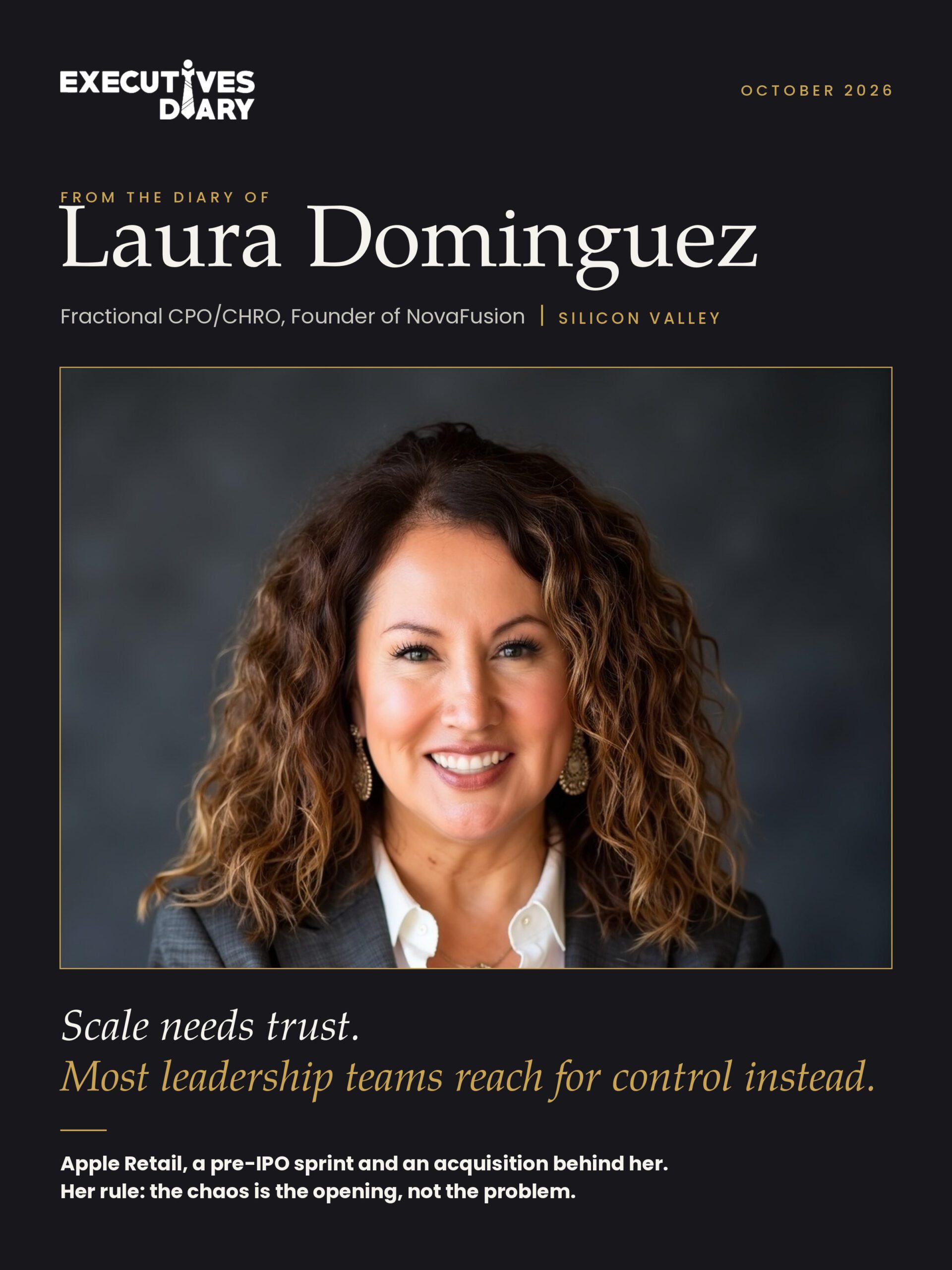
From the Diary of
Laura Dominguez
For the CEO whose culture is fraying under AI and growth: the case that the chaos is the opening, not the problem, from a people leader who has worked through a pre-IPO run, an acquisition and the Apple Retail years.
“Culture isn’t built through mandates. It’s built through kindness.”
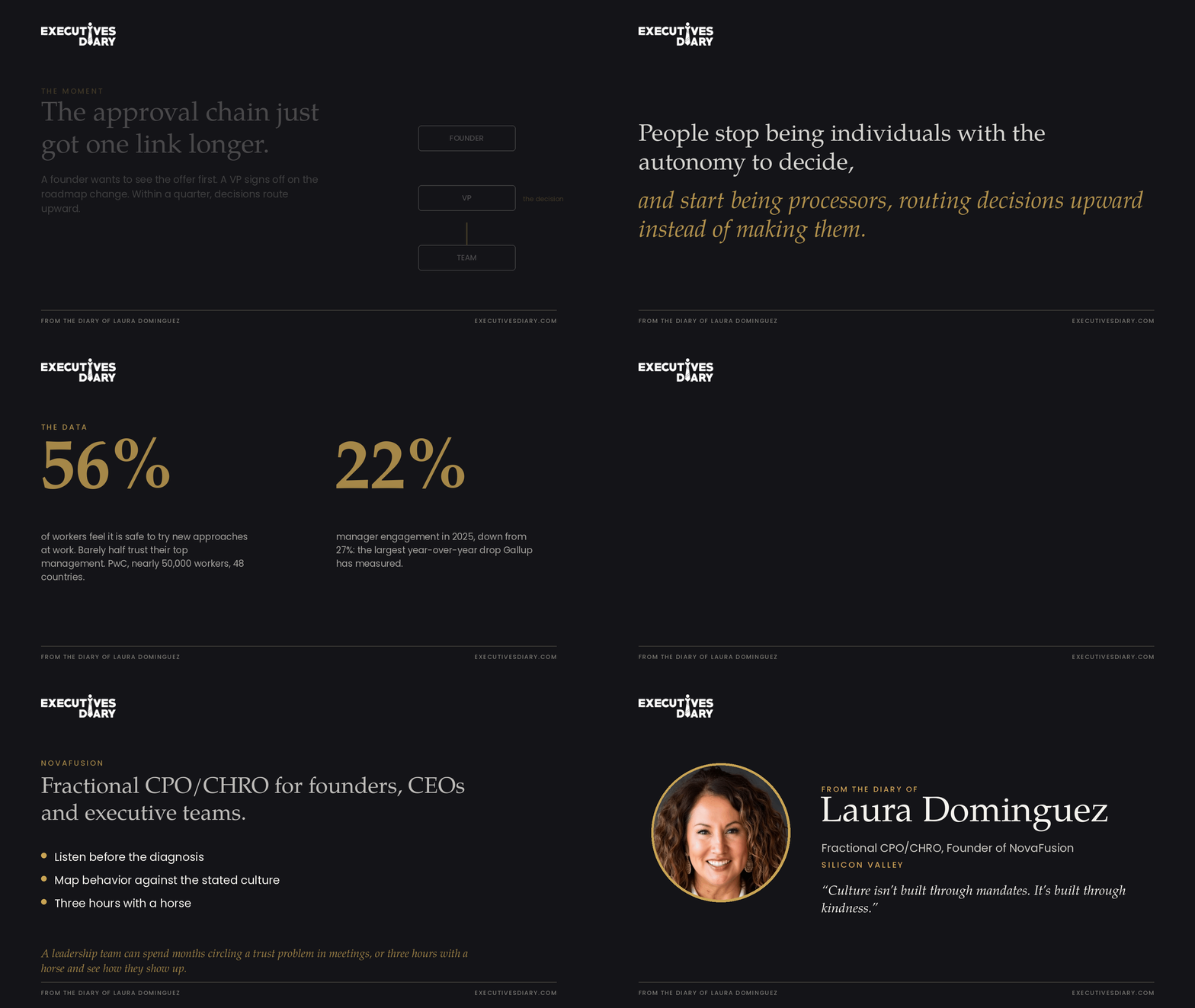
There’s a moment in a scaling company when the approval chain gets one link longer. It rarely looks like a decision. A founder wants to see the offer before it goes out, a VP wants to sign off on the roadmap change, and within a quarter the decisions that used to be made where the information lives are routing upward instead. Laura Dominguez has watched what that does to the people below. They “stop being individuals with the autonomy to decide and start being processors, routing decisions upward instead of making them.”
That pattern is not confined to any one company. PwC’s 2025 Global Workforce Hopes and Fears Survey, which asked nearly 50,000 workers across 48 countries, found that barely half of them trust their top management, and only 56% feel it’s safe to try new approaches at work. The gap between what a leadership team says it wants and what its people feel safe to do is, in most organizations, wide open.
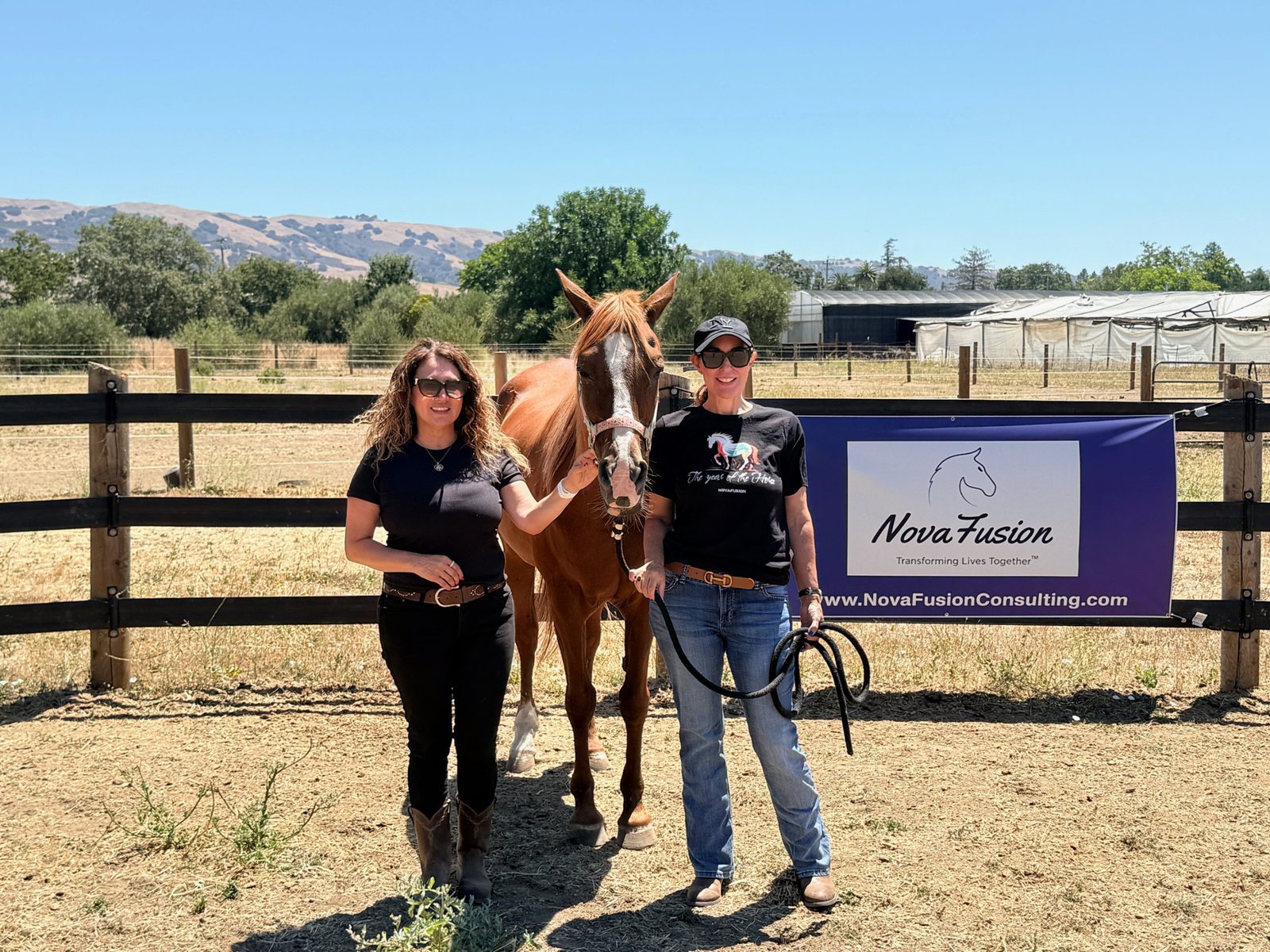
Laura is the founder of NovaFusion, and closing that gap is the work. She serves founders, CEOs and executive teams as a fractional Chief People Officer or CHRO, and part of the method involves horses. In her own sentence: “NovaFusion is an HR consultancy that helps organizations grow and scale with a very transformative equine-facilitated executive coaching program.” Her argument, and the reason this piece exists, is that a period of rapid change, “hello, AI,” is not a threat to culture but the one moment when it can be rebuilt stronger. The reader she wants is the CEO whose culture is fraying under AI and growth, the one who, as she puts it, “needs to see that the chaos is the opening, not the problem.”
Two Kinds of Trust
Ask Laura why culture breaks when companies scale and she gives a mechanism, not a mood. “Leadership teams substitute control for trust, right at the moment trust is what scaling actually requires,” she says. “Scale cannot happen if you haven’t taught people it’s safe to move without you.” She has written that “Culture isn’t built through mandates. It’s built through kindness,” and she’s specific about what kindness means at scale: trust and empowerment, not tighter approval chains. Nor does it mean going easy. “Being kind doesn’t mean avoiding tough conversations. In fact, having honest, difficult conversations is essential to building trust.” “I’ve seen leaders who require every decision to route through them, and it doesn’t just slow the company down: it changes what the role becomes.”
Being kind doesn’t mean avoiding tough conversations. In fact, having honest, difficult conversations is essential to building trust.
What it does to the people in the middle is showing up in the numbers. Gallup’s 2026 State of the Global Workplace report recorded manager engagement falling from 27% to 22% between 2024 and 2025, the largest year-over-year drop it has measured.
Laura is the first to say the idea is not hers. “This isn’t a new idea; it’s just consistently under-practiced.” She points to David Marquet’s work on intent-based leadership, pushing authority to wherever the information already lives and replacing “permission to” with “I intend to,” as the clearest day-to-day operating model she knows. She cites Mike Ettore’s trust-based leadership work for the leader’s side of the case: trust is a strategy, not a personality trait. And she says the piece most teams skip is the distinction Patrick Lencioni draws between predictive trust, earned by watching someone long enough to predict what they’ll do, and vulnerability-based trust, which she places in Brené Brown’s territory: the willingness to say “I don’t know,” “I was wrong” or “I need help” in front of the team.
Predictive trust is what most leadership teams settle for. Vulnerability-based trust is what actually lets someone say ‘I’m not sure this will work’ before it becomes a costly mistake, and that’s the trust scaling companies actually need.
The harder question is when to do anything about it.
Change Is the Moment
Most leadership teams plan to fix culture once things settle down. Laura tells them the opposite. “Change is the one moment when a leadership team’s old habits are already disrupted, which means it’s also the one moment when new, better habits are easier to shift. Waiting for stability to ‘fix culture’ almost always means the fix never comes, because stability removes the urgency.”
She has tested that inside the two transitions that pull hardest on a company. She built the people foundation while a company sprinted toward its IPO, and she integrated culture after a company she was part of was acquired by a much larger one. “They pull culture in opposite directions, but the same instinct saves you in both: protect the conditions, don’t wait for stability to fix them, because a transition like this never leaves you a quiet moment to do it later.”
Pre-IPO, she says, the pull is forward. Every calendar decision bends toward the listing date, and it’s easy to let culture become the thing the company will invest in “after we ring the bell.” The leadership teams that come through intact, in her experience, treat the people function as part of the readiness work itself, “not a line item next to the S-1,” a real test of whether the operating rhythm can survive public-company scrutiny without breaking the trust that got it there. Acquisitions pull backward. Two cultures collide, and “everyone below the leadership team is quietly measuring which one is going to win, whether anyone says it out loud or not.” What decides it, she says, isn’t whose values deck is more polished: it’s whether leadership is honest, fast and consistent about what’s changing and what isn’t.
Silence is what people fill in with worst-case assumptions, and that’s where trust erodes fastest.
So the work starts before anything is decided.
Listen Before the Diagnosis
The first thing Laura does when she walks into an organization is listen. Not a survey, she says, but “a set of real conversations across levels, because the gap between what leadership believes is happening and what’s actually happening is where the real work lives.” From there she maps the leadership team’s actual behavior against the culture they say they want, which is almost always where the mandates-versus-conditions problem shows up in concrete form.
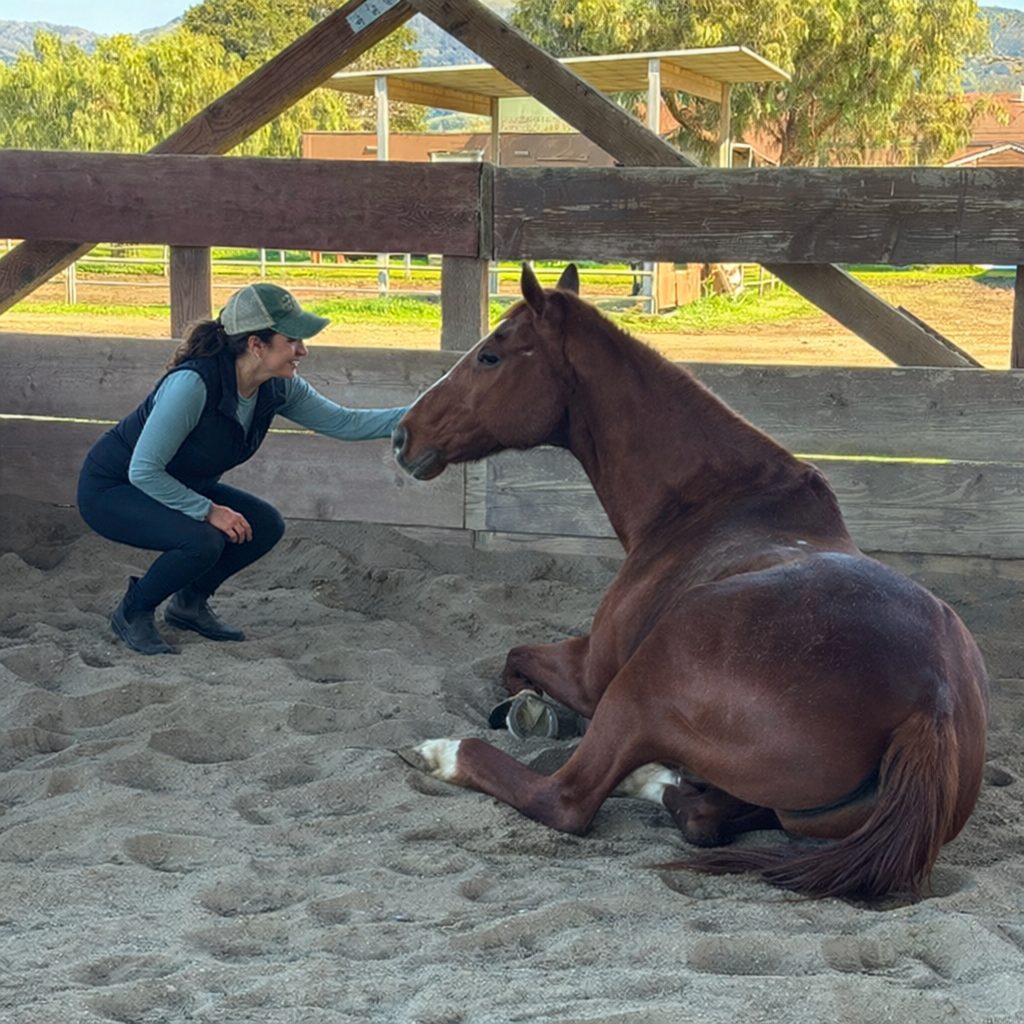
Then, fairly early, and often before the diagnosis is finished, she takes the team to the horses. “Horses don’t respond to titles or the story a leader tells about themselves; they respond to authenticity, trust and clear communication.” That is what makes the equine-facilitated sessions useful as an accelerant: “with AI impacting the workforce the key differentiator will be decision making and teamwork, therefore a leadership team can spend months circling a trust problem in meetings, or they can spend three hours with a horse and see how they show up.” NovaFusion built the sessions to accelerate insight, trust and long-term impact, and in practice, she says, that’s what they do: “they compress the timeline on the part of the work that normally takes longest, which is getting a team to actually see itself.” Her shorter version of the same point: “Leadership isn’t what you say. It’s what people experience.”
Teams leave with a p-ACT, an agreement they make together, focused on presence, awareness, communication and trust. After that comes what she calls leadership integration: making sure the team follows through on its action plans and strategy, and inserting the operational rigor needed to change the system. “Once you have the leaders aligned, changing the system is next and employees will follow.”
Once you have the leaders aligned, changing the system is next and employees will follow.
She has signed confidentiality agreements, so the companies stay unnamed. What she will say is this: “every individual that has gone through the equine leadership program has had an ‘ah ha’ moment. I haven’t seen those results from a leadership program.” The evidence, in her terms, is the acceleration, for the leaders and for the teams. The instinct to move fast and see clearly came from somewhere specific.
After Two Startups, Apple Retail
“After two startups, I went to Apple, yep, Apple Retail, and the failures along the way taught me more than any success did.” People often ask Laura where she learned to transform and scale organizations, she wrote recently, and that’s the answer. The lesson was about speed. “The real failure wasn’t one mistake, it was not moving fast enough.” Apple had built its identity on obsessing over the perfect product, and retail runs on a completely different clock. Her team had to transform an organization built around building great products into one that could think retail, which meant unlearning perfectionism. “Eighty percent was good enough to get it out the door.” Once it was out, they could revise it. “By the time a competitor released something once, we’d already iterated on ours three times.”
The real failure wasn’t one mistake, it was not moving fast enough.
What never changed was the standard on the experience itself. Employees were trained to be customer-focused to the point of going above and beyond, and what made that possible at scale, she says, was trust: a Mac Specialist or a Mac Genius could make real decisions on the floor without escalating them. “That’s intent-based leadership in practice, years before I had the language for it.” What held it together wasn’t a script everyone recited. “It was consistency: every store, every interaction, delivering the same standard, even though it was the front line making the calls, not corporate.”
From there her profile runs through Cisco Meraki as Head of People & Communities, Zscaler as VP, People Business Partners, and Qualys as SVP, Human Resources, before she founded NovaFusion in 2025. While she was at Qualys, GoProfiles named her one of its Top 100 HR GameChangers, a recognition for HR leadership.
Behind the roles sits a Master of Organizational Psychology from the California School of Professional Psychology and a BS in Business Psychology from Palo Alto University, an ICF Associate Certified Coach credential, and an Equine Facilitated Learning certification. The hard moment she chose was not at Apple.
The Slack Story and the First Manager
Asked for a hard moment, she doesn’t reach for a boardroom. “Slack… I love and hate Slack… this failure goes down as the number one in history… I took for granted all systems were the same.” She had moved from one organization to another, and the new one didn’t have the enterprise product, while she was working on a confidential issue. “I had a gracious C-level who didn’t let me beat myself over this BIG mistake.” The point she takes from it is the one she gives to leadership teams: “It’s how you own your mistakes, let it go and move on.” She and her colleagues laugh about it now.
When employees thrive, organizations win. Transforming Lives Together is our mission.
The person she credits is her very first manager, Marie Zolezzi, an HR consultant, who took her under her wing. “Taught me everything about HR. Told me to be strategic which always got me a seat at the table. To this day she is my mentor.” The habit she keeps is small and deliberate: “Every morning it’s a ‘Good morning,’ not a ‘morning,’ because it’s the energy I bring and they could hear me coming down the halls.” Virtually, she starts with a question.
Where Laura Is Now
NovaFusion is a year old, and Laura runs it as a People, Leadership and Organizational Transformation consultancy, partnering with founders, CEOs, executive teams and individuals as a fractional CPO/CHRO, with the equine-facilitated sessions as the accelerant. Alongside it she is a Strategic Advisor to Graphio.ai. Over the next twelve months she wants three things, and she doesn’t think they compete as much as they look like they do: more founders and executive teams finding NovaFusion, more fractional CPO/CHRO engagements specifically, and recognition for the argument itself, that a period of rapid change is a chance to rebuild culture rather than defend it.
Outside work, volunteering matters to her. She’s on the board of Scores & Scholars, and she serves as a Court Appointed Special Advocate for foster children. “I give back,” she says, and leaves it there.
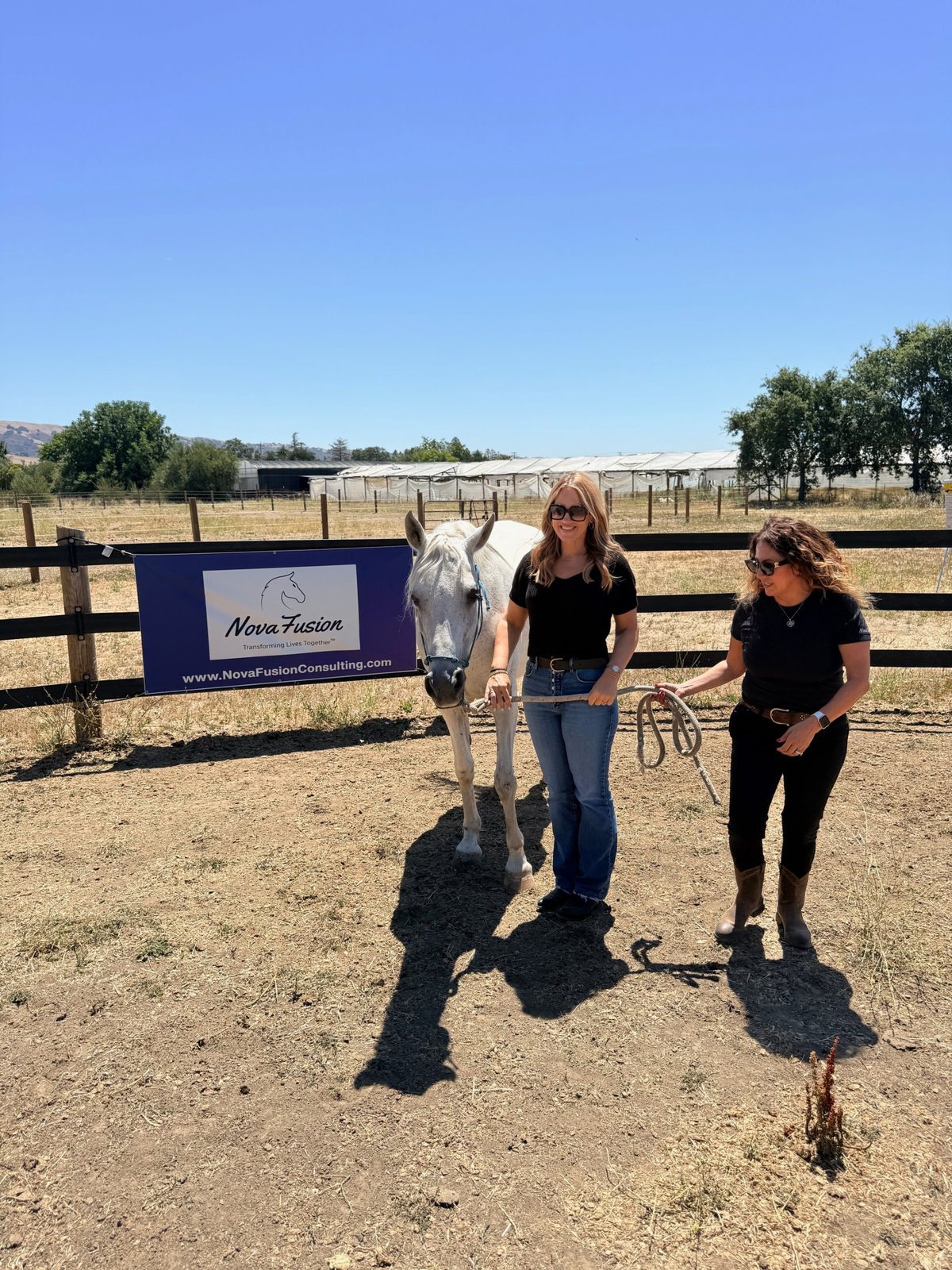
What’s next, in her words, is “helping more leadership teams choosing to rebuild culture on purpose, before a crisis forces their hand.”
The Playbook
Five Lines from Laura’s Diary
- “Culture isn’t built through mandates. It’s built through kindness.”
- “Scale cannot happen if you haven’t taught people it’s safe to move without you.”
- “Eighty percent was good enough to get it out the door.”
- “Silence is what people fill in with worst-case assumptions.”
- “It’s how you own your mistakes, let it go and move on.”
