

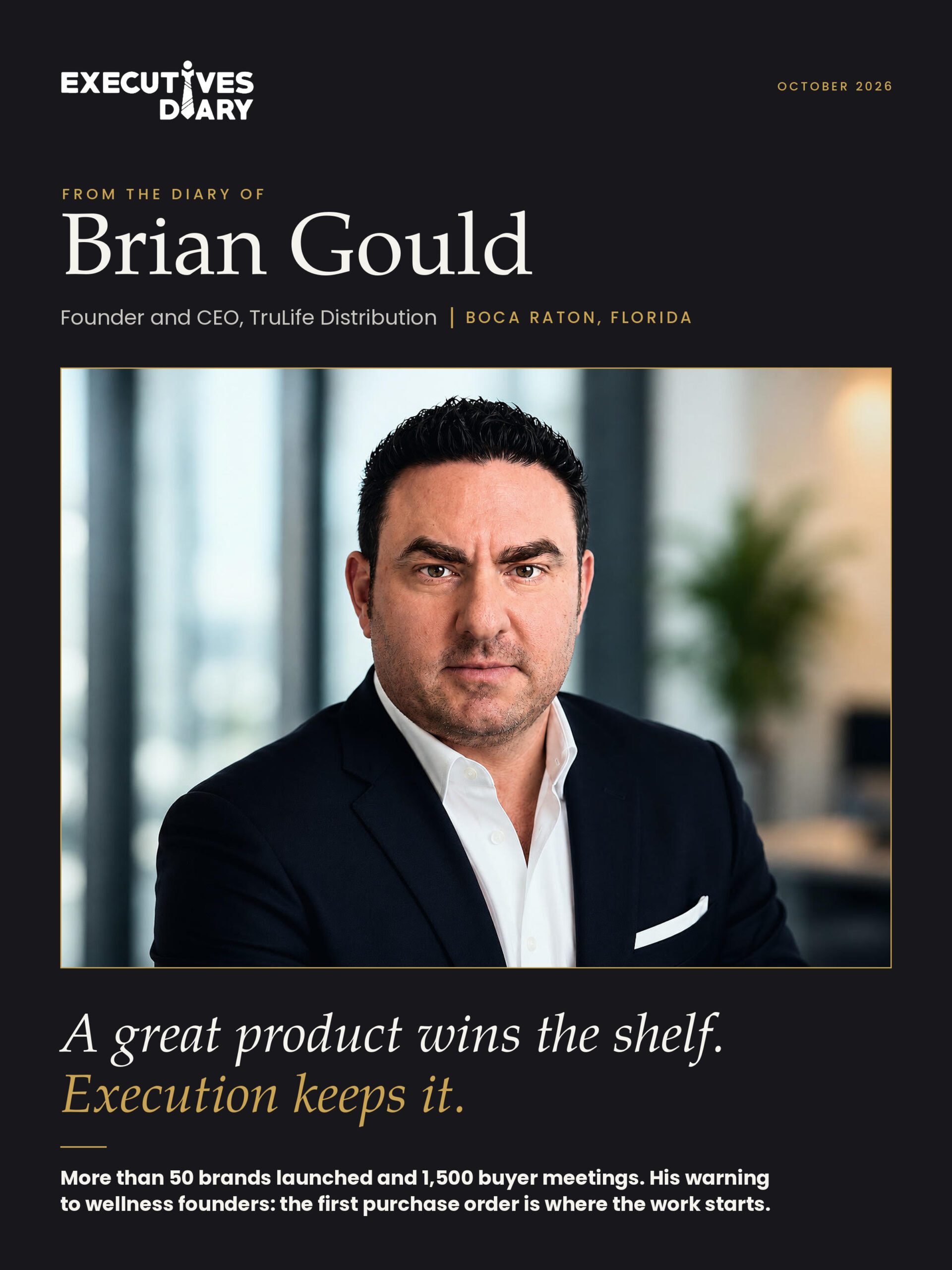
From the Diary of
Brian Gould
What an international wellness brand needs in place before a U.S. buyer says yes, from an operator who has taken part in more than 1,500 buyer meetings.
“Retailers are evaluating businesses, not just products.”
The brand had an excellent product, and the buyers were genuinely interested. It moved into retail, won its first order and treated the placement as the victory. Its pricing architecture, promotional budget, inventory planning and post-placement marketing were still unresolved. Once the product reached the shelf, there was no coordinated plan to educate consumers, drive awareness, monitor velocity or support the retailer.
“The initial order looked successful on paper, but the product turned too slowly and the reorder did not follow,” says Brian Gould, Founder and CEO of TruLife Distribution. He has helped launch more than 50 brands, supported placements across more than 5,000 retail doors and taken part in more than 1,500 buyer meetings, and he has a name for what happened to that one. “That is the execution gap. The brand had solved the product-development problem and the retailer-access problem, but it had not solved the commercial-execution problem.”
TruLife Distribution, in his words, helps emerging and international health and wellness brands “prepare for, enter and grow within the U.S. market.” The founder he most wants to reach runs an international health and wellness brand and is weighing the United States. That founder may have a strong product, successful sales at home and genuine consumer demand. Brian’s point is that all of it “does not automatically translate into U.S. retail readiness.”

The Order That Starts the Work
The line Brian comes back to is short: “Retailers are evaluating businesses, not just products.” He made the point in Food Business News’ special report from Newtopia Now, and it runs through everything he wrote in answer to our questions.
Retailers are not simply evaluating products. They are evaluating whether the business behind the product can consistently supply it, protect margins, support the launch and create enough consumer demand to earn continued shelf space.
On LinkedIn he has put the same idea in two lines: “Demand creates the first order. Execution creates the second.” For a founder, that changes what the first purchase order means. “Securing a buyer meeting or even an initial purchase order is not the finish line,” he says. “The real test is whether the company can support the placement, generate sell-through, replenish inventory and build a lasting retail business.”
It is also why he does not describe TruLife as a typical broker. “A broker generally focuses on making the introduction and earning a commission on the sale,” he says. “We become an extension of the brand, coordinating strategy, compliance, pricing, buyer development, sales management, marketing, logistics and ongoing commercial execution.”
He learned what happens after the introduction over thirteen years at one company.
Thirteen Years at Nutritional Products International
The industry came to Brian through his family. “My father, Mitch Gould, introduced me to this industry and taught me early that retail distribution is fundamentally a relationship business,” he says. “Products and companies will change, but trust, communication and keeping your commitments determine whether people continue doing business with you.”
After Florida Atlantic University, he spent thirteen years at Nutritional Products International, from 2006 to 2019, where his title was President. Earlier in his career he was also involved in placing more than 20,000 health and wellness SKUs onto Amazon. What those years taught him, he says, is that “strategy only matters if it survives contact with day-to-day retail operations.”
A presentation can look excellent and the buyer can like the product, but the operator, as Brian puts it, is thinking beyond the meeting. “Can the brand fill the purchase order accurately? Does it have enough inventory? Can it meet the retailer’s delivery requirements? Can it manage deductions, promotions, chargebacks and replenishment? What happens when velocity is below expectations? Who follows up with the buyer, and how quickly?”
“Someone who only prepares the pitch may focus on obtaining the placement,” he says. “Someone who has managed the business after placement understands that the purchase order creates a new set of responsibilities.” He has worked through the whole lifecycle, in his own list: “preparation, buyer presentation, onboarding, fulfillment, marketing, sell-through, reporting, reorders and expansion.”
I am not only asking whether the buyer will like the product. I am asking whether the business can perform after the buyer says yes.
That experience, he says, changes what he looks for before a brand ever reaches the buyer. It is also what he took with him when he left.
Building TruLife From the Ground Up
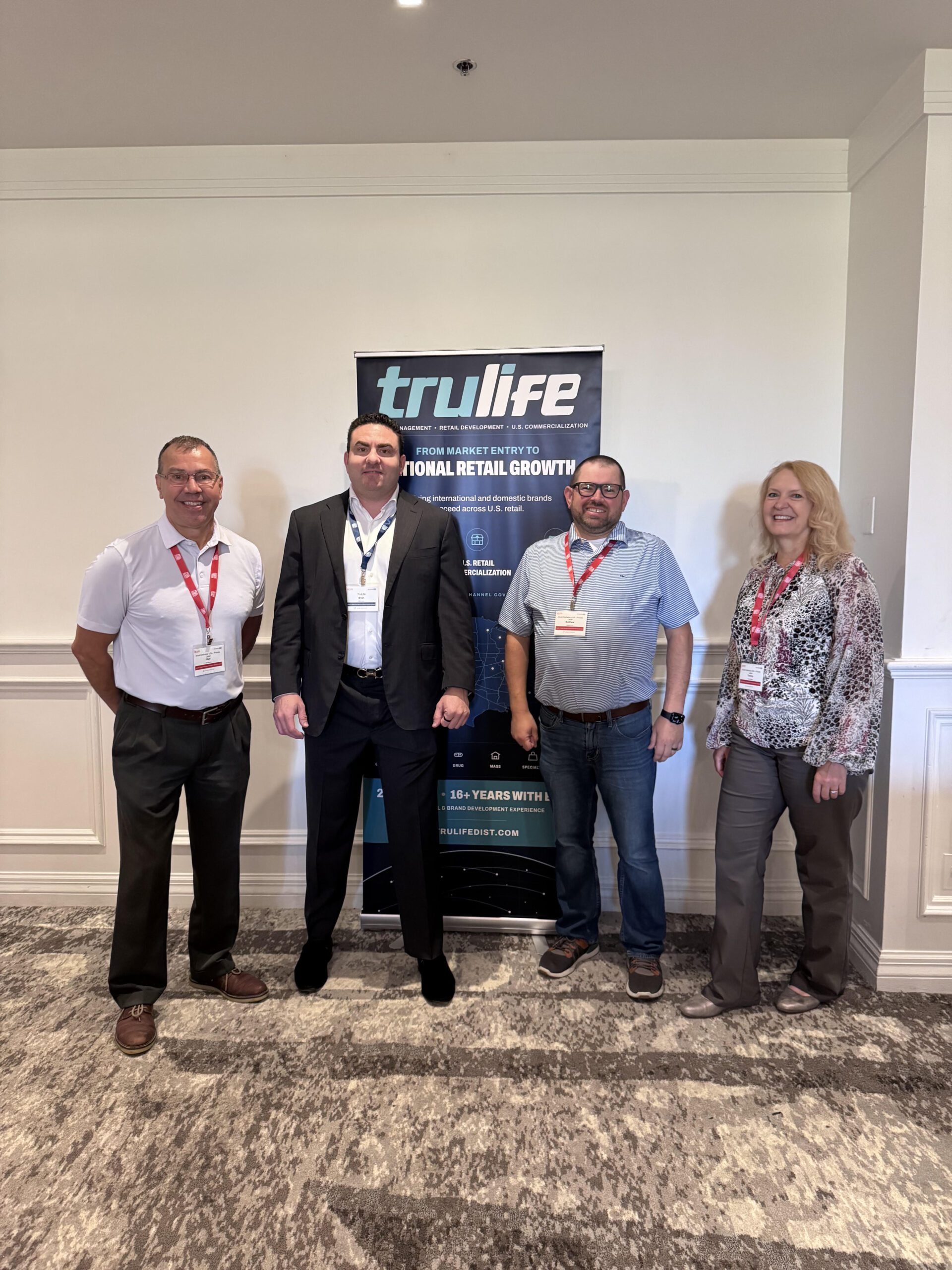
Brian started TruLife Distribution in 2019. “Starting TruLife after thirteen years at Nutritional Products International was the hardest professional reset of my career,” he says. “I had to take everything I had learned and build a new company, infrastructure and identity from the ground up.”
He has written that after more than two decades in consumer products he “saw too many exceptional brands struggle,” and that great products were not what they were missing. What they lacked, he wrote, was “the right commercialization strategy, retail guidance, and execution.” The aim he set for the company was to become an extension of the brands it represents.
He has also written about how clients describe that. “One of the biggest compliments we receive is this: ‘It feels like your team is part of our company.’” His own view of it follows in the same post: “The best commercial relationships aren’t transactional. They’re collaborative.”
The best commercial relationships aren’t transactional. They’re collaborative.
Where the Brand Is Actually Ready
“When a brand comes to us convinced it is ready, the first thing we do is determine where it is actually ready and where it is not,” Brian says. The review covers product and category differentiation, U.S. consumer positioning, pricing, landed costs and retailer margins, packaging and claims, FDA and regulatory readiness, SKU strategy, inventory and supply chain, importation, warehousing and fulfillment, marketing and promotional support, and the company’s ability to support retail after placement.
“A great product and a retail-ready brand are not the same thing,” he says. “If the economics do not work, the claims create regulatory exposure or the company cannot reliably replenish inventory, a buyer introduction will not fix those problems.”
Some of that exposure is set out in federal rules. A firm that markets a dietary supplement with a structure/function claim on its label must notify the FDA within 30 days of first marketing the product with that claim. Foreign facilities that make, pack or hold food for U.S. consumers must register with the FDA and have a U.S. agent as their link with the agency, as the FDA restated in a 2020 update.
Once the gaps are known, the work turns to what Brian calls the retail story: “who the consumer is, why the product deserves shelf space, how it is different, how the retailer makes money and what the brand will do to support sell-through.” Then it goes in front of buyers.
What the Buyer Meetings Are For
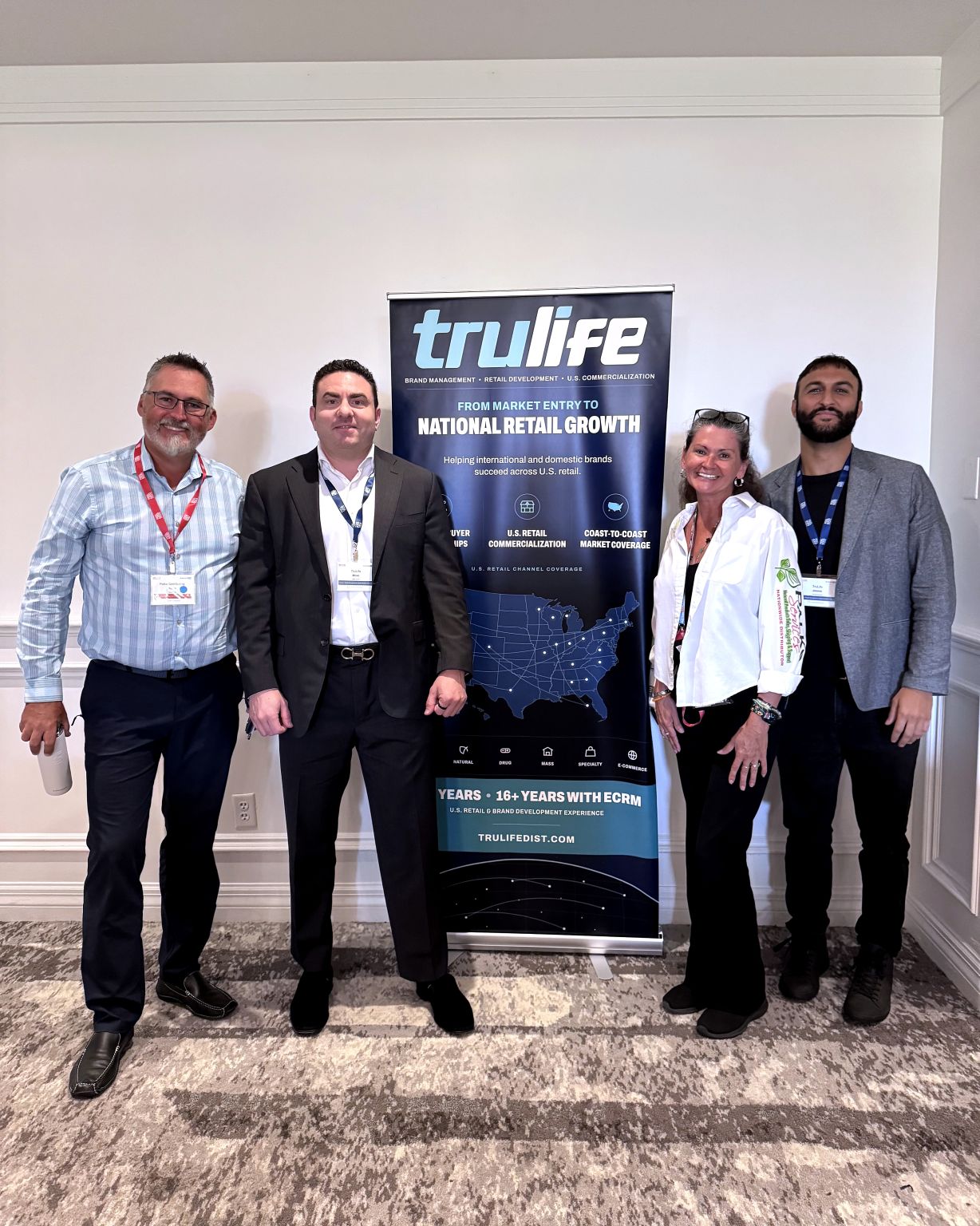
TruLife’s recent ECRM meetings, Brian says, show how he uses buyer time. “Those conversations are not simply about obtaining a yes or no from a specific group of retailers. They give us live market feedback. We see which messages connect, which objections appear repeatedly, which channels are the best fit and what must be strengthened before broader expansion.” The insights feed back into the strategy and into a broader U.S. commercialization plan.
The brands reach those meetings through a filter. At Newtopia Now in Denver, Brian and his team spent three days meeting emerging health and wellness brands from the United States and abroad. Several of them, he wrote afterward, would move into deeper evaluations with TruLife. “The show may be over, but the real work is just beginning.”
The show may be over, but the real work is just beginning.
His cases follow the same order. In one retail launch, TruLife helped a brand reach more than 700 doors. “The number was important,” he says, “but the work that happened before and after the placement mattered more: establishing the economics, building the retail presentation, coordinating inventory and supporting the rollout.”
All Real Nutrition, an international brand entering the U.S. market, is the example he gives of the process. TruLife helped coordinate its FDA and regulatory work, develop its U.S. positioning and strategy, and secure its initial specialty-retail and online placements. Rather than entering every channel at once, the focus was on the right first placements, so the brand could gather validation and feedback and build from there.
The goal is not to accumulate doors for the sake of announcing a large number. It is to build a repeatable commercial platform that can support sustainable expansion.
That is the part of the work he most wants founders to see early.
Where Brian Is Now
Seven years into TruLife, Brian’s attention is on the founder who has not yet approached a U.S. buyer. “Our strongest work happens when we are involved early enough to evaluate the brand, identify the commercial gaps and build the right foundation before it begins approaching buyers,” he says. Over the next twelve months he wants the execution gap understood as a recognizable industry problem, and he wants more founders to find TruLife before they try the U.S. market on their own.
His working habit is a small one. “I do not leave an important conversation without defining the next step,” he says, “and I believe disciplined follow-up is where many opportunities are either won or lost.”
Outside work, in his own words: “I’m a husband and father of three young children, and my family keeps me grounded and gives a deeper purpose to what I’m building.”
What he is building toward he states plainly: “My goal is to make TruLife Distribution the first call an international health and wellness brand makes before attempting to enter the U.S. market.” For the founder weighing that call, he has already said where the test lies. “Getting onto the shelf is one challenge. Staying there is the real business.”
Getting onto the shelf is one challenge. Staying there is the real business.
The Playbook
The Brian Gould Playbook: Before the Buyer Says Yes
- Find out where the brand is actually ready, and where it is not. Start with differentiation, margins, claims, FDA readiness and the ability to replenish, before any buyer meeting.
- Make the economics work before the introduction. A buyer introduction will not fix pricing, regulatory exposure or unreliable inventory.
- Build the retail story. Who the consumer is, why the product deserves shelf space, how the retailer makes money and what the brand will do to support sell-through.
- Treat buyer meetings as live market feedback. Watch which messages connect and which objections repeat, and strengthen the brand before broader expansion.
- Never leave an important conversation without defining the next step. Disciplined follow-up is where many opportunities are won or lost.
