

Founder and creative director Mervé Key has created work for brands including Victoria’s Secret, Pears, Herbal Essences and Samsung. She now shares what she learned about running projects, pricing, boundaries and building a sustainable creative business.
In her first year of freelancing, Mervé Key landed her first four-figure project. She was, she says, “over the moon.” She hadn’t set any boundaries. The client had her personal number and could reach her at night and at weekends, the scope kept changing, and she was doing everything herself. What had felt like a huge win took two or three months to finish.
“By the end of it, I was completely drained,” she says. “I remember thinking, if this is what being a photographer means, I don’t want to do it.” She came quite close to giving up. What she saw instead was that “the problem wasn’t the career itself. It was the way I was working and treating it.”
It’s a familiar place for a creative career to stall. A 2024 survey of UK visual artists, photographers among them, by the CREATe centre at the University of Glasgow found that those whose art is their main occupation earn a median self-employed income of £12,500 a year, and that many take on other jobs to make ends meet.
Mervé reads numbers like that practically. Someone can be talented and have regular freelance work, she says, and still feel “there’s no realistic way to leave their full-time job because the numbers simply don’t add up.” The answer isn’t always more clients. Sometimes, in her words, “they’re charging too little to the clients they already have.”
She is the founder and creative director of Veolara Studio, a multi-disciplinary creative studio for skincare, beauty and wellness brands, and she is based in Manchester. She started in a spare room with a beginner camera and has since worked with start-ups through to Victoria’s Secret, Samsung, Guinot and Aveeno Baby. What comes next, she says, is “becoming the person I once needed”: helping creatives win and keep clients and build profitable businesses, and helping founders turn scattered ideas into a creative direction that moves the brand forward.
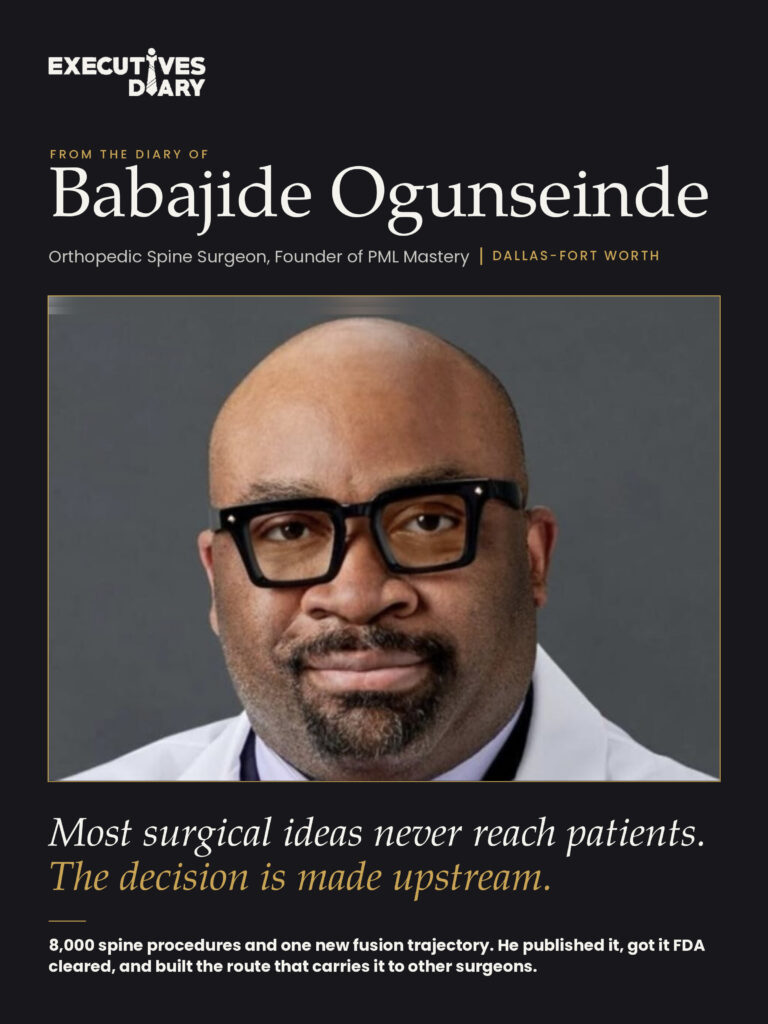
Leader in spotlight: Read BabaJide Feature in Executives Diary
A Beginner Camera and No Plan
Her route into photography, she says, was “quite unconventional.” She had a beginner camera at home, didn’t really know what to do with it and didn’t think it could become a career. During Covid she started experimenting with whatever objects she could find around the house, mainly to teach herself the camera.
“If anything, I probably had more confidence in my ability to sell an idea than I had a body of work to prove I could actually do it,” she says. So she filled the gap from the business side, learning how to present herself, approach brands and give clients a reason to trust her. “It was never about overpromising and underdelivering,” she says. “It was more about backing myself before I had all the evidence behind me.”
She thinks a lot of creative careers stall because people “spend years getting better at the craft, but almost no time learning how to build a business around it.” In the Creative Industries Policy and Evidence Centre’s 2026 Skills Audits, 56 per cent of creative employers with skills shortages linked their recruitment difficulties to applicants lacking core business skills such as finance, fundraising or people management.
Nobody handed Mervé those skills. People “weren’t always very transparent about the business side,” she says, so she learned “by doing, making mistakes, dealing with situations as they came up and gradually putting better processes in place.”
Pricing is where she learned her biggest lesson.
The Hidden Costs of Creative Work
That first four-figure project had a second cost she only saw later. While it dragged on, she had to turn down another opportunity she really wanted because she didn’t have the capacity. “That was when I started to understand opportunity cost,” she says. “Undercharging doesn’t just cost you in unpaid hours. It costs you energy, capacity and potentially better opportunities because your time is already tied up elsewhere.”
“It’s very easy to look at a £2,000 shoot and think you’ve made £2,000. But once you factor in assistants, models, studios, props, equipment, retouching, software, tax and all the unpaid time spent on calls, planning, revisions and delivery, it becomes a very different number.”
Mervé Key, Founder and Creative Director, Veolara Studio
The hours behind the camera are only part of it, she says. There’s planning, emails, calls, admin, prop sourcing, equipment, software and revisions, the work clients never see. “You can have a full calendar and still not be running a healthy business if your projects are underpriced or taking far more time and resources than you accounted for.”
After that first year she became much clearer on her offers, pricing, scope, revisions and boundaries, and she stopped doing everything herself. “If you price properly, you can bring in other freelancers where you need them and protect your own time and energy for the parts of the business that actually need you.”
That, she says, was the biggest shift from photographer to studio founder. She stopped looking at a project simply as what she was being paid to create and started asking what it costs to deliver, what it requires from her, what other opportunities she might be giving up to take it on, and whether it makes sense for the business. Learning to price properly, as she sees it, “can be the difference between freelancing on the side and actually being able to build a sustainable business.”
Getting the work in the first place was the other half.
Giving People the Chance to Find You
A lot of talented creatives, she says, are uncomfortable with self-promotion because it can feel “awkward or too salesy.” For her, it was never about pretending. “It was about recognising what I could do, being confident enough to put myself forward for it and then making sure I delivered.”
“Nobody is going to discover you simply because you’re very good at something. At some point, you have to give people the chance to discover you.”
Mervé, Founder and Creative Director, Veolara Studio
Sometimes the skill is already there and the business is missing. Mervé once spoke to a young creative who was very good at technical drawing. “When she showed me her work, my jaw dropped, and she seemed surprised by my reaction,” she says. To the young woman it was just something she could do. Mervé told her: “Brands pay people to create product visuals like this. Grab a couple of products at home that you think look beautiful, draw them, photograph your work and tag the brands on social media.”
“The skill was already there,” Mervé says. “The missing piece was recognising its commercial value and knowing how to put it in front of the right people.”
For others the problem comes later: a strong portfolio, plenty of enquiries, and still overworked and underpaid. Then it’s about how they’re pricing, what they’re agreeing to, how much time each project really takes, and whether the business makes enough to be sustainable. And getting the job, she says, “is only the beginning.” After it come contracts, usage, boundaries, revisions, communication and turning one project into an ongoing client relationship.
One project, she says, summed up how she has built all of it.
One Hour and No Lighting
Hair Syrup has been a client from quite early in her career. Her work for the brand ran across the London Underground, at London Bridge, Euston, Oxford Circus and Marble Arch and inside the tube carriages.
The shoot had been well outside her comfort zone. She had never photographed a model before. It had to happen in London, the studio was booked last minute with no professional lighting, and there was one hour to get the shot. “I could have easily thought, I’ve never done this before, so I’m not ready,” she says. “But I knew I could figure it out and deliver.” The project, in her words, “summed up something I’ve carried throughout my career: start before you feel completely ready.”
The same instinct shows when something goes wrong on set. Once, the only sample of a product smashed mid-shoot. Rather than panic the client, she spent hours going from shop to shop until she found something with the right texture, recreated the shot and carried on. “They never even knew anything had gone wrong,” she says.
Her client list now runs from start-ups to Victoria’s Secret, Ogilvy, Samsung, Guinot, Pears, Herbal Essences and Aveeno Baby. “Every time I’ve stepped slightly outside what I already knew how to do, I’ve come out of it more capable than I was before,” she says.
What brands buy from her, she has come to think, is more than the picture.
Reading the Brief as a Business
“I don’t think the job is necessarily about being the best photographer in the room. Brands want someone they can trust to take an idea and actually get it over the line.”
Mervé, Founder and Creative Director, Veolara Studio
Sometimes that means pushing back on a brief, suggesting a better way of doing something, managing expectations, or “solving a problem before the client even knows there is one.” Learning the business side changed how she reads a brief. She isn’t only thinking about what would look good creatively. She’s thinking about what the brand is actually trying to achieve, whether the budget matches what it’s asking for, what resources the work needs, how long it will take and whether the project makes sense for the business.
A client once told her: “Your opinion is so important to me because you saw and showed me what I couldn’t see in my own brand’s visual direction.” It stayed with her. “It made me realise that what I thought was ‘just being helpful’ was actually a skill,” she says.
Where Mervé Is Now
Mervé is putting more of her experience into helping others. She offers private one-to-one mentoring for creatives who want to price their work confidently, win and keep clients, and build a profitable business. She is also developing a masterclass covering the business skills she had to learn for herself. “Basically, everything I wish someone had taught me when I started,” she wrote.
For brands and founders, Mervé helps make creative budgets work harder. She audits existing visuals, identifies what is missing and advises on what to create next, where to invest and how to brief the right creatives. Her work spans creative direction, product launches, campaign planning and content strategy, with a focus on making brands look more cohesive and premium.
Her own days run on lists. “I need things out of my head and somewhere I can actually see them,” she says, whether that’s written down, sketched out, on a moodboard or in a reference image. She makes a to-do list every day, even when there’s barely anything on it. “Otherwise my ADHD brain will happily drift through the day.”
Away from the studio, she loves design-led hotels and restaurant hopping, and has “a very long list of places I want to eat at.” She’s drawn to thoughtful food, interiors, art and architecture, “anywhere you can see creativity in the details.”
The lesson she wants to pass on is the one she learned building her own business: “Being creative alone doesn’t pay the bills.”
Five Lines from Mervé’s Diary
- “I might not know exactly how to do that yet, but I know I can figure it out.”
- “You learn very quickly that being busy doesn’t necessarily mean being profitable.”
- “Marketing yourself doesn’t mean pretending you’re more experienced than you are.”
- “A good fee on paper doesn’t necessarily mean a good project.”
- “Pricing isn’t just about the hours you spend shooting either.”
From the Diary of Mervé Key
Mervé Key is a Manchester-based commercial product photographer, creative consultant, and Founder and Creative Director of Veolara Studio.
| Role | Founder and Creative Director, Veolara Studio |
| Based in | Manchester, United Kingdom |
“Being creative alone isn’t enough to build a sustainable career.”
Editor’s Note
Executives Diary chooses subjects for what their work can show other people. Mervé Key started with a beginner camera in a spare room and now produces creative visuals for global beauty brands. Her answers set out the business underneath that work in figures and specifics. She describes the first large project that brought her close to giving up and what she changed afterwards. That account, and the use she now wants to put it to, is why she is in these pages.
Executives Diary, Editorial

