

Three people on the same team can all be anxious for different reasons. Knowing which is which changes what they need from you.
On most teams there is someone who needs repeated reassurance, someone who struggles when plans change, and a high performer who is terrified of making a mistake. They can look like three personalities. They “may all be experiencing anxiety,” says one Chicago psychotherapist, “but what is driving that anxiety may be very different.”
Anxiety at work is not a small problem. The World Health Organization estimates that depression and anxiety cost about 12 billion working days a year worldwide, and roughly $1 trillion a year in lost productivity.
That psychotherapist is Noelle McWard Aquino, a licensed clinical social worker and the founder of Counseling Solutions, a group psychotherapy practice in Chicago. She has specialized in anxiety for more than 30 years, and she developed the Anxiety Unpacked framework, which identifies three types of anxiety, each driven by a different underlying need. She has trained therapists in it, written a book about it, and given a TEDx talk based on it that TED.com selected as an Editor’s Pick.
Her aim reaches beyond the therapy office. “My larger goal is to change the way we think and talk about anxiety,” she says. “I want people to move beyond simply asking, ‘Am I anxious?’ and become more curious about what kind of anxiety they’re experiencing and what is driving it, because different kinds of anxiety need different responses.”
Three Types of Anxiety, Three Different Needs
The first thing she thinks we miss is what we mean by a phrase people use every day. “We tend to talk about anxiety as though it is one thing, the same experience for everyone,” she says. “But I have found that there are three primary patterns around which anxiety organizes: Catastrophizing, Control and Distorted Beliefs.”
Catastrophizing anxiety, in her account, “is driven by a need for certainty. It lives in the ‘what if?’ and tries to anticipate what might happen so we can feel prepared for it.”
Control-based anxiety is driven by a need to feel safe and secure. With this type of anxiety, feeling okay becomes dependent on things happening the way you think they should or going according to plan. “This isn’t about wanting to control other people,” she says. “It’s about trying to control circumstances and outcomes (preventing problems, anticipating what could go wrong, and making sure things are handled) as a way of feeling safe and trusting that things will be okay.” It can show up as overpreparing, overfunctioning, perfectionism, difficulty delegating, or feeling responsible for making sure everything goes according to plan.
Distorted Beliefs anxiety is driven by negative core beliefs people hold about themselves, “such as ‘I’m not enough,’ ‘I’m a fraud,’ or ‘I don’t belong.’”
For a leader, she says, knowing your type can show you how anxiety is shaping “how you make decisions, respond to uncertainty, delegate, handle conflict, take feedback, or feel responsible for keeping everything on track.” “Knowing that you’re anxious is only the beginning,” she says. “When you understand the pattern your anxiety follows and what is driving it, you can respond to what it actually needs rather than just treating the symptoms of it.”
The clearest example of what the types change is a client she describes in her book.
A Client She Calls Sue
In Anxiety Unpacked she tells the story of a client she calls Sue, whom she first worked with before she had developed the three types, and again after. Sue was “a young professional woman who was extremely well put together, successful in her career, and perpetually overwhelmed and exhausted.” Of that first round of work, Noelle says: “In our earlier work together, I mistakenly attributed many of these traits to her personality.”
Sue came back several years later, after the framework existed, and this time Noelle saw something different. “I recognized many of the traits I had previously understood as simply part of who she was as symptoms of Control anxiety,” she says.
Underneath Sue’s overfunctioning, she says, was “a fear that if she let go, relaxed her standards, or stopped managing so much, her life would not work properly.” The work was to identify the ways Sue had organized her life around that fear, and to help her experiment with “doing less, letting go, and tolerating things not always being done according to her standards.” As Sue released herself from those demands, Noelle says, she became more relaxed and more able to enjoy her life, “all without sacrificing her competence or success.”
One day Sue came into session and said, “I’m really happy. I’m not stressed like I used to be. I feel like I’m living my best life.” In one of their final sessions she told Noelle: “I feel like a different person now. I never would have believed it was possible for me to feel this way.”
“I could see that Sue was lighter and more relaxed, and I felt elated for her,” Noelle says. “This is the kind of change I hope for everyone.” The second thing she believes we miss is where anxiety shows up.
Body, Emotion, Thought and Behavior
Anxiety, she says, moves through four channels: physical sensations, emotions, thoughts and behaviors. “We often focus on whichever channel is most noticeable, perhaps racing thoughts or a tightness in the chest, but anxiety is rarely happening in just one place.”
She has made the same case in Psychology Today, where she contributes. Introducing her article “You’ve Been Working on Your Anxiety: What You May Be Missing,” she wrote that most people who struggle with anxiety are already doing the work: “Therapy. Journaling. Breathing exercises. And yet for many, something still feels stuck.”
All four, she says, need to be addressed. “It’s not enough to change the way we think if our bodies remain activated, our emotions remain unaddressed, or our behaviors continue to reinforce the anxiety,” she says. The three types themselves came from two places.
Where the Framework Came From
Noelle studied social work at the University of Chicago and began her career in 1993. She has been in private practice at least part-time since 1996, and that is where she developed the framework. In 2000 she started Counseling Solutions, the practice she still runs, where her style is, as she puts it on her profile, “very interactive, with an emphasis on integrating psychodynamic and cognitive behavioral frameworks.”
The first source was her training in numerous evidence-based therapy models for anxiety. “What I found was that all of them were valuable,” she says. “All of them had wisdom, and each addressed important aspects of anxiety. But for me, there was no single theory or model that addressed everything I was seeing in my clients.”
The second source was her clients. Their details, circumstances and histories differed, but she noticed “recurring themes in the way they described their experiences with anxiety.” Over time she came to understand those themes as the three patterns, each with “distinct characteristics, a different underlying need driving the anxiety, and a particular way the anxiety tends to resist change when it is challenged.” She began applying interventions from the models she had studied according to each type’s underlying need, which let her ask a more precise question: “What is driving this person’s anxiety, and what does this particular anxiety need?”
“For me, the framework isn’t about replacing existing evidence-based approaches to anxiety. It is a way of organizing and integrating what we already know so that we can be more precise about which tools we use, with whom, and why.”
Noelle McWard Aquino, Founder, Counseling Solutions
Some of what shapes that work, though, did not come from clinical work at all.
What Being a Parent Taught Her
“Being the parent of a child with anxiety has given me an empathy for the suffering that comes from living with anxiety that I don’t think I could have gained from clinical work alone,” she says. “As a therapist, I have sat with people through tremendous anxiety for more than 30 years. But there is something different about watching someone you love struggle and witnessing up close how anxiety can affect not only the person experiencing it, but the entire family around them.”
It taught her something, she says, that she understood intellectually as a therapist but “had to learn very differently as a mother: helping is not always the same thing as reducing someone’s distress.” When someone you love is anxious, the instinct is to reassure them, solve the problem or remove the uncertainty. “But sometimes, in our effort to relieve someone’s anxiety, we inadvertently communicate that the anxiety is something they can’t handle without us,” she says. “Sometimes the more helpful response is to trust their ability to experience discomfort, figure things out, and discover that they can cope.”
That lesson has shaped her clinical work, and she applies it well beyond the family. Whether she is thinking about parenting, therapy or leadership, she says, she comes back to the same question.
“Am I helping this person become more confident in their ability to respond to what happens, or am I helping them avoid the discomfort of not knowing what will happen?”
Noelle, Founder, Counseling Solutions
It is also why she wants the work to travel. “I know what anxiety can take from a person and from the people who love them,” she says. “If I can help people understand their anxiety earlier and more accurately, and help therapists, parents, leaders, and others respond to it more effectively, that feels deeply meaningful to me.” Leaders are the audience she wants to reach next.
What It Means for the People You Manage
The framework, she says, “also changes how you understand the people you manage.” “Understanding those differences can help you respond more effectively rather than assuming everyone needs the same thing,” she says.
The World Health Organization now recommends manager training for mental health, to help managers recognize and respond when the people they supervise are in emotional distress. Noelle’s framework asks the next question: what kind of anxiety it is, and what it needs. She has been taking that question to bigger rooms this year.
Where Noelle Is Now
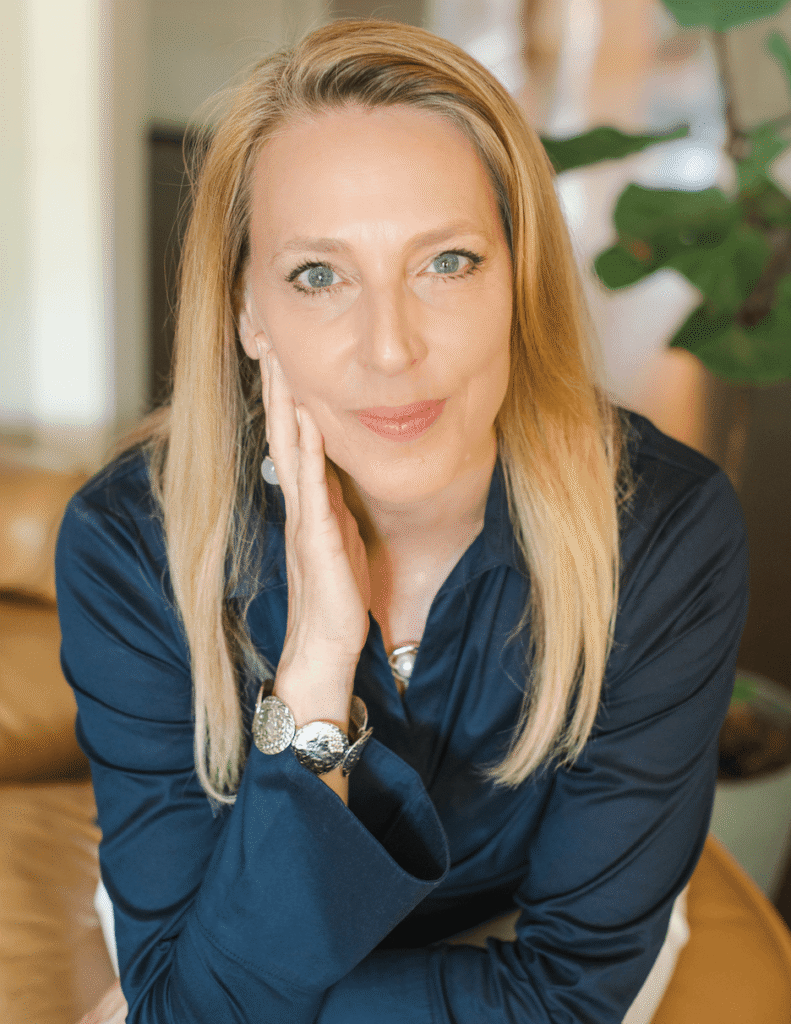
In July she took the framework to the TEDxKC stage in Kansas City, in a 12-minute version of Anxiety Unpacked. Before the talk she wrote about what it would ask of her. “I love speaking. And I’m shy. My nervous system does not like being in front of a crowd,” she wrote, adding that she would be “practicing every single thing I preach.” TED.com then selected the talk as an Editor’s Pick, a distinction given to less than 1% of all TEDx talks. “I am on a mission to change the way we talk about, understand and treat anxiety,” she wrote when the news came.
She has written that she wrote the book behind the talk, Anxiety Unpacked: Discover Your Type and Recover Your Peace, because she wanted people who are suffering from anxiety “to know there is a way through.” She also leads the Counseling Solutions Training Institute, which offers continuing education for mental health professionals in Illinois, and she provides expert mental health testimony and psychological evaluations for immigration cases, working with attorneys in Chicago and other states.
What she wants next is more of the conversation she started in Kansas City, with organizations interested in how anxiety affects the way we lead, work and interact with one another. The idea she brings to each room is the one she carried onto the TEDxKC stage, and wrote down beforehand: “anxiety isn’t the enemy. It’s information we haven’t learned to read yet.”
Five Reflections from Noelle
What kind of anxiety is this? Catastrophizing, Control and Distorted Beliefs each run on a different need, so the first question is which one you are looking at.
What does this anxiety need? Asking what is driving someone’s anxiety is more precise than asking how to treat anxiety in general.
Where else is it showing up? Anxiety moves through physical sensations, emotions, thoughts and behaviors, and it is rarely happening in just one place.
Am I building confidence, or removing discomfort? Helping someone is not always the same thing as reducing their distress.
What would happen if I did a little less? For Sue, the work was experimenting with doing less and letting go, without sacrificing her competence or success.
From the Diary of Noelle McWard Aquino
Noelle McWard Aquino is a Chicago-based licensed clinical social worker and the founder of Counseling Solutions.
| Role | Psychotherapist and founder, Counseling Solutions. Leads the Counseling Solutions Training Institute |
| Based in | Chicago |
| Also | Author, Anxiety Unpacked: Discover Your Type and Recover Your Peace |
“Different kinds of anxiety need different responses.”
Editor’s Note
Executives Diary tells the career stories of people whose work changes how others lead. Noelle McWard Aquino has spent more than 30 years in the therapy room, and the framework she built there gives leaders a more precise question than whether someone is anxious. The editors chose her because that framework came from years of evidence-based training and from her clients’ own descriptions, and because she is as open about what anxiety takes from a family as about how it shapes leadership.
Executives Diary, Editorial