

From the Diary of
Emma Flaxman
A twenty-year marketing career, a question most founders never ask, and the consultancy she built around the answer.
“Clarity isn’t about finding a cleverer way to describe what you do. It’s about making it easier for somebody else to understand why it matters.”
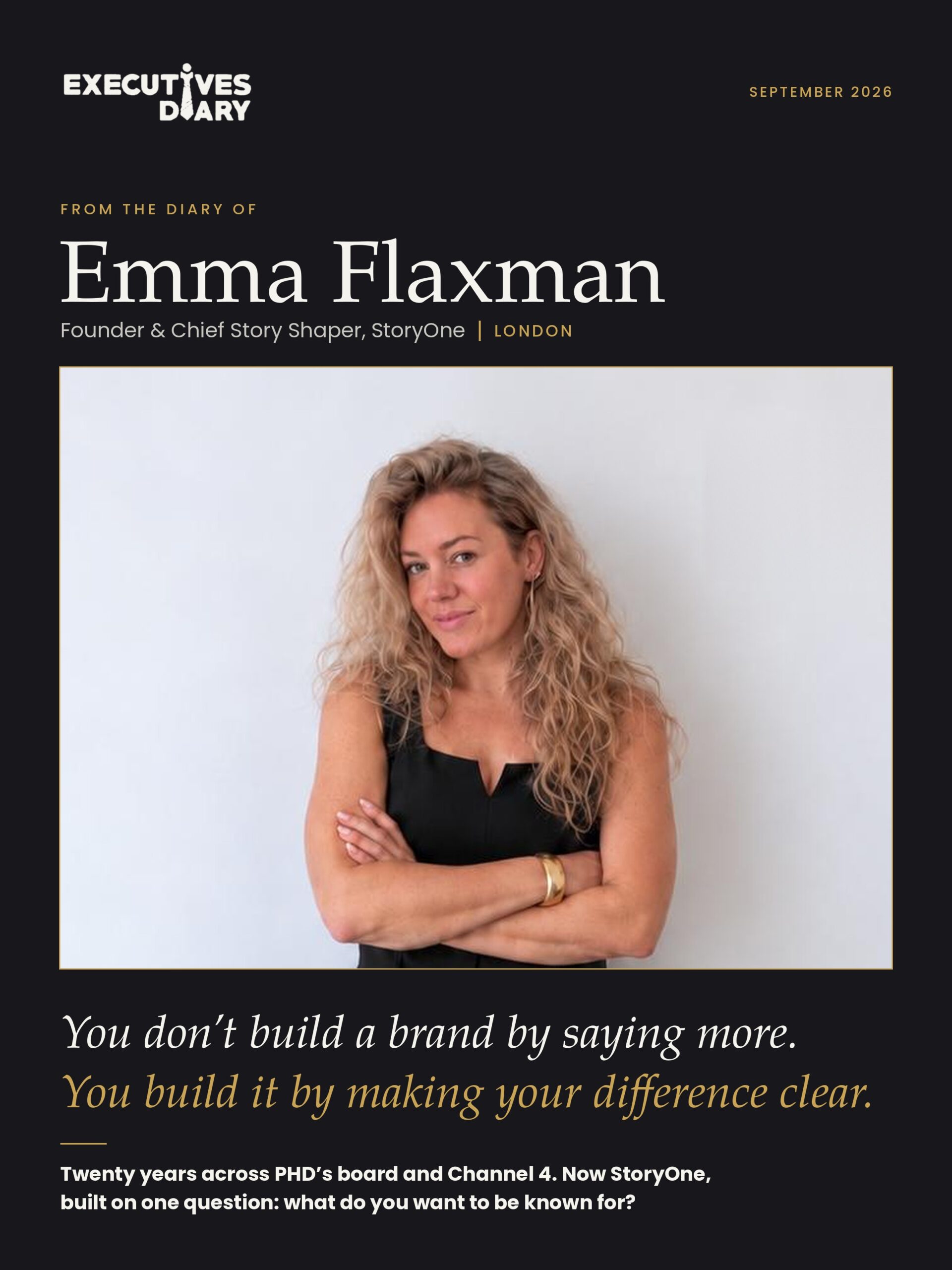
When Emma Flaxman went independent in January 2026, she could talk about marketing, leadership, mental health, inclusion, neuroscience, the advertising industry, building teams, career changes, being over forty, starting again and being a working parent in leadership. None of those things were irrelevant and plenty of them were interesting. But collectively, as she puts it, “they did not necessarily tell somebody what I wanted them to come to me for now.”
That is the trap she now helps other people out of. You can create plenty of perfectly good content that, when you stand back, does not add up to a reputation. Research by the Ehrenberg-Bass Institute found that at any given time, roughly 95 per cent of potential buyers are not in the market. Which makes what people remember between buying moments particularly important. The question, then, is not how often to post. It is what someone remembers after six months of reading you.
Emma is the founder of StoryOne, a London-based consultancy that helps founders and leadership teams work out what they want to be known for, then turns that into a clear brand story and the communications that help grow it. She launched it in April 2026, after more than twenty years across marketing, media and advertising, and she built it around a single argument: being visible and being known for something are not the same thing.
You can create lots of perfectly good individual pieces of content that, when you stand back, do not add up to a reputation.
The Machinery and the Value
When a founder comes to Emma with a website saying one thing, a sales deck saying another and a LinkedIn page introducing a third version of the business, she does not start by rewriting any of them. “Rewriting those three things separately just gives you three shinier versions of the same problem,” she says.
She starts underneath. She wants to know why the business exists, what customers genuinely come to it for, what problem it solves particularly well, where the founder wants it to go, and what their customers would say about them when they are not in the room.
“Founders are often so close to their businesses that they start describing the machinery rather than the value,” she says. “They know every service, product feature, methodology and acronym, while the customer is often buying something much simpler: confidence, growth, connection, reassurance, speed, expertise, fewer headaches.”
Her job, as she describes it, is to find the central story and create some hierarchy around it. What is the thing we want people to remember? What proves it? What supports it? What can we lose? Once that is clear, the website, the deck, the LinkedIn content and the sales material become expressions of the same story rather than a collection of unrelated marketing assets.
Her Own Case Study
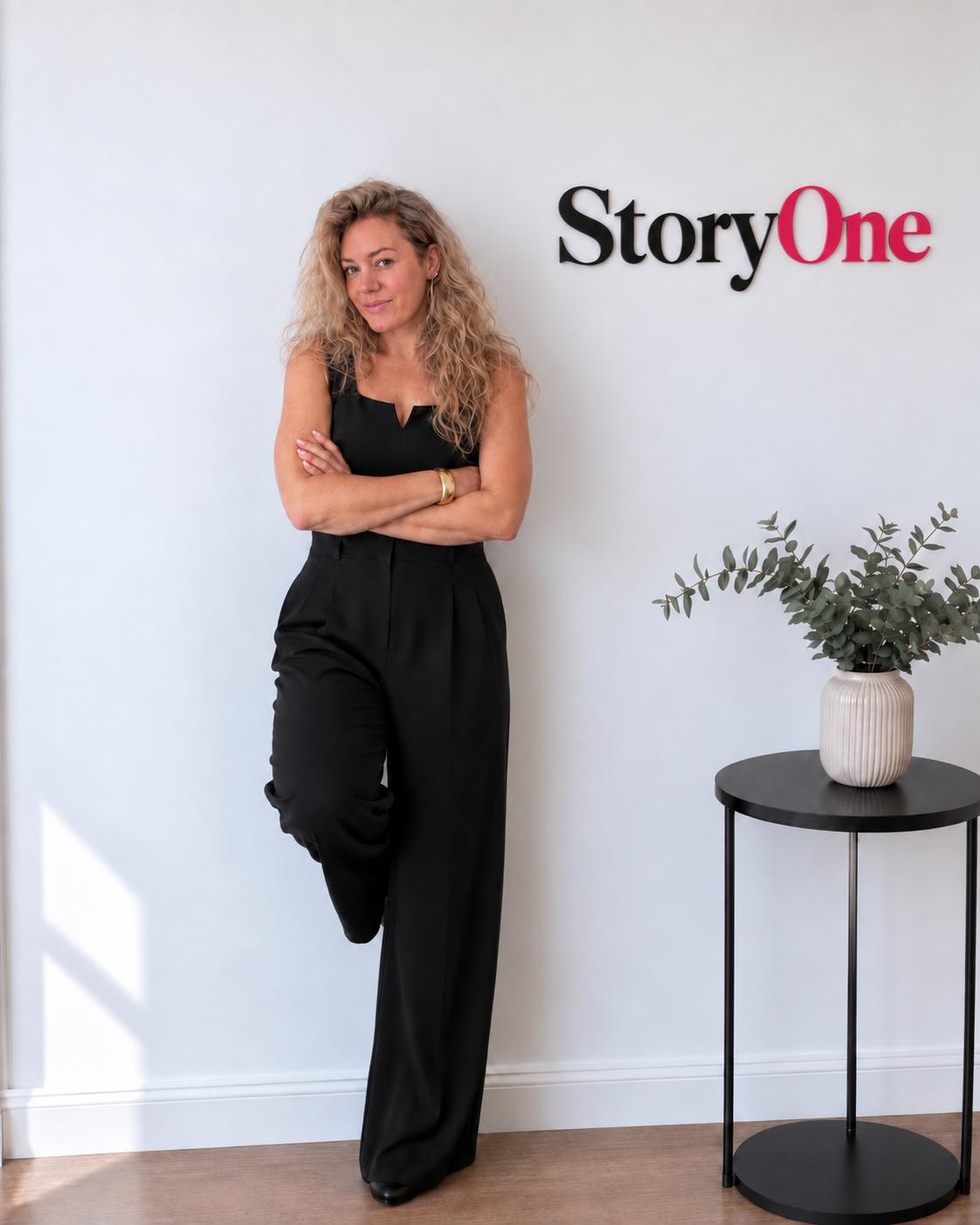
StoryOne itself is the cleanest test of the argument. When Emma first went out on her own, she could do a lot of things and initially talked about rather too many of them. “The danger when you have experience is that your proposition can very quickly become a list of everything you have ever been capable of doing,” she says.
A strategist, Lucy Verby, helped her stop thinking about everything she could offer and focus instead on what she wanted StoryOne to become. That, Emma says, completely changed how she positioned the brand.
Her goal for the first year was four retainer clients alongside at least one additional one-off project each month. Six months in, she has secured three of those retainers alongside a steady stream of project work. “I would never pretend that changing a few words on a website magically produced that,” she says, “but getting much clearer about what StoryOne stands for, who it is for and the value I bring has absolutely made it easier for people to understand where I fit, refer me and ultimately bring me in.”
She learned what a brand story has to survive somewhere specific.
What the Story Has to Survive
Before StoryOne, Emma spent nearly twelve years at PHD, the media agency, rising to a board-level partner, where she led marketing, new business and internal communications. She then moved to Channel 4 as Senior Commercial Comms Lead, working across commercial marketing, brand storytelling and B2B communications.
That time inside large organisations taught her something she thinks a consultant who has only ever consulted would not know. “It is quite easy to produce a beautiful brand framework in isolation,” she says. “It is much harder to create something that can survive a board meeting, a pitch, a sales conversation, an impatient client, a new employee joining six months later and somebody opening the PowerPoint five minutes before a meeting and needing to explain the business without the consultant standing next to them.”
Being busy is a terrible KPI. I care much more about whether all that activity is reinforcing something people can actually remember.
Having led marketing inside those businesses, she naturally thinks about what happens after the strategy presentation. Will people actually use it? Can they remember it? Does sales believe it? Can an employee tell the story without memorising six paragraphs of brand language?
“Activity can disguise a lack of clarity incredibly well,” she says. “Large organisations can generate enormous amounts of marketing, meetings, decks and initiatives simply because the machine is capable of producing them. Founders can fall into exactly the same trap on a smaller scale.”
Reputation, Not Frequency
The 2024 Edelman-LinkedIn B2B Thought Leadership Impact Report found that nearly three quarters of decision-makers consider an organisation’s thought leadership a more trustworthy basis for assessing its capabilities than its marketing materials. Emma’s argument lands in the same territory, from the other end: most founders and leaders are already producing content, but without a clear story underneath it, the content does not compound into a reputation.
“Personal brand has become far too associated with frequency,” she says. “People ask, ‘How often should I post?’ before they ask, ‘What do I want someone to remember after six months of reading me?’ I am much more interested in the second question.”
She still talks about a broad range of things on her own feed, because, as she puts it, “I am a human being and not a content pillar.” But the work-related pieces increasingly come back to the same territory: story, reputation, clarity, what businesses want to be known for and how the people inside them communicate that.
I am a human being and not a content pillar.
The Confidence Layer
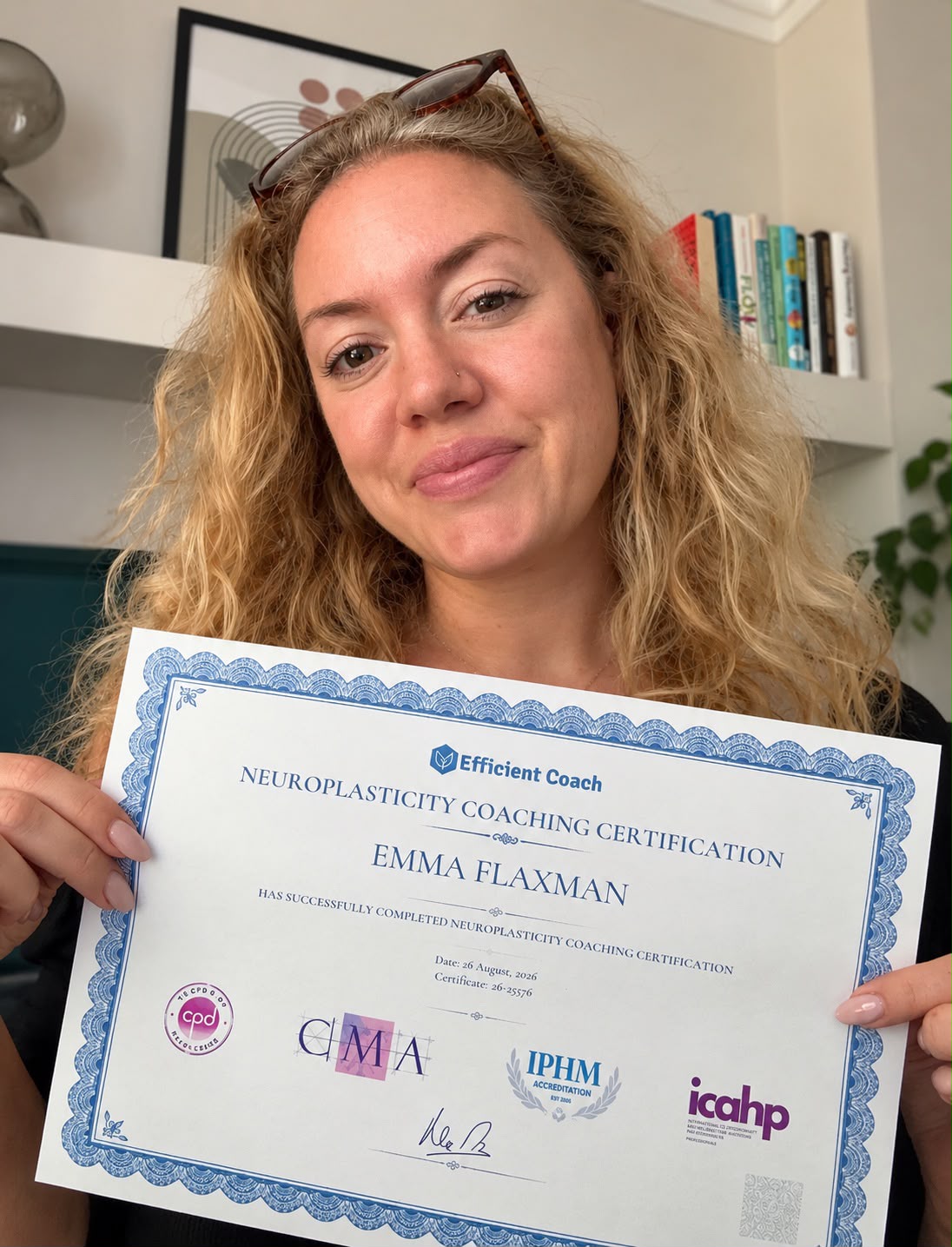
Emma recently completed a qualification in neuroplasticity coaching, building on a postgraduate degree in the psychology and neuroscience of mental health from King’s College London. She sees it as another layer of the same work.
“Something comes up surprisingly often in conversations with clients, particularly women,” she has written. “They know they need to build their personal brand and they know people want to hear their thinking, their experience and what they’ve achieved. They can happily champion their team, their business, their clients and probably someone they met once in a queue for coffee. Ask them to write a post saying, ‘I did this, and I’m proud of it,’ and suddenly we’re negotiating with the LinkedIn draft for three working days.”
Building a personal brand, she argues, is not only about knowing what to post. Sometimes it is about becoming comfortable enough to be seen.
Where Emma Is Now
StoryOne is over six months old. Emma is a Marketing Academy Scholar, a Campaign 40 Over 40 winner, and was named Most Inspiring Senior Leader at the This Can Happen Awards in 2024. She joined the Founding Women’s Collective at The Women’s Association in September 2026.
“Solo parenting and founder life both come with a fairly noisy brain, so I need creative outlets to stay balanced,” she says. “I make art when I need to quiet things down and host a comedy podcast with my sister for the moments when life starts taking itself far too seriously.”
The question isn’t simply, ‘How do I get seen?’ It’s, ‘What do I want people to associate me with once I am?’
“I want to be the person founders call when they need senior marketing thinking without a full-time senior hire,” she says, “stepping in to sharpen the story and strategy, then leaving the business stronger than I found it.”
The Playbook
Five Reflections from Emma
- What does your content add up to? Good content gets attention. Consistent ideas build association. That is when content becomes reputation. The test isn’t whether every post is good. It’s whether, over time, they build a clear picture of what you want to be known for.
- What is the customer actually buying? What you sell and why someone buys it are rarely the same. Your marketing needs to understand the difference.
- Can the story survive without you in the room? A story is only useful if other people in the business can understand it, remember it and tell it without you there to explain it.
- Are you building a reputation or filling a feed? You do not need a completely new idea every time you post. You need a recognisable point of view that people gradually learn to associate with you.
- What would they say when you are not there? The most useful question Emma asks a founder is what their customers would say about them when they are not in the room.