

Most leaders believe they have an open door. Here is what staff withhold, and the three moves that change it.
The people who tell you what is really happening in your organisation sit in the middle of it, and the middle is tired. Gallup found manager engagement fell to 22 per cent last year, down from 27 the year before, while the people they lead sat at 19. The gap that used to separate the two has all but closed.
Monique Roberts spent fourteen years inside the organisation that pays for South Australian workplace injuries, including the psychological ones.
The bill is not abstract. Safe Work Australia counted mental health conditions at 12 per cent of all serious workers’ compensation claims nationally in 2023-24, a rise of 161 per cent over the decade, with median time off work close to five times longer than for other injuries and diseases. Since February, South Australian employers have had a code of practice naming 17 psychosocial hazards they are expected to identify, assess and control, the same way they would a trip hazard. Most of those hazards are invisible unless somebody tells you about them.
Roberts has a view about why leaders miss all of it, and it is not that they are careless. What follows is the set of moves she uses instead, and where she learned each one.
From the Diary of Monique Roberts
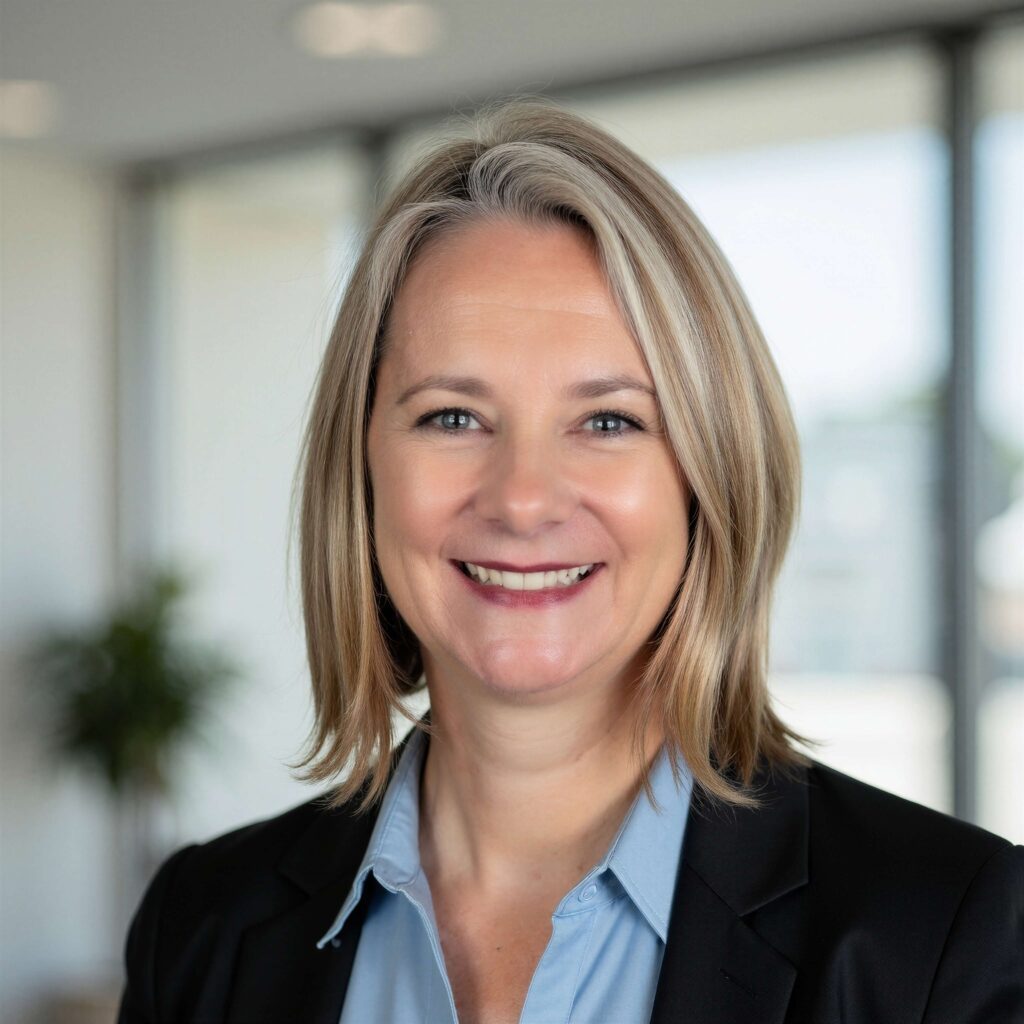
Monique Roberts is an Adelaide-based executive coach and the founder of Compass Coaching Group. Compass Coaching Group works on clarity, courage and connection, helping leaders create clarity, lead with courage and build connection, no matter the situation. She does this through whole of system HR advisory work and through individual and group leadership coaching. She spent fourteen years at ReturnToWorkSA, most recently as Executive Leader People, Capability and Culture, following roles at the University of Adelaide, the Northern Territory Government, Telfort, ABN AMRO Bank, AT&T, O2 and Cable and Wireless, and was made a Fellow of the Governors Leadership Foundation in 2022. The line she keeps returning to is “helping leaders create environments where people can tell you what is actually happening.”
The Open Door Nobody Walks Through
Ask a leadership team whether their people can tell them the truth and every hand goes up. Ask what somebody told them last week that they did not want to hear, and the answers thin out.
Roberts thinks the failure starts earlier than most culture audits look, in an ordinary sentence that lands differently from how it was intended. She has written about early morning six o’clock meetings run out of London by an English manager, with a team drawn from Spain, Portugal, Japan, the United States, Germany, the Netherlands and Britain. The manager said the team might want to review what stood in the way of achieving targets. He believed he was being clear, and diplomatic with it.
The team went away and did different things.
“Communication is only effective when the receiver has understood what you intended them to understand,” she wrote. “Being clear to you doesn’t necessarily mean being clear to them.” Neither side was wrong. They were working from different cultural conditioning about directness, hierarchy and what clear sounds like. Add a multicultural team, she says, and the sensitivity a leader needs to that gap has to rise again.
The second failure is simpler. “Many leaders just focus on the KPIs,” she says, which works until the thing blocking the number is sitting outside the spreadsheet entirely, in an interpersonal disagreement or a manager two floors up.
What a Terrible Leader Taught Her
The method has a source, and it is not a textbook. Early in her career Roberts worked for a leader she describes as terrible and a manager she describes as toxic, and she counts it as luck.
Some of my principles are: always provide Clarity (clear is kind), prioritise Connection before Content, and as a leader be Courageous, Calm and Consistent. These 5 C’s are integral to how I lead. Connection is so important and seeing the human for who they are.
Watching impact rather than intention is a discipline she has had to apply to herself. Some years ago the feedback came back that she was being experienced as aloof by senior stakeholders. She is an introvert who prefers her team to be the stars of the work stage, and her peers had told her they were not sure what she was doing. “Ouch,” she wrote, when she told the story at the Women Unlimited Leadership Summit this year. Her intention had been connection. Her impact was distance. Authentic leadership, she decided, is not announcing who you are. It is knowing who you are and flexing how you show up so the effect matches the intent.
The Meeting That Never Gets Cancelled
The mechanics are unglamorous, which is the point.
Roberts treats the one to one with a direct report as sacred. It is never cancelled and never shortened, short of a life-or-death emergency, because the time belongs to them and cancelling a one to one tells them what it is worth. Where possible she holds it somewhere other than her own office, for the same reason. She has sat on the other side of the table in one to ones that were a download of tasks, and she remembers exactly how empowered that felt.
The agenda has three parts: how their wellbeing is tracking, how their performance is tracking, and what is blocking them. When something is blocking them, the conversation splits the work. What is theirs to move, what is hers, agreed out loud so both of them can be held to it later.
Then there is what she does with what she hears.
It’s a Zulu greeting that literally means, ‘I see you.’ But its deeper meaning is much richer. ‘I see you. You matter. You are valued.’ I’ve always loved that.
Sawubona stayed with her from a childhood in South Africa as the daughter of Dutch immigrants, bullied for years at primary school, then discriminated against later for her accent. Belonging is the theme she found when she went looking for her own why, and it explains the rule she is strictest about: what someone tells you personally goes into what she calls the vault. Over the years the vault she has held for others included suicide risk, challenges with pregnancies, anxiety, depression and a great deal of ordinary fear about not being good enough.
Presence is the third mechanic and the cheapest. No scanning email while someone is talking. Then doing what you said you would do, every time, so that the pattern becomes evidence.
Three moves, she says: connection, doing what you say you will do, and being consistent, always.
The Team They Were Ready to Outsource
Roberts was once asked to take over a team the organisation was considering outsourcing, because customers were unhappy with it. She went at the problem undercover boss style, spending time inside the team and then in front of its customers, asking what they expected and what they were getting.
What she found was not a people problem. There was no clarity about what the service actually was, no processes or systems to support the work, and no shared definition of good, held by anyone on either side. The failure sat with the leadership that came before her, and from the moment she took the job, with her. “Not the team,” she says.
The repair was capability in full: skills, systems, processes, an agreed picture of good, stakeholder management and consistent leadership over time.
Leadership is about achieving outcomes through others, and ensuring the capability (systems, processes, ways of working and skills) is in place to help the team succeed. It’s about building trust. It’s about believing that each and every one of your team has unique strengths and you should uncover and showcase.
The same instinct shows up in miniature. When a team member came to her frustrated by a difficult colleague, hoping she would step in and handle it, she did not. She walked him through the drama triangle and one of her favourite mantras, that the behaviour you walk past today is the behaviour others will display tomorrow, until he arrived at the conclusion himself: he needed to have the conversation. She then backed him, held him to it and managed the stakeholders around him. “I create the conditions for people to succeed,” she wrote. “But I don’t take away ownership.”
Fourteen Years Inside a Scheme Collecting $900 Million a Year
The argument would be agreeable and unprovable without the record behind it.
At ReturnToWorkSA, Roberts reported to the chief executive as a member of the executive team, leading 22 people across business partnering, payroll, safety and wellbeing, workforce planning, talent, organisational design, employee experience and industrial relations. The scheme registers just over 63,000 employers and collects around $900 million in premium a year. She co-led enterprise performance through a stretch that saw 95 per cent of injured workers back at work at 103 weeks.
The number she picks for an advisory audience is more transferable. She managed a wellbeing program built on five pillars, work, values, physical and mental health, connection to family and community, and finances, and because it treated employees as whole rather than as an engagement score, uptake ran consistently above 80 per cent of the organisation. Sick leave per full time employee fell noticeably, with a substantial saving in productivity days recovered.
Earlier she led workforce strategy and the HR cultural change program at the University of Adelaide, and before that ran organisational design and reporting for a Northern Territory government department. Her experience in the global telecommunications companies AT&T in Shanghai, O2 in Amsterdam and Cable and Wireless in London taught her many a lesson as well. Twenty-five years plus, eight countries. One client, a corporate banking executive, puts the value of it plainly: Roberts “strikes a great balance between warm support and ‘tough’ challenge, so that I can better move forward.”
Where Monique Is Now
Adelaide, and building Compass Coaching Group, which she founded this year.
She works one to one with executives, people leaders and emerging leaders, runs small group and team coaching, and takes on workshop facilitation and advisory work covering leadership development, change, team culture, connection, communications and organisational design. Last Friday she was in a room of school leaders at the SASEPLA conference with Thilan Legierse, workshopping what it means to lead with or without a title. Outside work she played tennis at state level and spent twelve years running the junior program at her local club in the Adelaide Hills, which also requires clarity, repetition, and someone paying attention.
“So, above all else, for me leadership starts with curiosity, clarity, courage and connection,” she says. “Ask before you assume. Understand before you judge. And then create the environment where people can perform at their best.”
The Monique Roberts Playbook: Five Rules for Hearing the Truth Early
- Never cancel a one to one. Shortening it or moving it tells the person exactly what their time is worth to you, and they will adjust what they bring you accordingly.
- Ask what is blocking them. Cover wellbeing and performance in the same conversation, then split the blocker into what is theirs to move and what is yours.
- Check impact, not intention. Being clear to you is not being clear to them, and the feedback that stings is usually the one that closes the gap.
- Put what they share in the vault. What someone tells you about their own life is theirs to repeat, never yours, and confidentiality kept once is worth more than any policy.
- Fix the system before the people. When service is failing, look first for missing clarity, processes and an agreed definition of good, because that failure belongs to leadership.