

Your internal state is not private. In a founder-led company, your energy, pressure, expectations, capacity and way of seeing people travel through the organisation. Here is how to become conscious of what you are already transmitting.
You hire the twelfth person and something changes that nobody announced. Meetings go quieter on the days you are depleted. Certain problems stop reaching your desk. Worldwide only one in five employees is now engaged at work, a gap Gallup values at roughly $10 trillion a year in lost productivity.
Sara Torvallbach has spent close to twenty years working across finance, stress prevention, behavioural leadership, The undercurrence, Energetic leadership and executive People & Culture, including as Head of People & Culture in a company growing fast across seven cities.
Her argument is that in a founder-led company, one of the most powerful inputs into culture is not the strategy deck or the values on the wall. It is the founder’s own way of showing up: their internal state, energy, pressure, expectations, behaviour, capacity and the way they see other people. Much of it arrives in the room unmeasured. She calls it Founder Frequency.
What follows is how she reads it, and what a founder can do before those patterns harden into the way the company works.
From the Field: Sara Torvallbach
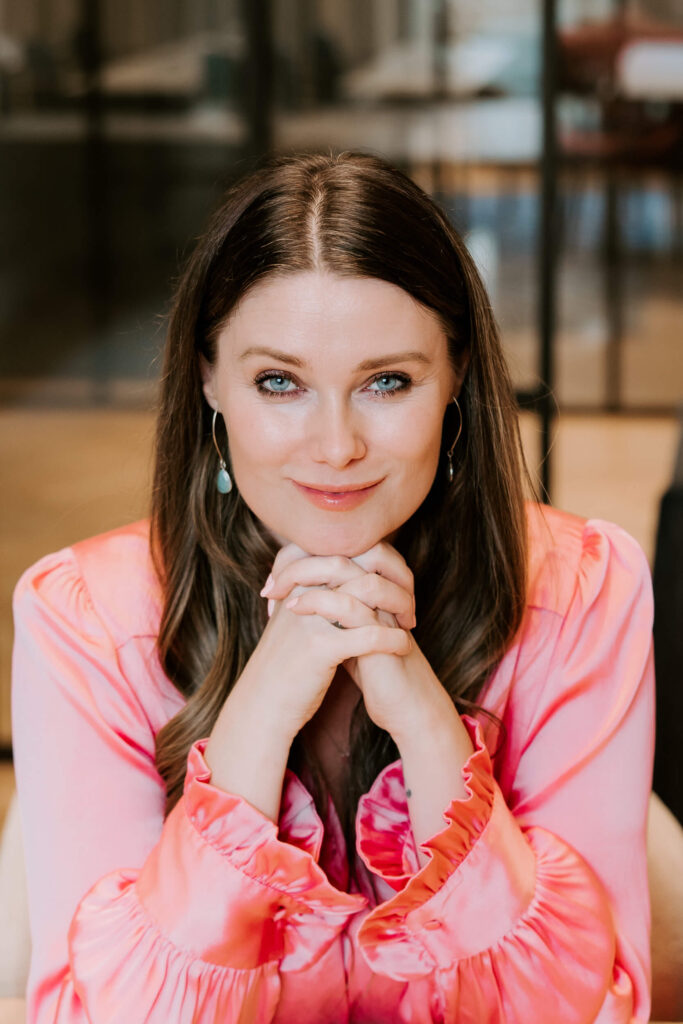
Sara Torvallbach is a Copenhagen-based Executive People & Culture Advisor and the founder of the consulting agency LEADish. In her own words, “LEADish is a People & Culture advisory for founder-led companies, helping founders intentionally design the leadership, culture and human systems behind sustainable growth.” She trained in banking at Nordea, founded No Stress Akademiet in 2012, built VØLVA as a Scandinavian spirituality and self-leadership education platform while living between Denmark and Bali, later designed and led People & Culture at a private financial company until 2026, and serves as a deputy board member at a private school in Gentofte. The line she wants to own: “People & Culture will design itself, if you do not design it on purpose.”
The Company Learns From You, and Around You
Many founders treat culture as something to build properly later, once there is an HR person, a handbook and enough headcount to justify both.
By then it is not a blank page. It is already a living system of habits, expectations and behaviours that the organisation has formed around its leaders, and, in founder-led companies, often around the founder in particular.
Gallup’s 2015 study of American managers found that the manager accounts for at least 70% of the variance in a team’s engagement, ahead of pay, perks or company-wide programmes. In a founder-led company of thirty people, the founder is often directly involved in that leadership layer or only one step away from it.
“The founder travels through the company,” she says. Energy, pressure, trust, impatience, courage, avoidance, expectations and the way people are seen: all of it is read, interpreted and responded to, whether or not anyone consciously decided it.
She has watched what the adaptation looks like from the inside. “People become highly attuned to the founder’s state. They stop bringing certain problems forward. Leaders compensate for what the founder avoids or react to.” Decisions start to wait on one person’s attention. Sometimes the whole company becomes fast. Sometimes it becomes careful.
The founder is usually the last to know.
A founder can walk into a room with trust, openness, belief and clear direction, and something in the room opens. The same founder, under enough pressure, can enter with tension, doubt, impatience or narrowed attention and change the atmosphere without saying a word. Neither makes them a bad leader. It makes them human, and it makes awareness part of leadership.
We tend to judge ourselves by our intentions. Other people can only experience us through what becomes visible: our behaviour, decisions, communication, presence and the way we make them feel seen. That gap between intention and impact matters enormously in leadership.
Reading a Balance Sheet Before Reading a Room
She began in 2007 as a finance trainee at Nordea, which is where she learned to read a company the way its numbers describe it.
The rest of the training happened somewhere less conventional. She founded No Stress Akademiet in 2012 to work on stress prevention, much of it with the financial sector, then spent years living between Denmark and Bali while building VØLVA, an education platform rooted in Scandinavian spirituality, self-leadership and the unseen dynamics between people.
“It taught me to notice what happens in people before it appears in a spreadsheet,” she says.
You can have the right strategy, the right organisational chart and the right values written on the wall and still walk into a room and immediately sense that something is wrong. I learned not to dismiss that information simply because it is difficult to put into Excel. There is enormous business intelligence in understanding human beings well enough to notice what is happening before it becomes absence, conflict, resignation, a bad hire, poor leadership or lost performance.
One room she keeps returning to: she wrote about a workspace where the structured, backend-oriented people had been seated next to the social marketing team, and the unspoken conflict was thick enough to touch. Every client, leader and employee walked through that room on the way to almost anything.
Nobody designed that. Somebody just allocated desks.
What a FounderLEAD Profile Puts on the Table
FounderLEAD Profile is one of the ways founders first meet LEADish. Delivered on site or remotely, it is an executive leadership profile of the founder rather than an audit of the organisation.
It asks who you are, what happens to you under pressure, what gives and drains your energy, how you affect the people around you, what your organisation may have learned to compensate for, and what the next version of your company requires from the next version of you.
Those questions are useful in a founder’s own hands before anyone is hired to ask them.
One pattern she sees often is also one of the least comfortable, because it is made of a strength. Speed, instinct and an unusual ability to decide are frequently the qualities that built the company. Later, those same strengths can become the reason the second layer of leadership never quite grows. A founder can genuinely intend to empower their leaders while everyone around them has quietly learned that the fastest route is still to wait for the founder’s answer.
It is not about removing the founder from the company. Quite the opposite. I want to protect the spark that built it while helping the organisation become strong enough not to depend on that spark for everything.
The Year She Had to Learn to Read Again
About fifteen years ago Torvallbach had a stress breakdown. She lost half her hair, she wrote, and temporarily lost the ability to process written information at the level she had before, something she had to rebuild over time.
She describes it as one of the most meaningful turnarounds of her life, and it is why capacity, nervous system, triggers and recovery sit inside the profiling work rather than in a wellbeing appendix.
The timing of that argument has become even more relevant. AI has given founders the ability to act on almost every idea immediately: research it, write it, build it, start the next thing. As she has written, AI may multiply a founder’s possible output and expand their possible input dramatically. If judgement, reflection and recovery do not grow at the same rate, it may not create a more capable founder. It may simply create a faster, overloaded one.
The buffer that used to absorb this is thinning too. Gallup’s most recent global workplace report shows manager engagement down nine points in three years, from 31% to 22%, and leaders reporting more stress, anger, sadness and loneliness on any given day than the people they lead.
The person whose state travels furthest through the organisation may also be carrying some of the greatest pressure.
Why Founders Bring Her In
The résumé is unusual in a useful way: finance at Nordea, a stress-prevention practice, years of building and teaching between Denmark and Bali, behavioural leadership work through the consultancy Empa10, then nearly four years leading People & Culture inside a fast-growing financial advisory business.
In that last role she built the leadership development programme, implemented DISC behavioural profiling across leaders and teams, designed the organisation maps, coached leaders, ran the full recruitment process, and advised the executive team while the company operated across seven cities.
Her own account of the result is a shift rather than a metric: People & Culture stopped happening around the business and started being designed. One of the founders later told her, “No one in the history of this company has implemented as much change as you have.”
She works in public as well as in boardrooms. Through SelfLEADish she has taught young women about identity, self-image, social intelligence and personal leadership, including a workshop for the finalists of Miss Denmark. In founder and executive settings, the same underlying question remains: how do you understand your impact on the people and systems around you?
She started LEADish this summer after her latest maternity leave. The thinking behind it, and the consulting in it, is older than the company.
Where Sara Is Now
Torvallbach works from Copenhagen, where she is the mother of three daughters and serves as a deputy board member at their school in Gentofte.
LEADish offers founder and executive People & Culture advisory, fractional People & Culture partnerships, leadership development, CompanyScans, Leadprofiles, workshops and keynotes, on site or remotely, with engagements shaped around the organisation and the people leading it.
“Ultimately, I want LEADish to become known for a very particular way of looking at companies: we pay attention to what is happening underneath the organisational chart,” she says. “Because what is invisible today often becomes measurable tomorrow.”
The Sara Torvallbach Playbook: Designing the Frequency Before It Designs You
- Assume the room is reading you. Your state on a difficult Tuesday is information your team is already interpreting and responding to, whether or not anyone says so.
- Ask what people stopped bringing. The problems that no longer reach your desk are one of the clearest maps of what your organisation has learned to work around.
- Name the strength that may now cost you. The speed that built the company can become the exact reason the layer below you has not grown.
- Grow capacity, not only output. More input and faster tools do not help if judgement, reflection and recovery stay where they were.
- Separate intention from impact. You know what you meant. Your team experiences what you said, did, avoided, prioritised and brought into the room.
- Design People & Culture on purpose. It exists in your company today either way, so the only real choice is whether anyone decided what it should be.
Sara Torvallbach advises founder-led companies on executive People & Culture, leadership and conscious culture through LEADish.