

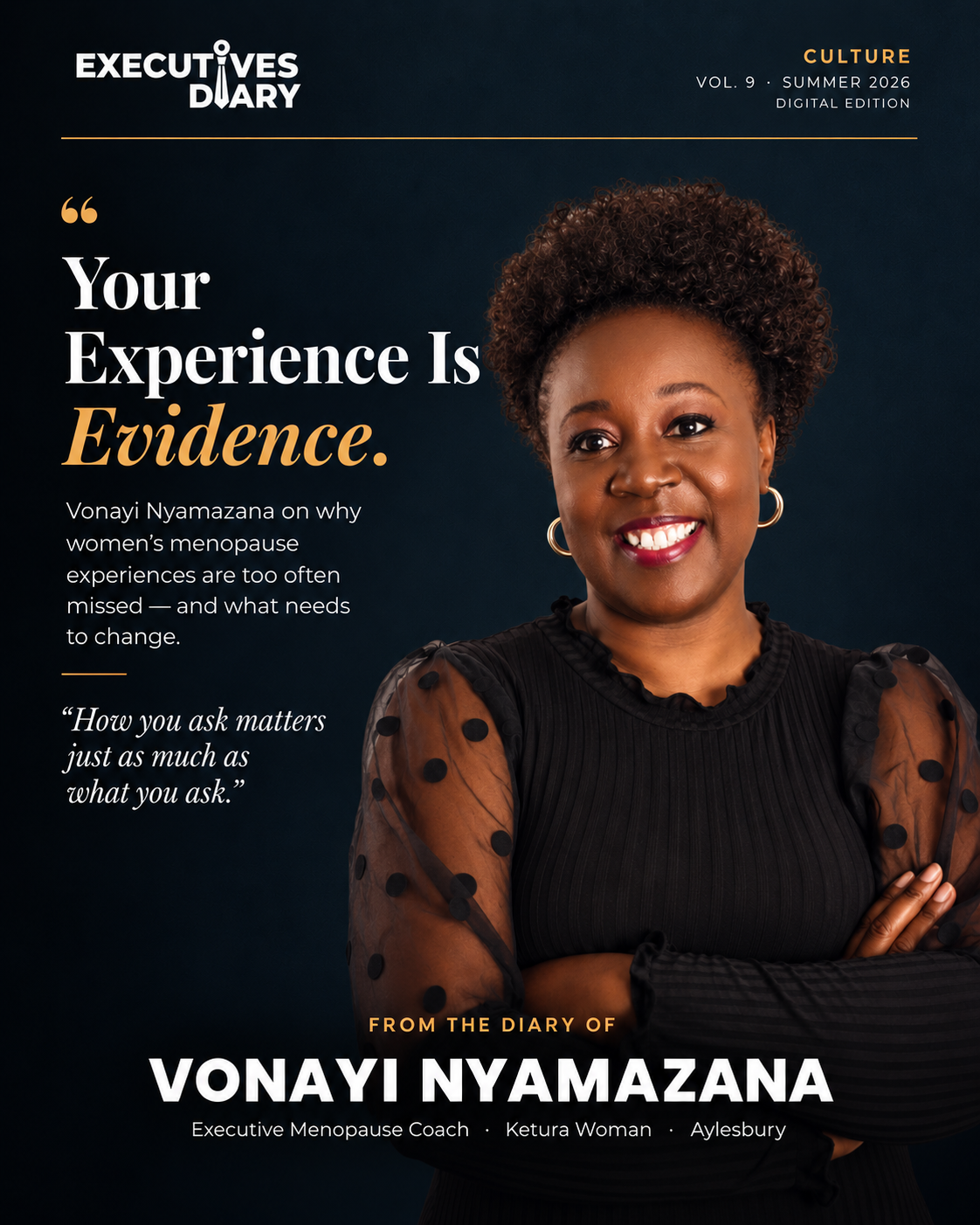
Vonayi Nyamazana
On why a woman who has learned to cope quietly reads as a woman with nothing wrong.Attempted murders, robberies, sexual offenses, frauds, and in the victim-friendly courts, children describing sexual abuse. For nine years in Zimbabwe’s magistrates courts, Vonayi Nyamazana’s working problem was which accounts held up and why. She now trains UK employers on menopause, where she says the listening fails for the same reason: when the expected words are missing, the listener hears nothing wrong. “My prosecution background taught me something I now consider fundamental to women’s health and that is absence of the expected language is not absence of evidence.”
Vonayi Nyamazana is the founder of Ketura Woman, an executive menopause coach, and a former public prosecutor who reached Zimbabwe’s Regional Court.
The Two Questions Nyamazana Asks Instead of a Symptom Checklist
Credibility, in Nyamazana’s account, is not awarded on the strength of what happened. It is awarded on whether the telling matches what the listener came in expecting to hear. “An account does not become unreliable simply because it is emotional, imperfectly remembered or difficult to articulate.”
Nine years of testing accounts against that gap produced the method she still works from. “I learned to listen beyond what was being presented, ask the next question without leading the person, notice what was being normalised or left unsaid, assess evidence carefully, and create enough safety for someone to tell you what was really happening.” One line out of the victim-friendly courts carries into every session she runs now: “how you ask matters just as much as what you ask.”
Menopause presented the same problem in different clothing. “Sometimes a woman will say, ‘I just don’t feel like myself,’ ‘My body is aching,’ ‘I can’t think properly,’ or ‘Something is wrong with me,’ rather than arriving with the clinical vocabulary of perimenopause. She may describe palpitations, anxiety, insomnia, painful sex, joint pain or overwhelming fatigue without connecting any of them to hormonal change.”
Culture thickens the edit. “Many of the women I work with grew up in environments where menopause was rarely discussed, where women were expected to endure, where intimate symptoms could be embarrassing to disclose, and where being a ‘strong woman’ often meant carrying on quietly. So by the time she seeks help, she may already have edited her own story.”
So a Ketura Woman session does not open on symptoms. “I do not simply ask, ‘What menopause symptoms are you experiencing?’ I might ask, ‘What has changed in your life that you have not connected to menopause?’ or ‘What are you managing silently because you think you should be able to cope?’ That shift can uncover the woman behind the symptom: the executive questioning her competence because of brain fog, the wife withdrawing from intimacy because sex has become painful, the employee considering resignation because anxiety has made meetings unbearable.”
The group that supplies her patterns, Menopause Conversations, started in 2021 as a WhatsApp thread of six Black African women looking for answers and somewhere to ask. It now runs at 428 as of August 2026. What the women told her became webinars, education sessions, and talks delivered “particularly in churches because that is where many of our women already gather.” She secured funding for Simply Talking, a call-in line staffed by trained handlers for two hours every Thursday evening across twelve months, and ran the Queen Maker mentorship program, twelve weeks for fifteen women, all fifteen of whom completed it. “We did not formally measure clinical outcomes, so I would not claim them,” Nyamazana says.
What she takes from those accounts is a question about scale: “How much evidence are we losing because women have learned to normalise their suffering before anyone has even asked them about it?”
What Waitressing and Care Work Taught Nyamazana About Capacity
Nyamazana left Zimbabwe in February 2002 to widen a legal training built entirely on criminal law, and was awarded an LLB (Hons) degree from the University of Wolverhampton, graduating in 2005. Around the degree she waited tables and worked care shifts, sometimes two or three jobs in a day. “Never confuse someone’s current position with their capacity. The person watching me serve a table or work a care shift had no idea I had spent nine years prosecuting criminal cases.” Care work supplied the rest: “we cannot separate a woman’s menopause experience from her culture, family, faith, workplace and life circumstances.”
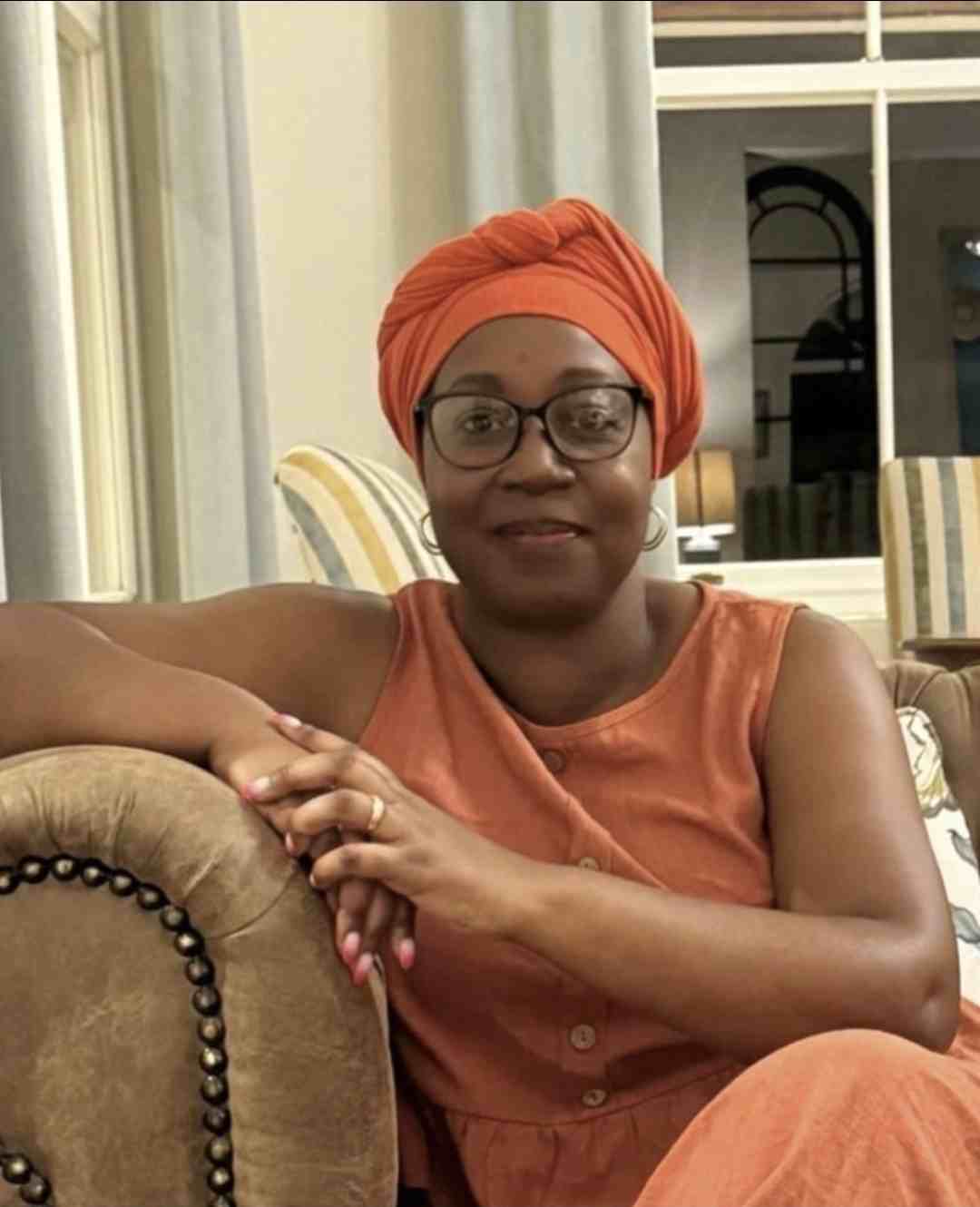
What an HR Lead or a Clinician Can Take From a Prosecutor’s Intake
The transferable part of Nyamazana’s practice is not the coaching. It is the intake, and four moves inside it travel into any organization already running a menopause policy.
Four Moves Inside Intake
First, treat unfamiliar language as data rather than noise. A woman who reports aching, broken sleep and not feeling like herself has handed the listener three usable facts and no diagnosis, and the conversation closes only because a different word was expected. A second filter sits underneath the first: “If assumptions are also being made about culture, pain, resilience, mental health or a woman’s ability to cope, her experience can be minimised further.” Keeping the conversation open when the word menopause has not appeared is half the instruction. Making the listener’s own assumptions explicit is the other half.
Second, read across accounts rather than only within one. “I do not just hear women’s stories. I interrogate what those stories are telling us about the systems around them.” One woman describing painful sex to a manager is a private difficulty. Several women describing it inside the same organization is a pattern, and a pattern is what a policy can be built on.
Third, build the measurement before the program rather than after it works. Nyamazana did not, and says so: “I would build formal measurement into the programme from the beginning, baseline knowledge, confidence, healthcare-seeking behaviour and changes after education.” A headcount proves reach. A baseline taken before the first session and repeated after the last is what turns a community program into something a commissioner can read.
The Marriage That Broke Down Before Anyone Said the Word Menopause
Fourth, educate the people around the woman, not only the woman. Vonayi Nyamazana arrived at this one by being caught out. A woman waited behind after one of her talks to speak privately. She had been changing physically and emotionally, intimacy and communication had become difficult, and neither she nor her husband had a name for any of it, so the two of them read the changes as evidence that they no longer loved each other. The marriage broke down. “I remember thinking how different that conversation might have been if they had been given this knowledge earlier.” What came out of it was a change to who the education is for: “we cannot educate women alone. Partners, families, churches and communities need to understand menopause too.”
For the Black African woman entering midlife who has not been heard in a room where her health was discussed, Nyamazana puts it in one sentence: “Your experience is evidence, your voice belongs in the conversation, and you should never have to suffer in silence simply because nobody gave you the language to explain what you were experiencing.”
Who Is Vonayi Nyamazana, the Prosecutor Who Became a Menopause Advocate?
Vonayi Nyamazana is the founder of Ketura Woman and an executive menopause coach based in Aylesbury, Buckinghamshire, who spent nine years as a public prosecutor in Zimbabwe.
She joined the Public Prosecutor’s Office at the Bulawayo Magistrates Court in April 1992 and progressed from the Remand and Provincial Courts, where the caseload ran to theft, assaults and pickpocketing, to the Regional Court and its serious offences. She left in January 2002, moved to the UK the following month, and took an LLB (Hons) from the University of Wolverhampton, graduating in 2005.
Her UK work ran through advocacy and social care: volunteer advocate coordination for people with learning disabilities at Aylesbury Vale Advocates from 2008, then a decade at Carers Bucks supporting family carers, which she left in 2019. She founded Inspired Khaya in 2010 as a platform for conferences, workshops and mentoring in the UK and Africa, and ran the Rubies and Diamonds mentoring program for women in Zimbabwe from 2017 to 2020.
The Ketura Woman Movement followed in 2022, named for her mother and for Abraham’s wife in the Bible, whose name Ketura reads as fragrance, incense and sacrifice. “For me these are the very things that our grandmothers and mothers represented and the platform name was to honour them as we stand on their shoulders,” she says.
She qualified as an Executive Menopause Coach through the Kathryn Colas Academy in 2021 and added a Practitioner’s Diploma in Menopause from Gateway Workshops UK in 2024, and won the Menopause Champion category at All 4 Inclusion’s 2025 awards. She has delivered training and talks directly to the Zimbabwe Business Chamber (UK), the healthcare platform Peppy, an NHS trust, women on probation through Oxford Probation Services, and nurses on a menopause course, where she spoke on the Black woman’s experience of menopause. Ketura Woman is an education, coaching, training and advocacy practice, and Nyamazana is not a clinician and does not give medical advice.
She is the author of More Than My Menopause (2025) and More Than A Second Chance (2023), both self-published, and of the second edition of It’s Crazy Not to Dream (RM Publishers, 2022). She compiled and co-authored the 55-contributor anthology Being God’s Daughter (2020). What she carried out of the Bulawayo courtroom into the church halls and the workshops is one working rule: an account that does not arrive in the expected words is still an account, and the failure to hear it belongs to the listener.