

From the Diary of
Karen Tisdell
She built a career on visibility. She has never wanted to be famous.
“Your network still matters more than your noise.”
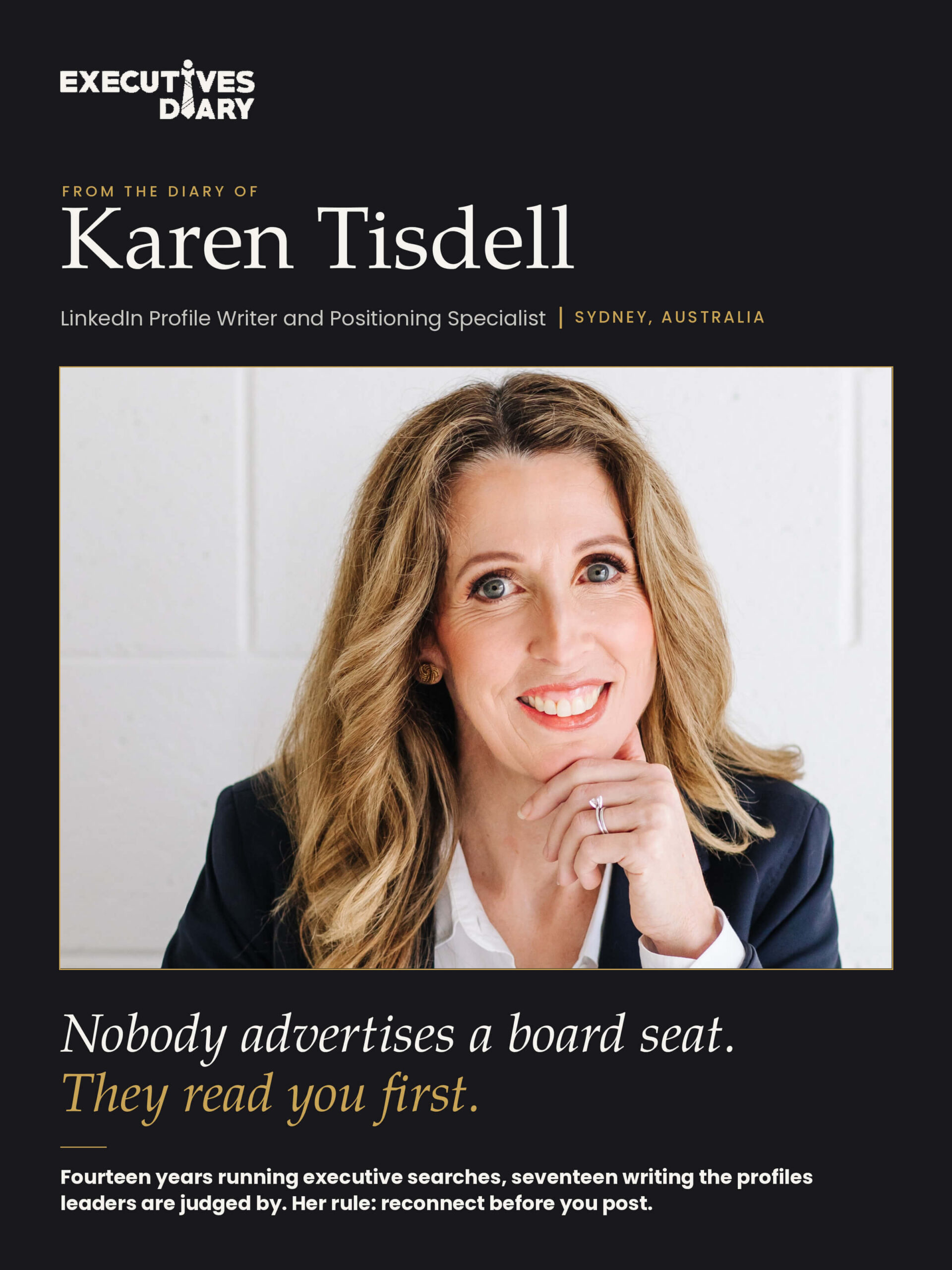
Nobody advertises a board seat. Executive search firms map the market first: they identify the target companies, reverse-engineer the org charts, rank a hundred or more leaders in comparable roles, and only then pick up the phone. Recruiters have been saying for a decade that LinkedIn is the single most effective place to vet a candidate. Which means that by the time a search partner, a board chair or a prospective client contacts you, they have already read your profile, formed a view, and decided whether you are worth the call.
Most senior people never find out what that reader saw. Karen Tisdell does, because for 14 years she was the reader. She was the recruiter running the search, and since 2009 she has been on the other side of it, writing the profiles that senior leaders are judged by and teaching them to build the networks that carry their name into rooms they cannot enter.
What she has learned is simpler than the advice you have been given, and most of it is the opposite of it.
What the Reader Sees in the First Line
Karen’s first rule comes from before recruitment, from a job writing advertising copy for a newspaper group in England in 1992, and it has not changed: people do not read, they skim. They latch onto the first meaningful noun or verb, remember what comes last, and move on. A search consultant working through a hundred names does exactly this, and most senior profiles are written as if they will be read slowly by someone with time.
They are not. And the standard profile fails the skim in a specific way.
High achievers get stuck because they are too close to their own experience. They describe themselves through career chronology and achievements such as led a transformation, managed an acquisition or built a high-performing team. These may be substantial achievements, but the language makes them sound like everyone else. The profile becomes accurate but forgettable.
Forgettable is the word that matters. The reader is not deciding whether you are good; at your level, everyone on the list is good. They are deciding whether they can remember, refer and recommend you. That is a positioning problem, not a résumé problem, and it is why Karen reads a client the way a recruiter reads a shortlist before she writes a word.
I look for the patterns running through someone’s career: the problems they are repeatedly trusted to solve, the situations in which others turn to them, the judgement they bring and the particular strengths behind their results.
The instruction to any senior leader follows from that. Decide what you want to be known for. Put it in the first line, shown rather than claimed: the problems you have been trusted to solve, the judgement you brought, the decisions you made and what changed. Then delete the adjectives.
Calling yourself a visionary, purpose-driven, transformational leader tells me nothing other than the size of your ego.
The Advice You Were Given, and Why It Is Backwards
LinkedIn, Karen says, “has become oddly (and annoyingly!), fixated on content.” Senior leaders are told to post several times a week, “as though they have accidentally acquired a second job.” Some do it badly. Most do nothing. Both look the same to the person checking them out.
Her frame is the one she found in 2005, when LinkedIn was two years old and she was a recruiter at Chandler Macleod using it to find candidates who were not looking for a job. It took her, she says, “a little while” to realise she could use it to find clients too, and when she did the results earned her runner-up Recruiter of the Year one year and the award the next, both for volume of sales, and a trip around Australia to teach other recruiters what she had worked out.
There was no content to teach. The platform barely had a feed. What she taught was that LinkedIn is “a relationship platform and a professional database,” in that order. Twenty years and a great deal of algorithm later, that is still the whole lesson, and it matters more for senior people than for anyone else, because their opportunities arrive through networks and referrals rather than adverts. The profile manages your reputation when you are not in the room. The network carries your name into rooms you cannot be in. Content, on its own, does neither.
The Move Almost Nobody Makes
If the profile is the half senior leaders over-think, the network is the half they neglect. Karen’s most useful advice is also her least glamorous.
The most overlooked strategy is remarkably simple: regularly look back through the people who already know you and create a genuine reason to reconnect. Before searching for strangers, leaders should consider former clients, colleagues, managers, suppliers and professional friends. Who has moved organisations? Who has recently done something interesting? Who would appreciate hearing from you?
The mechanics are specific enough to do this afternoon. Make Notifications your home page, not the feed. Use the three dots beside each notification to tell LinkedIn what you do and do not want to see, until what arrives is people who matter to your professional world rather than whatever the algorithm has decided deserves your attention. Then comment “when you can add experience, perspective or a useful question, rather than joining the chorus of ‘Congratulations!’”
A voice note works when the relationship is warm. “‘I saw this and thought of you’ is very different from dropping a sales link into someone’s inbox.” She draws a hard line between goodwill and disguised prospecting, and she has a name for crossing it.
People can smell pitch breath.
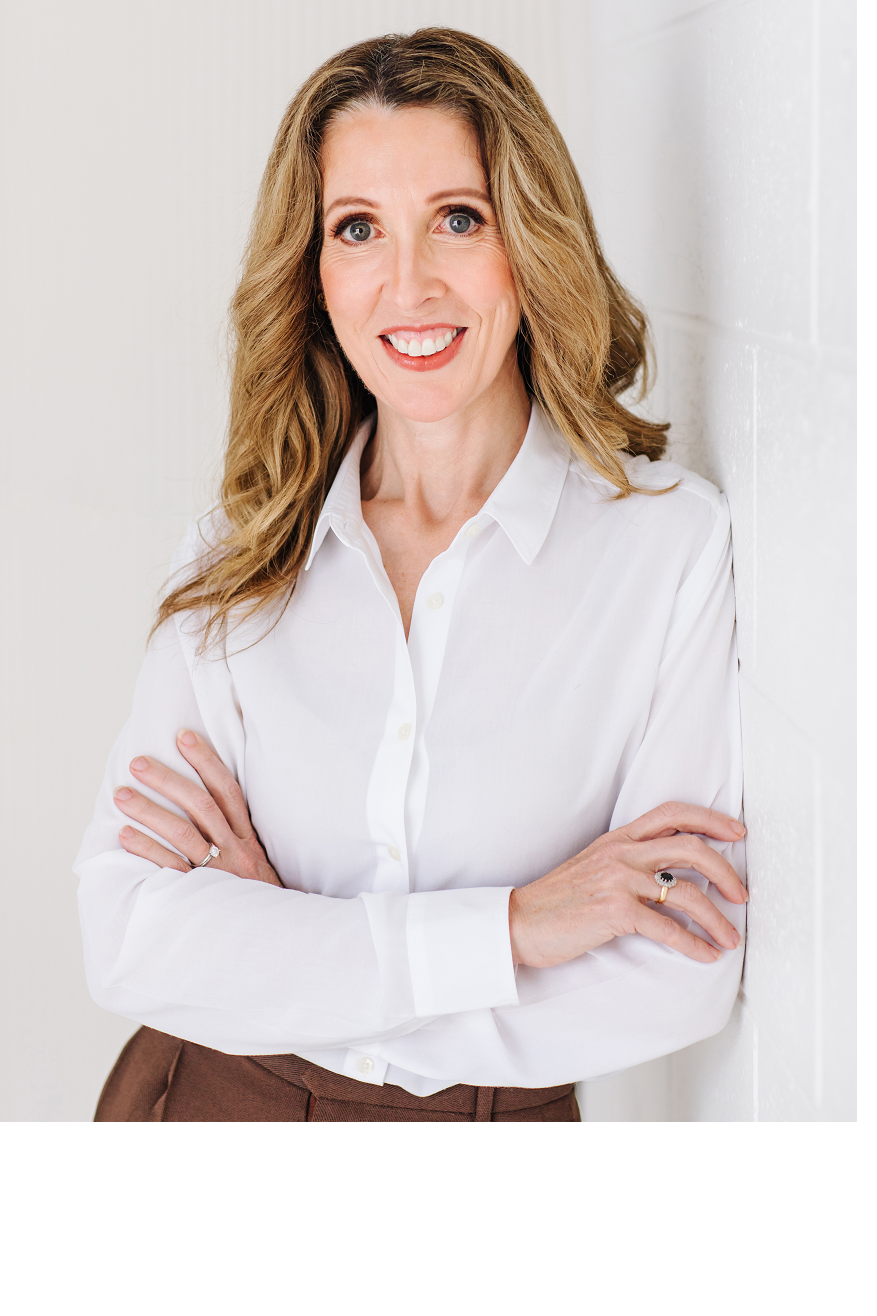
She has done this warm outreach herself for years. She kept a rule she called “never eat alone on a Friday,” and the lunch went to someone she had met online, someone she had been meaning to see, or two people who should know each other. Taking a connection offline has always felt easy to her. She knows it does not feel that way to everyone, which is why it is now part of the training.
The Profile That Sounds Like Nobody
Senior leaders now arrive with a newer problem: a profile written with AI in an afternoon, and a nagging sense it is not them.
Karen is not against AI. AI can organise thoughts, challenge an idea, beat the blank page. The trouble is what it does when left alone. It writes what the person is proud of rather than what a client, employer or board chair needs to understand, “in language they would never naturally use.” Everyone sounds the same. The important line is buried halfway down a paragraph. And the reader, remember, skims.
AI can help with expression. It should not invent the person, or decide their positioning.
Why Her, and the Phone Call That Proves the Method
There are many people who will rewrite your LinkedIn profile. The case for this one is that she has sat on both sides of the search for longer than the platform has had a feed, and that her own method produced the thing she wanted most.
She was using LinkedIn to win business in 2005, before most of Australia had heard of it. She has written profiles for senior people since 2009, trained teams since 2015, addressed company directors through the AICD, run a public masterclass in Sydney for years, and been named a Top Voice by the platform itself. Of her 182 recommendations, one comes from a sales leader who watched her train teams across two organisations for four years and then hired her separately to rewrite his own profile.
And in August the proof arrived. Karen has written that she struggles to want things; she built a business, deliberately, that fits around her children and her walks through forests and along beaches, and has never wanted it bigger. But she had one specific professional dream: a call from The Australian Financial Review. Someone asked what she thought of LinkedIn’s new “AI slop” button. Her answer became an essay, the essay became a newsletter article, and a journalist rang to ask for her perspective as a leading Australian LinkedIn expert.
Dream. Come. True.
The lesson she took from it is the one she gives senior leaders about their own visibility: stop asking “What could I post?” and ask instead, “What do I genuinely think? What am I for? What am I against? What is the wrong my work helps make right?”
Where Karen Is Now
Karen lives in Sydney and works with senior leaders in four ways: a strategy session, a rewritten About section, a full profile with positioning and coaching, and LinkedIn training for teams. She dislikes social media and says so on it. What she likes about LinkedIn, the “compelling magic” of it, is that it gives people a starting point.
Your profile manages your reputation when you are not in the room. Your network helps your ideas, name and opportunities travel when you are not there to carry them yourself.
And her warning against measuring the wrong thing is equally direct.
Sales are often a lagging indicator of conversations.
The Playbook
Karen Tisdell’s Playbook: Five Moves for the Executive Who Does Not Want a Second Job
- Decide what you want to be known for, then show it in the first line. The reader skims. Delete the adjectives.
- Make Notifications your home page. Teach LinkedIn who matters to you, and comment only when you can add something.
- Go back before you go out. Each week, one former client, colleague or manager, and one personal message that says why you thought of them.
- Take the warm ones offline. Lunch, a call, a voice note. Never with pitch breath.
- Let AI help with expression, never with positioning. It can tidy the sentence. It cannot decide who you are.
Karen Tisdell writes and trains at karentisdell.com.