


Ellen Claire van Olden
Built a Career in Personal Safety. Then Her Daughters Turned College Age.She had spent decades in rooms where professionals were trained to read a situation before it turned, teaching the small signals that come before trouble announces itself. It was work she knew cold. Then the person about to walk into an unclear moment was not a client or a school district. It was her own daughter, packing for college.
She Does Not Think Her Students Lack Instinct
Ellen Claire van Olden is a speaker, educator, and advocate, and the founder of Empower the Girls, which prepares teen girls and young women to act on what they already sense. Her premise is not that young women miss the warning signs. It is that they catch them, then talk themselves out of them.
The reasons she hears are almost never about danger. They are about manners.
Her Father Taught Her to Read a Room. Her Daughters Changed What She Did With It.
The training started in 1988, alongside her father at MOAB Training International. The subject was personal safety, de-escalation, and managing aggressive behavior, taught to people whose jobs put them in front of volatile situations, and before long she was certifying the instructors who would go on to teach it themselves. She rose through the organization to Vice President. She had finished a business degree at Western Connecticut State University the year before she started. The credential said marketing. The apprenticeship said something else entirely.

In 2007 she co-founded SAM Training and spent five years carrying the same material into schools. That move mattered more than it looked. Adults in high-risk professions arrive at a de-escalation course expecting to be trained. Teenagers arrive expecting a lecture about being careful, and they have already tuned it out.
Empower the Girls, founded in 2012 as the SAM years closed out, came from watching that gap up close and then living inside it. Her own daughters were approaching the age she had spent a career preparing other people to protect. The professional question became a domestic one. What do you actually hand an eighteen-year-old before she goes?
Not warnings. She was clear on that from the start, and she remains blunt about why the standard approach fails.
What came out of a career that began in 1988 and kept narrowing toward a single question is the Courage Confidence Code™, the framework her programs are built on. What it rests on is a reversal. Ellen Claire van Olden does not treat hesitation as a confidence problem. She treats it as a trained habit, learned early, of ranking someone else’s comfort above your own read of a room.
What 1,300 Students Say When They Stop Laughing
Empower the Girls now offers assemblies, workshops, and programs for schools and colleges, alongside keynotes for organizations and a parallel framework built for parents. In evaluations from more than 1,300 students who completed the Personal Safety 101 program, instructor delivery, demonstrations, and relevance of material each averaged 9.5 out of 10. Relevance is the number that carries weight in a room of teenagers. It means they did not decide the material was for someone else.
The measure she trusts most is not on the form. It is what a student says out loud.
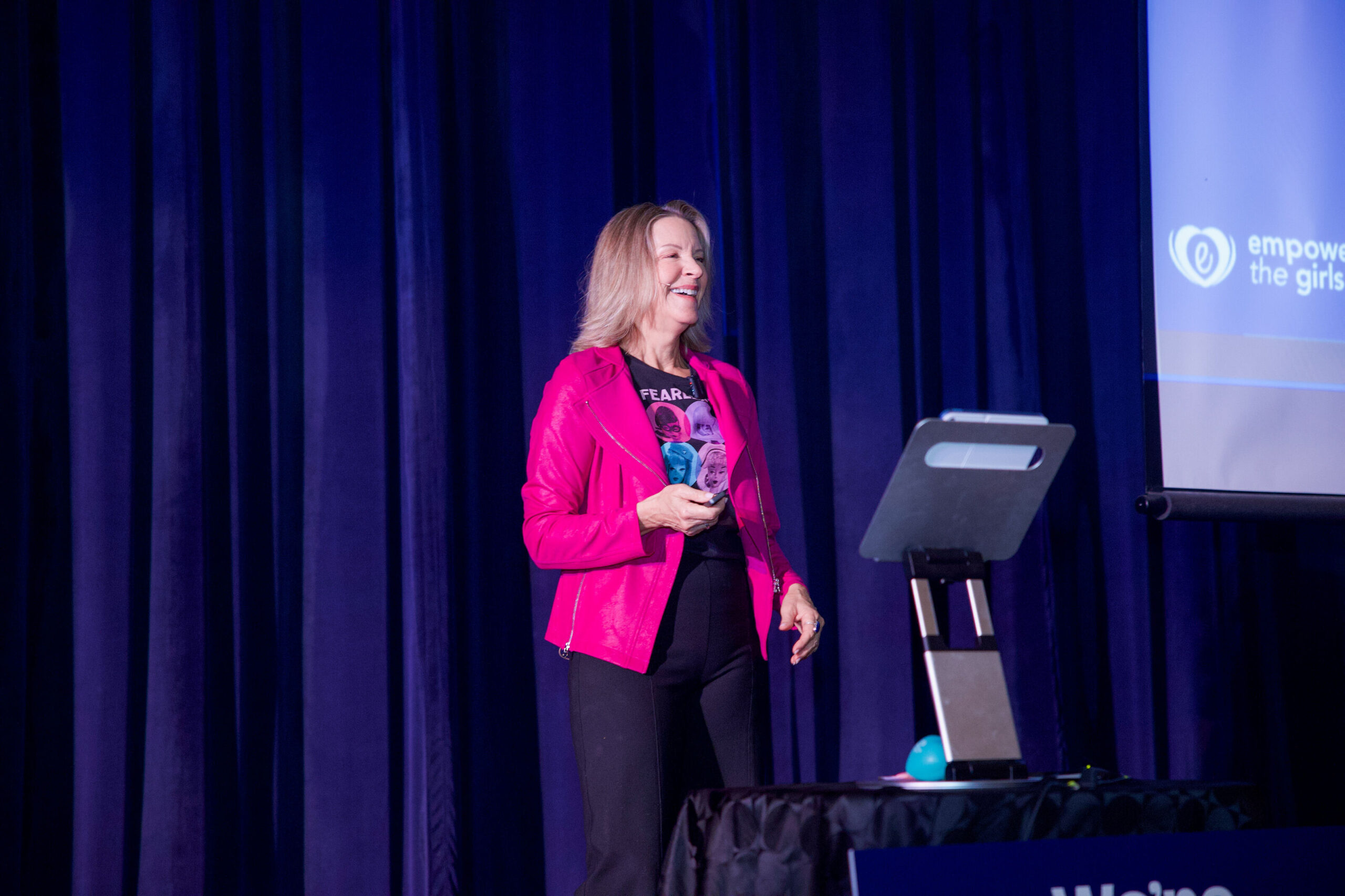
That is a behavioral marker, not a mood. Students who make the shift name what they are picking up on sooner, identify a next step, and use clear language in situations that would previously have made them freeze or minimize.
Her workshops are built around practice rather than instruction, and the difference shows in the room. Students rehearse plain lines until the words are available before pressure arrives. A sentence as simple as “I’ve changed my mind. I’m leaving.”
The nervous laugh is the point. It is the sound of a young woman discovering that the sentence is permitted, and it usually comes right before she says it properly for the first time. Ellen Claire van Olden treats that moment as the outcome, the point where a skill stops being a concept and becomes something she can actually reach for.

The work is now extending past the assembly hall. She is building the Before She series, including the free guide Before She Goes and a course called Real-Life Ready, aimed at the transitions that put young women in unfamiliar rooms with no one to check with first. Schools get the workshop. Parents get language that does not shut their daughter down. Both are pointed at the same window, the years when the decisions start arriving faster than the guidance does.
The Answer She Sends Them Out With
The question that turned a career in personal safety toward something larger was never really about danger. It was about what a young woman does in the seconds when she is not certain, when the evidence is thin and the social cost of being wrong feels enormous. Her father’s field had an answer for professionals. It did not have one for an eighteen-year-old who did not want to seem dramatic.
So she built it, and it fits in a sentence she repeats often:
She is not sending them out afraid. She is sending them out trusting what they noticed.