

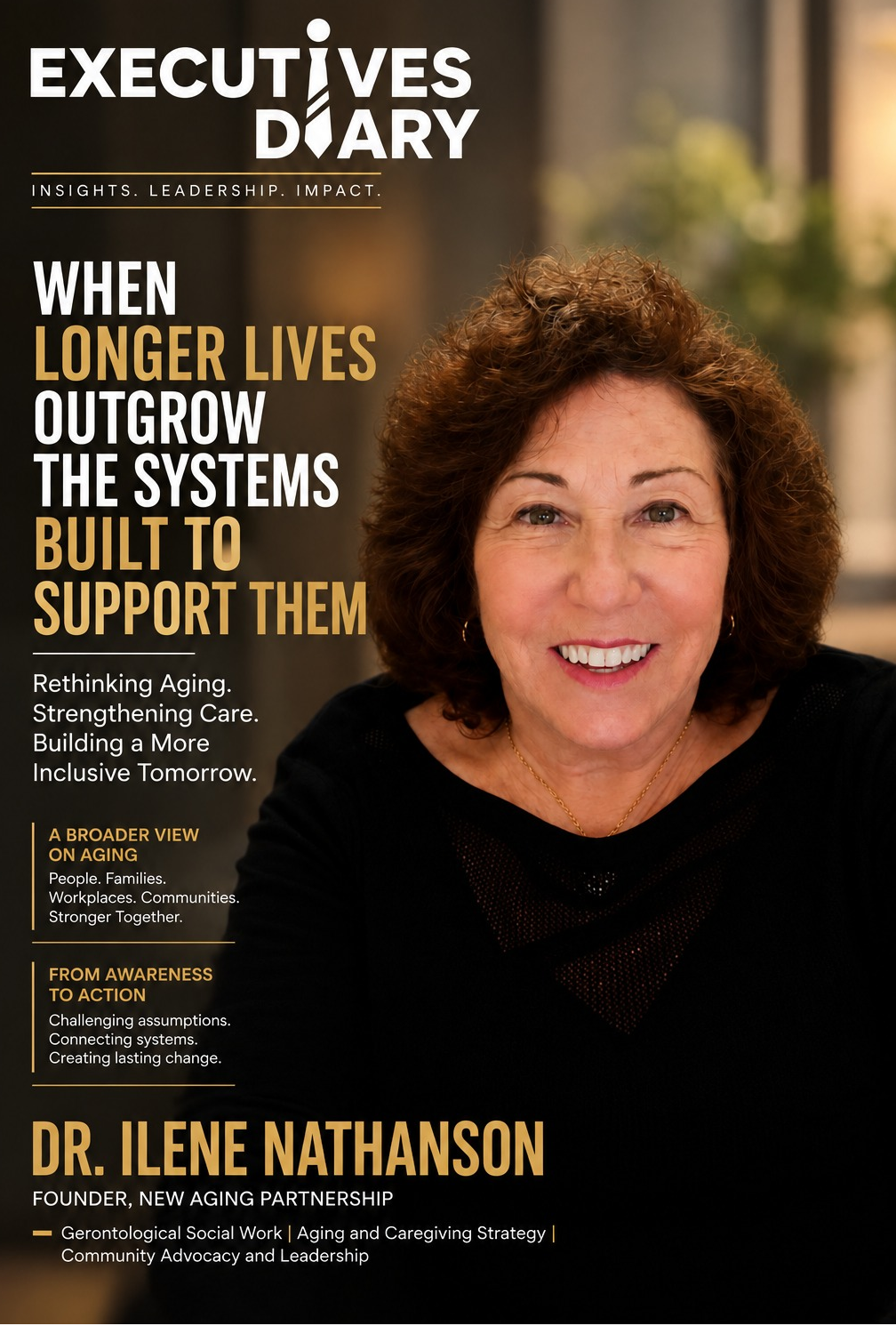
Dr. Ilene Nathanson: When Longer Lives Outgrow the Systems Built to Support Them
Founder, New Aging Partnership | Gerontological Social Work | Aging and Caregiving Strategy | Community Advocacy and LeadershipThe Lives We Have Now No Longer Fit the System We Built
America has become remarkably good at extending life. It has been far less successful at reconsidering what those additional years require from families, workplaces, institutions, and communities.
That contradiction sits at the center of Dr. Ilene’s work. After decades spent studying aging, caregiving, healthcare, social welfare, and organizational systems, she has arrived at a conclusion that reaches beyond the familiar discussion of whether there are enough caregivers or services.
The deeper problem is that society is asking people to live longer lives inside structures designed for a different era.
Dr. Ilene sees caregiving as one of the clearest places where that mismatch becomes visible. Families encounter fragmented services, competing systems, financial pressures, workplace expectations, and responsibilities that can quietly expand until what began as occasional help becomes a second job. Her own commentary on caregiving repeatedly returns to the same warning: people often wait until circumstances change before preparing for what those circumstances will demand.
For Dr. Ilene, that fundamental change begins by questioning the assumptions underneath the system itself.
Four Decades of Looking at the Problem From Different Sides

Dr. Ilene’s perspective did not come from studying caregiving from a single professional vantage point. Her career has moved through direct service, gerontological social work, healthcare, academia, policy analysis, program management, and organizational leadership. She spent more than three decades at Long Island University, including roles as Professor, Chair, and Chief Administrator of Graduate Social Work, and earlier worked with the Brookdale Center on Aging.
That range matters because her thinking is fundamentally interdisciplinary. She looks at what happens to an individual, but also at the family around that person, the workplace, the organization delivering care, the community, and the policies governing access.
Over time, she began seeing the same pattern from different directions. People may know what families need, yet organizations remain separated by their own mandates, funding structures, priorities, and strategic interests.
The result is a system in which responsibility can become everyone’s concern and no one’s responsibility at the same time.
Dr. Ilene’s current work through New Aging Partnership reflects the conclusion she has drawn from those years of observation: knowing what needs to change is only one part of reform. The harder question is how to create enough collective will to make different systems respond.
The Roles We Never Redesigned
Longevity has changed more than the number of years people spend alive. It has changed the roles they occupy during those years.
The traditional sequence of education, work, parenting, retirement, and later life assumed clearer boundaries. Those boundaries are increasingly difficult to maintain. A person can be an employee, parent, spouse, adult child, caregiver, and provider at the same time.
Dr. Ilene knows this tension personally. When she cared for her own parents and relatives, her academic schedule gave her a degree of flexibility that many workers do not have. Even then, balancing professional responsibilities with caregiving was intense. Her parents also belonged to a generation that had different economic and family circumstances, while later generations face smaller families, higher costs, and more complicated demands.
Her concern is especially pronounced for people caught between work and caregiving. Family leave and employee benefits can help, but they do not resolve the deeper conflict when the expectations of one role collide with another.
Women may leave the workforce. Younger adults may postpone education or personal development. Families may depend on multiple incomes while simultaneously needing one member to step away from paid work.
The question, then, is not simply whether people have enough services. It is whether the roles themselves have been reconsidered for the realities of longer lives.
Why Role Theory Changes the Conversation
This is where Dr. Ilene’s expertise in role theory becomes central.
Role theory offers a way to understand something that can disappear when caregiving is discussed only in terms of policy, funding, or service delivery. The caregiver is not merely a consumer of a service. That person is also a worker, parent, spouse, sibling, adult child, or friend, each role carrying its own expectations.
When those expectations collide, the individual is left to solve a structural problem privately.
That observation explains why Dr. Ilene does not believe another isolated program can solve the larger problem. Systems theory adds another layer by examining how individuals, families, organizations, and communities interact. Together, these frameworks allow her to examine caregiving as a problem of relationships and responsibilities, not simply a shortage of resources.
Her LinkedIn writing reflects this broader view. She has pointed to the shortage of appropriate residential options, the financial burden placed on families, the underuse of existing aging services, the home-care workforce gap, and the way caregiving can gradually consume a person’s time and economic security.
Each issue is different. Together, they reveal the same structural weakness.
Why Dr. Ilene Is Looking Beyond Institutions
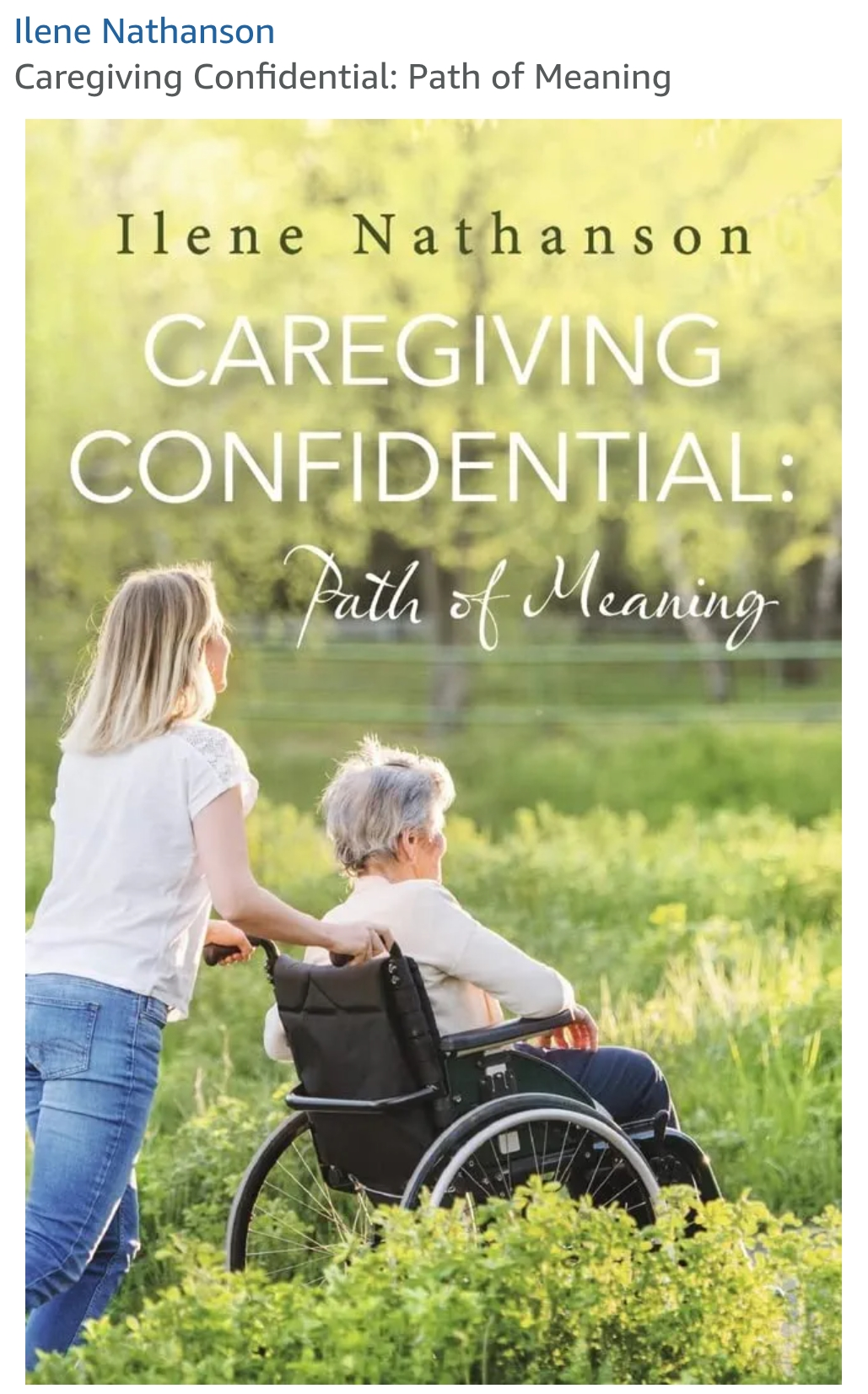
Years of working with private, nonprofit, and government organizations have also changed where Dr. Ilene believes reform can begin.
Her conclusion is direct: institutional systems are often too fragmented to generate the kind of fundamental change the caregiving problem requires. Her current focus with New Aging Partnership is therefore moving toward community building, education, advocacy, and leadership development, particularly through faith-based and spiritually oriented communities.
The reasoning is grounded in history.
In her essay Faith: The New Old Frontier, Dr. Ilene points to the abolitionist, civil rights, and sanctuary movements as examples of social change in which communities played a significant organizing role. She argues that reform does not necessarily begin with institutions. It can begin with people who are close enough to a problem to recognize it, organize around it, and create pressure for change.
There is another dimension to her argument. Dr. Ilene believes caregiving cannot be approached entirely through the competitive logic often used to organize markets. She is not opposed to free enterprise. Her concern is applying free-market principles to essential human services where universal access is necessary.
She describes the result of years of incremental fixes in blunt terms:
Her answer is not to discard existing institutions, but to get people and organizations out of their silos and build enough community momentum to demand something better.
From Private Burden to Community Responsibility
That shift is what makes Dr. Ilene’s current work more than another caregiving initiative.
She is asking communities to see preparation differently. A family should not have to discover every resource, financial consequence, and care option after a parent has already reached a crisis. Communities should not wait until people are overwhelmed before making existing resources visible. Employers should not treat caregiving as an occasional disruption detached from the realities of working life.
Her own LinkedIn observations make the point repeatedly. She has argued that communities are not doing enough to connect people with services already available, and that employment and public channels could become important ways of reaching families earlier. Her conclusion is simple: “we need to get organized.”
She also questions assumptions about family capacity. A large family may sometimes make aging at home possible, but that model is not available to everyone, particularly as family sizes shrink and the cost of maintaining multiple households rises. And not everyone has children who can eventually provide care.
This is where community becomes more than a word. It becomes part of the infrastructure.
Faith organizations, neighborhood groups, workplaces, volunteers, aging networks, and local leaders can help people prepare earlier, connect resources, and identify needs before families reach the point of exhaustion.
New Aging Partnership is now beginning to build those relationships, including a needs-assessment effort with the Sisters on Long Island. The organization is also being featured in the November edition of Faith, the Magazine, published in recognition of Caregiving Month.
The Bigger Question Is How We Choose to Live Together

Dr. Ilene’s work ultimately asks a question that extends well beyond aging.
What happens when society changes the conditions of life but refuses to change the expectations built around those conditions?
Longer lives are not simply a demographic development. They affect employment, family structure, retirement, finances, housing, healthcare, community relationships, and the distribution of responsibility between generations.
For Dr. Ilene, responding to that reality requires more than adding another service to an already fragmented system. It requires people to recognize caregiving before crisis, reconsider the roles they expect one another to play, and build stronger local networks around shared responsibility.
Her faith-community work is therefore not separate from the decades she spent studying aging. It is the logical next step in her thinking.
After years of examining what institutions can and cannot do, Dr. Ilene is putting greater attention on what people can build together.
The future of caregiving may depend not only on what society provides, but on whether communities are willing to organize around the people who need it.