
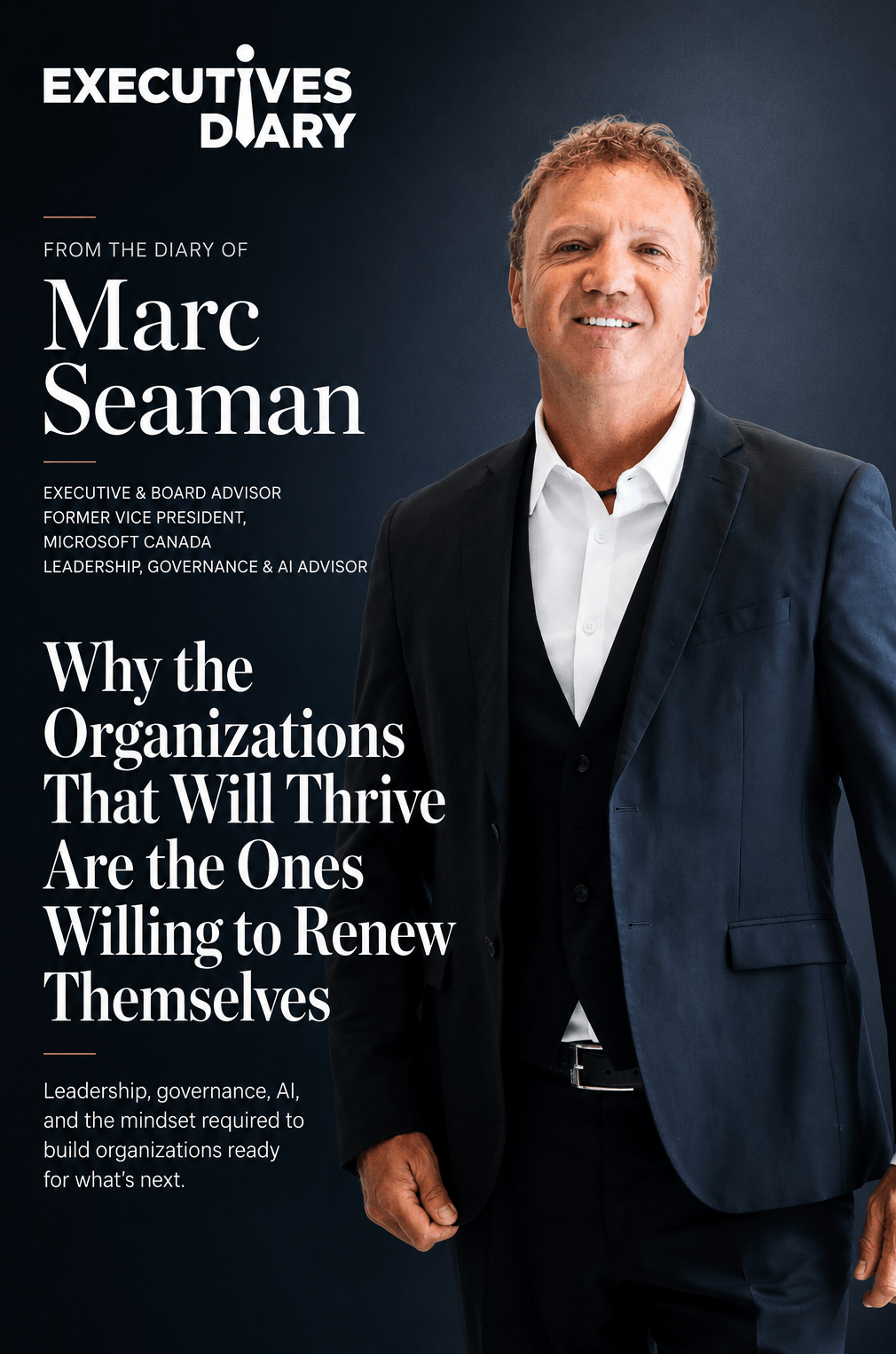
Marc Seaman: Why the Organizations That Will Thrive Are the Ones Willing to Renew Themselves
Executive & Board Advisor | Former Vice President, Microsoft Canada | Leadership, Governance & AI Advisor | Helping CEOs and Boards Build Organizations Ready for What’s NextWhen Change Is No Longer Enough
Every generation of business leaders faces a defining leadership challenge. Globalization reshaped competition. Digital technology rewrote entire industries. Remote work challenged long-held assumptions about culture and collaboration.
Artificial intelligence is often described as the next chapter in that story.
Marc Seaman believes it represents something far more significant.
He argues that AI is not simply another wave of technological disruption. It is exposing weaknesses that have existed inside organizations for years. The companies that succeed will not necessarily be those with the largest technology budgets or the most sophisticated AI tools. They will be the ones willing to rethink how leadership works, how decisions are made, and how organizations continuously adapt.
That conviction has become the foundation of Marc’s work with CEOs, boards, founders, and public institutions. It also explains why his conversations rarely begin with technology.
They begin with leadership.
A Career That Prepared Him to See Beyond Technology
Marc Seaman has spent more than twenty-five years helping organizations navigate periods of significant change. Throughout his career, he has led major enterprise-wide transformations spanning operating models, organizational structures, commercial strategy, governance, and culture. His career has crossed technology, government, education, healthcare, tourism, and national institutions, giving him a perspective that few executives develop within a single sector.
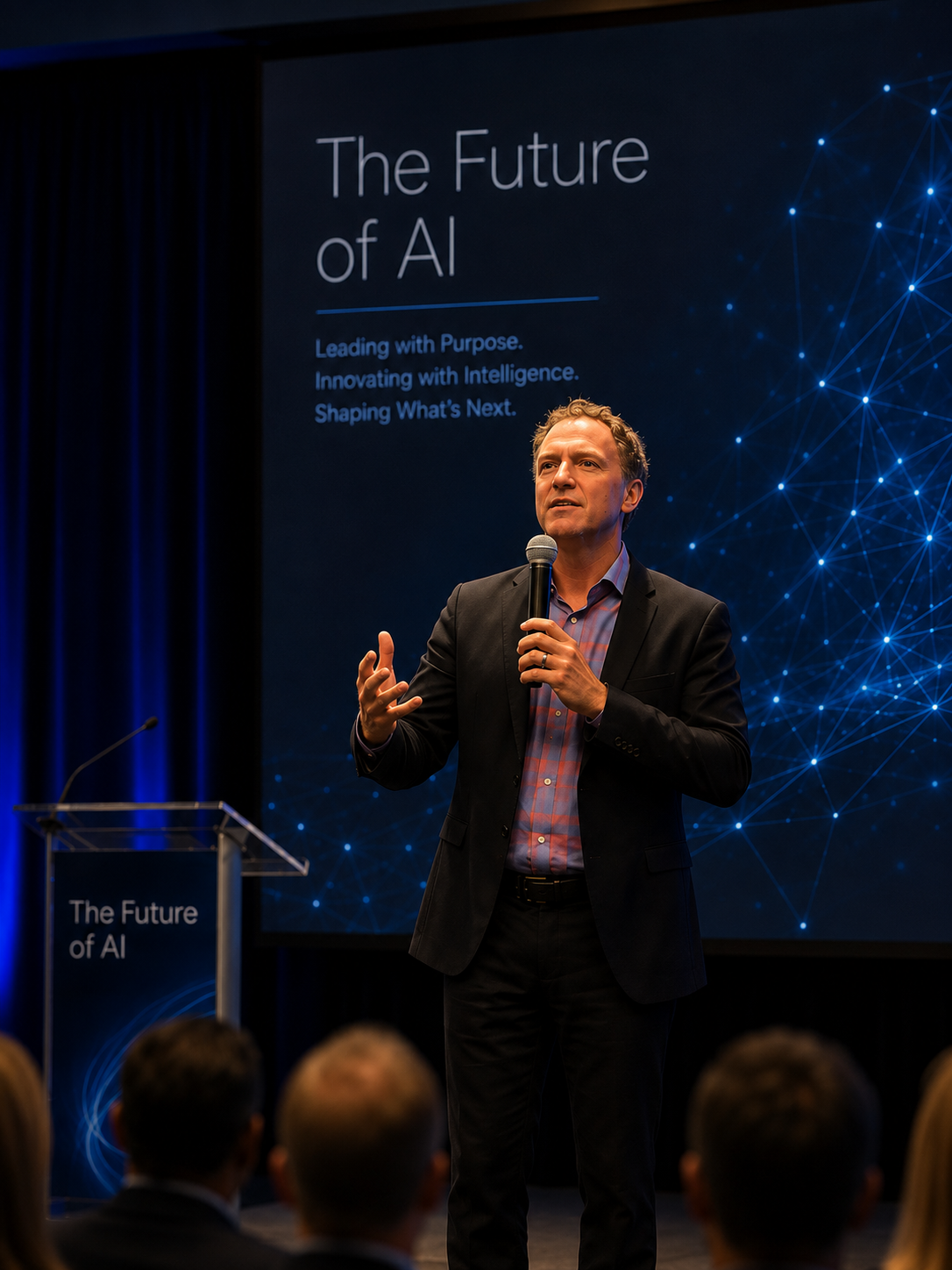
Much of that foundation was built during more than two decades at Microsoft Canada, where he ultimately served as Vice President, Education. Leading one of Microsoft’s largest public sector businesses meant more than delivering commercial results. It required building high performing commercial teams, shaping market strategy, and navigating one of the fastest periods of technological change in the industry’s history. It also meant anticipating where education, technology, and public policy were heading, then bringing universities, colleges, polytechnics, governments, educators, and industry together around a common vision.
Under his leadership, Microsoft’s education business expanded its reach across virtually every Canadian university, college and polytechnic, along with the vast majority of K to 12 school boards. The business generated more than $150 million in annual revenue, while the education portfolio represented approximately $1.5 billion in annual commercial value, helping establish Microsoft as a trusted partner in education across Canada and accelerating the adoption of AI-enabled learning nationwide.
Those achievements matter.
What matters even more is what they taught him.
Looking back, Marc describes leaving Microsoft as one of the most valuable periods of his professional life.
Stepping outside a single organization gave him something success inside it never could.
Perspective.
Working across different industries, governance structures, and leadership teams revealed a pattern that had always been there.
In Marc’s experience, organizations rarely struggle because they lack ideas.
More often, it is because leadership, governance, culture, and execution are evolving at different speeds.
That realization fundamentally changed how Marc thinks about organizational performance.
It is a simple observation, yet one that reframes one of today’s biggest executive conversations. Technology may accelerate change, but leadership determines whether organizations are capable of responding to it.
Renewal Instead of Reinvention
Transformation has become one of the most frequently used words in business.
Organizations launch transformation programs.
Boards approve transformation strategies.
Consultants develop transformation roadmaps.
Marc believes the word itself has become limiting.
Transformation often implies moving from one destination to another. Renewal is different. It suggests an ongoing commitment to learning, adapting, and questioning assumptions before circumstances force change upon an organization.
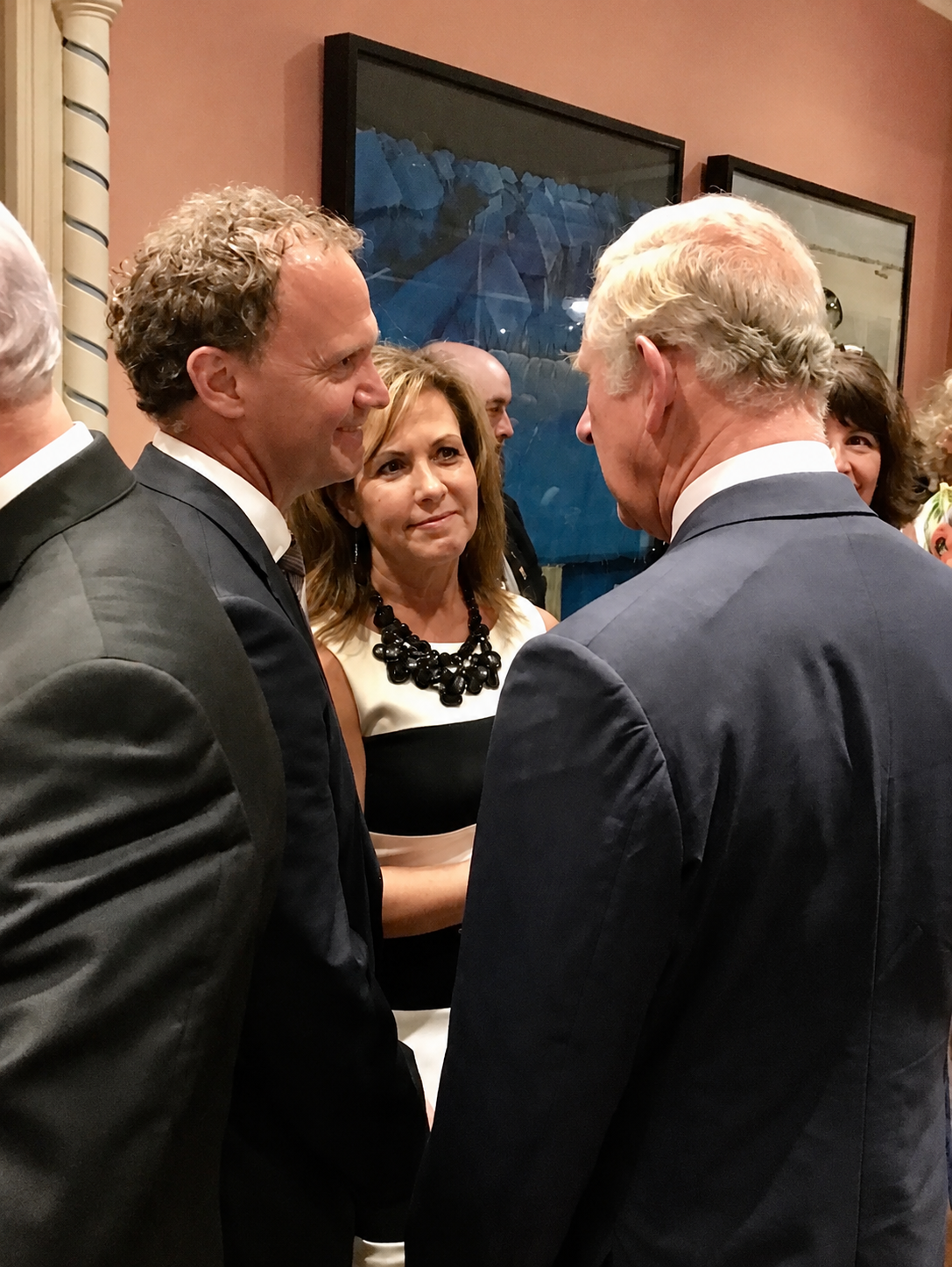
That distinction sits at the centre of his advisory work today.
Through years of supporting executive teams and boards, he has seen organizations invest heavily in technology while leaving leadership capability, governance practices, decision making, and organizational culture largely untouched.
The result is predictable.
Technology changes quickly.Organizations often struggle to evolve at the same pace.
Organizations continue operating with yesterday’s thinking while expecting tomorrow’s tools to produce different outcomes.
Marc sees AI as revealing realities that many organizations could previously afford to overlook.
In his view, organizations are entering a period where technology alone can no longer compensate for weak leadership systems.
That belief explains why his work increasingly focuses on helping leaders rethink not only strategy, but the operating assumptions that shape how organizations function.
For Marc, sustainable success has never been about keeping pace with change. It has been about developing the capacity to renew before external pressure makes renewal unavoidable.
The Boardroom Changed the Questions
Leaving Microsoft did more than broaden Marc Seaman’s perspective. It fundamentally changed the kinds of questions he was expected to answer.
As an executive, success often depends on execution. As a board chair, the responsibility shifts. Decisions are measured not only by what they accomplish today, but by whether they strengthen an organization for years to come.
Serving as Chair of the National Capital Commission, Chair of the Rogers Centre Ottawa, and advising the CEO and Board of the Canadian Institutes of Health Research through a period of major organizational transformation exposed Marc to leadership from an entirely different vantage point. CEO succession, enterprise risk, organizational renewal, public accountability, and long-term strategy became everyday conversations rather than occasional considerations.
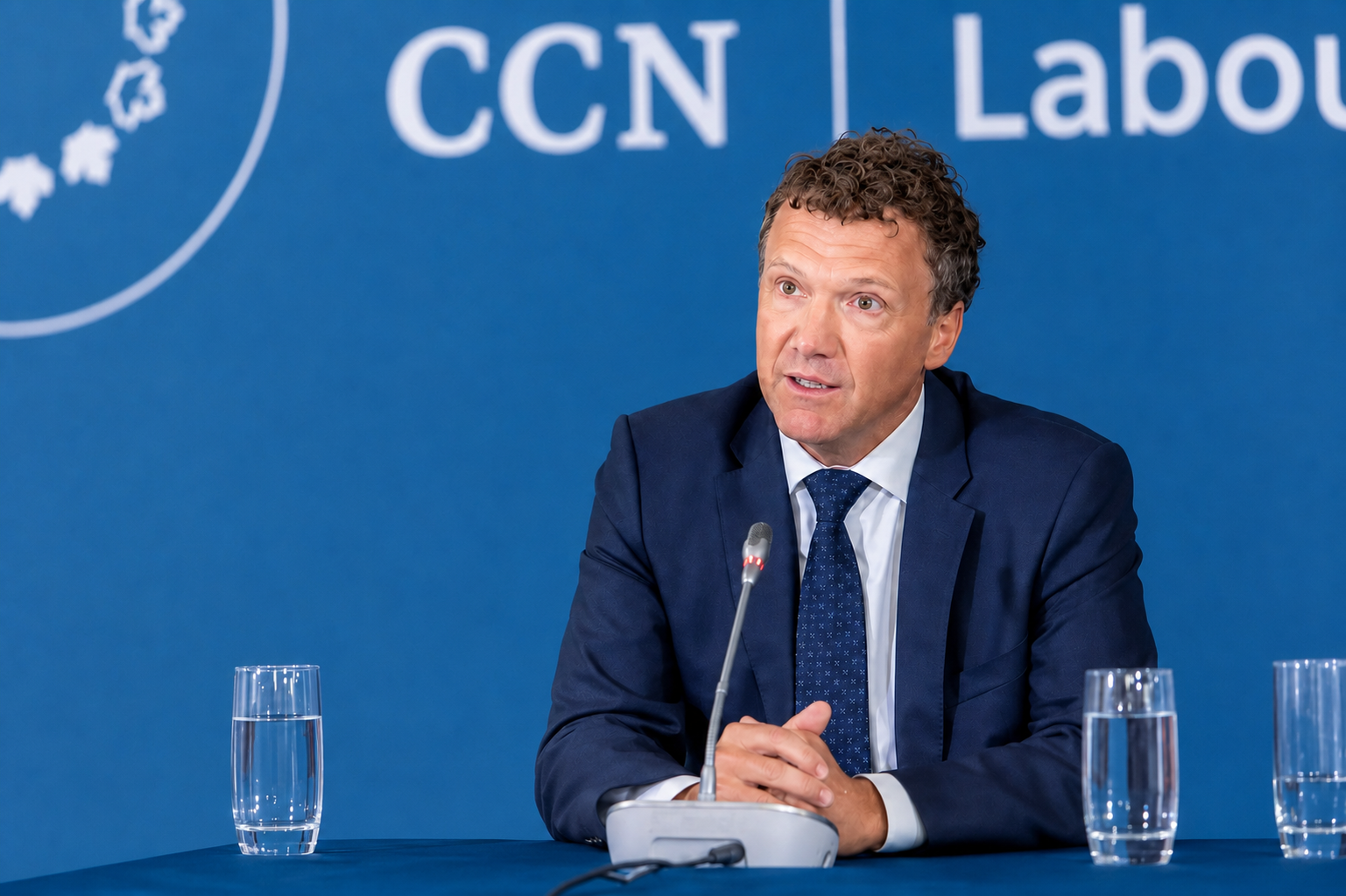
Those experiences reinforced something he now shares regularly with executive teams.
Executive teams naturally focus on today’s performance. Boards have the responsibility of ensuring the organization is prepared for tomorrow.
That distinction has become increasingly important as artificial intelligence shapes every industry.
Marc believes boards cannot simply ask whether an organization is adopting AI. They must ask whether leadership teams possess the judgment, governance, and culture needed to use it responsibly and strategically.
Technology can create opportunity.
Governance determines whether that opportunity becomes lasting value.
Leadership Begins With Listening
For someone who has advised CEOs, chaired national institutions, and led one of Microsoft’s largest public sector businesses in Canada, Marc speaks surprisingly little about authority.
Instead, he talks about people.
Growing up in a family of seven left a lasting impression that continues to influence how he leads today.
Everyone had an opinion.
Everyone expected to be heard.
Disagreement was normal, but so was respect.
That environment taught him that good leadership rarely comes from having the loudest voice in the room. It comes from creating space for better ideas to emerge.
It is a philosophy that appears consistently throughout his career.
Whether building Microsoft’s Corporate Affairs function, leading the national education business, guiding public institutions through significant transitions, or advising founders navigating rapid growth, Marc has consistently focused on alignment before action.
People perform at their highest level when they understand the purpose behind the work, feel trusted to contribute, and know their perspectives genuinely matter.
That belief also explains why he rejects the idea that high performance and humanity exist on opposite sides of a spectrum.
In his experience, organizations achieve extraordinary results precisely because they invest in both.
High expectations and empathy are not competing priorities.
They reinforce one another.
The Future Belongs to Organizations That Keep Learning
Ask Marc what excites him most about the years ahead, and he does not begin with artificial intelligence.
He begins with the opportunities that moments of change create.
He is energized by organizations standing at consequential moments of change, where today’s decisions will define relevance for the next decade. Increasingly, his work focuses on advising leaders who recognize that adopting new technology is only one part of the equation. The greater challenge is renewing how organizations think, govern, collaborate, and create value.
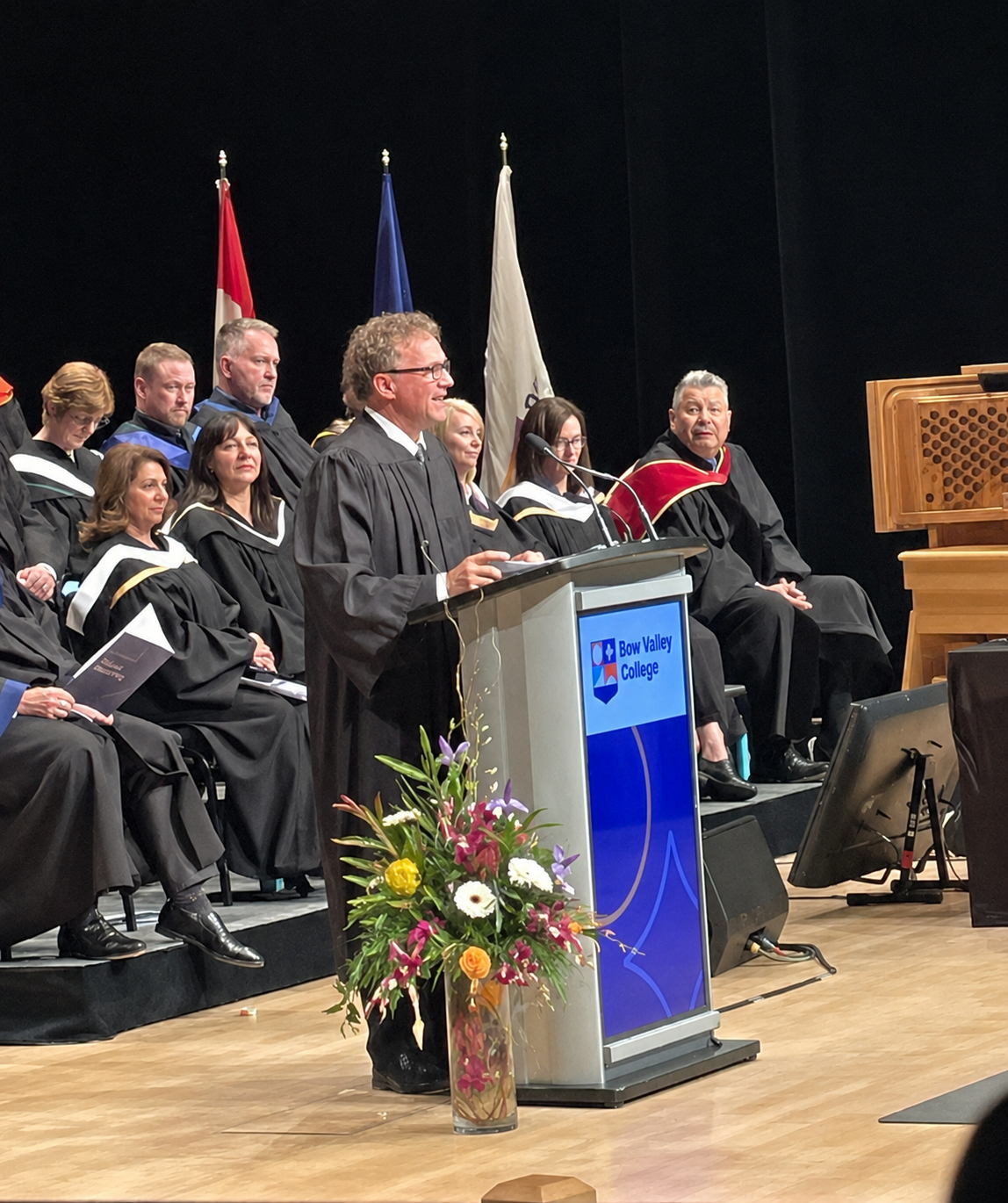
That conviction has also shaped his own professional development.
Rather than relying solely on decades of executive experience, Marc recently completed the Institute of Corporate Directors designation while expanding his work in executive coaching and advising early-stage AI companies. For him, continuous renewal is not advice reserved for clients.
It is a personal commitment.
Those six words capture far more than his view of artificial intelligence.
They reflect his belief that every leader, regardless of experience, must remain willing to question assumptions, embrace new perspectives, and continue evolving alongside the organizations they serve.
Perhaps that is why Marc hopes readers remember something remarkably simple.
Not the titles he has held.
Not the organizations he has led.
But that he helped people and institutions become more capable than they believed possible.
In a business world increasingly fascinated by technology, Marc Seaman offers a different perspective.
The organizations that will shape the future will not be defined by the tools they adopt.
They will be defined by their willingness to renew themselves before change leaves them no other choice.