

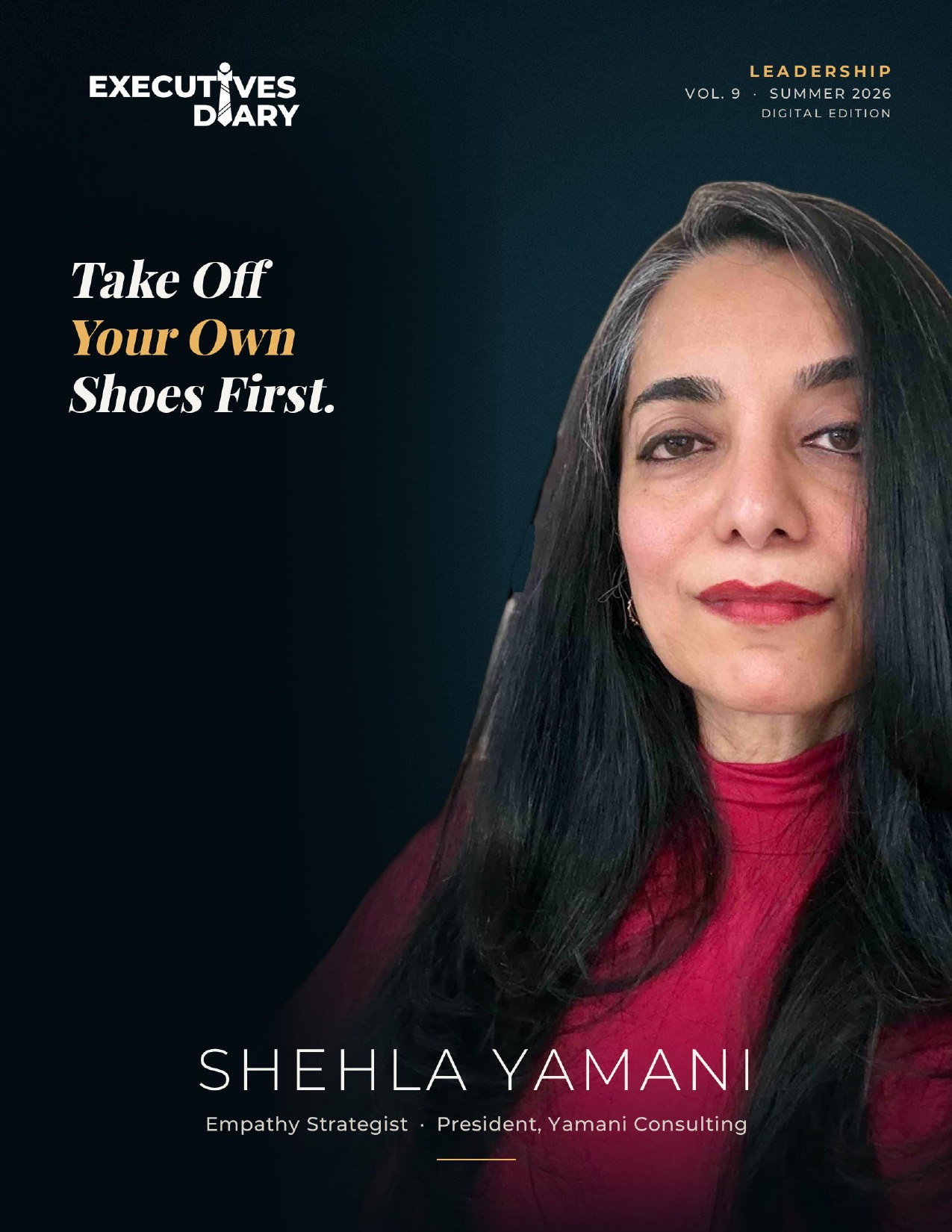
Shehla Yamani, PMP, ProSci
empathy strategist &the President of Yamani Consulting.
Author, Take Off Your Shoes
Shehla Yamani spent twenty-five years running enterprise change from the inside: the program office that carried PlayStation Now onto Windows PC, ERP implementations, data center migrations, a customer success organization built from the ground up.
Across those years, one pattern refused to move. “Toxic behavior and toxic leaders continued to be rewarded and promoted.” Organizations answer that pattern with policy, values workshops, and empathy training, and Yamani’s argument is that all three fail the same way: they start one layer above where the problem lives.
Shehla Yamani is an empathy strategist and the President of Yamani Consulting, a practice built on twenty-five years leading enterprise technology transformations.
The Insider Problem HR Cannot Solve
Yamani’s core claim is that empathy fails inside organizations not because leaders lack technique but because they arrive carrying conditioning they have never examined. “They are not there to provide answers,” she says of leaders walking into a struggling room. “They need to be curious first about their own beliefs, values and blocks that may be hindering their ability to fully see the people they are entrusted to lead.”

The claim would sound familiar coming from a facilitator. Coming from someone who carried delivery portfolios for a quarter century, it lands differently, and she is blunt about the difference. “HR is not an insider.” The perspective is real and the guidance often useful, but the people running most empathy programs have never sat inside the pressure they are trying to humanize. “There is a world of difference between being in the trenches, leading projects, sometimes with technology that is still new and solutions for problems that haven’t been experienced before.”
What the trenches showed her, repeatedly, was a fear economy. “Teams, employees lived in fear of being reprimanded for going against the grain. People played safe and innovation stopped in these environments.” The counterfactual appeared whenever she behaved differently. “When I walked into a room and created safety by listening to people’s ideas, reflecting back to them what I heard, they felt seen and it led to a flow of ideas, innovative problem solving and creative solutions.” Safety, in her experience, is not a wellness perk. It is the operating condition under which enterprise teams produce.
The Shoes She Took Off First
The method got its first test on her. Arriving as Director of the IT Business Office at Ventura Foods, she inherited a conflict: the IT director was frustrated with a project manager who reported to her, one more burden he had neither time nor energy to carry. Her first instinct was the one org charts train into every new executive, defend the turf and the hire. She caught the instinct and named it as her own shoes. What she said instead conceded the ground: “It must be very frustrating for you.” Then she made his problem her mandate. “My job is to make things easier for you so you can focus on what’s important.”
Taking off her shoes did not soften the personnel decision. It changed what the decision was for. She coached the project manager, and when the fit did not recover, she replaced him with one the director’s team came to rely on. The outcome she claims is not the swap; it is what the exchange bought. The director, previously resistant, began partnering with her team on efforts he would otherwise have blocked, a trust she describes as the working asset of her tenure there.
The same instinct ran at organizational scale at Elevate SaaS, where as VP of Professional Services she built the post-sale function around the customer’s experience rather than the department’s boundaries. “I developed the Customer Success team from the ground up,” she says, writing its operating procedures and service agreements and positioning the team as the voice of the customer across sales and engineering.
What a Transformation Lead Can Steal From the Six Steps
The method Yamani now teaches is a six-step sequence, and the name carries the argument. “Take Off Your Shoes is an invitation to any leader to notice their identities, values, beliefs before attempting to relate or stepping into others’ shoes.” The title arrived as a question she asked herself while examining why empathy so often fails: “How can I step into someone’s shoes without taking off my own?” The steps run in strict order: noticing your shoes, loosening your laces, taking off your shoes, putting on their shoes, walking in them, and coming back to your own shoes.

A change leader can run four of its moves before the method ever formally arrives.
Key Takeaways / Playbook
- 1. Inventory Your Shoes: Name your own beliefs, fears, and values before stepping into a room to change what you are capable of hearing.
- 2. Prioritize Listening Over Answers: Turn fear economies into productive idea flows by reflecting back what you hear before responding.
- 3. Concede Emotional Ground First: Acknowledge the stakeholder’s frustration directly rather than mounting an immediate defense.
- 4. Return to Your Ground: Walk in their perspective, but always return to your own shoes to make the final executive call.
Underneath the four moves sits the belief the whole practice tests, and Yamani states it as the line most leadership development will not say. “What most leadership development concepts miss is that you are already wearing your own shoes, your beliefs, fears, prejudgments, values that need to be removed before you can truly step into someone else’s shoes. Otherwise you are only performing and not truly being vulnerable enough to empathize with the other person.”
Who Is Shehla Yamani, the Operator Behind the Six Steps?
Shehla Yamani is an empathy strategist, the President of Yamani Consulting, and the author of the forthcoming book Take Off Your Shoes, with a twenty-five year record leading program and transformation work inside enterprise technology and healthcare organizations. Her career began at Ernst & Young Global Consulting Services in 1995 and ran through IBM Global Services before settling into delivery leadership: five years managing the project management office at St. Joseph Health System, consulting engagements for Molina Healthcare, Broadcom, and Kelley Blue Book, and the senior manager seat over the PlayStation Now program office during the year the service reached Windows PC, bringing PlayStation exclusive titles to Windows for the first time. She went on to direct the IT Business Office at Ventura Foods, serve as VP of Professional Services at Elevate SaaS, and consult on organizational change management at Stanford Health Care. She holds an MBA from California State University, Fullerton, and a BA in Comparative Literature from the University of California, Irvine, a degree in reading other people’s stories that predates the career spent learning why leaders cannot.
The attunement underneath the practice has a history she names plainly. “Growing up in a difficult environment where my needs for connection, love and safety were not met, I learned to cope by becoming attuned to others feelings and emotions. This coping skill became my strength as a leader when I applied it strategically.”
Today Shehla Yamani runs Yamani Consulting full time, coaching senior leaders and delivering organizational workshops and keynotes, and is writing Take Off Your Shoes, where the framework is set down. The argument she carries into those rooms is the one twenty-five years of enterprise change kept proving. The problem was never the policy. It was the shoes, and they come off one leader at a time.