

Who is Ghada Jabbour Yared?
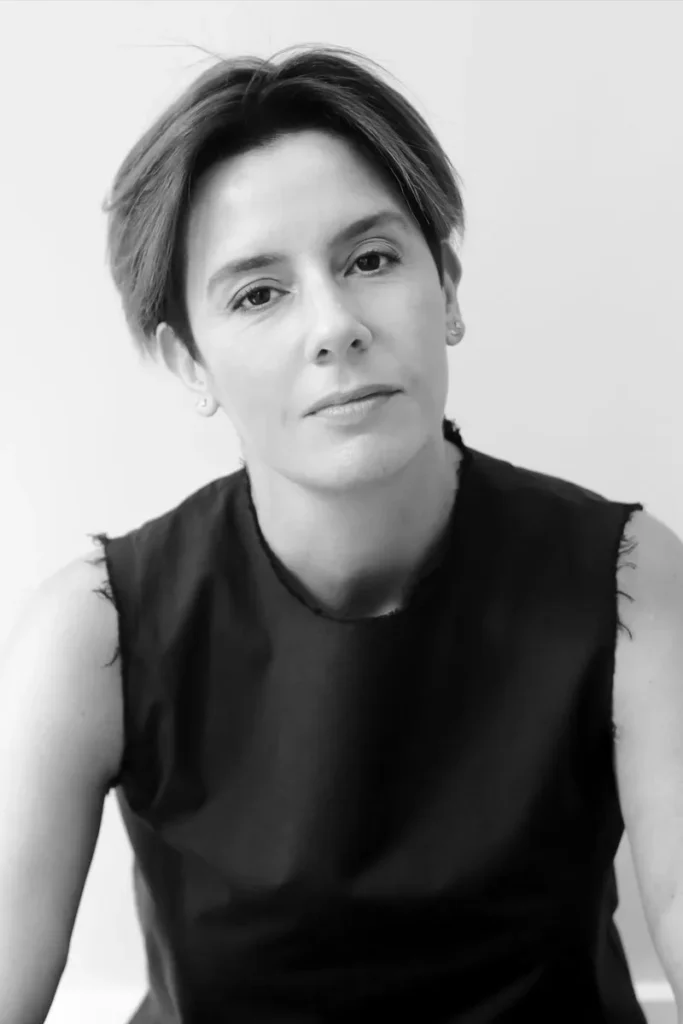
Meet Ghada Jabbour Yared from Beirut Governorate, Lebanon. A Professional Certified Coach (PCC), CPD Certified Trainer, Professional Mediator, and President of the Lebanon Chapter of the International Coaching Federation (ICF), she has dedicated her career to understanding how people think, relate, and lead. Through Wonderlust Coaching & Training, she partners with individuals, corporate teams, NGOs, and educational institutions, combining Systemic Coaching, ADHD Coaching, Family Coaching, Executive Function Coaching, and Mental Fitness to help people strengthen communication, leadership, emotional intelligence, and self-management. Fluent in English, French, and Arabic, she brings together cultures, perspectives, and generations while championing leadership that is deeply human-centered.
There is a familiar instinct in almost every organization, every family, and every team.
When performance declines, we look for better strategies. When conflict emerges, we search for solutions. When someone struggles to focus, communicate, or adapt, we often assume they simply need to try harder.
Yet beneath many of the challenges we attempt to solve lies a question we rarely ask. What if the issue is not capability, but understanding? What if people are not failing because they lack potential, but because they are being measured, managed, and led without fully appreciating how they think, learn, process emotions, or experience the world?
For Ghada Jabbour Yared, that question has become the defining philosophy of her life’s work.
Today, she is recognized as a Professional Certified Coach (PCC), Professional Mediator, CPD Certified Trainer, Executive Function Coach, ADHD Coach, Mental Fitness Coach, and Family Coach. Through Wonderlust Coaching & Training, she works with executives, educators, organizations, families, and individuals across cultures, helping them strengthen leadership, communication, emotional intelligence, and self-management.
Yet her work has never been about coaching alone. It is about changing the way people understand one another.
Learning to See Beyond What Is Visible
Long before Ghada began coaching leaders or advising organizations, she was fascinated by people. Not simply by what they did, but by why they did it.
Born in Lebanon as civil war erupted, much of her childhood unfolded in Europe. She grew up between cultures, languages, and perspectives, learning to navigate different ways of thinking while never losing her connection to the country she still calls home. Even while living happily abroad, Lebanon remained present in her everyday life. She has often spoken about missing its unmistakable scent, the warmth of family gatherings, and the feeling of belonging that distance could never erase. Those experiences gave her something that would later become central to her work: the ability to see situations through more than one lens.
Fluent in Arabic, French, and English, she discovered early that communication extends far beyond language. The same conversation could be understood differently depending on culture, upbringing, personality, or lived experience. Her extroverted nature made those conversations easy to begin, but it was her genuine interest in others that made them meaningful. That realization stayed with her. So did another. No two people experience the same reality in exactly the same way.
Searching for Better Questions
Like many people driven by fairness and justice, Ghada initially believed the law offered the greatest opportunity to create positive change.She earned a Master’s degree in Private Law from Université Panthéon-Assas before continuing her studies in mediation at Saint Joseph University of Beirut. The work appealed to both her analytical thinking and her desire to help people resolve conflict constructively. But over time, she noticed a recurring pattern.

Legal frameworks could resolve disputes. Mediation could facilitate dialogue. But neither fully addressed what happened before conflict emerged, the invisible patterns, emotions, beliefs, and assumptions that shaped human interactions long before disagreement became visible. The deeper she looked, the more she realized that disagreements were often symptoms rather than causes. Behind them were invisible patterns. Beliefs. Emotions. Stress. Identity. Fear. Ways of thinking that shaped every interaction long before words were spoken. She wanted to understand those invisible systems. That curiosity gradually led her toward coaching, not as a departure from her previous work, but as its natural evolution.
As she explains, “I define myself as a coach and a trainer because I find it so rewarding to watch others grow. I’m passionate about empowering individuals, teams and families to design the lives they want to lead and uncover their incredible talents.”
It was never about giving people answers. It was about helping them discover the ones already within them.
When Difference Becomes a Strength
As Ghada continued studying human behavior, another realization emerged. Too often, society labels difference as deficiency. A child who struggles to organize schoolwork is considered careless. An employee who thinks differently is described as difficult. A leader who leads with empathy is sometimes perceived as less decisive. Yet what if those differences were not problems to eliminate, but strengths waiting to be understood?
Determined to explore that question, Ghada expanded her expertise across multiple disciplines. She became a Professional Certified Coach (PCC) through the International Coaching Federation, trained through ADD Coach Academy and the Professional Association for ADHD Coaches (PAAC), earned EQ-i 2.0 and EQ-i 360 practitioner certification, became a CPD Certified Trainer, and deepened her expertise in Mental Fitness, Executive Function Coaching, Family Coaching, Systemic Coaching, and conflict management.
Each qualification added another layer to her understanding. Not because she was collecting credentials. But because each discipline offered another perspective on how people learn, grow, make decisions, build relationships, and unlock their potential. Gradually, those perspectives came together into a single philosophy. People flourish when they are understood before they are judged.
It is a belief she often captures in one simple reflection: “What happens when you align strategy with human potential? You thrive even in turbulence.”
Building a Practice Around Human Potential
That philosophy became the foundation of Wonderlust Coaching & Training, the practice Ghada founded in 2017. Rather than focusing on isolated challenges, Wonderlust approaches people as interconnected systems shaped by their experiences, strengths, relationships, environments, and ways of thinking.
A senior executive may arrive seeking stronger leadership skills, only to discover that emotional awareness is the missing piece. A parent may believe they need better discipline strategies before realizing that understanding executive functioning changes the entire conversation. An organization may request communication training but uncover deeper opportunities to strengthen culture, collaboration, and belonging. Ghada begins every engagement the same way: by listening. Whether working with multinational organizations, educational institutions, nonprofits, families, or individual professionals, she believes meaningful change begins with understanding. For organizations, that means identifying underlying gaps before designing tailored learning experiences. For individuals, it begins with discovery sessions that create space for reflection before solutions emerge.
Leadership. Conflict management. Executive functioning. Positive Intelligence. Mental Fitness. Parenting. Communication. ADHD. Emotional intelligence. The subjects vary, but the purpose remains the same: helping people better understand themselves so they can lead themselves, and others with greater clarity.
Over the years, her work has reached hundreds through coaching, training, workshops, webinars, and organizational consulting. Yet Ghada has never measured success by numbers alone. She measures it by whether people leave with greater self-awareness, stronger relationships, and a deeper understanding of those around them. Because lasting transformation, she believes, begins with understanding.
When Leadership Is Tested by Life
Ideas are easy to believe when life is predictable. They become convictions when they are tested. For Ghada, that test unfolded not in a coaching room, but in the country she has always called home. Like millions of Lebanese, she witnessed years of uncertainty reshape everyday life. The 2019 uprising, an unprecedented economic crisis, a global pandemic, and the Beirut Port explosion were not distant headlines.
They became part of the lived experience of raising a family, supporting communities, and continuing to serve others while navigating the same realities herself. Those years changed the questions people brought into her coaching conversations. Professionals no longer wanted to know only how to become better leaders. They wanted to know how to lead through uncertainty. Parents were searching for ways to support children living with anxiety and disruption. Organizations were discovering that resilience could not be built through strategy alone. The answers, Ghada realized, would not come from teaching people to work harder. They would come from helping them understand themselves more deeply.
That period led her to immerse herself even further in Mental Fitness, Positive Intelligence, Emotional Intelligence, and Systemic Coaching, not because they were emerging trends, but because they offered practical ways for people to strengthen the one thing uncertainty could not take away: their capacity to choose how they respond.
Reflecting on that journey, she shares, “I became, and remain deeply passionate about igniting that inner light in the people I train and coach, helping them become truly self-empowered and anchored in their own power of choice.”
It is this belief that continues to shape every conversation she facilitates today.
Changing the Conversation Around Leadership
As Wonderlust Coaching & Training evolved, so did the scope of Ghada’s work. What began as coaching gradually expanded into something broader: creating learning experiences that help people rethink the way they relate to themselves and to one another.
Across corporate organizations, schools, universities, NGOs, coaching communities, and international forums, she has designed and facilitated workshops exploring executive functioning, ADHD, communication, conflict management, emotional intelligence, Positive Intelligence, leadership, parenting, peer mediation, habits, procrastination, digital wellbeing, and human connection.
At first glance, the subjects appear diverse. In reality, they are connected by a single question. How can people better understand the human experience? Whether she is working with educators supporting neurodivergent students, leaders navigating organizational change, parents raising teenagers, or professionals seeking healthier ways to collaborate, Ghada returns to the same principle: meaningful transformation begins by recognizing strengths before attempting to fix weaknesses.
“Success is achieved by developing our strengths, not by eliminating our weaknesses.”
That philosophy has become particularly important in her work around neurodiversity and executive functioning. Rather than asking people to fit predefined systems, she encourages organizations and families to build environments that recognize different ways of thinking as valuable contributions rather than obstacles to overcome.
For Ghada, inclusion is not simply about representation. It is about understanding.
A Voice Beyond the Coaching Room
While coaching remains central to her work, Ghada has also become an important voice in broader conversations about leadership, organizational culture, and the future of work. Her writing reflects the same curiosity that has guided her career from the beginning. Instead of offering quick answers, she asks thoughtful questions.
In Mind the Gap: When Corporate Values Hit the “Real World” Wall, she challenges organizations to consider whether the values they proudly display are genuinely reflected in everyday decisions, relationships, and leadership behaviors.
In The “Second Brain” We’ve Been Waiting For, she explores artificial intelligence through a refreshingly human lens, suggesting that technology’s greatest contribution may not be replacing people but helping individuals, particularly those with executive function challenges—participate more fully in work and life.
And in The Cost of Staying Relevant: A View from Lebanon, she reflects on the experience of leading, learning, and remaining hopeful while living through one of the most difficult periods in her country’s modern history.
Although the topics differ, the message remains remarkably consistent. Leadership is not measured by how much authority we possess. It is measured by how deeply we understand the people we serve.
Building Communities, Not Just Careers
As Ghada’s philosophy gained recognition, she began thinking beyond the impact of individual coaching engagements. Helping one leader grow creates change. Helping an entire profession grow creates momentum.
That belief drew her into leadership within the International Coaching Federation Lebanon Chapter, where she contributed to professional learning, continuing coach education, governance, partnerships, ethics, and strategic planning before eventually becoming Chapter President. Yet even there, titles were never the destination. Community was.
Under her leadership, the Chapter continued expanding its engagement, strengthening a multilingual coaching community of more than 160 members while advancing professional standards and collaboration. The Chapter also received the ICF Global Recognition Award for Excellence for two consecutive years, recognizing its commitment to member engagement, ethics, and professional development.
Her work has also extended internationally through initiatives across the MENA region and participation in global coaching conversations, including facilitating discussions on Diversity, Equity, Inclusion, and Belonging during ICF Converge in Paris. These experiences have only reinforced something she has believed for years. Communities become stronger when different perspectives are invited to the table rather than filtered out.
The Future Belongs to Leaders Who Stay Curious
When Ghada speaks about the future, she rarely begins with technology, economic trends, or organizational structures. She begins with people. She believes the next generation of leadership will require something many organizations still struggle to embrace: the willingness to genuinely value different ways of thinking.
Watching her own children grow into young professionals has strengthened that conviction. Their perspectives continue to challenge her assumptions, expand her thinking, and remind her that leadership is as much about listening as it is about guiding.
“I constantly learn things from them that I had never thought of before, and their insights have deeply impacted how I behave and how people perceive me.”
She sees the same opportunity in workplaces around the world. The future, she believes, belongs to organizations that move beyond simply celebrating diversity and begin creating cultures where different minds, different generations, and different experiences are recognized as essential to innovation.
As she explains, “True systemic transformation happens when teams and communities move away from deficit-fixing and lean into strengths-spotting, actively building spaces around what people are naturally gifted at and do exceptionally well.”
It is a vision rooted not only in her work, but in her own life, shaped by multiple cultures, languages, professions, and decades spent helping people discover strengths they often could not see themselves. Perhaps that is why one of her simplest reflections remains among her most powerful.
“To begin, begin.”
Because meaningful change rarely starts with certainty. It starts with the willingness to take the first step.
The Ghada Jabbour Yared Playbook: 5 Lessons for Human-Centered Leadership
- Understand People Before Solving Problems: Lasting solutions begin by recognizing how individuals think, feel, and process the world rather than assuming one approach fits everyone.
- Lead Through Strengths, Not Shortcomings: Build individuals and teams by identifying their natural abilities and creating environments where those strengths can flourish.
- Make Emotional Intelligence a Leadership Practice: Approach every decision with empathy, self-awareness, and curiosity, recognizing that people perform best when they feel seen, heard, and valued.
- Create Space for Different Minds to Thrive: Foster cultures that embrace neurodiversity, diverse perspectives, and intergenerational collaboration as drivers of innovation rather than exceptions to accommodate.
- Choose Progress Over Perfection: As Ghada often reminds her clients, “To begin, begin.” Meaningful transformation starts with one intentional step and grows through consistent action.
Editorial Note
Ghada Jabbour Yared’s journey reminds us that exceptional leadership is rooted not in authority, but in understanding. By championing emotional intelligence, neuroinclusion, and human-centered growth, she is helping individuals and organizations rethink what it truly means to thrive. Her work is a testament to the enduring power of empathy, curiosity, and the belief that every person has untapped potential waiting to be discovered.