

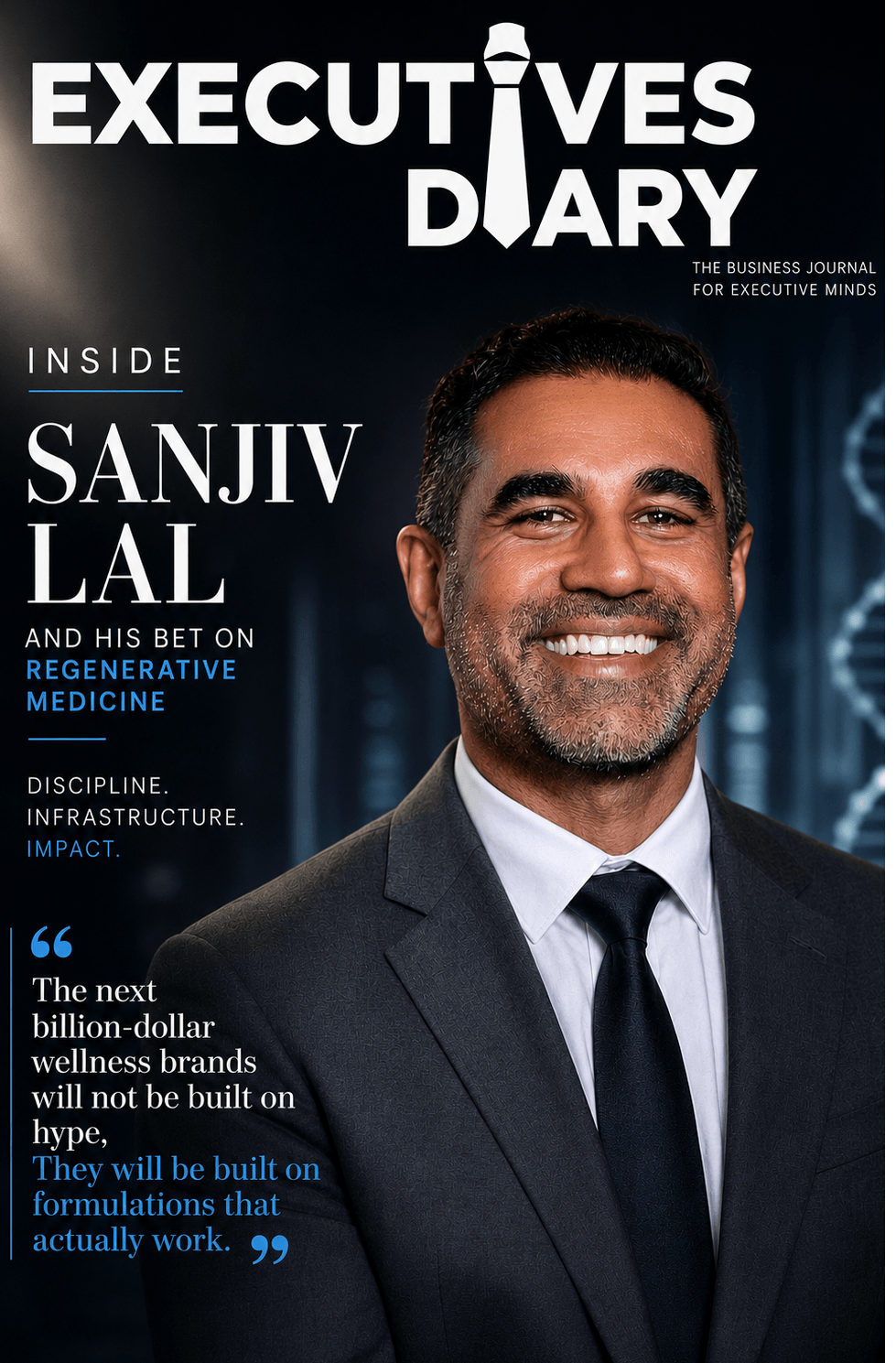
Why Markets Reward Discipline, Not Hype: Inside Sanjiv Lal’s Bet on Regenerative Medicine
Most people in regenerative medicine talk like evangelists. Sanjiv Lal talks like someone who has read the balance sheets, studied the protocol deviations, and already lived through enough boom-bust cycles to know which companies survive the correction.
In a field obsessed with longevity hacks and miracle molecules, he keeps returning to one unfashionable idea: markets reward infrastructure and outcomes, not excitement.
The noise spikes, conferences fill up, venture capital flows toward the loudest claims, and then quietly, the same question emerges.
Who can actually deliver consistent, safe, measurable results at scale?
That question is exactly where Sanjiv Lal placed his career bet.
From Pharmaceuticals to Regenerative Medicine
Sanjiv Lal is the CEO and Co-Founder of RegenTherapy, Co-Founder of Motivant, and owner within the Beverly Hills Rejuvenation Center network.
After 24 years in pharmaceuticals, biotechnology, and molecular genetics, and after founding, scaling, and selling multiple laboratories, he is now focused on one target: turning regenerative medicine from a fragmented collection of promising ideas into a standardized, evidence-driven clinical system.
He did not drift toward wellness trends. He walked away from the system he knew best because he saw its limitations.
A Foundation Built on Rigour
Ohio State’s pharmaceutical sciences program does not produce romantics. The curriculum is rigorous, methodical, and deeply skeptical of claims that outrun data.
Sanjiv earned both his Bachelor and Master of Science degrees there, graduating into an industry that rewarded precision and punished shortcuts.
Those early years built an instinct that has never left him: asking not whether something works in theory, but whether it can be measured, repeated, and scaled without losing integrity.
His career moved through Fortune 500 biotechnology firms, where he absorbed lessons that smaller companies rarely teach.
Large organisations have compliance frameworks, institutional memory, and the operational discipline required to function under regulatory scrutiny.
They also move slowly, operate in silos, and often prioritise protecting existing revenue over following where science leads.
He watched both the strengths and limitations from the inside.
The independent laboratory world provided the other half of his education.
At Marquis Labs and later at Rio Grande Valley Labs, where operations contributed to over a million diagnostic results, he learned what execution without corporate safety nets actually demands.
Speed, decisiveness, creativity, and the ability to build systems that hold under pressure when teams are small and margins for error do not exist.

The Business Thesis: Solving Fragmentation
Two successful laboratory exits later, he had something most people in his position lack: proof he could build something worth buying, plus the capital and credibility to tackle a bigger problem.
That problem was regenerative medicine’s structural fragmentation.
The science behind cellular signalling, placental-derived biology, and peptide therapies has been accumulating for years.
What has not accumulated is the infrastructure to deliver it consistently, safely, and at scale that makes clinical impact measurable rather than anecdotal.
Building the Infrastructure at RegenTherapy
That gap became his business thesis. RegenTherapy is designed as a platform that connects emerging science, clinical infrastructure, and physician education into something coherent.
The company works directly with physicians, operators, and industry partners to develop treatment frameworks and clinical standards that prioritise outcomes over optics.
The recent strategic partnership with LifespanningRx to integrate CellGen Factors into their longevity platform demonstrates how this infrastructure approach scales.
Rather than launching another standalone clinic, RegenTherapy builds the educational and operational backbone that allows multiple providers to deliver consistent, measurable results.
The emphasis is recovery, resilience, cellular optimisation, and healthy ageing that can be tracked and replicated.
Extending the Logic: Jupiter Neurosciences and Beyond
His advisory role at Jupiter Neurosciences extends the same logic into neurology and supplementation.
The resveratrol and bioavailability work around JOTROL’s micellar delivery technology reflects his broader thesis that supplement markets will be won by formulations that actually reach target tissue, not by louder marketing claims.
Positioning in a Maturing Industry
This perspective shapes how he approaches industry networks as well.
His presence at the Healthspan Collective, the Longevity Leadership Conference, and events like David Meltzer’s Regenerative Revival Mastermind at SoFi Stadium are not speaking tours.
They are strategic placements inside the networks where capital, clinical credibility, and commercial infrastructure find each other.
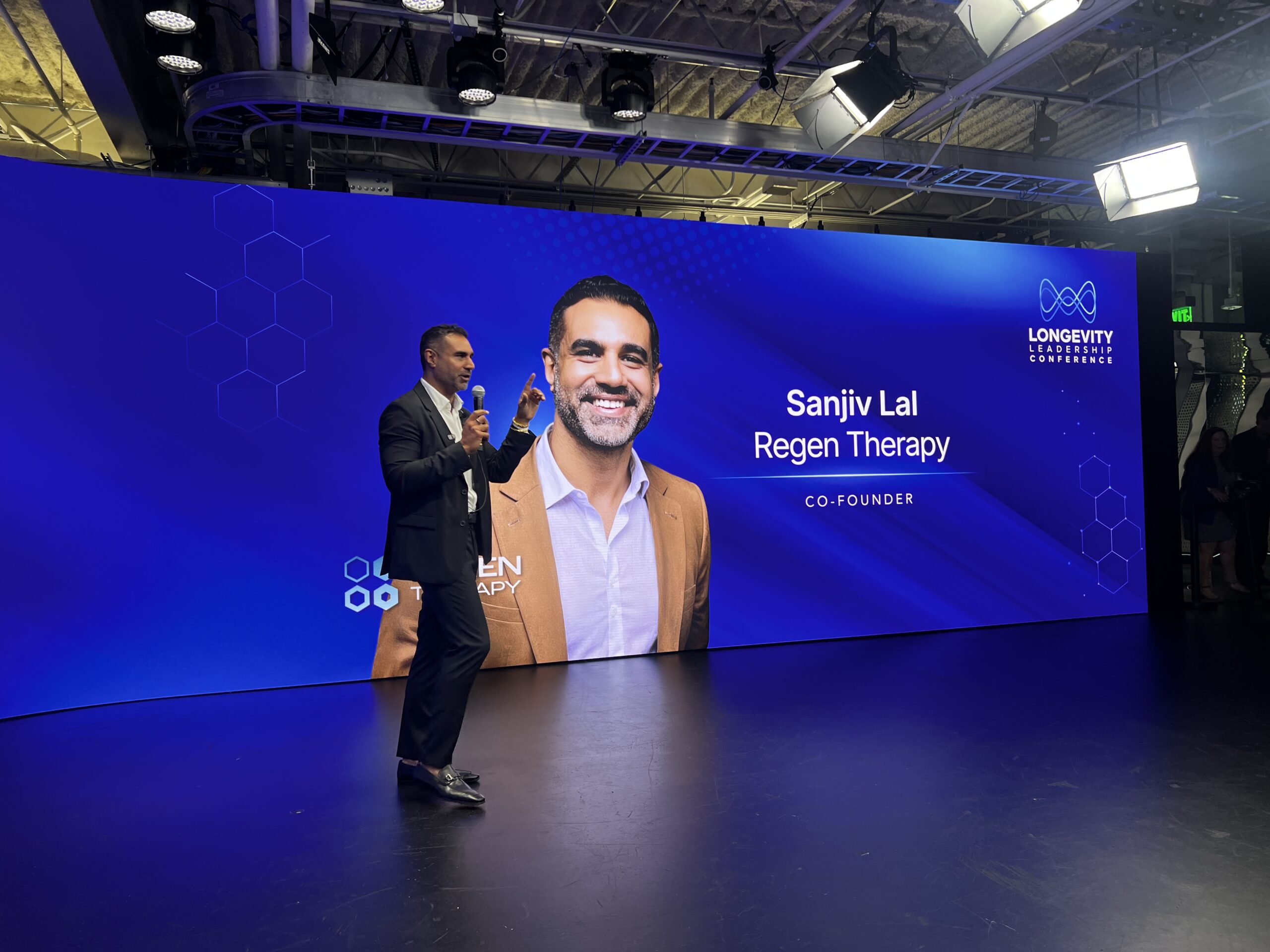
In a space where personal branding often overshadows systematic thinking, that approach is either naive or strategically brilliant.
His track record suggests the latter. He understands that regenerative medicine’s next phase will be won by whoever builds the most trusted relationships between operators, scientists, investors, and physicians before the market fully matures.

Building the System That Survives the Correction
The longevity industry will experience its own version of the late 1990s biotech correction.
Hype will compress, undisciplined players will exit, and what remains will be companies that built real infrastructure, real clinical standards, and real measurable outcomes before the market demanded proof.
Sanjiv Lal is not waiting for that moment. He is building the thing that survives it.
Because markets do not remember who spoke the loudest. They remember who built the system everyone else had to use.