

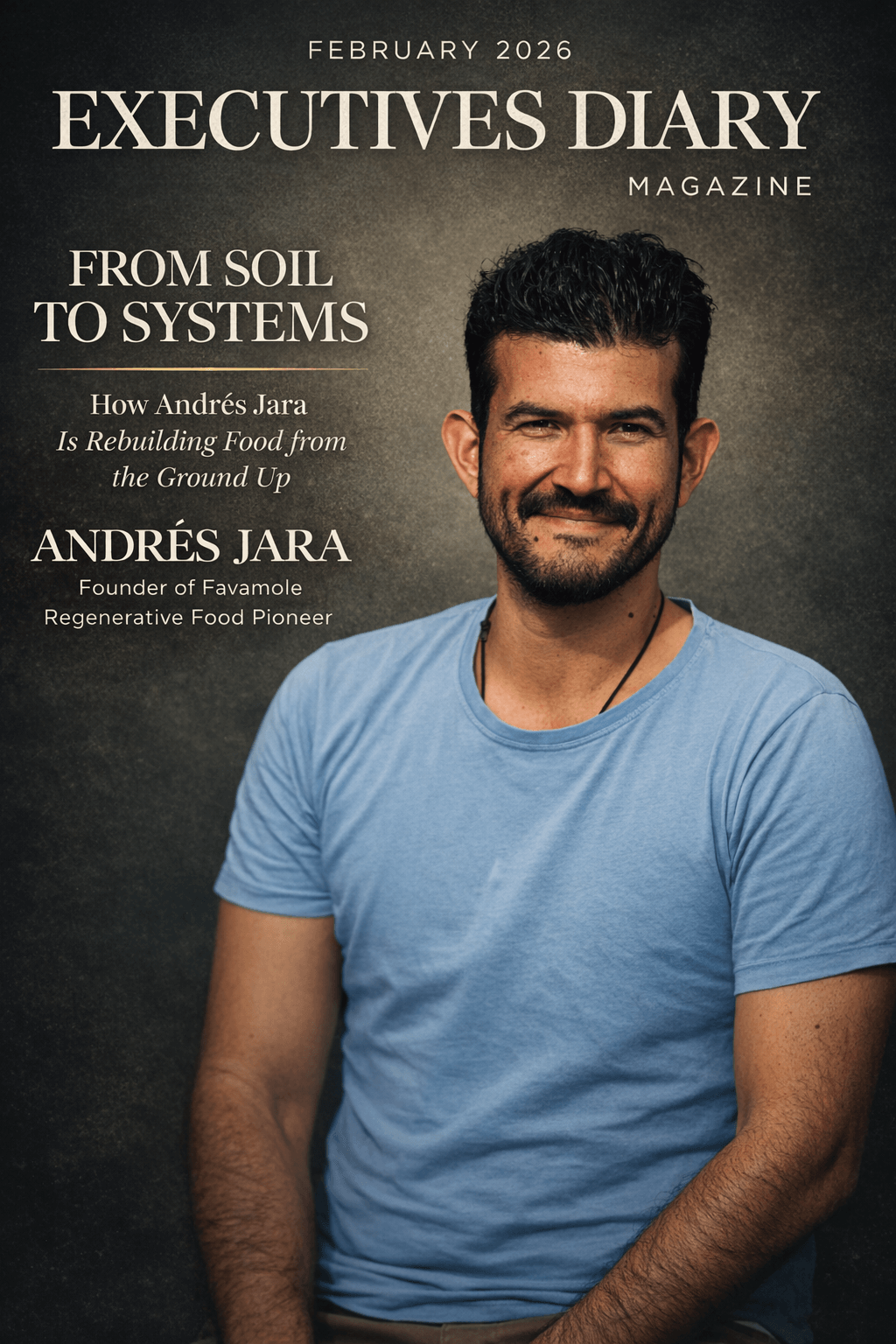
Andrés Jara – Rewriting the Food System from the Inside Out
Andrés Jara is the founder of Favamole, a Dutch regenerative food brand transforming fava beans into climate smart, chef ready products. A Colombian born chef turned farmer and food producer, he combines culinary expertise with soil restoration to build scalable, taste first solutions that reduce emissions, restore biodiversity, and challenge extractive food systems at their roots.
Regeneration, Andrés Jara believes, does not begin in the soil. It begins inside people, long before it reaches fields, farms, or food systems. Long before it becomes a product, a procurement strategy, or a sustainability report. It begins with awareness, intention, and the courage to question systems that quietly reward extraction.
As Jara often reflects, “Regeneration doesn’t start with the system. It always starts with you.”
That conviction was not formed in boardrooms or accelerators. It took shape across kitchens, fields, and deeply personal family experiences that taught him something many modern systems overlook. Nothing thrives in extraction, not land, not people, and not leadership.
Roots That Shaped a Systems Thinker
Jara grew up in Barranquilla, Colombia, raised by a mother whose presence combined strength, discipline, and deep compassion. She filled both parental roles with unwavering resolve, showing by example that limits are rarely fixed realities. Watching her navigate life against the odds instilled in him a belief that determination, self-belief, and care for others can coexist.
“If you really want to do something, there is always a way,” he says, echoing words he heard repeatedly from his mother and grandfather.
Equally influential was his grandmother, whom Jara describes as the embodiment of service. She gave freely of her time and energy, not for recognition, but because service was simply how she moved through the world. From her, he learned that leadership is not about authority, but about contribution.
As a student, Jara was curious and outspoken. He questioned rigid rules and resisted the idea that there was only one correct path. Some teachers embraced that curiosity, engaging him in deep conversations at a young age. Others struggled with it. The experience left a lasting imprint. Progress, he learned early on, belongs to those willing to challenge fixed thinking with respect and intention.
Learning the Food System from the Inside Out
Jara’s career does not follow a conventional corporate arc. He never worked for a large multinational or climbed a predefined ladder. Instead, he immersed himself in the food system piece by piece, building a rare, end to end understanding.
He began as a chef, training in Colombia, Peru, and Italy, where discipline, precision, and respect for ingredients were non-negotiable. He went on to master traditional butchery in Tuscany, learning how value is created or lost across production lines. Later, he became a farmer in the Netherlands, co-founding a community-supported agriculture initiative that supplied local families while actively restoring soil health.
That journey, from chef to butcher to farmer to food producer, was not accidental. It was deliberate. Jara wanted to understand the full system, not just one part of it.
“I thought hard work alone would pay off,” he reflects. “What really carried me through was passion, consistency, and how I showed up every day, even when I was exhausted.”
Along the way, he learned another lesson that would shape his leadership style. Kindness compounds. Treating people with respect is not only ethical, but it is practical. The food system, like life, has a way of bringing people back into your orbit when you least expect it.
Turning Regeneration into a Scalable Reality
That systems-level perspective led Jara to found Favamole, a regenerative food brand built on a deceptively simple idea. If we want healthier soil, we must make people want to eat the crops that heal it.
Fava beans, nitrogen fixing legumes grown locally in the Netherlands, became the foundation. From them came Favamole, a creamy, bold dip designed to stand on its own, not as a compromise or substitute. The product delivers dramatically lower emissions, supports regenerative Dutch farms, and fits seamlessly into large scale kitchens and procurement systems.
For Jara, taste is not secondary to impact. It is the gateway to scale.
“If people don’t crave it, it doesn’t scale,” he often says. “Taste is the adoption layer.”
Favamole’s impact extends beyond the product itself. By creating demand for regenerative legumes, it gives farmers a reason to plant crops that restore biodiversity and reduce dependency on synthetic inputs. By working directly with chefs, caterers, and buyers, it turns sustainability from a theoretical goal into a daily operational choice.
The journey has not been romanticized. Jara speaks openly about underestimating branding, about the difficulty of translating mission into perception, and about the personal reckoning that comes when founders try to do everything themselves.
“If I’m doing everything, I’m not leading,” he admits. “I’m just trapped in busy mode.”
Learning to delegate, to trust others, and to face financial realities head on became part of building a company that could truly regenerate rather than burn out its founder.
Vision for the Future: Regeneration as a Way of Leading
Today, Jara is increasingly focused on speaking engagements, investor outreach, and partnerships that can scale regenerative food systems without stripping them of integrity. His leadership philosophy is grounded in a set of principles passed down through generations.
“You bring more flies with honey than with ice,” he says, reflecting his belief that change spreads through openness, not force.
Another guiding idea underpins both his personal growth and his professional mission.
“The inner world is a reflection of the outer world,” Jara explains. “When you change how you see things, you can create entirely new outcomes.”
That belief fuels his conviction that systemic change begins with individuals. People do not change because they are shamed or overwhelmed. They change when better choices feel meaningful, empowering, and genuinely enjoyable.
For Jara, regeneration is not a trend or a label. It is a way of thinking, building, and leading. In food, it means restoring soil, supporting farmers, and serving food people truly love. In leadership, it means humility, curiosity, and the courage to challenge inherited systems with respect.
Editorial Note
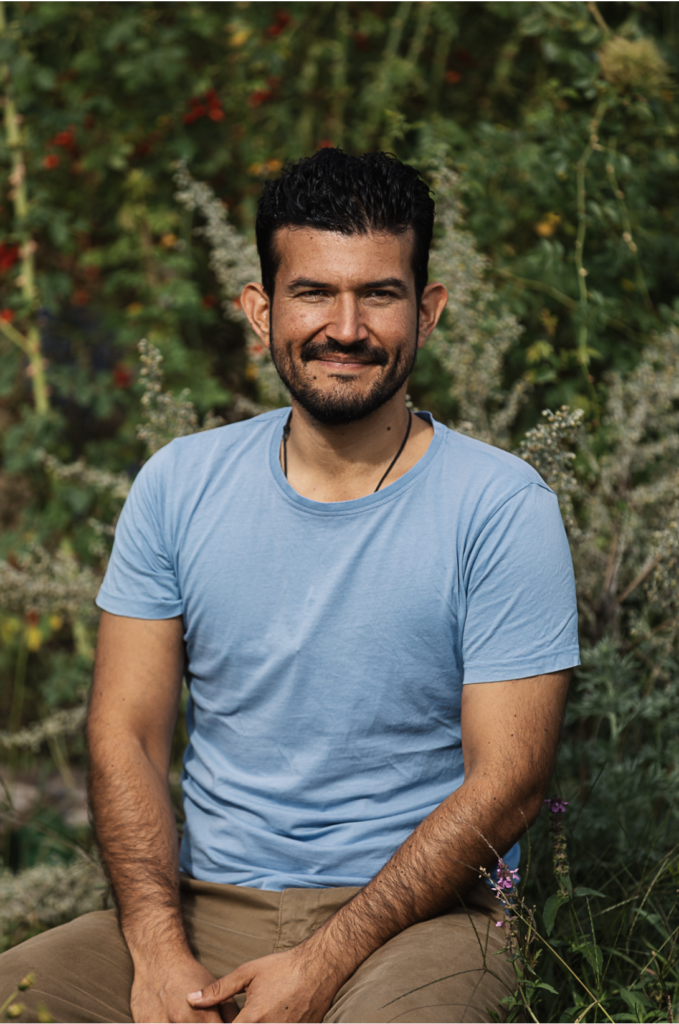
Andrés Jara’s journey offers a quiet challenge to today’s leaders. Measure success not only by what you produce, but by what you restore along the way. His work reminds us that meaningful change does not start with slogans or reports. It starts with people who are willing to rebuild systems from the ground up, beginning with themselves.