For women starting a business on their own: what changes when someone finally listens, from the co-founder of a Stockholm network built so nobody has to build alone.
The woman who walks into a FoundHers Network event often has an amazing corporate career behind her. What she hasn’t done, Ulrike Schulz says, is build something as a solo founder, and she arrives full of doubt: about whether her idea is worth pursuing, and whether she is capable of building it.
“That’s where FoundHers comes in, and mainly we listen,” Ulrike says. “It sounds simple, and it’s hard to ‘sell’ listening, but it’s what people really want. They want to be seen and heard.” Then the doubts get taken away, or at least looked at from a different perspective, whether that comes from the organisers, from an expert or from fellow founders.
One woman has been with FoundHers since its very first event. She was the one who told Ulrike that something like it was missing in Stockholm. She came in with a strong, quite detailed idea but hadn’t moved the needle much. After joining, she launched her business.
She is part of a wider pattern. The Global Entrepreneurship Monitor’s 2023/24 Women’s Entrepreneurship Report found that women’s startup rates rose from 6.1% to 10.4% across 30 countries between the early 2000s and 2021 to 2023.

Ulrike is the Stockholm-based CEO and co-founder of FoundHers Network, a community and event series for women founders and solopreneurs, and she runs Visible Focus, her visibility strategy practice. FoundHers is a year old, based in Stockholm and building a global network. The reader she wants is the woman doing it all by herself. “I want to speak directly to her and let her know she’s not alone,” she says. “This article is for her.”
Stop Building Alone
A lot of the FoundHers community are internationals. They have moved to Sweden, often to Stockholm, and don’t know anyone. They don’t know how Sweden works culturally or bureaucratically, and answering those questions is a big part of what the network does.
What shifts, Ulrike says, is a way of thinking: it’s all possible. Joining can eliminate the doubts, or sometimes just validate them, and the founder gets started anyway. “It’s not easy, and the doubts never fully disappear,” she says. “Especially as women, we doubt ourselves a lot. This community is here to support our members with exactly that.”
The Messy Middle
Ulrike’s profile says founders need people who understand the messy middle, and she means the part social media leaves out. “What’s portrayed on social media is that you can be super successful in business,” she says. “That’s true, but what gets left out is that it often takes longer than you expected, and that the middle can be boring and really draining.”
She thinks it’s something founders should go through together, so they can exchange what is actually happening. “Most of the time it’s not something crazy amazing or a string of big wins,” she says. “It’s the reality of building a business, and we’re here to talk about it more and shine a light on it.”
One question comes up often: how long should I wait before I decide it might not work? It’s hard to answer, she says, because it depends on your personality too. “But my recommendation is always to push a little further and stay in the messy middle. One day it will make sense, and you’ll look back and see that it all needed to happen.”
Forty to Seventy at Every Event
The clearest number Ulrike can point to is attendance. FoundHers events bring in around 40 to 70 people every time, which tells her there are a lot of women, potential founders and entrepreneurs, looking for more structure or simply an outlet to validate their ideas and get a push. The network held its first event outside Sweden, in Copenhagen, this autumn.
The proof she cares about most is the women who start. Another member launched her business right after the first or second event. She had been thinking about it for years and needed validation: someone to listen and tell her it was a great idea. She took action straight away.
“I care more about stories like hers than about reach or follower counts. For me, it’s about getting started and not giving up.”
Ulrike Schulz, CEO & Co-Founder, FoundHers Network
Her own career has taken a similar mix of action and chance.
Half Action, Half Destiny
“I think it’s half taking action and half destiny,” Ulrike says of the turns that led here. It started in London, where she was applying for apprenticeships at advertising agencies. One required a campaign to prove her creativity, so she started a Twitter account about looking for a job in London. Very shortly afterwards, The Guardian asked her to write about job hunting on Twitter. She wrote three articles for the paper, ending with a success story: a job in London as a social media consultant. “I never intended to work in social media,” she says, “but that’s how my career started.”
Insights analysis came the same way. She was discovered on LinkedIn, wasn’t looking for it, and thought she could do it. “That’s generally my attitude: I can do anything, unless it’s being a doctor or a lawyer straight away,” she says. She took the job and learned on the spot.
When she moved to Stockholm, a friend pointed her to a job post in a Facebook group, and her background got her the consulting role. Visible Focus grew out of discovering what LinkedIn can do for a personal brand, which fascinated her enough that she wanted to teach it. Her YouTube channel followed the same pattern: she started it about personal finance, made one video about life in Sweden as she was moving there, saw the interest, and has been making content about life in Sweden as a foreigner ever since.
FoundHers began with a LinkedIn connection and a coffee. The woman she met immediately saw Ulrike as someone who was all about female founders and connecting with solopreneurs. She had a co-working space, so they could start right away. The first event was so good that they decided to build something around it together. “I listen to my environment a lot,” Ulrike says, “and I have certain skills that I use.”
Five Interviews in One Week
Ulrike’s hard moment came in London, when she lost a job during her probation period because the project she had been hired for never happened. With no financial cushion, she threw herself into the search. She had five interviews in one week, a freelance job within two, and several offers to choose from within four.
She traces that response to her father, not through anything he said but through who he is: tough, action-oriented and solution-focused. She approaches challenges the same way, by getting over them and finding a way forward.
Where Ulrike Is Now
FoundHers Network is a year old. Over the next twelve months, Ulrike wants women who are building alone, wherever they are, to know that it exists. Visible Focus continues alongside it.
Outside work, she reads, mostly non-fiction on psychology and mindset, which she says helps her stay focused, keep the bigger picture in view and be happier. “Without books,” she says, “life would be only half the fun.”
The line she lives by is an old German proverb, Geteiltes Leid ist halbes Leid: a trouble shared is a trouble halved. “It’s why I believe so strongly in community,” she says. “You need people around you, and like-minded people make everything lighter.”
Five Lines from Ulrike’s Diary
“Mainly we listen.”
“Most of the time it’s not something crazy amazing or a string of big wins.”
“Push a little further and stay in the messy middle.”
“I can do anything, unless it’s being a doctor or a lawyer straight away.”
“For me, it’s about getting started and not giving up.”
From the Diary of Ulrike Schulz
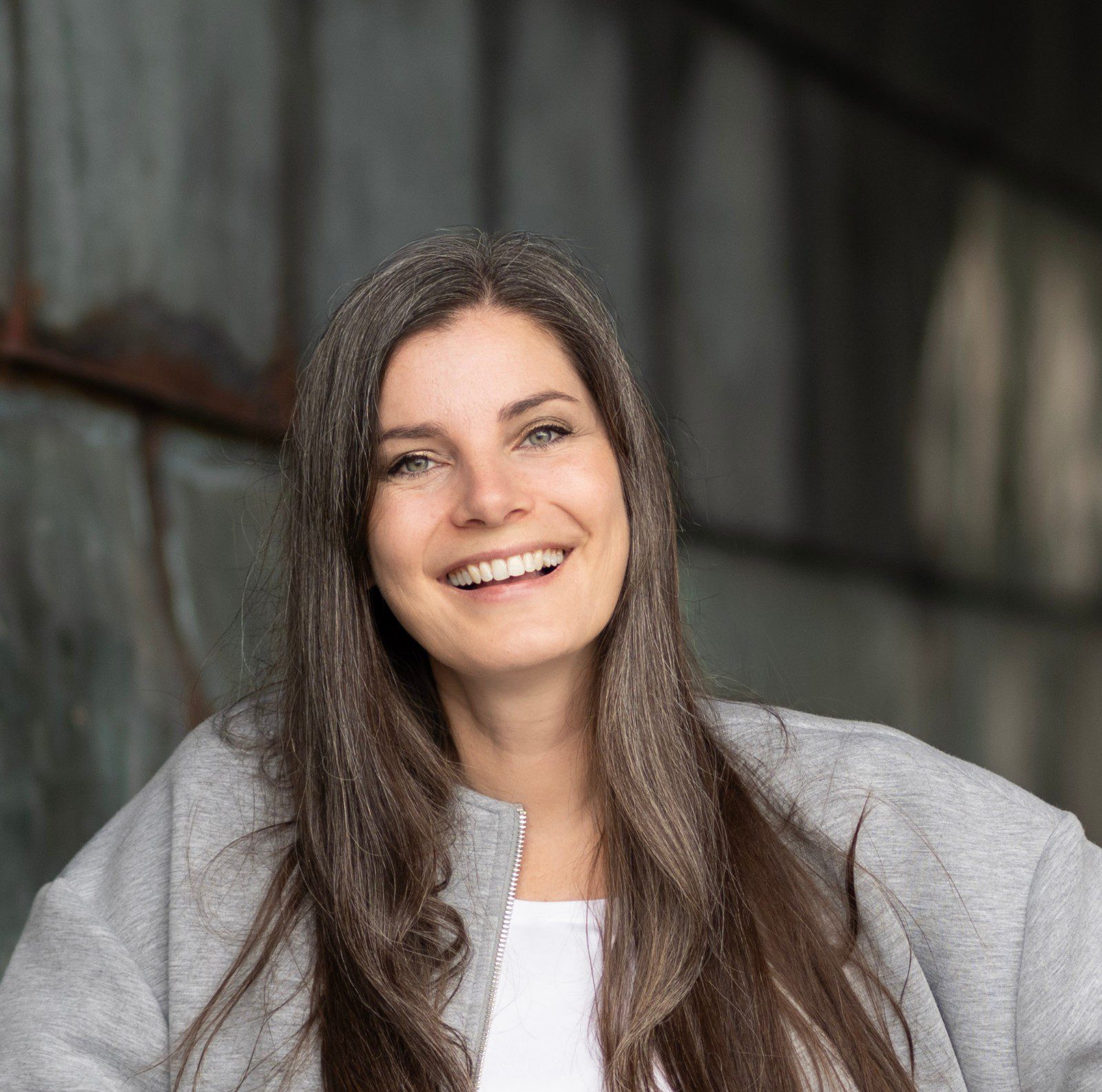
Ulrike Schulz is a Stockholm-based visibility strategist and the CEO and co-founder of FoundHers Network.
“A trouble shared is a trouble halved.”
Editor’s Note
Ulrike Schulz built a network around something she admits is hard to sell: listening to women who are starting businesses alone. The editors chose her because her evidence is specific and modest, rooms of 40 to 70 people and members who launched after an event or two, and because she is candid that the middle of building a business is mostly unglamorous. Her own career, from a Twitter job hunt in London to a co-founded network in Stockholm, shows the mix of action and chance she describes.
Executives Diary, Editorial
Sources
Global Entrepreneurship Monitor, “What are the trends and lessons about women’s entrepreneurship over the past 25 years?” (GEM 2023/24 Women’s Entrepreneurship Report), 2024, https://www.gemconsortium.org/news/women%27s-entrepreneurship-report-launch-webinar%3A-insights-and-trends-over-the-past-25-years