From the Diary of
Phoebe Wasfy
For the education policymakers, and the school leader anywhere, who wants academic results and character to come from the same work: how the principal of a Canadian school built over twenty years of practice around one question, who do our students become.
“Education is not just about preparing students for the future, it is about empowering them to shape it.”
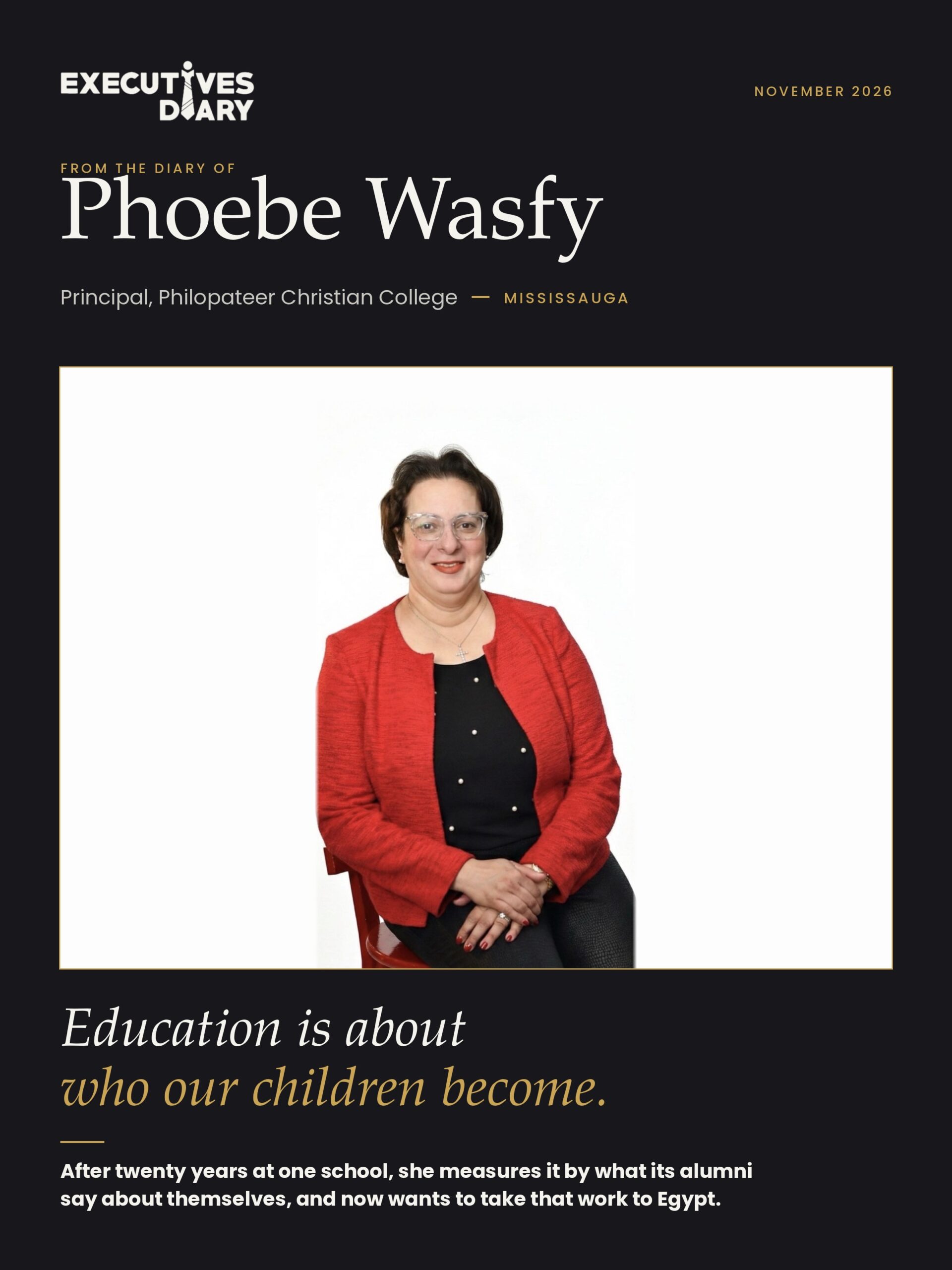
Phoebe Wasfy is a principal of a school in Mississauga, Ontario, that holds its students to high academic standards, and she is quick to say that the standards are not the point. “When we help students develop integrity, courage and perseverance, we’re also helping them build the work ethic and accountability they need to succeed academically.”
She has been Principal of Philopateer Christian College since 2014, after six years teaching there and two as Vice Principal, and she has spent more than two decades in Canadian education. This year she took the argument home. Born in Alexandria and brought to North America at nine, she spoke at Egypt National Forum 2026 on what children are learning and whether it prepares them for the future, and she wants the next twelve months to turn that conversation into work with Egyptian schools.
Who they become
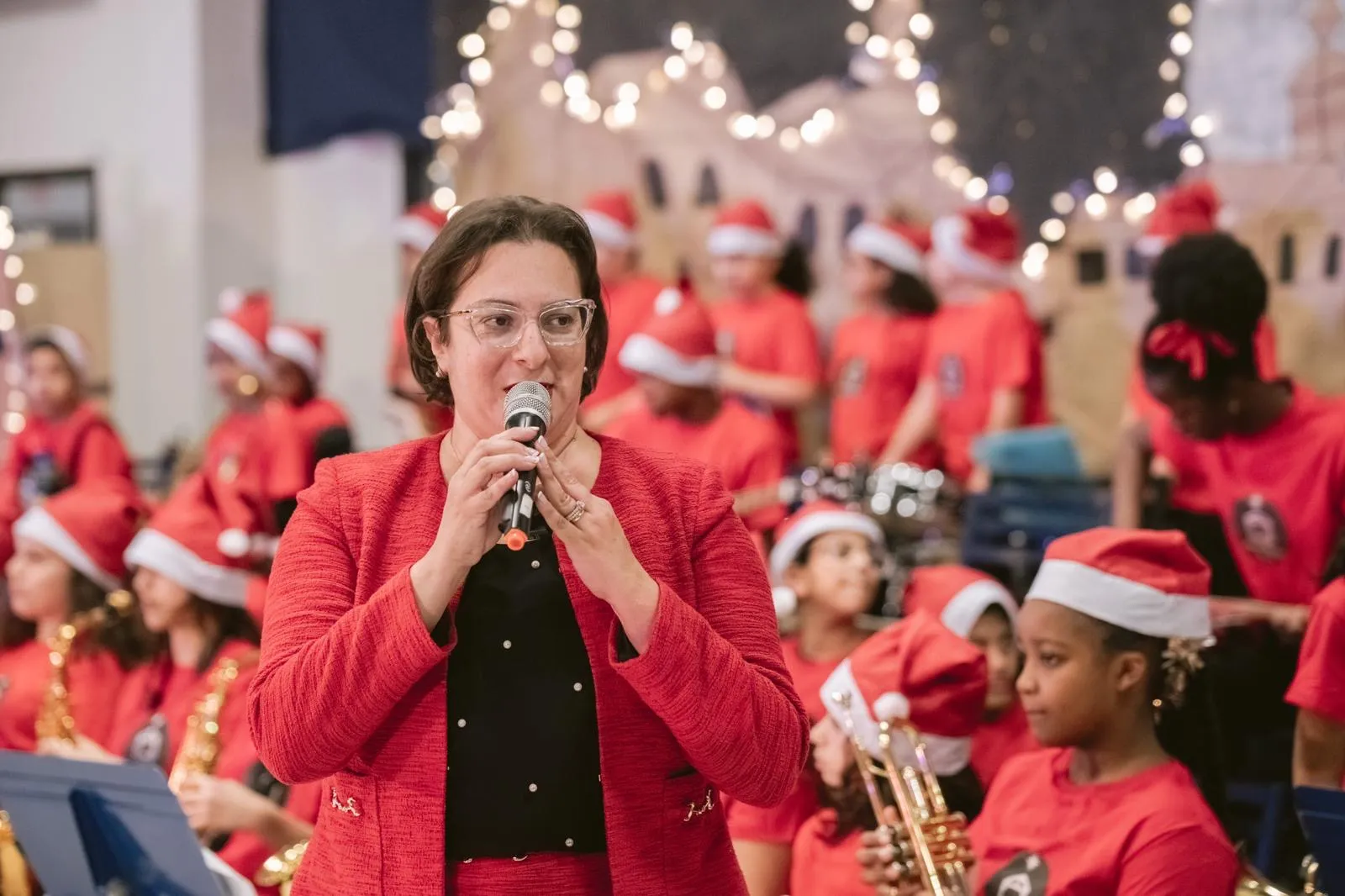
The line on her profile is that education is not simply about what our children learn but who they become. Asked what that means in practice, she answers with the three words she uses with her staff. “Integrity shows up when a student submits work that is genuinely their own. Courage shows up when they admit they don’t understand something and ask for help. Perseverance shows up when they take feedback seriously and go back to improve their work.”
The test is concrete. “In a group project, we want students to produce work they’re proud of. I also want each student to be able to say what they contributed, how they handled a disagreement and whether they kept their word to the group.” Purpose, in her account, is what makes the habits stick. “In co-op, for example, showing up prepared and communicating clearly matter because someone is counting on you. That experience can give a student a new reason to take those same habits seriously in the classroom.”
This is also why she pays attention to what universities now ask for. Strong grades matter, she says, but many selective programs and professional schools use interviews or supplementary applications to get a fuller picture. “Students may be asked to explain what they contributed to a team, how they responded to a setback or why they want to pursue a particular field. I want our students to have real experiences to draw on when they answer those questions.”
Integrity shows up when a student submits work that is genuinely their own. Courage shows up when they admit they don’t understand something and ask for help.
When grades were not enough
The moment that tested the idea was the pandemic. “When we moved our high school online during the pandemic, students could still receive assignments and earn marks. The harder question was whether they could manage their time, ask for help and stay connected to their teachers and classmates when the routines they relied on disappeared.”
Her first priority was contact, not content. “A student needed to know when they would see their teacher again and how to get help before they fell behind.” The school kept its high school courses running online, and the experience changed what she thinks a school has to teach alongside the curriculum. “Knowing how to plan your work, speak up when you’re struggling and follow through when nobody is in the room are skills students need to practise while they’re with us.”
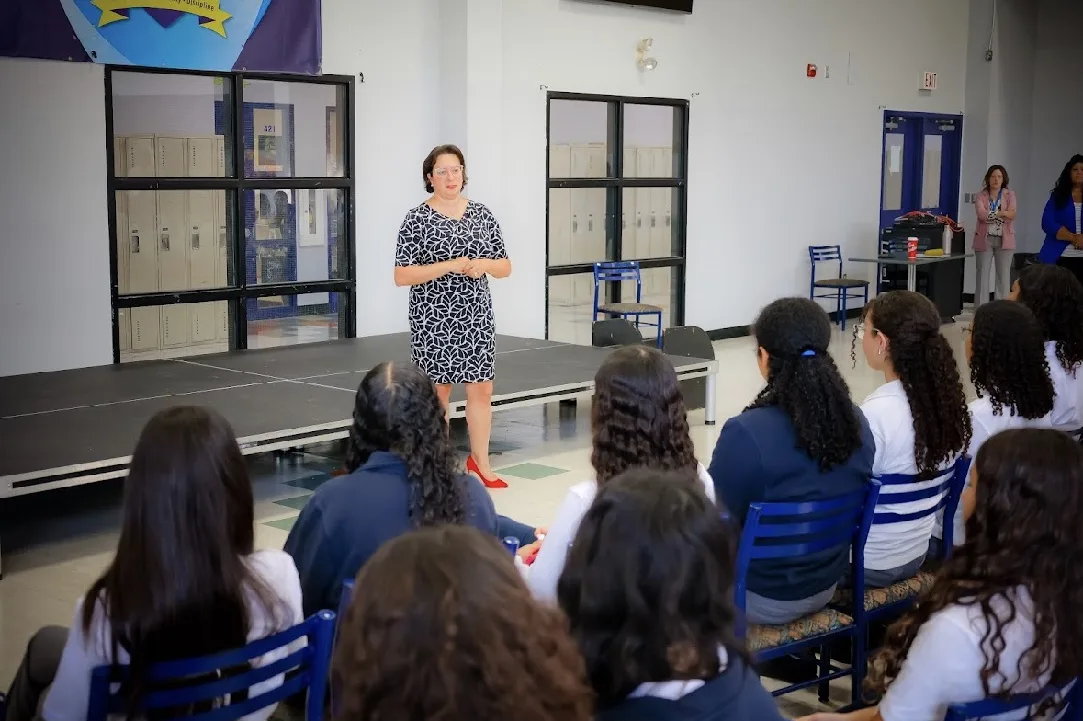
It was also the hardest moment of her career, and she describes it as a question she could not stop asking. “I kept asking myself whether every student would know how to reach a teacher if they were struggling. Keeping that connection meant supporting our teachers, too, by setting clear expectations and making sure they knew where to turn for help.”
The evidence is in who comes back
Asked for proof, Phoebe does not reach for a test score. “I see it in our alumni. Years after leaving PCC and building successful careers, they come back and tell us that this school helped make them who they are today.” Some come back to say thank you. Others speak at school events or open doors for current students.
I see it in our alumni.
She gives three. “One former student returned to speak to our school community about service. Thirteen years on, he still credits his time at PCC with helping shape his character and the values he lives by. What moved me was that he made that connection himself.” A second was not an easy student. “Another former student often pushed back against expectations when he was at PCC. He went on to earn a law degree and later dedicated his doctoral dissertation to the school. Knowing how often we had challenged him, I was deeply moved that he chose to acknowledge the school in work that meant so much to him.” A third, now a university professor, invited her to speak to her own students about the school she credits with her success.
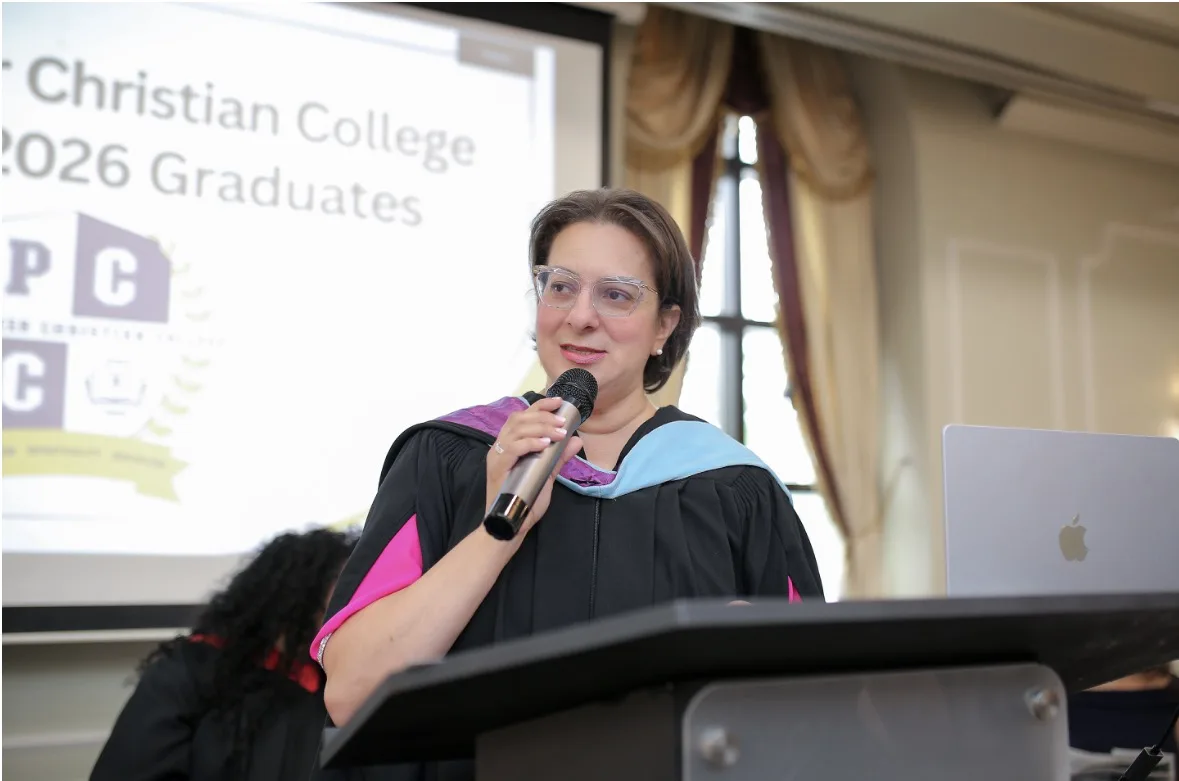
The pattern matters to her more than any single story. In a post this autumn she put it plainly: after more than twenty years in education, the greatest impact is not measured by grades, test scores or graduation rates, but by the lives touched, and when a school invests in its teachers, it invests in the future.
Three turns
The first was joining PCC as a teacher in 2005. “Teaching gave me a daily view of how differently students respond to the same expectations. I became interested in what a teacher could change so more students could meet those expectations.”
Teaching gave me a daily view of how differently students respond to the same expectations.
The second was the move to Vice Principal in 2011. “I wanted to work on the decisions that affect students across classrooms, especially how we support teachers and how consistently we respond when students need help.” She completed a Master of Education in educational leadership at Western University during those years.
The third was becoming Principal in 2014. “I wanted to help shape the whole school. For me, that meant asking whether our academic programs, the opportunities we offered students and the way we handled difficult situations reflected what we said we believed about education.” Since 2017 she has also served on the board of ACSI Eastern Canada, and in 2023 she certified as a coach and speaker with the John Maxwell Team.
Egypt
What she wants next is specific. “Over the next twelve months, I want to share what we’ve learned at PCC with educators internationally and bring that experience to Egypt. Speaking at Egypt National Forum 2026 was my first step. I’d like to build on it by working with Egyptian educators to adapt what we’ve learned at PCC to the needs of their schools, starting with teacher development and school leadership.” The reader she most wants is equally specific: a decision-maker at Egypt’s Ministry of Education who can invite her into the reform work and help identify schools where the ideas can be put into practice together.
Egypt is not a country we live in, but a country that lives in us.
A Page from Phoebe’s Diary
The person who shaped how she works is her father. “Watching my father, Fr. Angelos, serve our community taught me what resilience looks like. Even as he ages, he keeps showing up when progress is slow and people still needed him. His example continues to teach me to measure the impact of my work by what actually changes for the people I serve.”
She also credits a teacher. In a post this month she thanked Derrick Mohamed, her Grade 9 maths teacher, who visited her school thirty years after he taught her. He saw potential in a shy, quiet girl, she wrote, and believed in her before there were results to show for it. The student he believed in is now an educator trying to do the same for others.
Outside work, the thread is Egypt. “I was born in Alexandria and immigrated to North America at nine. I often think of these words from Pope Shenouda III. ‘Egypt is not a country we live in, but a country that lives in us.’ Egypt has stayed with me all these years, and being able to give back feels deeply personal.”
The line she lives by is her own definition of the education she wants for her students. “The education I want for our students gives them the knowledge to do good work, the character to take responsibility for it, and a reason to put it to use.”