

From the Diary of
Debbie Warburton
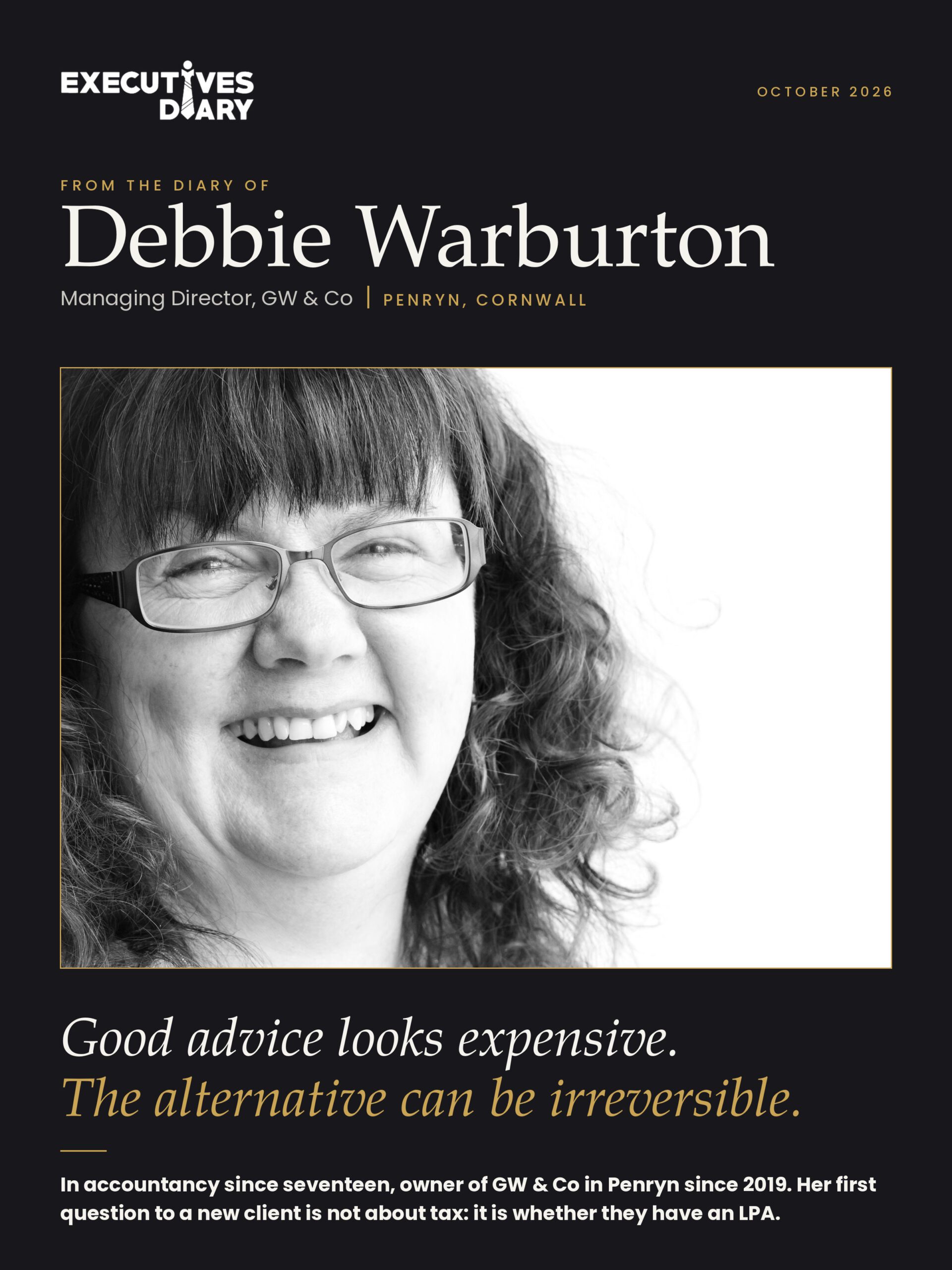
An accountant in Cornwall on the advice business owners skip to save money, and what it can cost them when they do.
“It is not all about the numbers, it is about using your common sense and questioning things if you don’t think they are right.”
In 2024 a new client came to GW & Co in Penryn with four businesses and an accountant he wasn’t happy with. Three of the companies were two years behind with filing their accounts at Companies House, so the practice started there and brought the filings up to date. “What we found when we completed the accounts was frightening,” Debbie Warburton says.
What we found when we completed the accounts was frightening.
In one of the companies the director’s loan account was overdrawn, with the director owing the company £250,000. The S455 tax due on that loan, which she puts at more than £84,000, had never been paid to HMRC. No VAT return had been filed since December 2019, and the client owed £168,000 in unpaid VAT. His other companies should have been VAT registered as well, and had been told by the previous accountant that they didn’t need to register until they reached the threshold.
“My biggest gripe is overdrawn directors loan accounts,” she says. She also has a plain answer for why a case like this reaches her so late.
The majority of the time it is down to cost, people think it is going to cost them too much money to get the advice they need. As a result of not getting the correct advice, or engaging an accountant to complete their year end accounts they are possibly making decisions which are not right for their business. It may well also end up costing them more in tax, and it may be irreversible.
Issues also arise when accountants do not understand the tax issues surrounding overdrawn directors loan accounts, and do not advise and support clients correctly.
Debbie is Managing Director of GW & Co Chartered Certified Accountants and Business Advisers, the practice she has owned outright in Penryn, Cornwall, since 2019. Her clients are sole traders, partnerships and limited companies, and the work as she describes it is the year end compliance plus everything a business owner needs from an adviser in the months between. “It doesn’t matter if you are a small sole trader, partnership or a limited company it is my job as your accountant to help you succeed, to be there when you need help and support.”
“Finding the right accountant for you and your business is most probably one of the most important decisions you may make as a business owner,” she says.

Limited or Sole Trader
The question she’s asked more and more, she has written, is whether a business should be limited or a sole trader: clients who are already limited ask whether they should stay that way, and people starting out ask whether they should incorporate at all. She doesn’t give a stock answer.
“Unfortunately due to the tax changes over the last 5 to 10 years it is not as easy to just say stay as a sole trader or become a limited company,” she says. “Unless you need limited liability protection it is now a trade off between having more money in your pocket or paying less corporation tax.”
So she does the sums. “I will always work out tax calculations for people so that they can make an informed choice about which is the best format for them to use for their business.” Last week that meant a year end tax planning meeting with two directors whose turnover is above £350,000. They asked why their corporation tax was so high and whether they’d be better off as a partnership. She had run the calculations before the meeting. The answer was no, they were better off as a limited company, though as she put it, not by excessive amounts. “Corporation tax is a killer on small business and stunts growth,” she wrote afterwards, “it is especially harder since the change in the associated company rules.”
Every GW & Co client is offered a tax planning meeting before their year end, to make sure pension contributions are as tax efficient as they can be and to give an idea of the liabilities coming, with time to plan. The other conversation she has with every prospective client has nothing to do with tax at all.
The Couple Who Had No LPAs
Debbie raises wills and lasting powers of attorney with every prospective client and client, because, in her words, they are so important to protecting personal and business finances. “It still astounds me how many people do not know the financial impact of not having an LPA in place if someone you love loses mental capacity,” she wrote this month.
The example she gave was a couple she had spoken to the week before. Both had just finished highly academic careers and were looking at setting up a small business. She mentioned LPAs and got what she calls the usual response: “No we don’t have them, but we have them for our parents.” Then she explained what would happen to their joint bank account if one of them lost capacity through a stroke, a fall or a car accident, and what it would cost. “The look of panic on their faces was a look I see all to often,” she wrote. LPAs went on the couple’s to-do list for when they got home.
The look of panic on their faces was a look I see all to often.
Where the habit of asking came from is a longer story.
Seventeen, Congleton, Penryn
Debbie has worked in accountancy since she left school at seventeen: she started as a trainee accountant in Liverpool qualifying firstly with AAT in 1992 and them moving to Mitten Clarke in Congleton when she qualified with the ACCA, moving to Cornwall in 2008 she became practice manager at Cornish Accounting Solutions in Bodmin and, from 2011, at John Girdlestone in Penryn. In 2016 she went from employee to partner in that practice, and she and her husband had to raise the funds to buy 49 per cent of it.
My husband has been my rock for 25 years, he stood by me and supported me in 2016 when we had to raise the funds to purchase 49% of the business. It was a show of faith in me that I could run and grow the business in to what it is today.
Asked for the page she’d tear out of her own diary, she chose this one. “Owning and running your own business is really hard, the late hours, the stress and the constant need to grow your own business and be a success,” she says. “When I first moved from being an employee to a partner of the business back in 2016, it was really hard, employees carried on treating me as an employee not their employer and it caused a lot of friction. It got to the point where I threatened to walk out if things did not change.”
“Things did not change over night but it got better over time and eventually in 2019 I purchased the remainder of the business and that was the start of GW & Co Limited.”
She doesn’t pretend the ownership part got easier. In a January post she listed the month ahead, 35 tax returns among it, and wrote: “Don’t get me wrong I don’t have to complete all of this myself I have a wonderful team behind me, but as the business owner the overwhelm is real as the book stops with me.” Part of that is a habit she admits to.
The Ones She Can’t Say No To
“I find it very hard to say no to people,” Debbie says. “I just want to help people and sometimes you hear some awful stories and I just can’t say no.”
I find it very hard to say no to people.
She gives three. A client whose previous accountant disengaged four days before a VAT return was due, leaving them with no idea how to file it. A client who needed his limited company accounts for a mortgage and had filed them himself, so the lender wouldn’t accept them. A client whose accounts were two years behind at Companies House, who needed them for a remortgage, and whose accountants had disengaged.
Then there are the ones who arrive with a longer list than they know. Last month she met a couple whose accountant was closing and who had been sent to GW & Co by an existing client. A mention of a works van and P11D benefits, as she put it, opened the floodgates: medical insurance paid for staff with no P11D ever filed, a monthly staff raffle with vouchers of up to £100 and nobody had told them anything over £50 was taxable, and a request for budgets and cash flow forecasts their current accountants weren’t interested in. She sent a quote that afternoon and had an acceptance by the evening.
The part of the job she has no control over is HMRC. She has written about a woman who dropped into the office in the first week of a new year with a letter demanding £80,000 over her late father’s estate, an error on probate forms that had taken HMRC more than four years to notice and which they wanted paid by the next day. In the same post she listed what her own practice deals with: departments taking more than six months to answer a letter, then allowing four weeks for a reply, a £26,000 VAT refund paid twice on the same day, and a payment on account refunded in September and chased with penalties in October. “They are a nightmare to deal with at the moment,” she wrote.
Her experience has a public record behind it. The National Audit Office reported in 2024 that callers who reached an HMRC adviser waited an average of nearly 23 minutes, up from five minutes in 2018-19, and that HMRC answered about two-thirds of the calls it received against a target of 85 per cent.
Her advice to the woman with the letter was to go back to the solicitors and the accountant she had paid to process the probate, and to come back if she still wanted help. One other thing she decided on the day she started the business.
What Goes Back Into Cornwall
“When I started my business I made the conscious decision that if I could give back to my local community then I would,” Debbie wrote in a post this month. The list runs from Cornwall Air Ambulance Trust, Children’s Hospice South West and Cornwall Hospice to small non-profits and community interest companies across the county: food bank donations, children’s sports club sponsorships, adopted animals, and a CIC’s Xero licence paid for so it was one less thing to worry about.
This month it sponsored Harry, a young boy who wants to play football for Penryn AFC, adopted Willy the African grey parrot (she wanted Dodge the sheep, but someone beat her to it), and agreed to fund two therapy sessions a month for Out of the Woods CIC, which offers play and creative arts therapy to children suffering from trauma. “Charities and CIC’s are really struggling at the moment,” she wrote, “and local business’s supporting when they can is imperative to their continuing survival. It doesn’t have to be big it can be small and regular.”
Where Debbie Is Now
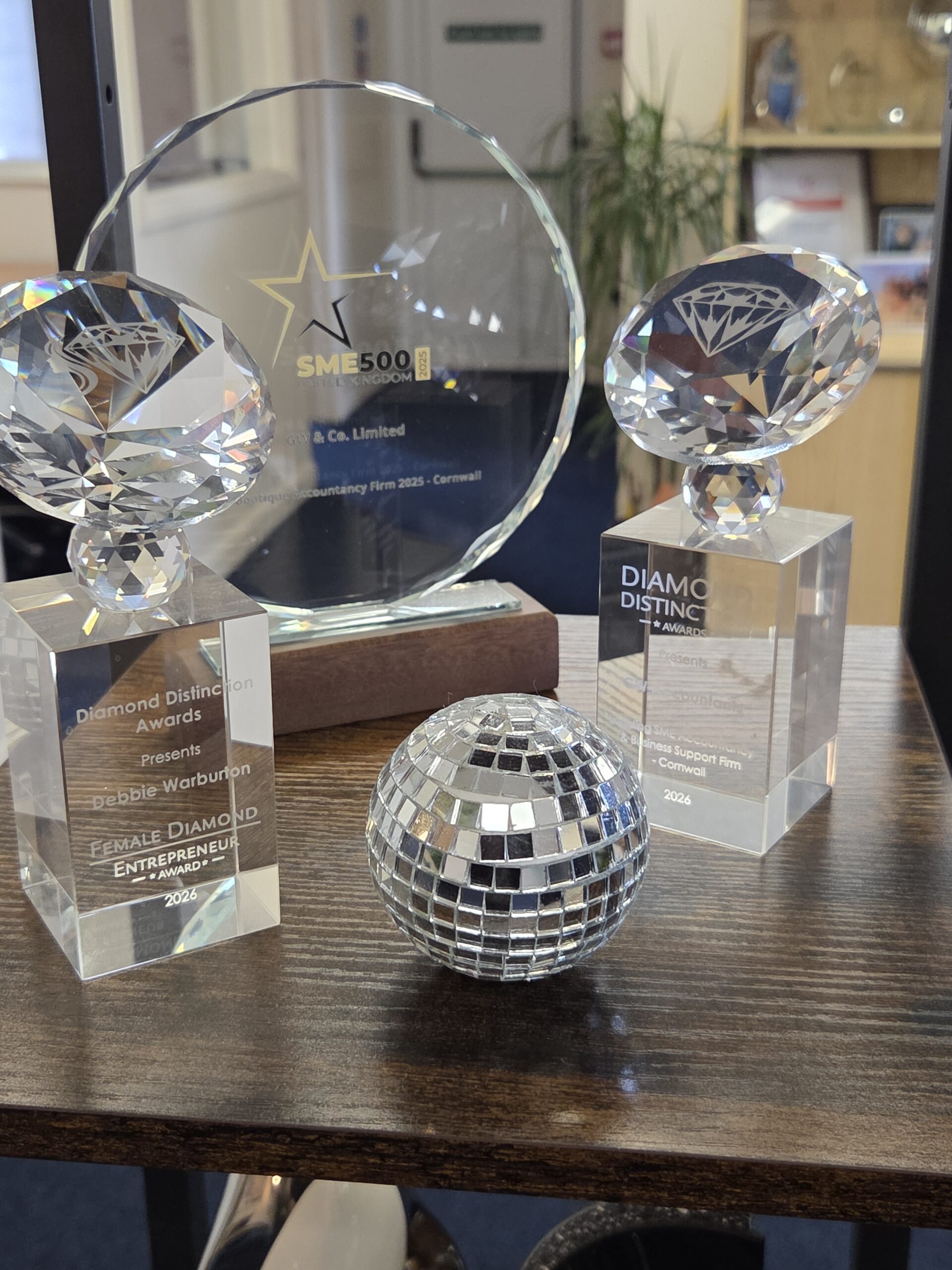
Debbie is running GW & Co from Penryn with an open door policy and a 24-hour reply to emails, so that clients can carry on with their businesses. The practice offers a free 60-minute business review to anyone new to business, established, changing accountant or planning ahead. The people she most wants to reach are start-up businesses and anyone looking for a new accountant, or not happy with the one they have.
To someone starting out in accountancy who wants to be doing what she does in five years, she has one thing to say, and it isn’t about qualifications.
It is not all about the numbers, it is about using your common sense and questioning things if you don’t think they are right. Just because that is the way it has always been done doesn’t mean it is right.
The thing outside work that she wants in the piece is the support of her family. And what comes next, in her words, is “to keep supporting and helping people and their businesses and to try and prove that not all accountants are bad.”
The Playbook
Five Lines from Debbie’s Diary
- “Just because that is the way it has always been done doesn’t mean it is right.”
- “It doesn’t have to be big it can be small and regular.”
- “I find it very hard to say no to people.”
- “Corporation tax is a killer on small business and stunts growth.”
- “Owning and running a business is really, really hard.”
