

For anyone who designs or pays for support for young people: what twenty years in children’s services has shown one director about who gets help early, and who waits.
When young people wait too long for mental health support, the waiting list is usually read as a count: too many referrals, too few staff. The director who oversees The Children’s Society’s services across England and Wales reads it another way. “A waiting list is rarely just a demand problem,” he says. “It is often telling you something about the way the whole system has been designed.”
The count itself is not small. In 2024-25, , according to the Children’s Commissioner for England, and 35% of them were still waiting for treatment at the end of March 2025.
Nick Cook is Director of Young People’s Services and Business Development at The Children’s Society, the national children’s charity, where he oversees its local services across England and Wales, its national programmes and its business development function. This year marks twenty years since he began working in children’s services. The question he keeps coming back to is the one inside that waiting list: who the system is built around, and who it misses.
The young people the system misses
The Children’s Society’s September 2026 report, Meet Me Where I Am, sets out who that design leaves behind. It looks at young people facing overlapping disadvantages, including young carers, children living in poverty, children from the global majority, and those with special educational needs and disabilities. Its central argument, Nick says, is that unequal access “is not caused by lower need or a reluctance to seek help. It is created by structural, cultural, practical and service-design barriers within the system.”
The report names a “missing middle”: young people whose needs may be too complex or significant for universal support, but who don’t meet the thresholds for specialist services. They “can be left without meaningful help until their needs escalate into crisis,” he says.
The barriers it identifies include rigid eligibility processes, fragmented referral routes, dependence on schools as a gateway, a lack of trusted and consistent relationships, and short-term funding that undermines continuity. “These barriers have a greater effect on families with less knowledge, confidence, time or support to navigate the system,” he says. Asked what the report’s title means for how services should work, he answers in one sentence.
“It means we should stop expecting young people to navigate systems that were designed around organisations rather than around them.”
Nick Cook, Director of Young People’s Services and Business Development, The Children’s Society
What the report argues for instead is earlier, sustained and community-based help that is flexible, relational and delivered in places young people trust, so that services adapt to young people’s circumstances, communication needs and lives. The charity already runs services built that way.
What that looks like in practice
The example the report points to is Space to Grow, The Children’s Society’s emotional health and wellbeing programme, which offers free early help to children aged 8 to 13. Its England briefing reports improved wellbeing outcomes for 82% of participants who completed support, alongside success in reaching diverse and under-served communities.
This year the charity added another service. Its new Online Therapy service gives young people aged 11 to 25 one-to-one sessions by secure video, with the same qualified BACP therapist each time.
The service is also something other organisations can commission, which is where the business development side of his role meets the practice side. “If you’d like to find out more about the service or would like to commission us, please get in touch,” he wrote. The case for building services this way rests on what young people say about their own lives.
What young people are saying
In October 2026 the charity launched The Good Childhood Report 2026, the 15th edition of its annual report on how children and young people across the UK feel about their lives. It combines national survey evidence with insight from young people, including research by Young Advisors with their peers, and evidence from professionals working directly with children and young people. This year’s theme is belonging: whether young people feel connected to the people, places and communities around them, and whether they have trusted adults, welcoming spaces, influence over decisions and accessible routes to support.
The charity’s 2026 household survey found that . School was the part of life they were most commonly unhappy with, rising prices were their most common concern about society, and almost four in five parents and carers were worried about increases in the cost of living. Separate analysis of the latest PISA data by the charity found that of all the European countries it included.
For Nick, the report makes the case for the earliest possible support stronger still. Nick sees the same principle reflected in Save Teenhood, the charity’s new campaign to improve support for teenagers. The campaign is rooted in what young people say they need: trusted relationships, somewhere to belong and access to help before problems escalate.
For him, it is another expression of the idea that runs through his career and the charity’s services: support earlier, listen better and build support around young people’s lives rather than expecting them to navigate complex systems alone. It’s a case he has been building for twenty years, and it started in Cornwall.
Twenty years, three turns
Nick began his career with Cornwall Council before moving into the voluntary and community sector in 2010. That move was the first turn that mattered: leaving the council for Barnardo’s, from commissioning into a role supporting care-experienced children and young people to have a voice and influence the decisions being made about their lives. “I loved the role and never regretted stepping away from a largely desk-based position to work more directly alongside young people,” he says.
Having lived and worked in Cornwall all his life, he took a second step in 2014, moving to Jersey to establish Barnardo’s presence on the island. That developed into the opportunity to lead the creation and management of a residential children’s home. “It stretched me personally and professionally, and taught me a great deal about developing services from the ground up, building partnerships and leading in a new environment,” he says. As Assistant Director of Children’s Services he went on to oversee, as his profile puts it, a “£5m+ portfolio of services across the South West of England and Channel Islands.”
The third turn came in 2023, when he joined The Children’s Society as a Director, initially overseeing services across England. The role has since grown to take in local services across England and Wales, the national programmes and business development. Each step, he says, increased the scale of his responsibility.
“The thread running through my career has remained the same: ensuring that children and young people have a voice, receive the right support and can influence the systems and decisions that shape their lives.”
Nick, Director of Young People’s Services and Business Development, The Children’s Society
He now holds to that thread in a harder environment than any he has worked in.
Leading when the funding isn’t there
“It is difficult to pinpoint just one hard moment,” Nick says. “What I would say is that, in my 20 years working in children’s services, I have never known the environment to be as challenging as it is now. The needs of children, young people and their families are increasing, yet the funding required to provide consistent, meaningful early support simply is not there.”
His answer is about use rather than complaint. “That is difficult to reconcile, but it makes me even more determined to use the resources we do have well and to deliver high-quality, outcomes-focused services that make a lasting difference.”
How he leads through that comes from a former leader, who taught him that clarity is a form of care. “They showed me that people cope better with difficult decisions when leaders are honest about what is known, what is not known and how the decision will be made,” he says. “That has stayed with me, particularly when I am leading through uncertainty or change.” After a day with colleagues in the North East this autumn, he wrote: “The power of relationships and connections is at the heart of our work.”
Where Nick Is Now
Nick wants this piece to strengthen his voice in the national, and international, conversation about how services move from crisis-led to earlier, more accessible support for young people. The reader he most wants to reach is, in his words, “a key national decision-maker, who knows the current system is not working well enough but is keen to be a champion for a practical and credible alternative.” More opportunities to influence strategy, speak publicly or contribute at board level would be valuable, he says, “but the purpose is bigger than personal recognition.”
Alongside his day job he is a trustee of the Rees Foundation, a national charity supporting care-experienced young people and adults, and Chair of Rock Pool, which delivers trauma-informed training and resources to support professionals working with people who have experienced abuse and trauma.
He lives in London with his wife, Sohila. After Cornwall and Jersey, he has “fully embraced city life,” and the two go to the theatre regularly, improv comedy in particular. He has always loved radio and has presented shows on several stations, most recently Chaos Radio, an online station based in Cornwall.
The line he lives by is one he credits to Desmond Tutu: “There comes a point where we need to stop just pulling people out of the river. We need to go upstream and find out why they’re falling in.” What he wants from this piece follows from it. “I want it to help make the case for changing how support is designed and commissioned.”
Five Lines from Nick’s Diary
“A waiting list is rarely just a demand problem.”
“We should stop expecting young people to navigate systems that were designed around organisations rather than around them.”
“A former leader taught me that clarity is a form of care.”
“It makes me even more determined to use the resources we do have well.”
“I want it to help make the case for changing how support is designed and commissioned.”
From the Diary of Nick Cook
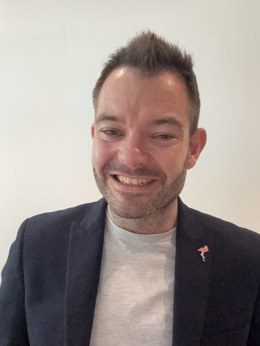
Nick Cook is a London-based children’s services leader and the Director of Young People’s Services and Business Development at The Children’s Society.
“A waiting list is rarely just a demand problem.”
Editor’s note
Executives Diary features Nick Cook because his case for earlier support for young people comes from twenty years of running services. His career runs from commissioning at Cornwall Council, through Barnardo’s in Cornwall and Jersey, to a national directorship at The Children’s Society, and the same concern holds across it: whether young people have a voice in the systems built for them. What convinced the editors is that he reads a waiting list as evidence about design, and can point to services built on that reading.
Executives Diary, Editorial
Sources
Children’s Commissioner for England, “Over a million children referred to mental health services” (press notice on Children’s and young people’s mental health services 2024-25), 2026.
The Children’s Society, The Good Childhood Report 2026, 2026.
The Children’s Society, “Young people in the UK have the lowest life satisfaction in Europe”, 2026.
Changes in this version
1. You changed “a second route” to “another service” in What that looks like in practice. Applied as written.
2. You deleted the sentence crediting Rachel Peters with leading the development of Online Therapy. Removed. Her name no longer appears in the piece.
3. You added a paragraph on Save Teenhood at the end of What young people are saying. Applied in your words. To keep the section reading in order, it sits before the closing line that leads into your career (“It’s a case he has been building for twenty years, and it started in Cornwall”), and is split into two paragraphs at “For him, it is another expression…”. No words of yours were changed.

