

For anyone standing at a crossroads in their life or career who knows something needs to change: a coach on the stories people live by, the client who no longer needs her, and the porch where her own began.
As a young girl, Alicia Booker spent time sitting on the porch waiting for her father to pick her up. After her parents divorced, the family moved to a neighborhood where her mother didn’t feel it was safe for her to go any further than the front steps. “The porch became both a place of safety and confinement,” she says.
She did not think about it again for a long time. Then, “around the age of 42, the foundation of my marriage, which at the time felt like my entire world, began to crack. As I navigated that experience, I realized I was still living much of my adult life as that little girl on the porch.”
She is exact about what that looked like. “I was trying to be perfect so no one would leave me, overcompensating out of fear of disappointing others, and making myself small because I hadn’t fully recognized that I had a voice.”
What she did with the discovery became her work. “That realization began my own journey of examining and rewriting the narratives that had shaped my life. My personal transformation ultimately led me into coaching as an entirely new professional direction.”



Getting Off the Porch began as a blog post she wrote before she was a coach. It became a book, and then the coaching practice she launched in February 2015, two years after she began coaching. Along the way she spent nearly six years at Ginger, later Headspace, coaching members and then training coaches, and she now teaches at The CaPP Institute. The name sounds like an instruction, and she is quick to say it isn’t one.
“Getting Off the Porch isn’t simply about taking action. It’s about understanding what got you on the porch in the first place.”
Alicia Booker, Owner and Coach, Getting Off the Porch
The person she most wants to reach is at a crossroads. “They may know that something needs to change, but they’re struggling to understand what’s keeping them from moving forward.” Her questions for that person are the ones she once put to herself. “What experiences, beliefs, or narratives have shaped where you are today? And more importantly, how can you begin to change those narratives to reflect where you want to go?”
The client who stopped needing her
One of her most recent clients came to her feeling stuck in her career. “She knew something wasn’t right, but she couldn’t quite identify what was happening or why she felt so unfulfilled.” As they worked, the problem turned out to be wider than the job. “She was experiencing similar challenges in many of her personal relationships.”
So they looked at expectations, “both real and perceived”, as Alicia puts it. “She had spent years working to become the person she believed others expected her to be. She had met those expectations, achieved what she thought she was supposed to achieve, and yet she wasn’t happy.”
The turning point was a recognition. “One of her biggest realizations was that she was still living according to expectations she associated with her parents, who were no longer alive. She began recognizing patterns of people-pleasing and overcompensating in her relationships, often at the expense of her own needs and desires.”
From there the coaching changed shape. “Our work became less about figuring out her next career move and more about examining the narratives that had shaped her choices and deciding which ones still served her.” The client now has a new job and is exploring other opportunities. “She’s learning to take ownership of what she can control and release what she cannot.”
The result Alicia is proudest of is the one that costs her a client. “We moved from weekly sessions to monthly conversations, and now she reaches out as needed. For me, that’s what successful coaching looks like. It’s not about creating dependency. It’s about helping people develop the awareness, confidence, and tools to navigate their lives on their own terms.”
What sustainable change takes
“I believe meaningful, sustainable change begins with a safe space where people feel seen, heard, and supported without judgment,” she says. What her clients don’t need is direction. “My clients don’t need someone to tell them how to live their lives. They need a coach who is genuinely curious about who they are, believes in their ability to navigate their own lives, and respects their autonomy.”
Her method is grounded in positive psychology and motivational interviewing. “Through intentional listening, powerful questions, and genuine curiosity, I help clients explore what’s happening beneath the surface.” That is where she sees people change. “Clients begin connecting the dots between their experiences and patterns of behavior that may no longer serve them. They start challenging assumptions they’ve made about themselves and the world around them. They discover that some of the stories they’ve been carrying for years are not necessarily the stories they want to continue living.” Then, she says, “something shifts. They begin to see new possibilities, reconnect with their strengths, and find the courage to make meaningful changes.”
She draws the line between this and advice clearly. “Sustainable change isn’t about giving someone a set of instructions to follow. It’s about helping them develop the self-awareness, confidence, and trust in themselves to make choices that align with who they are and who they want to become.”
Three vantage points
She has watched coaching work from three positions. “Through Getting Off the Porch, I’ve coached more than 100 clients over the past 13 years, helping them identify and challenge the barriers that have kept them stuck.” At Ginger and Headspace, “I coached hundreds of members navigating their own personal and professional challenges. I also had the opportunity to train and develop more than 100 coaches.” And at The CaPP Institute, where she teaches the ICF Core Competencies and mentors people working toward credentials, “I’ve supported more than 100 aspiring coaches on their professional journeys.”
The Headspace chapter was not one she planned. She joined as a coach and was invited onto a committee developing the curriculum for the Headspace Training Institute. “That experience opened doors I hadn’t envisioned. Leaders recognized my strengths in learning and development, and I was offered the opportunity to become an Onboarding Training Specialist and eventually Manager, Coach Training.” What she took from it: “growth doesn’t always follow a carefully constructed plan. Sometimes it happens because others recognize something in you, and you’re willing to trust yourself enough to step into a new opportunity.”
The CaPP Institute was a return. “My relationship with The CaPP Institute began as a student. The program had a profound impact on my personal transformation and helped shape the coach I would become.” Being invited back as faculty by its founder, Valorie Burton, “felt like a testament to how far I’d come in my own journey”.
A Page from Alicia’s Diary
The hard moment in her working life was a choice about money. “I once walked away from a contract that provided the financial foundation of my coaching practice because the work conflicted with my integrity as a coach. It was a scary decision, but it reinforced something I believe deeply: sometimes walking away from something, even when it’s frightening, is the very step that leads you toward where you’re meant to go.”
The person who shaped her is family. “Without question, my sister. I had a front-row seat as she rose from nurse to Chief Operating Officer of a major hospital system. I watched her advocate fiercely for what she believed in, remain steadfast in her commitment to patient care, and never compromise her integrity.” The lesson came by example. “True leadership isn’t about a title. It’s about having the courage to stand by your values, even when doing so is difficult.”
She guards her mornings. “Whether it’s enjoying a quiet cup of coffee, working out, or giving myself space to reflect, those moments allow me to connect with myself before the demands of the day begin. I’ve learned that being present in my own life is just as important as the work I do helping others navigate theirs.”
And the line she lives by is the one her whole practice hangs on: “Getting Off the Porch isn’t a destination. It’s a journey, one that serves different purposes at different stages of our lives.”
Working with Getting Off the Porch
What it is: A coaching practice for people navigating career and life transitions, grounded in positive psychology and motivational interviewing.
Who it is for: Someone at a crossroads who knows something needs to change and can’t yet see what is holding them back.
What you get:
– A safe space to examine the stories and expectations behind where you are
– Coaching that builds your own awareness, confidence and tools, not dependency
– Speaking and facilitated conversations about change
Where it stands: More than 100 clients coached over 13 years. Alicia is also faculty and a mentor coach at The CaPP Institute.
In their words: “I want readers to recognize that they have the ability to examine the stories they’ve been living by and intentionally create a different narrative for their next chapter.”
From the Diary of Alicia Booker
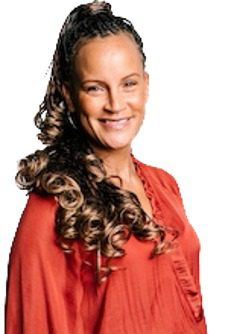
Alicia Booker is the owner of Getting Off the Porch, LLC, a coaching practice, and the author of the book of the same name. She is based in Miramar, Florida.
“Presence is something I value deeply, and I intentionally protect my mornings as a time to simply be.”
Editor’s note
Alicia Booker’s practice is named after a real porch, and she told us she was comfortable with that story being told. It earns its place because it explains her method: she is less interested in getting people moving than in what kept them still. The measure she offers for her own work is unusual for a coach, a client who went from weekly to monthly to hardly at all.
Executives Diary, Editorial

