

From the Diary of
Jillian Watt
Drawing on nearly twenty years of senior leadership experience, Jillian Watt explains why self-leadership matters and how developing confidence, emotional intelligence and leadership skills helps people become more effective, both in their own roles and in leading others.
“Leadership starts with you.”
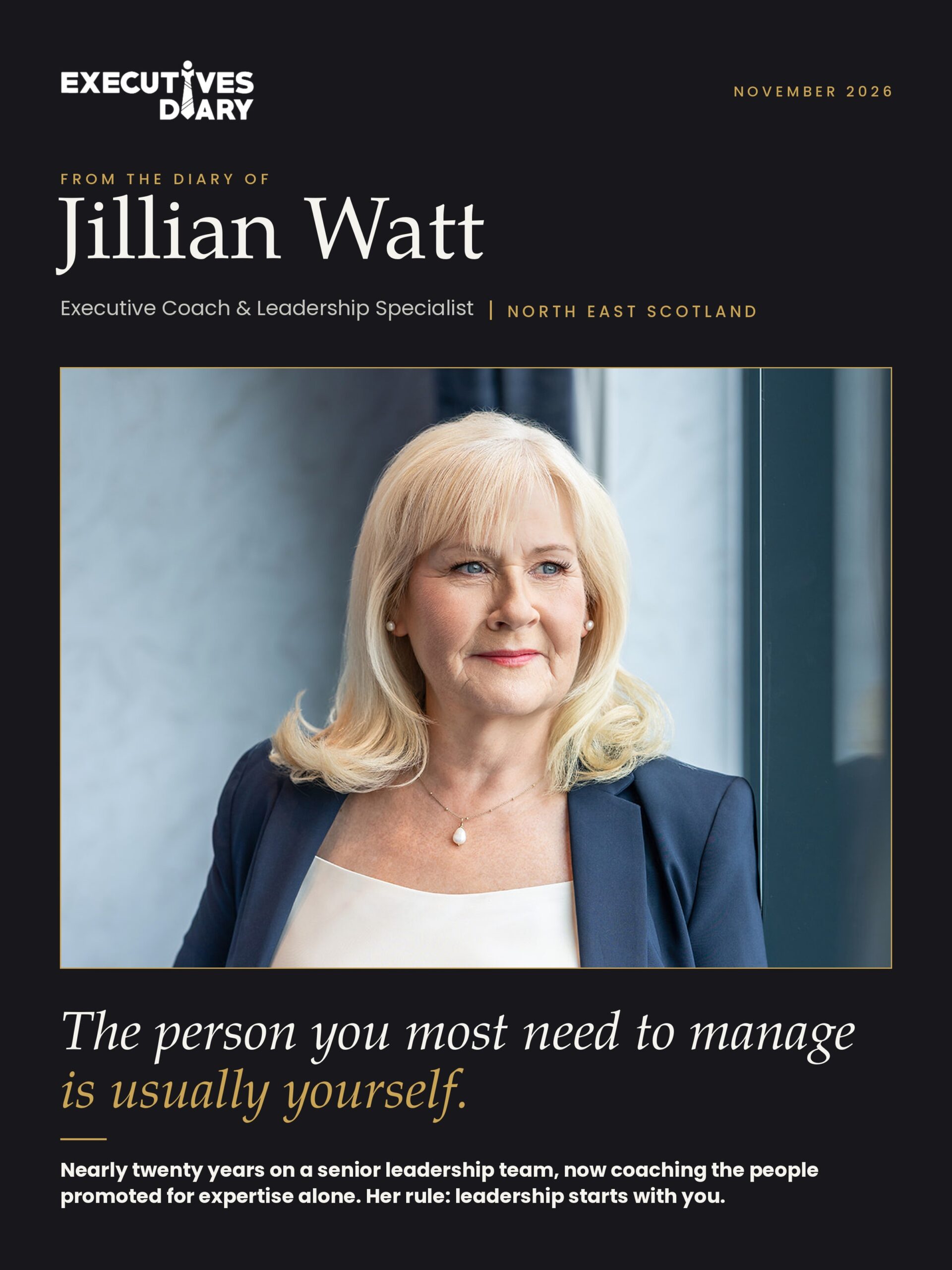
Before her first leadership role she attended a bespoke Executive Leadership Programme from London Business School, and she thought she was well prepared. She understood the business, she was ambitious, she was used to getting results, and she assumed the biggest challenge would be making the right decisions and proving herself. “It wasn’t,” she says. “The hardest part was people.”
“People don’t behave like spreadsheets or business plans,” she says. “They bring different personalities, motivations, insecurities, ambitions, emotions and pressures to work. What motivates one person may have no effect on another. What you intend when you communicate something isn’t necessarily how it lands. And sometimes the person you have to manage most effectively is yourself.”

She at least had a programme before she started. Most people stepping into a management role do not: the Chartered Management Institute reported in 2023 that 82% of managers who enter management positions have had no formal management and leadership training.
Jillian Watt spent more than thirty years in business before she became a coach, nearly twenty of them at senior leadership level. Today she runs Jillian Watt Coaching, which provides executive and professional coaching, in-house workshops and leadership development programmes for organisations and individuals. Through her Mastering YOU™ framework, she helps professionals and leaders develop the self-awareness, emotional intelligence, mindset and self-management skills that underpin personal and professional effectiveness. Her work focuses on helping people manage pressure, build confidence, communicate effectively, strengthen relationships, and lead and influence others. The idea underneath it fits in four words: “Leadership starts with you.”
Thirty Years Around the Table
Jill didn’t start her career intending to become a coach. She spent more than thirty years in business, working across the UK and internationally, including the USA, Canada, the Middle East, Asia and Japan. Her profile traces the route: Grampian Country Food Group, then Sales and Marketing Manager for North America at Baxters Food Group, then nearly twenty years as Director of Marketing and NPD on the Senior Leadership Team at Rohto Mentholatum Pharmaceuticals, part of what she describes as a multi-billion-pound global organisation.
Those years taught her how much impact a leader has through the way they behave. “People notice whether you’re calm or stressed, whether you listen, how you react when something goes wrong and how you treat people when you’re under pressure,” she says. “The more senior you become, the more important your ability to manage yourself becomes.” Gallup’s research points the same way: it finds that managers account for 70% of the variance in team engagement.
The more senior you become, the more important your ability to manage yourself becomes.
Early in her leadership career she worked with a senior leader who had a significant influence on her. “He wasn’t loud and didn’t lead through status or ego,” she says. “He was calm, supportive, developed his people and had enormous loyalty from his team.” He taught her something she has carried throughout her career: “Leadership isn’t about having all the answers. It’s about bringing out the best in other people so that together you deliver the results.”
“A derogatory comment from a difficult colleague once knocked my confidence far more than I ever expected,” she says. “Learning how to stop someone else’s words having that power over me was a huge lesson, and it’s one I now pass on to others through my coaching and workshops.”
Alongside her business career, Jill has invested extensively in her own personal and professional development, studying business management with applied psychology and undertaking further training in coaching, mindset and neuroscience-informed approaches. She now combines that knowledge with her experience of senior leadership to help others develop the skills that make such a difference to their performance and effectiveness.
It’s why she’s clear about what her coaching is not built on. “My coaching isn’t based on leadership theory,” she says. “I’ve sat around the table. I’ve had to make decisions, deal with personalities, manage pressure, get things wrong, learn from them and come back the next day and do it again.” A lot of what she learned in those years has gone into Mastering YOU™. In February 2024 she set up Jillian Watt Coaching to put it to work.
Why Capable People Get in Their Own Way
“Very capable people don’t usually get in their own way because they lack knowledge or ability,” she says, “but quite often it’s what happens when they experience pressure, overwhelm, emotion or self-doubt.”
She has worked with people who are extremely competent at what they do but find themselves overthinking a decision, avoiding a conversation they know they need to have, or reacting emotionally to someone who pushes their buttons. “They usually know what they should do,” she says. “The difficulty is managing themselves well, particularly when they’re under pressure, and having the tools to do it.”
“There’s often a big difference between knowing what you should do and being able to do it when you’re under pressure,” she says. “You can know that you need to have a conversation, make a decision or set a boundary, but that doesn’t necessarily mean you’ll find it easy. That’s where learning to manage your thoughts, emotions and behaviour makes such a difference.”
One of her clients is a high performer and a perfectionist who puts enormous pressure on themselves. “Interestingly, it was often when they had some downtime or a gap in their day that the overthinking would start,” she says. “Their mind would go off in all sorts of directions, they’d start beating themselves up about things and wasted a huge amount of time and energy.” The work has been on recognising when that starts, interrupting the inner talk and choosing where to put that energy instead.
“It’s not about never having negative thoughts or emotions. We all have them,” she says. “It’s about becoming aware of what’s happening early enough that you can choose what you do next, rather than allowing those automatic thoughts and emotions to take over.”
None of this means her work is only for people who are struggling. She also works with highly capable, ambitious and successful professionals who want to become even more effective, and with some who want promotion to the next level. “Coaching isn’t just for people who are navigating challenges,” she says. “Some of the most rewarding work I do is with already successful people who recognise that developing themselves further will help them achieve even more, professionally and personally.”
Often people don’t need more knowledge. They just need to know how to get out of their own way.
How she gets them there has a shape, and she has given it a name.
Know Yourself, Lead Yourself, Manage Yourself
The first thing Jill does with a client is help them become more self-aware. She encourages them to take a step back and look at themselves from an observer’s point of view. “What’s happening here? What triggered that reaction? What are they thinking and feeling? What story are they telling themselves? How is that affecting their behaviour? And what impact is it having on the people around them?”
“Because until we notice these things, we’re often operating on autopilot,” she says. “Once you create that awareness, you create choice. You can ask: Is the way I’m thinking or behaving helping me here? What can I control? How do I want to respond? What is most likely to get the outcome I want?” That is what she means when she says self-awareness creates choice, “including sometimes choosing not to react at all.”
Once you create that awareness, you create choice.
From there the work moves into self-leadership: deciding who and what you want to be, where you want to go, and taking responsibility for getting yourself there. The third stage is self-management, learning to manage your thoughts, emotions, behaviours, communication and energy, particularly when things are difficult. Then comes leading and influencing others. “Because once you know yourself, lead yourself and manage yourself well, you’re in a much stronger position to lead other people, build good relationships and bring out the best in others.”
Mastering YOU™ brings together Jill’s business and leadership experience, coaching knowledge and practical tools into a four-stage development framework: Know Yourself, Lead Yourself, Manage Yourself, and Lead and Influence Others. It can be applied through individual coaching, workshops and leadership development programmes, helping people turn greater self-awareness into lasting changes in how they think, behave, communicate and perform. The evidence she points to is what people do with it afterwards.
Six Months and a Promotion
One client Jill describes as extremely intelligent, with excellent technical skills, had an opportunity for promotion onto the leadership team. He recognised that technical ability alone wasn’t going to get him there, and that he needed to develop his confidence, emotional intelligence, interpersonal skills and his ability to manage himself at that level. They worked together over six months on those areas. “Some of it took him well outside his comfort zone,” she says, “but he put the work in and practised what we discussed.” Six months later, he got the promotion and joined the leadership team.
Then there was another issue. He was working nights and weekends and was in danger of burning himself out. “I challenged him on whether that was sustainable and suggested he needed to ask for more resource,” she says. “He was convinced he wouldn’t get it. So, we worked on how he could make the case, why the additional resource was needed, what it would allow him to achieve and how he could put that across confidently. He asked. And he got the additional resource.” They’re now working on the next stage, his leadership skills, and the move from technical expert to leading and developing others.
“For me, that’s where the real value lies,” she says. “When someone develops the confidence to challenge their own thinking, communicate what they need and make better decisions, the benefits extend beyond that individual to their team and the organisation.”
It’s not just about getting someone the promotion. It’s about helping them develop the self-awareness, confidence and skills to succeed when they get there.
She sees the same thing in the workshops. Her Mastering YOU™ workshops have been rated 5/5 in attendee feedback, but what matters most to her is what people do with what they’ve learned. After a recent workshop for professionals, one attendee had an interview and presentation for a new job immediately afterwards. She used some of the tools from the morning and contacted Jill a few days later to say she’d got the job, thanking her for “the extra boost in my step that day.” Another attendee, who described herself as a long-time overthinker, said the coping strategies she learned were “invaluable” and that she wished she’d done the workshop years ago.
“I want people to come away with greater self-awareness, confidence and practical tools they can actually use,” Jill says. “Not just on the day, but when they’re back at work, under pressure and dealing with real situations.” One of those tools she learned a long way from any boardroom.
The Half-Step
At forty, Jill was diagnosed with Grade 4 osteoarthritis and told she had the hip of an eighty-six-year-old woman. She needed a hip replacement. She had also always wanted to climb Kilimanjaro, and she was determined to do it with her own hip before surgery. After altitude training in Colorado, she climbed it twelve months later.
“On the mountain, I learned the value of focus and what I call the ‘half-step’,” she says. “Instead of thinking about how far I still had to go, I focused on taking one tiny half-step at a time.” On the final night ascent she developed a migraine, took her emergency medication and kept going, one half-step at a time, until she reached the summit.
“I’ve carried that lesson with me ever since,” she says. “When the end goal feels far away, focus on the next small step and keep moving forward.” It is a lesson she has carried into her coaching too.
When the end goal feels far away, focus on the next small step and keep moving forward.
Where Jill Is Now
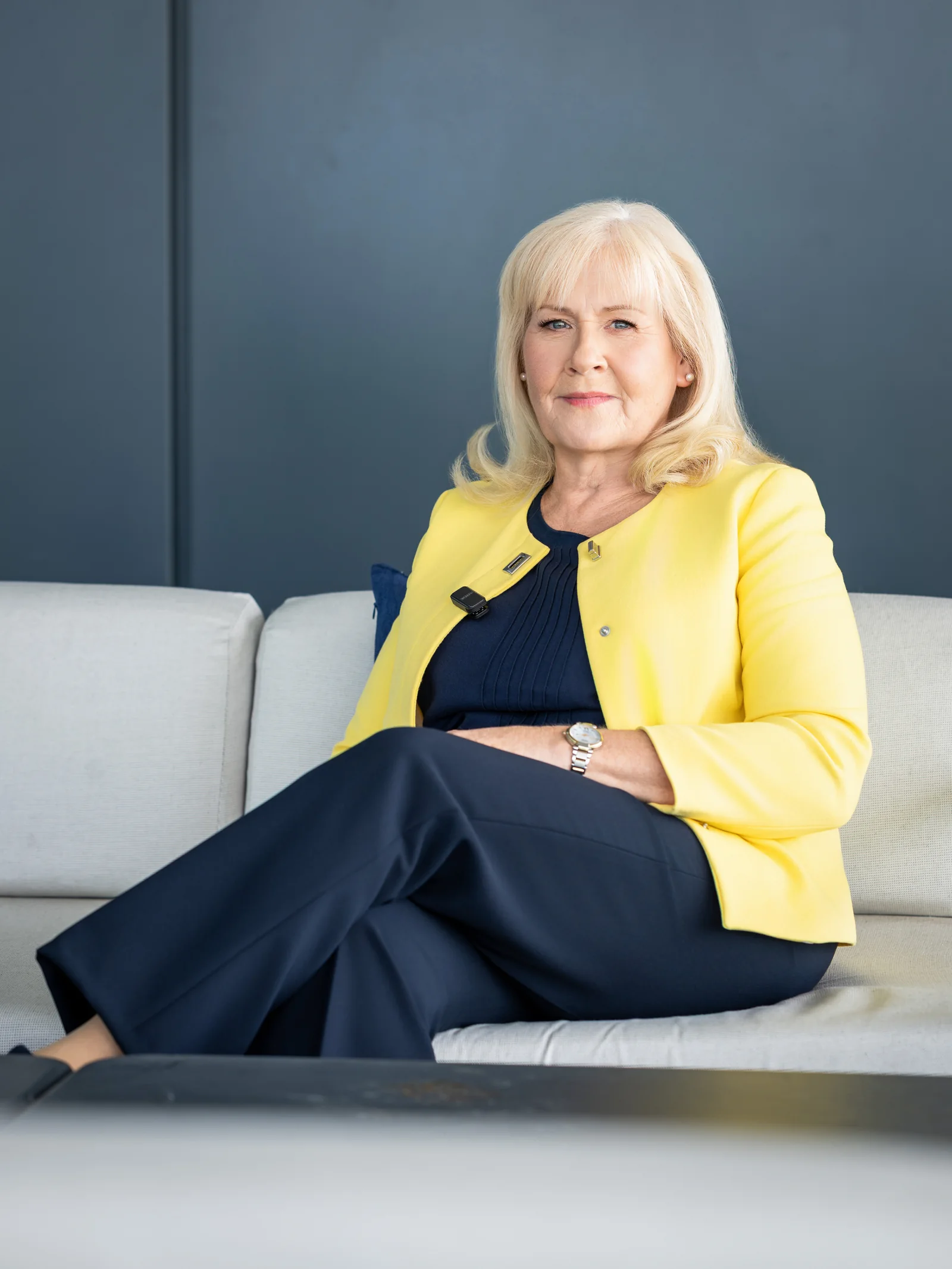
Today Jill works with professionals, emerging and established leaders, and business owners through individual executive coaching, in-house workshops and leadership development programmes.
Her work is particularly relevant to organisations that want to invest in the development of their people, whether that’s helping technically strong professionals develop their confidence and interpersonal effectiveness, supporting emerging leaders as they take on greater responsibility, or helping established leaders become more effective in how they manage themselves and lead others. “I’m finding many organisations have talented solicitors, accountants, engineers, financial professionals and technical specialists who are promoted because of their expertise, not necessarily because they have developed their people skills,” she says.
For organisations, the benefits go beyond individual development. When people become more self-aware, manage themselves effectively and develop stronger interpersonal and leadership skills, it can improve communication, decision-making, working relationships and ultimately team performance.
Through Mastering YOU™, she brings together mindset, emotional intelligence, self-leadership and practical self-management skills to help people perform more effectively, particularly when under pressure.
The people she most wants reading this are senior leaders, business owners and the people responsible for developing others within organisations. One of her ambitions is to encourage organisations to invest in these skills much earlier in people’s careers. “Too often, people are promoted because they’re technically excellent at what they do, but that doesn’t automatically mean they’re equipped to lead people or manage the pressures that come with greater responsibility,” she says.
“I’d like to see organisations developing those skills much earlier. When people understand themselves, can manage their thoughts and emotions, communicate effectively and build strong relationships, it makes an enormous difference to how they perform and how they lead. Ultimately, I want to help people be more successful and happier in their work and lives. And when organisations invest in developing their people, everyone benefits.”
Away from the work, there is one habit she keeps. “I wake up in the morning and choose to have a good day,” she says. “It’s a day of my life, and I owe it to myself, and to those who are no longer here, to make the most of it.”
It is the same idea her work rests on, and it hasn’t changed since the mentor who was never the loudest person in the room. “Leadership starts with you.”
The Playbook
Five Reflections from Jill
- What story are you telling yourself? Step back and watch yourself as an observer would: what triggered the reaction, and what it’s doing to the people around you.
- Is the way you’re thinking helping you here? Awareness creates choice, including the choice not to react at all.
- Who are you waiting to give you permission? Sometimes the person who needs to give you permission to take the next step is you.
- What are you carrying into the weekend that you don’t need to? Get it onto paper, decide what can wait, and put work down so you can come back with a clearer head.
- What’s the next half-step? When the end goal feels far away, focus on the next small step and keep moving.

