A coach on why training is the start of the road for your people, not the end, and what one leadership team taught its president.
The leader was, in Sorina Bradea’s account, a very inspirational person. People were ready to follow him, “no matter where and how,” she says, borrowing a line she attributes to Colin Powell, “even if only out of curiosity.” The company had many years of success behind it, and the leadership team had learned one habit from those years. They expected all the good ideas to come from him.
Sorina ran many trainings with that team. She saw, as she puts it, “a lot of potential unused for strategic level.” For a long time nothing moved. “Not too many things changed until the day some of the most important people in the team left!”
The president asked why. He had excellent relations with his team, very good results and strong business performance, and he couldn’t understand what was missing. The people who had left could tell him: he hadn’t given them autonomy, or the chance to put their own ideas into practice. That was the moment he asked Sorina to coach him.
“The first think that I did was to ask him the question not how many ideas he has but how many his team gave him over time and how many were implemented successful or not,” she says. “He thought for a moment, and he answered ‘I have ideas, why should I forced them to come with ideas? They are following me for so many years!'”
That answer is where the change started: brainstorming sessions, accountability for team members, a RACI for every project, and roles allocated inside the leadership team. The president has since retired. The leadership team today is 90% people who were in his team then, and, in Sorina’s words, “they are very successful and they have appreciation for their leader that knew how to push them out of their comfort zone and recognise potential!”
The president’s situation is not unusual. Gartner reported in 2024 that 75% of organizations had significantly updated their leadership development programs and more than half were increasing spending, “but they are not seeing results.” Sorina has worked on that gap since 1992, first as personnel manager at Coca-Cola, then through RoMarketing, the company she started with her friend, Carmen Sasu, in Oradea, Romania, and runs today as managing partner, and through the partnership she built with Thomas International in Romania. Today her business partner is her daughter, Emilia Popescu, who is taking the lead of the business. The work is assessments that give leaders proper information about their people, training programs that give those people knowledge and experience, and coaching for the leaders themselves. Her answer to the president is the one she gives every client.
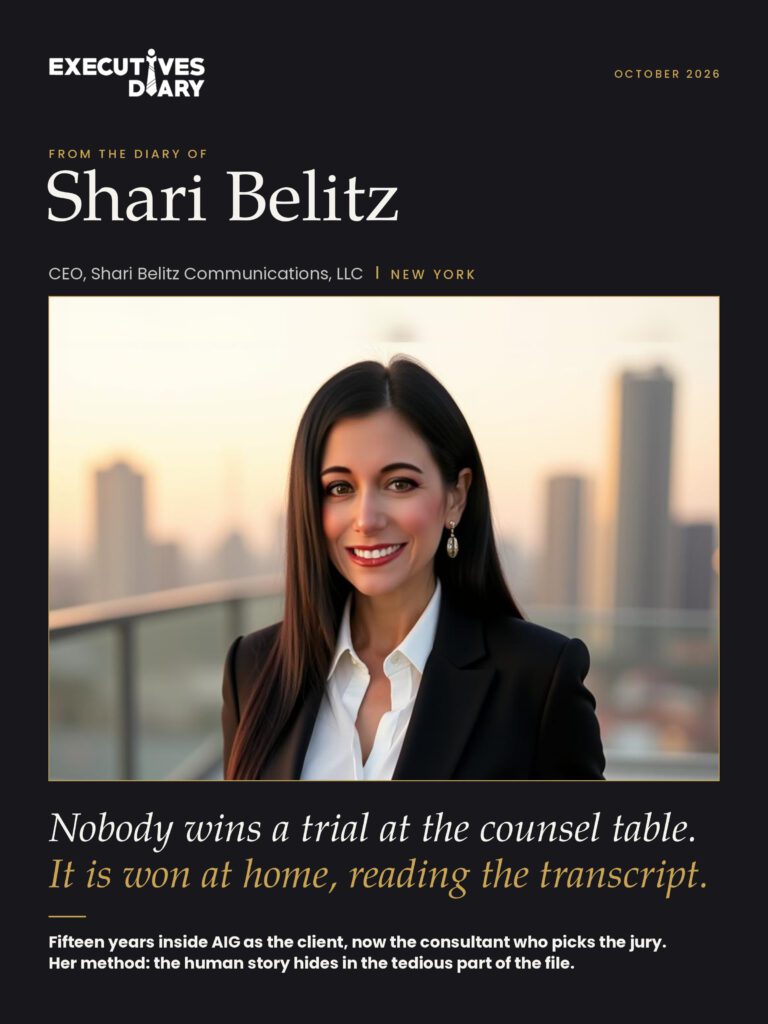
Leader in Spotlight: Read Shari Belitz Feature in Executives Diary
The Start of the Road
Sorina says it the way she’d say it across a table.
“Assessment and training are not the end of the road! Assessment and training programs are the start of the road for every employee.”
Sorina Bradea, Managing Partner, RoMarketing
The mistake she sees most often is a manager who believes the sending is the work. “Managers are having the idea that it is enough to send someone to the training program or to the coaching session and that person will become more direct, more performant, will take better decisions,” she says. Her question back is pointed: “Did you think that you need to create the psychological safety for that person to make wrong decisions in the beginning or to ask for resources to be performant? And it is not the HR that will create that climate, but all the leaders you have!”
She is clear about where her own work stops. “We are equipping your leaders with the proper information about their people (assessments) and your people with the proper knowledge and experiences (through training programs) but the continuity to implement and exercise belong both to the leader (through their leader – coach hat) and to each person (through their accountability).”
“The myth of having external resources that will solve people development it is just a …. myth!” she says. “External trainers, coach, assessors are supporting the development road, and the real transformation comes from internal leaders and the people recognition that they need to grow!” She has one program that shows what happens when a leader picks up that continuity, and what happens when the others don’t.
The Department That Did the Follow-Up
The program ran for more than 30 people in one company, “high value for money,” as Sorina describes it. One department manager, after some coaching sessions with Sorina, decided to follow up with her own team: sharing what she’d learned with the other team members, and running short workshops on topics from the program, delivered by the people who’d attended it. “The other departments did nothing!”
The second year told the difference. The second edition enrolled 46 people, more than half of them from the department that had done the follow-up. Of the people who’d been through the first edition, 75% were nominated for managerial roles or as successors. For the second edition, Sorina says, “the follow-up became a must for all managers that had people in the program!”
The lesson is the same one the president learned, and it’s one Sorina learned herself at the start of her career, in an interview she didn’t fully understand at the time.
How Many Lives
Sorina was a teacher in a vocational high school when she applied to be personnel manager at Coca-Cola. It was 1992, two years after Romania moved from communism to democracy, and she didn’t know much about the role. What she knew was that it matched “my wish to change things around me.” A well-known corporation, she says, “I considered that this is a one time in a life opportunity for me. And really, it was!”
Asked in the interview why she wanted the job, she said, “I want to change mentalities.” The interviewer, who later became her coach, asked her how many lives she wanted to work for the company. “I did not understand at that time what he wanted to say,” she says. “Now I know!”
“It is not something you will change in a few years if people don’t want to change but in a lifetime!”
Sorina, Managing Partner, RoMarketing
The second turn took her out of that safe environment and a very good, promising role, to start RoMarketing with her friend, Carmen. “We knew that that was the moment and that our competencies will be appreciated in the market. Later, would be too late!” What followed was the education of two new entrepreneurs: “to hire people for which you are responsible, to generate income to pay the wages, to be responsible for clients’ satisfaction and many other things we had no idea we should know!”
She made the same kind of move again when she entered the partnership with Thomas International, “when it was nothing like that on the Romanian market.” Her own account of both turns is one sentence: “I moved away from the safe environment of a corporation because I saw the opportunity!”
The hard moment came in 2008, when she thought the business would have to close. It didn’t, she says, “because we had the team with us – they accepted to work for less money for a while and the loyal partners that chose us in hard times also for them!” Behind the way she works there is one more person, from before any of this.
The Teacher Who Took Energy From Her
“I had a teacher in the university that said ones: I am taking my energy from you when I see your passion for what I teach you!” Sorina says. She carried the sentence with her. “I am doing with passion everything I do, and I am choosing now to work with people that have the same passion!”
Where Sorina Is Now
Sorina wants the next twelve months to bring her more of two things: speaking, and coaching sessions at executive level, where she can share “my good and bad experiences as leader and as entrepreneur.” The reader she has in mind is specific. “Executive leader, more than 10 years’ work experience, brave enough to see the need to continuous improvement!”
Outside the work, she is a Rotarian. “I believe that our role is to do as much good in the world we can! That good may be a word, an action, a project – something that a community needs!” She is also a BNI member, and believes in its principle that givers gain.
The line she’d want a reader to leave with is her own, and it’s the one the president’s team, the department manager and the two new entrepreneurs all ended up living by. “Be the best version of yourself and not the best copy of your role model!”
Five Lines from Sorina’s Diary
- Assessment and training are not the end of the road!
- It is not the HR that will create that climate, but all the leaders you have!
- I want to change mentalities.
- Later, would be too late!
- Be the best version of yourself and not the best copy of your role model!
From the Diary of Sorina Bradea
Sorina Bradea is an Oradea, Romania-based leadership coach and the Managing Partner of RoMarketing.
| Role | Managing Partner, RoMarketing |
| Based in | Oradea, Romania |
| Previously with | Coca-Cola, Personnel Manager, from 1992 |
| Also with | Thomas International, Romania |
“Be the best version of yourself and not the best copy of your role model!”
Editor’s Note
The magazine chose Sorina Bradea for the question she asked a president: not how many ideas he had, but how many his team had given him. Her account of a development program whose second edition filled from the one department that did the follow-up is the kind of evidence that is rarely written down. She describes the limits of her own work as plainly as its value, which is why her argument that training is the start of the road carries weight. Her career runs from a vocational classroom to a corporation to a company of her own, each move made because she saw an opportunity and said so.
Executives Diary, Editorial