

From the Diary of
Sharon Miller
What an HR lead gets when Joyworks walks into the room: music, a one-to-ten check-in, laughter that isn’t left to chance, and a tool somebody is still using the next morning.
“When people feel better at work, everything works better.”
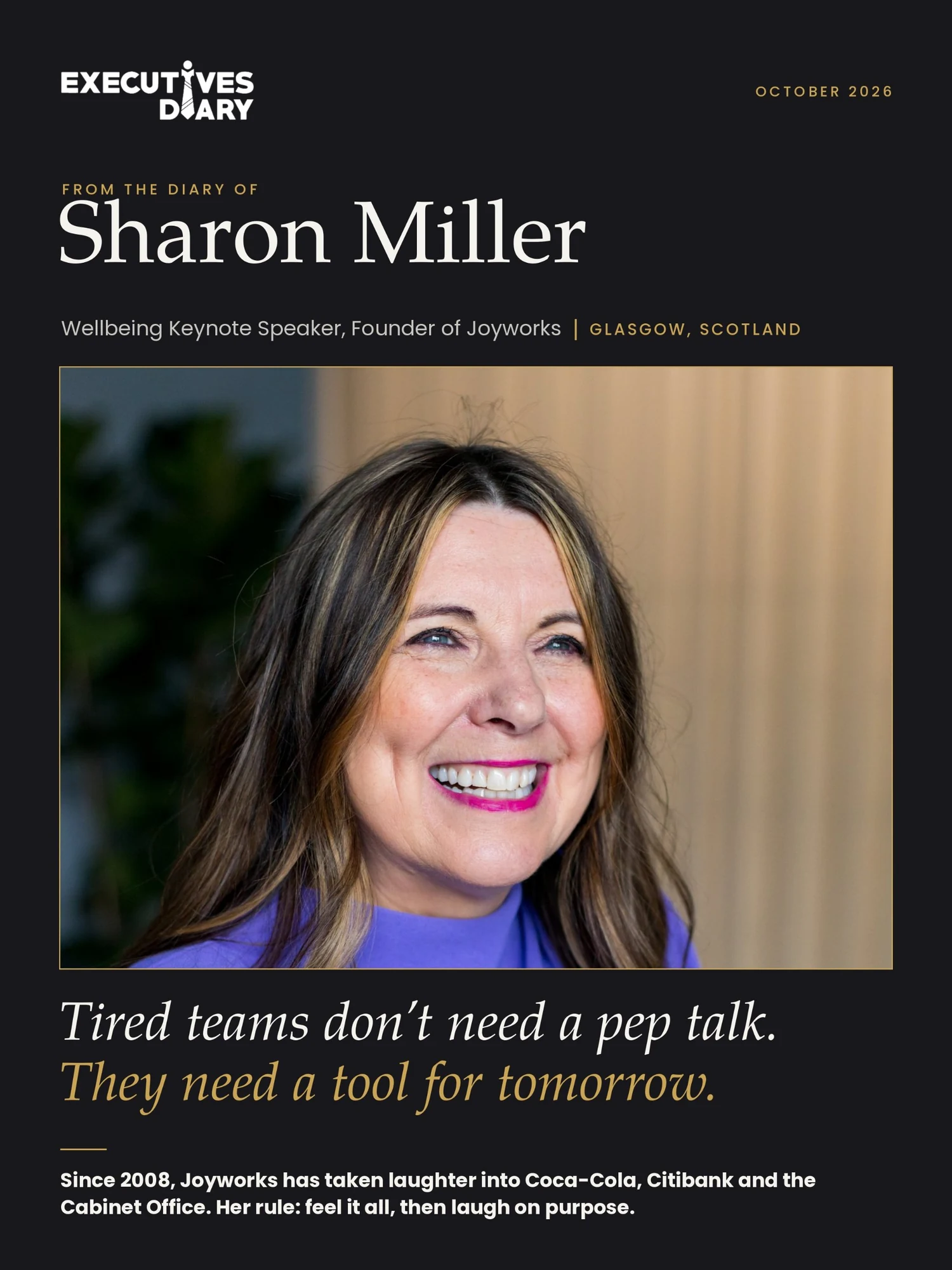
The music is already playing when people walk in. Nobody has been asked to do anything yet. Then everyone is asked to put themselves on a scale. One is “You’re lucky I even showed up today.” Ten is “I’m on top of the world.” Whatever number comes back, the woman at the front says the same thing: “We are where we are, and that’s OK.”
It isn’t a pep talk. “We’re not asking people to slap the happy face on or leave difficult emotions at the door,” Sharon Miller says. “Acceptance is one of the starting points of the Joyworks Method.”
The rooms she walks into are often tired ones. Work-related stress, depression or anxiety accounted for an estimated 22.1 million working days lost in Great Britain in 2024/25, according to the Health and Safety Executive, more than half of all days lost to work-related ill health and injury.
Sharon is the founder of Joyworks, the Glasgow-based business she started in 2008 that brings keynotes, workshops, programmes and events into workplaces, from Coca-Cola, SSE and Citibank to the Cabinet Office and North Ayrshire Council. It runs on what she calls the 360 Joyworks Method, “blending neuroscience, positive psychology, creativity, and ancient wisdom with a whole lot of laughs.” What that looks like in a room is more specific than it sounds.
Acceptance is one of the starting points of the Joyworks Method.

Head, Heart, Body and Spirit
The music isn’t decoration. “I spent more than a decade working in theatre and at Scottish Opera before Joyworks, so creating an experience without music peppered all the way through would be sacrilege!”
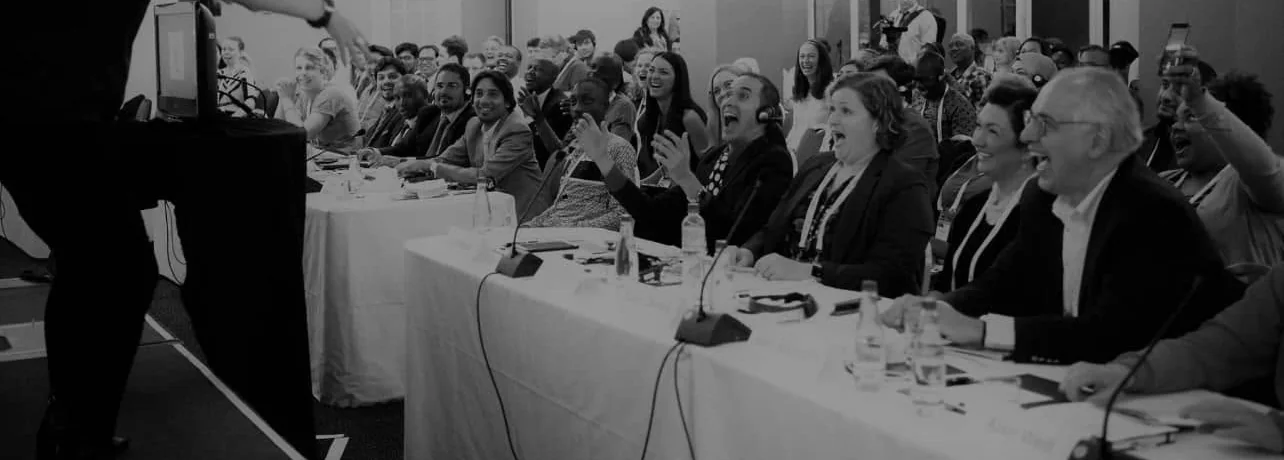
What happens after the check-in depends on what the organisation has booked and on who turns up. Minutes to Calm might begin with mindfulness, breath work or shaking it out to music. The Signature Event begins by asking the room for jokes, which don’t always land. “That becomes a brilliant way into laughter therapy,” she says. “If laughter is so good for us, why leave it to chance?” Either way she goes with the team in front of her: “I can tell very quickly whether a team needs a bit of fun to relax into the experience or whether they need five minutes to settle, breathe and arrive.”
The 360 in the method’s name stands for four things worked on at once. The head: mindset, perspective and how people respond to challenges. The heart: emotional safety, compassion, trust and belonging. The body: movement, laughter, nervous system regulation and energy. And the spirit, “which definitely isn’t religious, but about presence, meaning, connection and what matters to us most.”
She brings her own story into the room too. “I’ve lived through decades of depression and anxiety and, in 2020 nearly died with a protracted recovery. I’m not telling teams they should ‘just be positive.’ That is toxic.”
One of the core ideas behind Joyworks is that our capacity for joy grows by how much we allow ourselves to feel it all, all the emotions, especially the yucky ones.
The point of the session, for her, is not the session. “I want them to think differently and be inspired to make the changes, to use the simple tools back in their working day, when things get difficult and the curve balls happen.” Whether that happens is a question she answers with what people tell her afterwards.
The Head Teacher Who Named It
Sharon first worked with North Ayrshire Council in 2010, and this year they brought Joyworks back as the main wellbeing provider for their Early Years Health and Wellbeing Conference, with her keynote, Reawakening Hope in the Heart of Change, and six breakout Loving What Is workshops. The conference came about, she says, because the service was dealing with unprecedented numbers of staff leaving, and when staff were consulted about what had made an impact before, Joyworks came back in the feedback.
She had opened her keynote by admitting, “I’m a wee bit nervous!” and talking about affect labelling, naming what you’re feeling, or “name it to tame it.” Afterwards a head teacher told her she had been using it before going into school in the morning and had used it again before coming into the conference that day. “What I loved was that she now had a shared language around it with her fellow colleagues who were there with her.” Another head teacher told her what one event, all those years ago, had done: the staff had fed the Joyworks philosophy into their work with parents, and when the school inspectorate later visited, the difference was noted in the inspection.
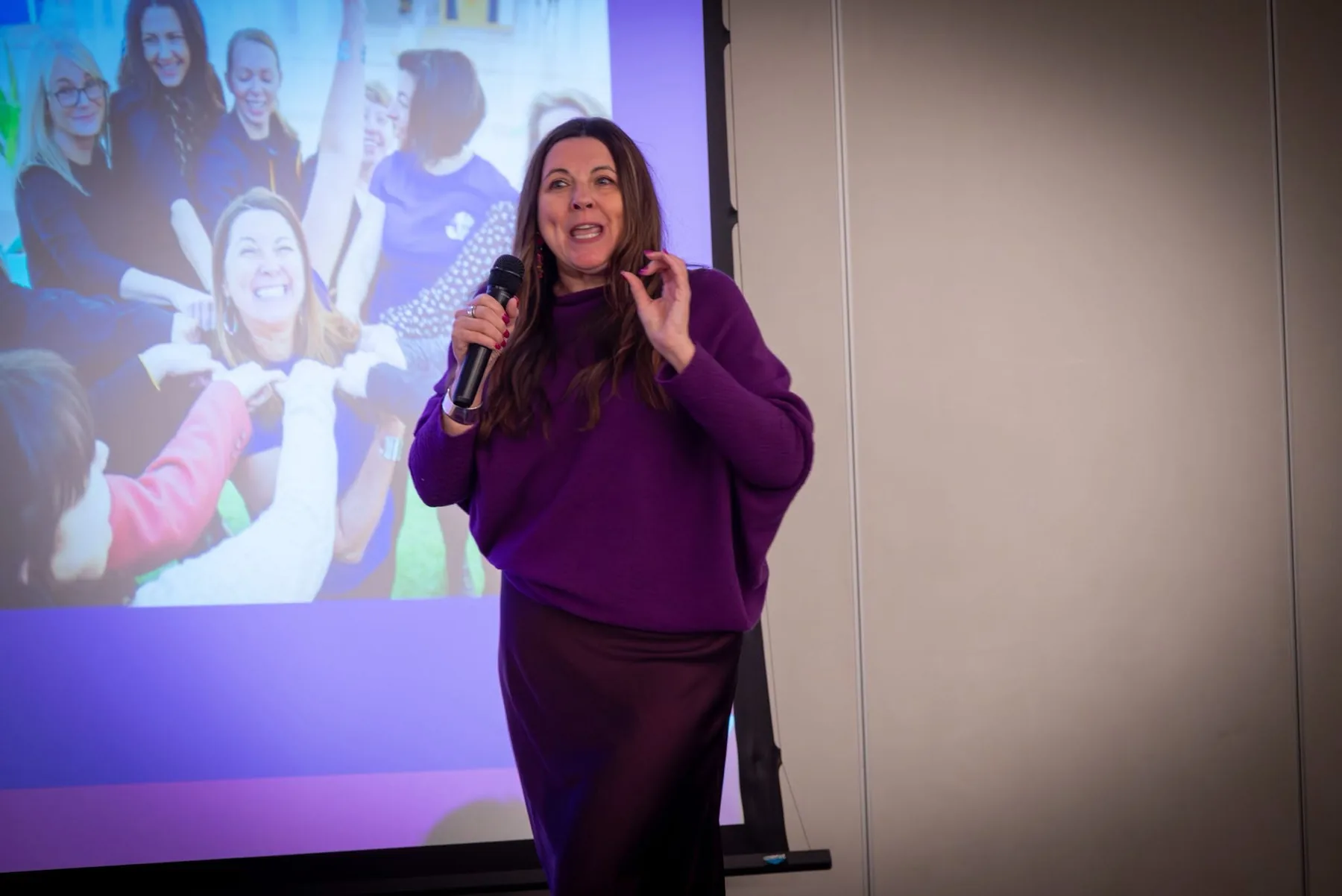
A different kind of result came after a bespoke staff resilience event for Citibank. With everyone talking and sharing cake afterwards, two members of staff from different departments on different floors got chatting and realised they had been emailing back and forth about the same challenge for months. They arranged a meeting. “It sounds so simple, but that is exactly the kind of thing I love seeing after a Joyworks event.”
The repeat bookings tell the same story: Virgin Money brought her back for its customer-facing teams during the merger with Nationwide, and SSE booked a series of virtual events before its first in-person one. At the Cabinet Office in London, the organiser tweeted afterwards, “I am still buzzing and so is the building.”
Of course, I love hearing that people love the experience, but what matters much more to me is what happens afterwards. Someone uses a tool the next morning. Two colleagues finally have the conversation they’ve been emailing about for weeks.
None of it started in workplace wellbeing.
Jock Tamson’s Bairns
Before Joyworks, Sharon worked through theatre and drama with young people at risk, people experiencing homelessness and addiction, and with radically diverse groups in prisons. “That gave me an unusual education in human behaviour and taught me early on never to make assumptions about people because of their title, circumstances or where I happen to meet them.” Her grandpa, who she calls her hero, used to say, “We’re all Jock Tamson’s bairns,” an old Scots saying meaning we’re all in this together. “And that is at the heart of Joyworks.”
The roles she wants named are actress, TV presenter, drama teacher, Education Officer at Borderline Theatre, Arts Developer in Criminal Justice at Creative Scotland and Associate Artist at the Scottish Youth Theatre. “Once you have worked with children, you learn very quickly how to keep people with you, how to change direction when something is not landing and how important it is to make everyone part of what is happening.” “Theatre teaches you to improvise, to work with what is happening, to trust the people in the room, to be vulnerable and to be comfortable off script, because that is where a lot of the fun is.” Her team come from theatre as well, and much of that work was ensemble work: “In an ensemble, nobody is operating on their own. That is very much how our workshops and programmes work too.”
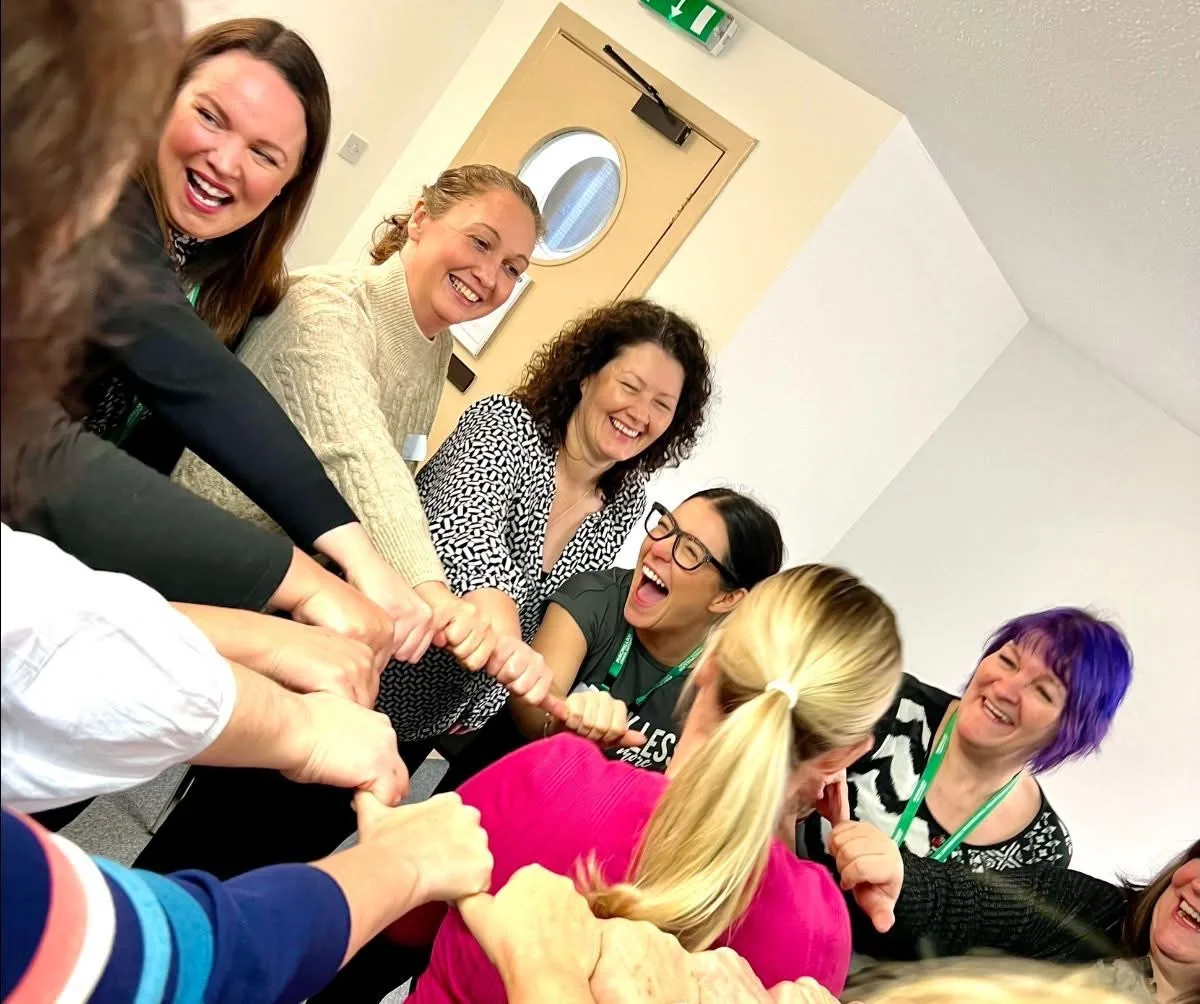
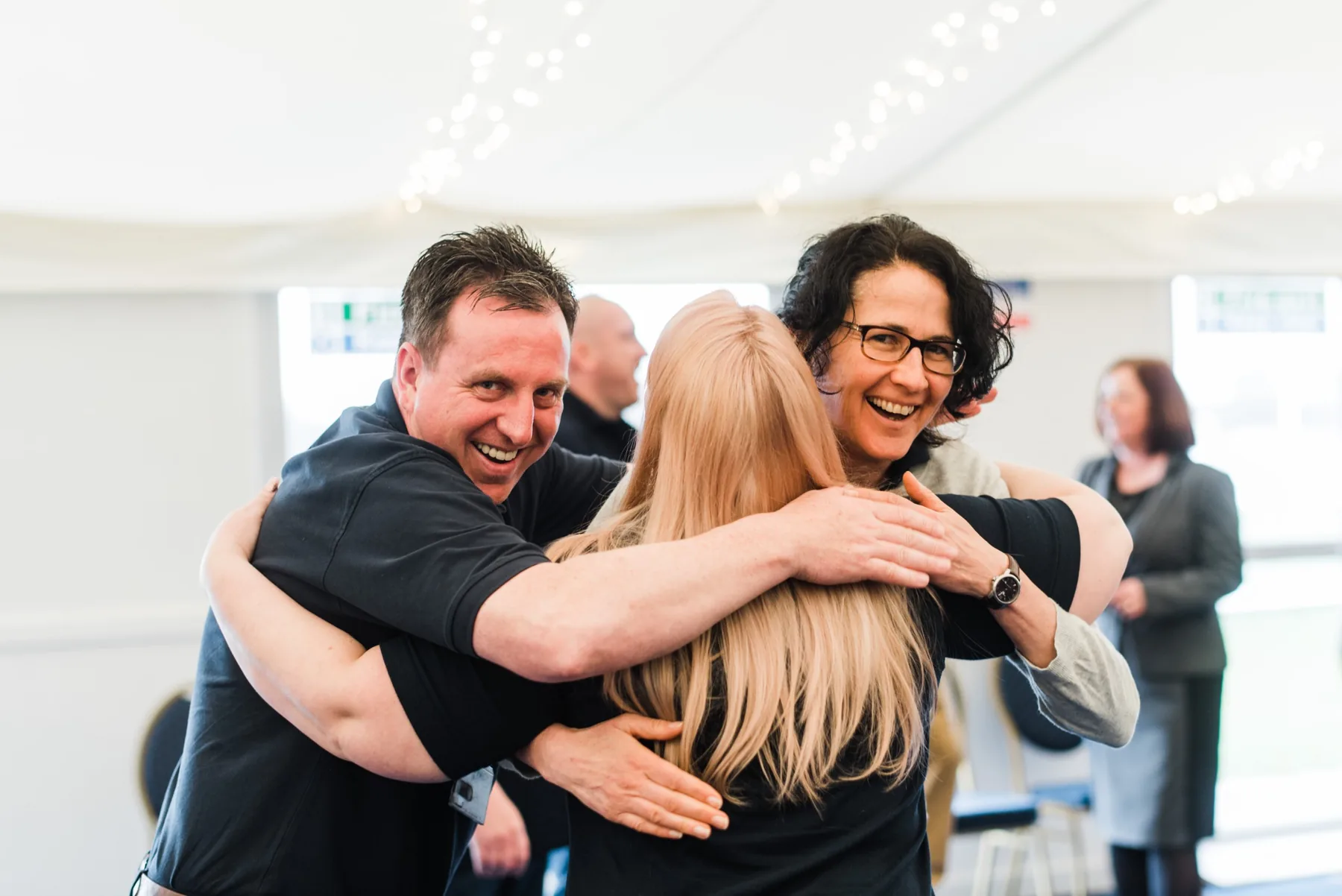
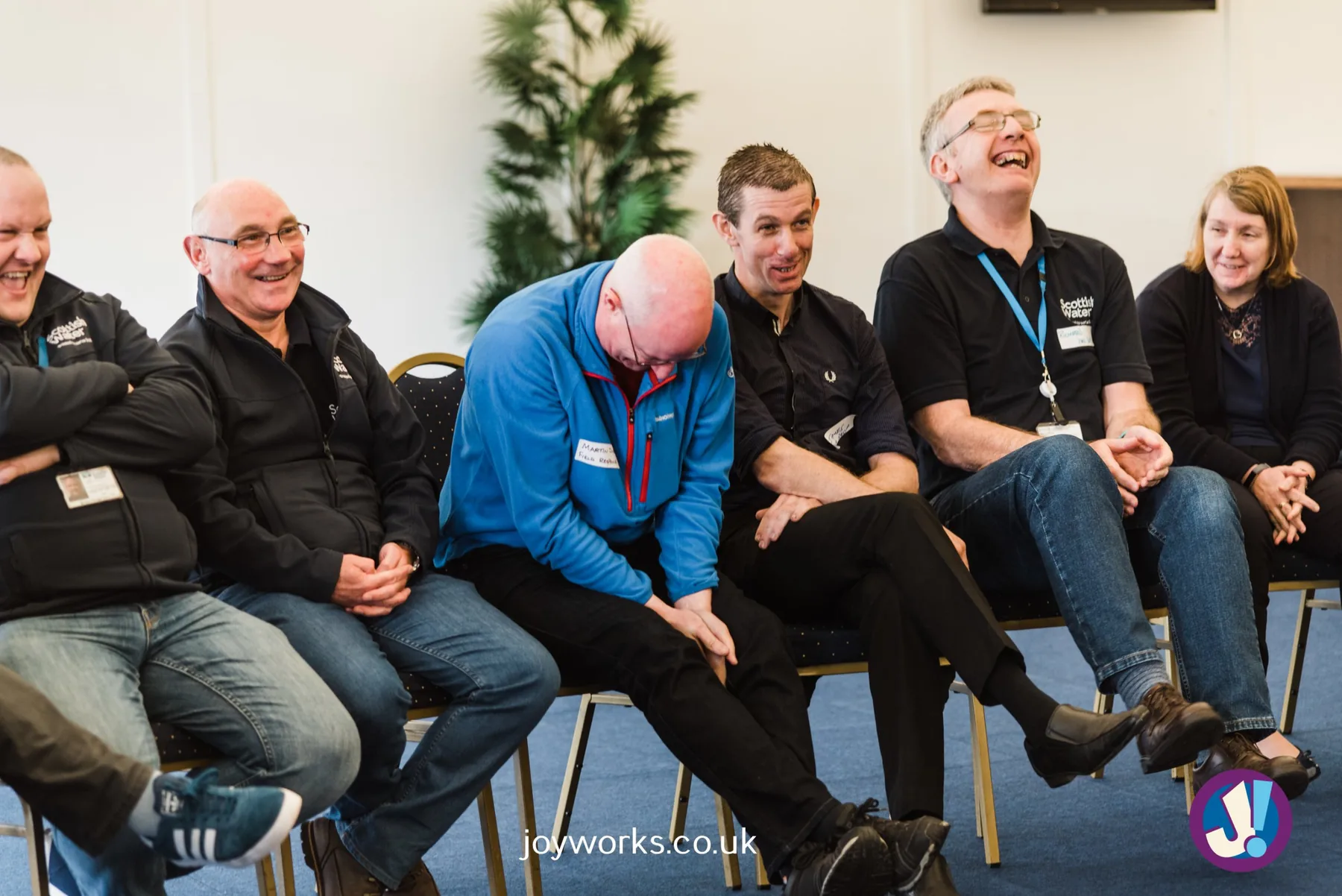
The laughter is the part Joyworks became known for. As she puts it on her profile, Joyworks spearheaded the laughter therapy movement in Scotland and has trained 200 laughter yoga leaders across the globe, while staying true to her own method. But it is never just about having fun. “There is strong science behind positive emotion and play. They can help broaden our thinking, support creativity and problem-solving, help us see more possibilities and make connections we might not make when we are stressed, stuck or working in the same old way.” The manager of the Scotland women’s football team told her that was one of the reasons she brought Joyworks in: she wanted her team to experience that it was okay to make mistakes, learn from them and grow. “You try something, it might not work, you laugh, you learn, you try again.”
There is strong science behind positive emotion and play.
The rethink of how she herself worked came later, and not by choice.
Rest Is Gold
“Serious illness forced me to completely rethink how I worked and for a while I thought I might have to change careers,” Sharon says, “but I came back differently, with much clearer boundaries, more speaking, a new membership and one huge lesson: pushing through doesn’t work for me anymore, I guard my energy fiercely, rest is gold and the neuroscience proves it.”
The membership is the Joy Academy, for people navigating chronic illness, depression or life’s curveballs. In November 2024 she received the Business Hero Resilience Award from Collabor8te, and the same year she was named in the BWS Top 100 Women in Business.
A colleague would recognise one habit. “I say, ‘It’s done,’ whenever someone tells me what they want. As in, you’ve said it, it’s already created in your mind, let it catch up, relax and expect it.” And her grandpa is still in the work, through simple things he said, like “Aw hen, you’ve got to laugh” and “No one’s going to come and chap your door, get out there.”
Where Sharon Is Now
The people Sharon wants reading this are the HR and wellbeing leads who bring her into their organisations and the event organisers who book her to speak. Both matter, she says, particularly in November, with its awareness days and the festive season following close behind: an opportunity for organisations to “remind their people to care a wee bit more about how they feel, to look after their mental health and each other.”
Outside work, in her words: “I love Ayurveda! It’s a 5,000-year-old ancient science that took me back and forth to India for many years before I lived there for a year.”
What’s next, in her words: “Next is the Scottish Pause Summit, the Oxton Wellness Event alongside David Robson, author of The Expectation Effect, more keynote speaking, taking the Joyworks Method into more workplaces and conferences, continuing to serve my membership and keeping my grandpa proud!”
Her favourite of his lines came whenever she asked him how he was. “Great! I woke up.”
The Playbook
Five Lines from Sharon’s Diary
- “We are where we are, and that’s OK.”
- “If laughter is so good for us, why leave it to chance?”
- “Relationships are everything. They change how we work, how we see one another and how we view our future.”
- “Rest is gold and the neuroscience proves it.”
- “You try something, it might not work, you laugh, you learn, you try again.”
