

From the Diary of
Frederic Lanz
What a German fume-extraction company learned about the American shop floor once its Group CEO moved to Michigan to build the business himself.
“The plan ends with the last slide. The business begins with everything that was not in the PowerPoint.”
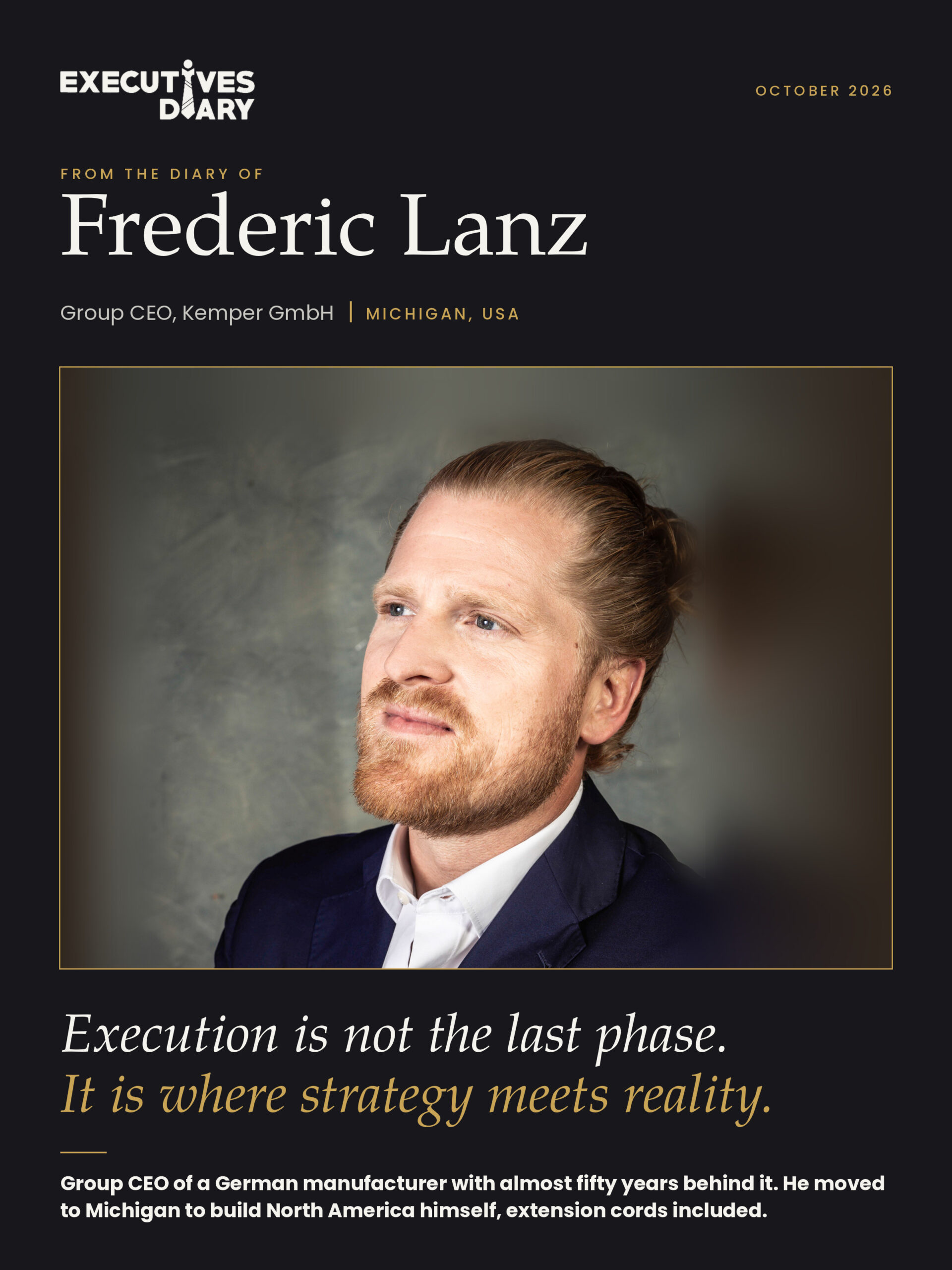
Five minutes before a product demonstration, somebody had to find the extension cord. In Kemper’s new showroom in Troy, Michigan, that somebody was the Group CEO. The cord was behind a stack of boxes. The customer was already there.
The same week included distributor meetings, product training, customer calls, event planning and one urgent delivery problem. None of it appeared unusual to Frederic Lanz. This was not a detour from the strategy. This was the strategy, stripped of its slides.
Frederic is Group CEO of Kemper GmbH, a German manufacturer of welding-fume extraction equipment. The company has almost fifty years of experience. In Europe, that history opens doors. In the United States, it earns an introduction. What happens after the introduction has to be built locally, conversation by conversation, demonstration by demonstration, problem by problem.
That is why Frederic did not try to build North America from a conference room in Germany. He became Executive Chairman and Co-Owner of Kemper North America and moved to Michigan. He did not come to supervise the landing from a distance. He came to make it work.
What the plan could not show
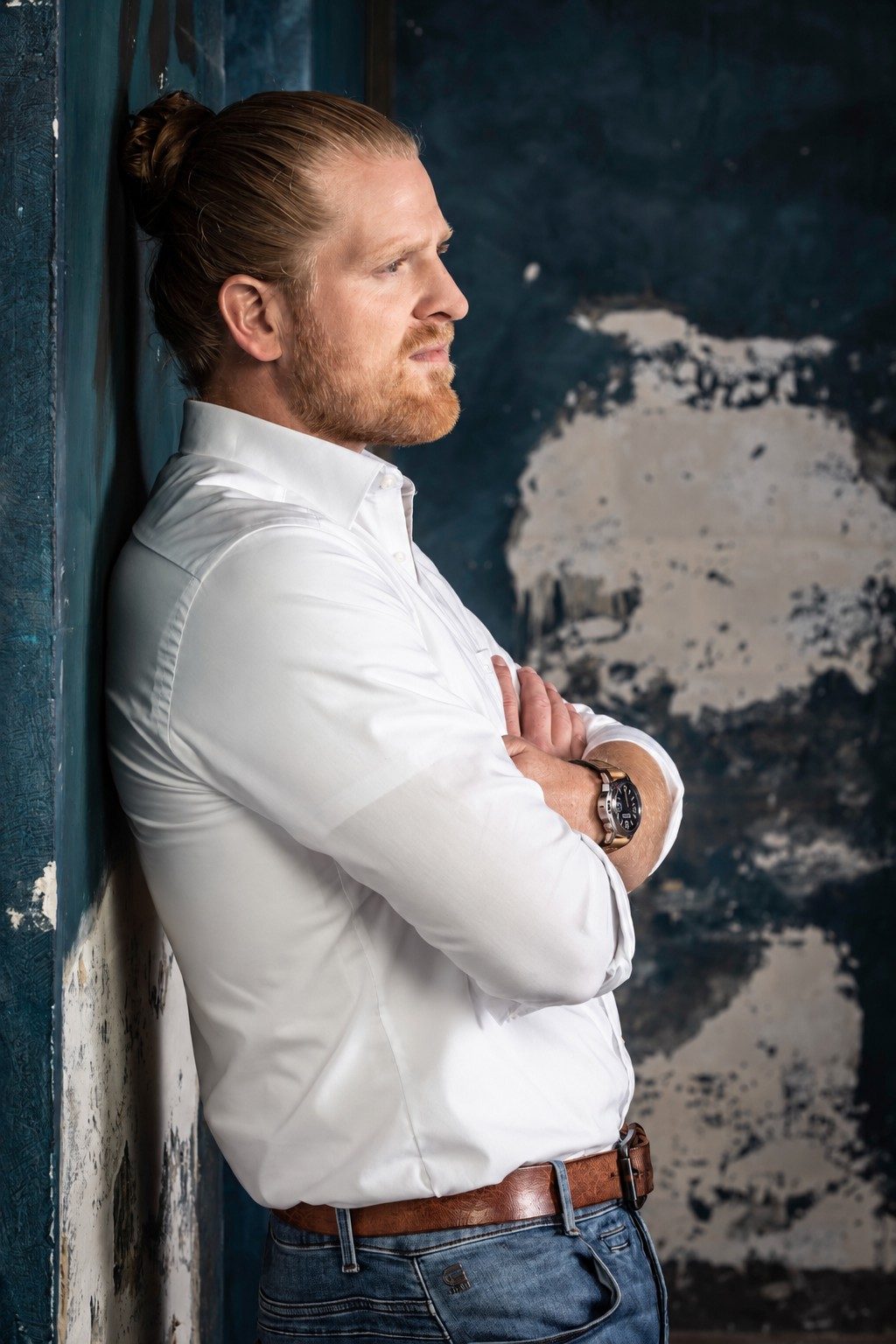
The market-entry plan was good. Establish the operation. Build the team. Open a showroom. Develop distributors. Create awareness. Win customers. Grow. Every line was correct.
What the plan could not show was the space between those lines. It did not show who would train the first partners, answer the Friday-afternoon call, fix the delivery issue, prepare the next event or find the cable while the customer waited. It could not show the different pace of the US market, the expectation of immediate follow-up or the distance between a decision made in Germany and the person who has to make it work in Michigan.
The plan did not fail. It did what a plan is supposed to do: it pointed in the right direction. Then reality started editing it.
Execution is not the last phase of strategy. Execution is where strategy finally meets reality.
Frederic prefers movement to theoretical perfection. His rule is simple: make sound decisions quickly, correct the ones that need correcting and keep going. Waiting feels safer, but the opportunity rarely waits with you.
That instinct has shaped his career. It also explains why his version of leadership is unusually physical. Leadership, to him, is not standing above the work. It is staying close enough to feel where the work is getting stuck.
Where the market happens
In the early stage of a business, the organizational chart is mostly a promise. People have titles, but the day still decides what the job is. One hour Frederic may be discussing long-term strategy. The next, he is reviewing an offer, preparing a product demonstration or carrying equipment across the showroom.
There is no romance in every part of that. Some days are exhausting. Some weeks are larger than the team. There are moments when the distance from the German head office feels longer than the number on the flight schedule. But there is also something he values deeply: the honesty of building close to the customer.
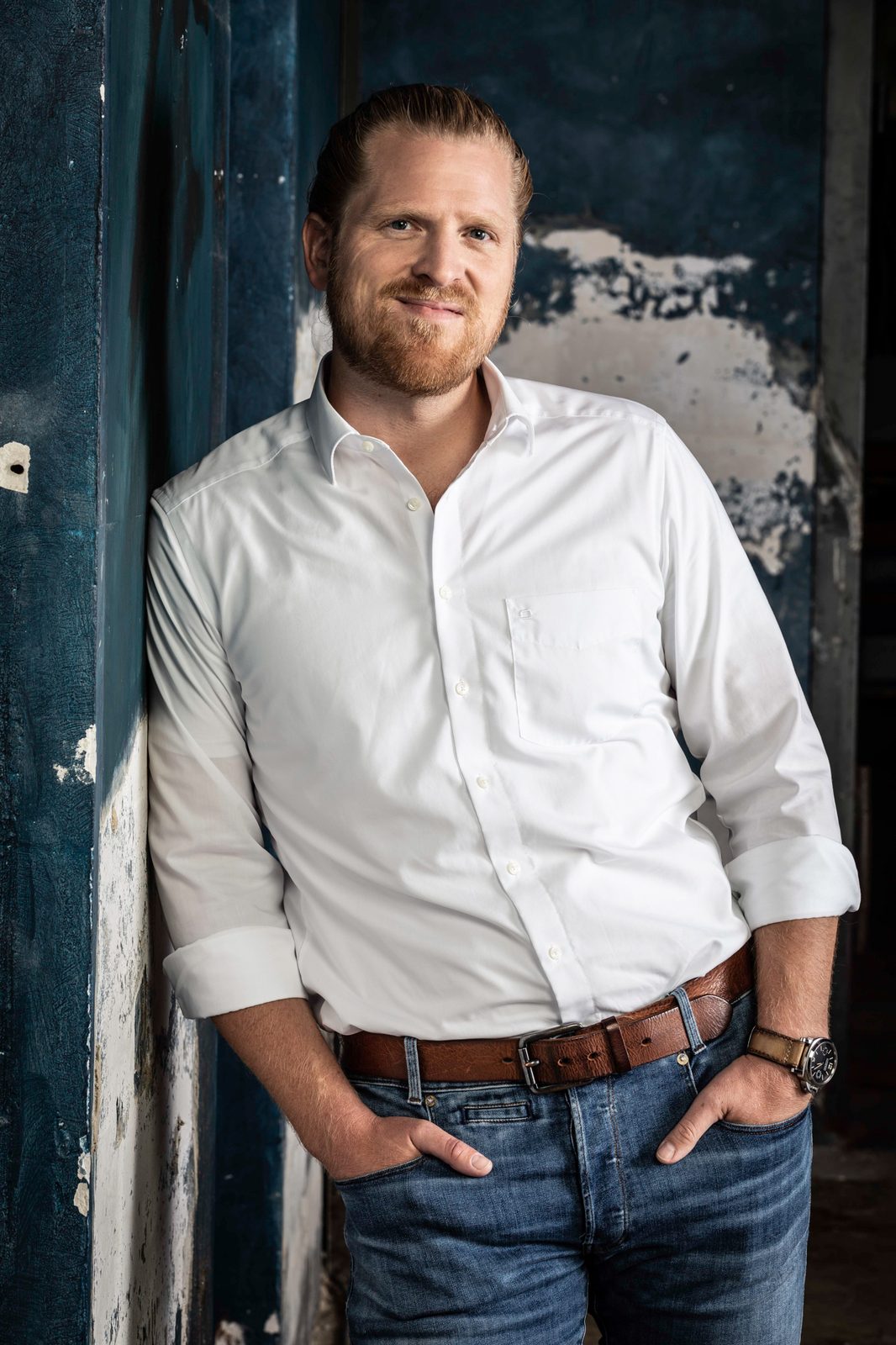
A dashboard can show sales. It cannot show the pause before a distributor recommends your product for the first time. A report can show a delayed order. It cannot show the frustration that caused it. You learn those things by being there, listening and proving that your energy lasts longer than the presentation.
Customers do not buy your ambition. They buy the confidence that you will still be there when something gets difficult.
That is also why Frederic talks so often about energy. Not the loud, motivational kind. The useful kind. The kind that answers the call, makes the decision, removes the obstacle and gives the team the feeling that progress is possible. Partners have to feel that you genuinely want to build something with them. The team has to feel it first.
When demand changed address
Kemper had already learned what happens when reality rewrites the plan. During COVID, large parts of its traditional market changed almost overnight. The comfortable response would have been to reduce activity, protect the old business and wait for normality to return.
Instead, the company adapted production. Air purifiers went into schools and restaurants. The school business alone generated more than $4 million in additional revenue. Kemper also shifted part of its production to sanitizer-dispenser stands and became the number-one seller in that category on Amazon.
It was not the market the company had planned for. That was precisely the lesson.
Demand does not always disappear. Sometimes it changes address. Management has to notice before the organization finishes explaining why the old address is empty.
Since becoming Group CEO in 2019, Frederic has helped reshape Kemper’s structures, responsibilities and management levels while the company continued to grow through difficult industrial conditions in Europe. Through ETI Ventures, which he co-founded, he has also helped build a portfolio of around twenty companies. Some have grown to triple-digit employee numbers within months.
He does not present those results as the product of one brilliant forecast. He talks about strong teams, fast learning and the willingness to change direction without losing the destination. There is a difference between being inconsistent and being awake.
The lesson he brought from Finland
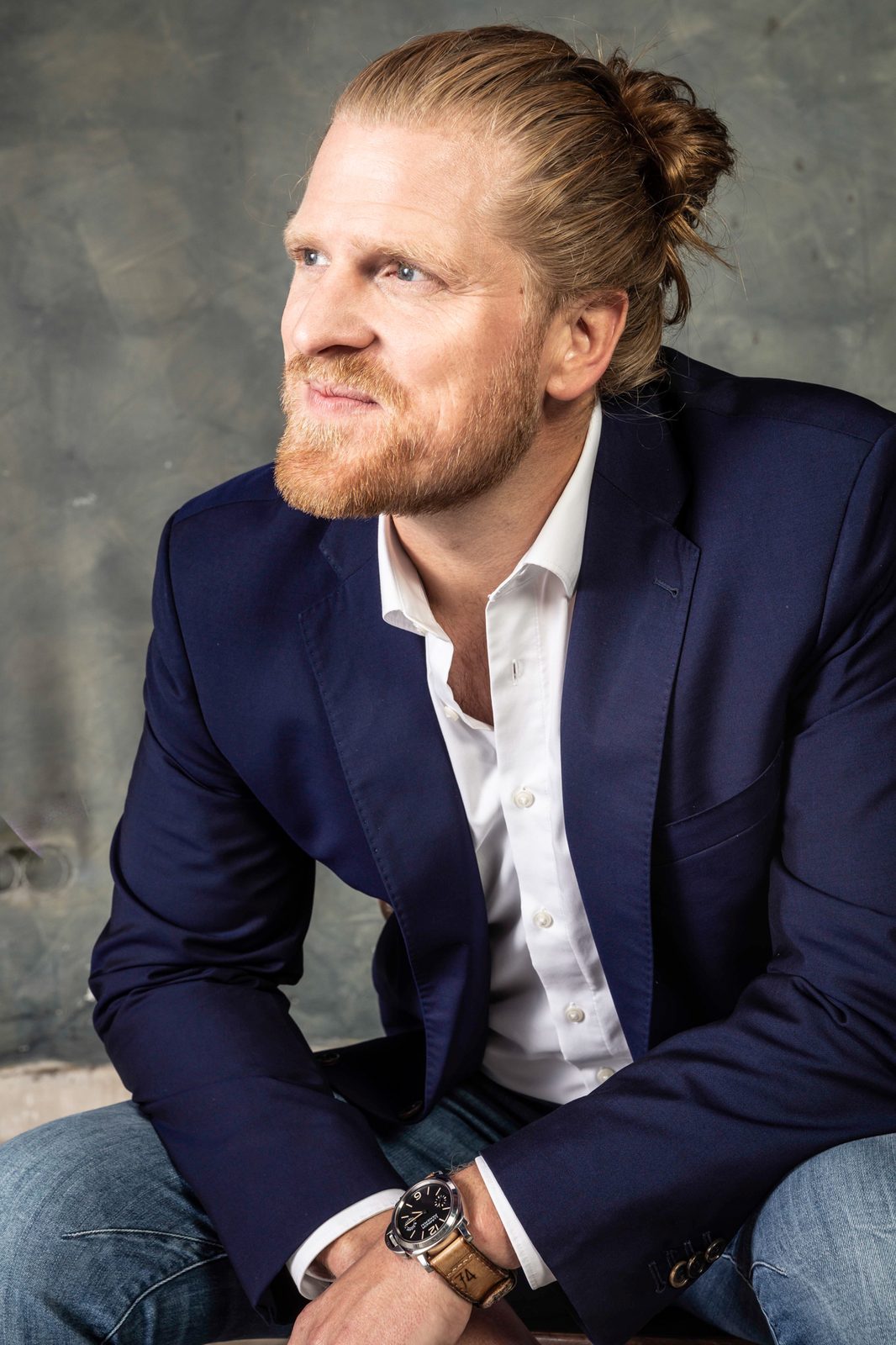
Before Kemper, Frederic spent seven years at Kemppi Oy in Finland, a different company despite the similar name. He joined as Managing Director of Kemppi GmbH and European Sales Director, moved into the role of Vice President of Marketing and Sales, and later worked in business development and mergers and acquisitions.
The lesson he carried forward was less about hierarchy than pace. Jouko Kemppi taught him that eight fast, sound decisions will usually take a company further than waiting to make all ten perfectly. Frederic has kept that thought because it accepts something many leaders prefer not to admit: good management is not the absence of mistakes. It is the ability to recognize and correct them before they become expensive.
The arrows have traffic
Moving to the United States changed the way Frederic looks back at head office. From Germany, he could see the strategy, the process and the result. In Michigan, he began to feel every bit of resistance between them.
From head office, every process has a box and an arrow. On the ground, the arrows have traffic.
The problem is rarely one dramatic failure. It is twenty small obstacles: too many approval steps, information arriving a day too late, unclear responsibility, a decision waiting in another time zone. Each one looks harmless. Together, they decide how fast the company moves and how much energy good people lose fighting the organization before they can do their actual work.
That discovery has made him less interested in adding structure for its own sake and more focused on removing friction. Structure should help people move. When it becomes the thing people have to move around, it has missed its purpose.
The US market has sharpened that view. Follow-up is relentless. Visible commitment matters. Opportunities move quickly and silence is interpreted even faster. You cannot fully understand that rhythm from a German dashboard.
Frederic admits that the move has also been humbling. He has now personally met several processes that looked perfectly reasonable when he approved them from head office. They were considerably less charming in person.
From dirty, dull and dangerous to cool, clever and clean
For Frederic, the North American build is bigger than selling equipment. Welding has spent decades introducing itself with three D’s: dirty, dull and dangerous. He wants the industry to be associated with three C’s instead: cool, clever and clean.
The clean part is Kemper’s business. Welding fume has been classified as carcinogenic to humans by the International Agency for Research on Cancer. Clean air is therefore not a cosmetic improvement or a line in a recruitment brochure. It is a fundamental part of a modern workplace.
It also matters because the trade is competing for people. The American Welding Society estimates that the United States will need about 320,500 new welding professionals by 2029, with roughly 80,000 openings every year, while more than 157,000 current welders approach retirement. The industry cannot complain about the talent shortage while continuing to present itself as a place young people should avoid.
The cool part led Frederic and his partners to create Urban Steel Rockstars. Established industry events were losing visitors and energy while repeating the same answer: another hall, another booth, another presentation about why young people were no longer interested. Their answer was the industrial event they would attend themselves: smaller, faster and more human, combining serious technology and business with music, creators, competition and personality.
The format began in Berlin, continued in Frankfurt and moved to Istanbul. In 2027, through the cooperation between MingleMakers and Messe Düsseldorf, Urban Steel Rockstars will become part of the new Urban Steel Expo.
Our industry was never boring. We just became very good at presenting it that way.
Where Frederic Is Now
The United States is Kemper’s clear priority in the Americas. The audience is not abstract: fabricators, welding shops and the distributors who serve them. The Troy facility now hosts product training for partners such as Central Ohio Welding and gives customers the opportunity to experience the equipment rather than simply read about it.
Frederic is not chasing awareness for its own sake. He wants a shop owner or distributor to meet Kemper and think: these people understand our reality. We should talk.
There are days when building from zero still feels exactly like building from zero. The task is larger than the team. The calendar is full. The answer is not always sophisticated. Sometimes it is simply to try harder, call again and keep the promise.
Part of that drive comes from his father, a salesman who could make an entire room smile before he sold anything. Frederic watched him win people before he won business. The lesson stayed with him: people remember the energy you bring long after they forget the presentation. Frederic has added a lesson of his own. Energy matters most after the room empties, when the real work begins.
Michigan is home now, shared with his partner Steffi and Nugget, the Shiba Inu who remains completely unimpressed by job titles. His daughter Klara lives in Germany and comes to Michigan during her school holidays. He sees her less often than he would like, so those weeks are protected time. There is no grand philosophy behind it. When she is here, being present matters more than being busy.
My goal is to make the United States Kemper’s largest market worldwide. Not through one big announcement, but one customer, one partner and one earned step at a time.
Landed, yes. Settled, not even close.
The Playbook
The Frederic Lanz Playbook
- Move before perfect arrives. Make sound decisions quickly. Correct what needs correcting and keep the opportunity alive.
- Be where the market happens. Customers, distributors, training and events will teach you what the report cannot.
- Remove friction. Small obstacles quietly consume speed, motivation and trust. Find them and take them out.
- Notice when demand moves. Do not defend yesterday’s market when the customer has already gone somewhere else.
- Bring useful energy. Answer, decide, help and follow through. People remember what moved because you were there.

