

From the Diary of
Maria Vought
Why a day can fit the calendar and still not fit the person, and the two-minute morning check one nurse built to show the difference.
“You are not the problem. The math is.”
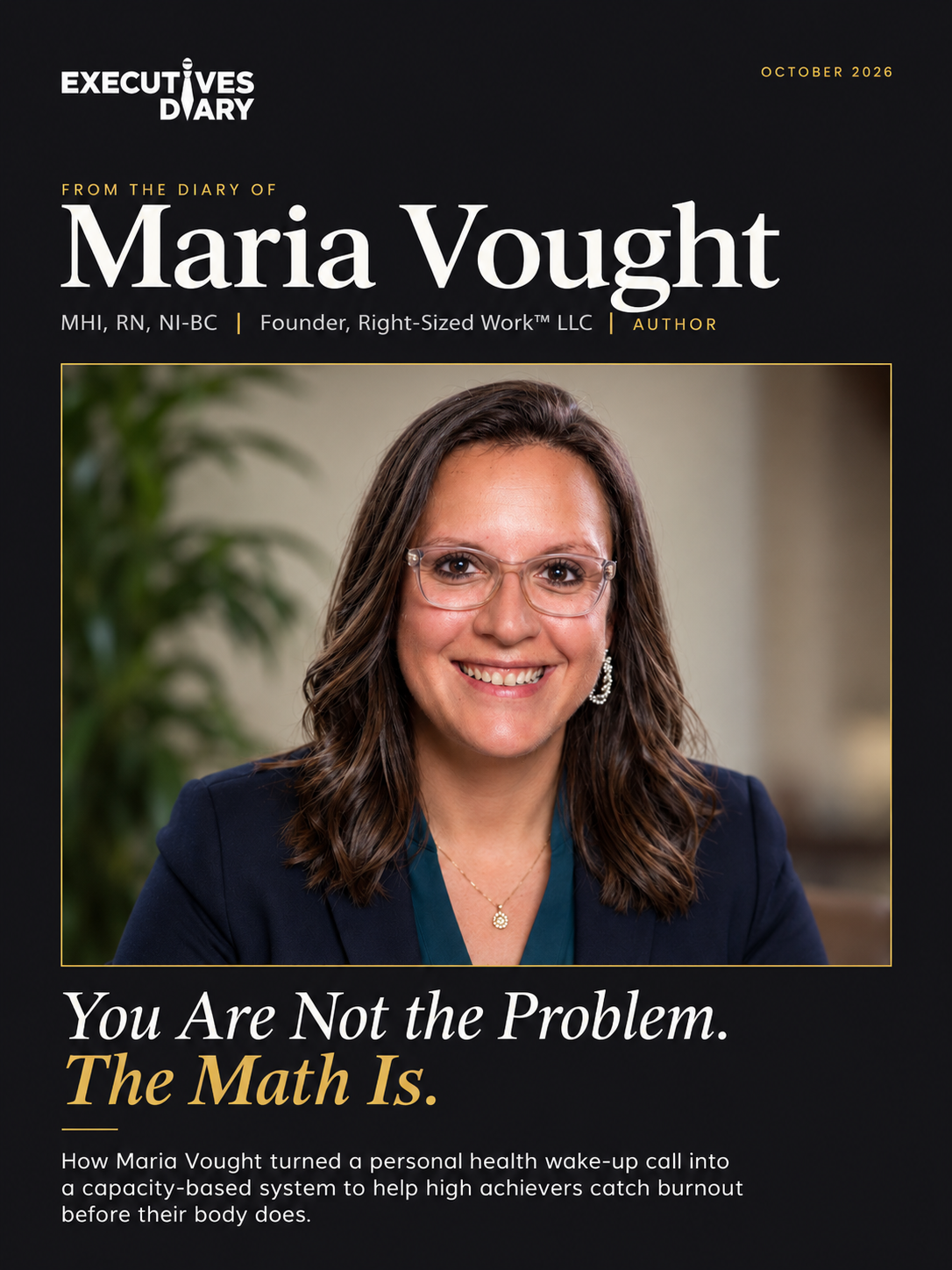
Maria Vought, MHI, RN, NI-BC, says her book opens on “the morning my body finally called my bluff: a migraine I could see coming, a meeting I refused to miss, and a colleague finding me on the floor in the dark while I insisted I was fine.”
She is a nurse and a clinical informaticist, and at the time she was leading an oncology service line. She was “doing capacity math every day, just never for myself.”
Today Maria is the founder of Right-Sized Work™ LLC and the author of Burnout Broke My Body: A Capacity-Based System to Catch Burnout Before Your Body Does, out now in paperback and Kindle. What she built is a daily check that takes about two minutes: what you have today set against what today is asking, answered before the day starts. It is, she says, “a daily version a person can run on their whole life, without a clinician, an employer program or anyone’s permission.”
It isn’t a healthcare framework, she says. “Burnout is a capacity problem and the same math applies in any industry.”
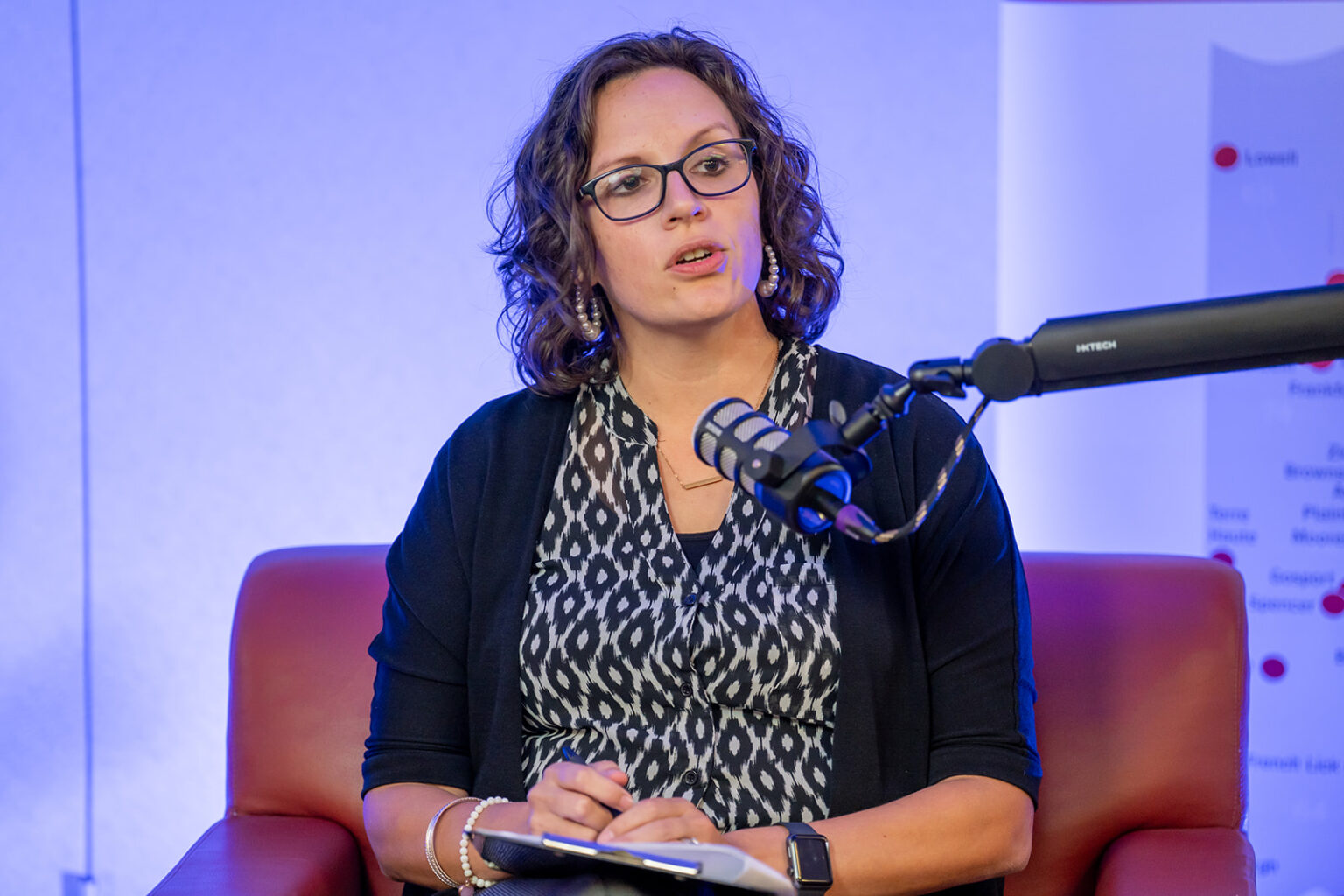
Photo credit: Antonio Chapital
A Day That Fits on Paper
The reader Maria has in mind is “the ambitious, capable person everyone calls ‘so dependable,’ whose work still looks fine from the outside while their sleep, their evenings and their body quietly absorb the difference.” Most of them, she says, “can’t burn it all down, and they don’t want to.”
She doesn’t say the usual advice is wrong. “Most of it isn’t wrong,” she says. “Sleep, boundaries, exercise and therapy all help, but they land as one more thing to fit into a day that’s already overflowing, and most people in high-pressure roles can’t imagine spending time on themselves with that much work to do.”
When a system runs past its limits, nobody asks it to be more resilient. You take work off it, add capacity or redesign how the work flows, without judgment. Your body is the constraint, and the same rule applies.
The shift she is asking for is “from measuring productivity as output to allocating Load intentionally, consistent with the Capacity of the day or the season.” She calls burnout “usually a design problem with a person stuck inside it.” The World Health Organization’s 2019 definition describes burnout as resulting from chronic workplace stress “that has not been successfully managed.”
That view came from inside the systems themselves.
From the Bedside to the Service Line
Maria started at the bedside in cardiac care. She moved into informatics during an Epic implementation, and her career went on through nursing informatics, clinical informatics, virtual health services and then oncology service line leadership.
As she puts it on her profile, when demand exceeds what a system can supply, “effort does not close the gap.” It “moves the cost somewhere less visible.” Leading the oncology service line, she learned to treat that gap as a design problem rather than a staffing one.
When she was building a service line and leading the opening of a new regional cancer center, she says, “capacity was the whole job, and every plan had to fit the staff and time we actually had, even as demand grew.”
Her own planning was another story. “I changed roles more than once, and while none of those moves was about burnout, a lighter load was part of the appeal. Each time, I rebuilt the same over-capacity environment in the new role, because a new job resets the Load but doesn’t change how you plan.”
“My health finally forced an honest look at my own Load and Capacity,” she says, “and I moved into continuous improvement and transformation work, which changed where my time and attention go without touching my ambition.”
She doesn’t put it all on the system. “I also had to admit that no one had forced every overextended season on me,” she wrote in a September post. “The system mattered. My choices mattered. Both can be true.”
Right-Sized Work™, she says, “is what I built to get out of it.”
The Daily Capacity Snapshot
The logic isn’t new, she says. “Constraint management, which most operations people know as Goldratt’s Theory of Constraints, is standard practice: find the limiting resource and plan against it.”
What she did differently, she says, was “apply it to a person and treat the human as a constraint to build around. Every human has finite Capacity. A continuous improvement piece comes over time. When the same Bad Math keeps coming back week after week, that’s the signal to stop adjusting day by day and redesign.”
It starts, she says, with “writing down two things most people have never separated: what you have, and what your whole life is asking of you.” She calls them Capacity and Load, and “when Load runs higher than Capacity, that’s Bad Math. The difference gets paid for somewhere, usually out of your sleep, your relationships and eventually your body.”
For years I measured my Capacity in hours, which is how you end up with a calendar that fits and a body that doesn’t.
Gallup reported in 2020 that hours matter, but how people experience their workload influences burnout more strongly than hours worked alone.
The Load, in her telling, is bigger than a calendar shows. “I wasn’t exhausted by everything I was doing. I was exhausted by everything I was carrying,” she wrote. A conversation not yet had costs Capacity before it happens, she wrote, and an unresolved problem costs it while it waits. “Invisible Load is still Load.”
Invisible Load is still Load.
The tool she would hand anyone first is the Daily Capacity Snapshot. As she puts it: “Before you commit to a day, you take two minutes and walk four questions: What do I have? What is the day asking? Does it fit? What can change? You’re not aiming for precision, just enough honesty to plan from reality. If the day doesn’t fit, you change something before you start: later, smaller, someone else, good-enough, not today, or set up once. The Daily Capacity Snapshot worksheet holds those questions in place while you practice, until they run on their own over morning coffee.”
She calls that Right-Sizing: changing the plan so it fits.
Then there is the question of what to do when someone asks for more.
The STOP Check
Her favorite example from her own work is a yes. “When a leader asked me to take on a second project while the first was still in flight, I said yes, if the deadline moved and a project manager was assigned. They moved the date, so the goal stayed where it was and the plan got a real chance.”
People assume this is about saying no more often, but running the math usually gets you a better yes.
The book’s tool for that moment is the STOP Check, four questions to ask before answering: Scope, Timing, Ownership, Priority. “The question was never yes or no,” she wrote in a September post. “It’s whether the yes fits.”

Photo credit: Antonio Chapital
The tools aren’t the point, she says. “The thinking is more important than any sheet.” The Daily Capacity Snapshot and the STOP Check are the everyday practice. When the days keep not fitting, the book steps back to a higher altitude, with three more tools for building a plan that gets you closer to a right-sized life: a Pressure Map for finding where to start when everything feels urgent, a Reduced-Capacity Plan for when you’re already underwater, and an Access Map for deciding, season by season, what gets to draw on your Capacity at all.
The same arithmetic applies to the person handing work down.
When Leaders Set the Load
Many leaders need the framework too, she says, “for themselves, to understand it for their teams, or both. Organizations have a real responsibility here, and it’s in their own interest, for turnover, productivity and culture, to build structures that manage load proactively, identify burnout early and handle change well.” The book, she says, “focuses on what one person can change on any given Tuesday.”
She wrote in September about leaders who hear “untapped capacity” from their own leaders and then say it to their teams. “The plan shows a team with room. The room is someone’s evenings.” Her two questions work in both directions: “What specifically comes off to free this?” and “Has it come off yet?” Her rule is short: “Free the Capacity first. Then spend it.”
Free the Capacity first. Then spend it.
The next companion guide she is writing is for team leaders.
Where Maria Is Now
The book is out now in paperback and Kindle. Its worksheets are free at RightSizedWork.com, with no email required, and paid options will come later. For readers who see themselves in it, “if they’re early, the book helps them catch it, and if they’re underwater, there’s a plan for getting back to where they can think.”
Her plans are for “more companion guides and resources that help people apply the framework to their own lives in accessible ways.” Nobody, she says, “has to go through any of it to get the useful part.”
The person who shaped how she works is her husband, Matt. When she shared big ideas about how to help others, “he said, ‘Why not you?’” Outside work, it is their two girls. “A picture checklist got our girls running their own after-school routine, for a while. Then it slipped back to us prompting, because we’d fixed the task without deciding what the time it freed up was for. When we stepped back and used the Access Map as a family, we carved the afternoon around what mattered to us: homework, physical activity, chores, free play, dinner together and family time.”
The line she wants people to remember her by runs all the way through the book: “You are not the problem. The math is.”
The Playbook
The Maria Vought Playbook: Plan Against the Capacity You Have
- Ask what you have today and what today is asking. The book walks through how to answer both.
- Call the day. Fits, Tight or Doesn’t Fit.
- When it doesn’t fit, change something before you start. Later, smaller, someone else, good-enough, not today, or set up once. The book’s term for this is right-sizing.
- Run the STOP Check before you say yes. Scope, Timing, Ownership, Priority.
- Ask what comes off before you add anything. Then check that it has.

