

From the Diary of
Elin Mendola
Why the founder of L’AURA starts with what a supplement has to deliver, and the five questions she wants buyers to be able to ask.
“Better choices start with better understanding.”
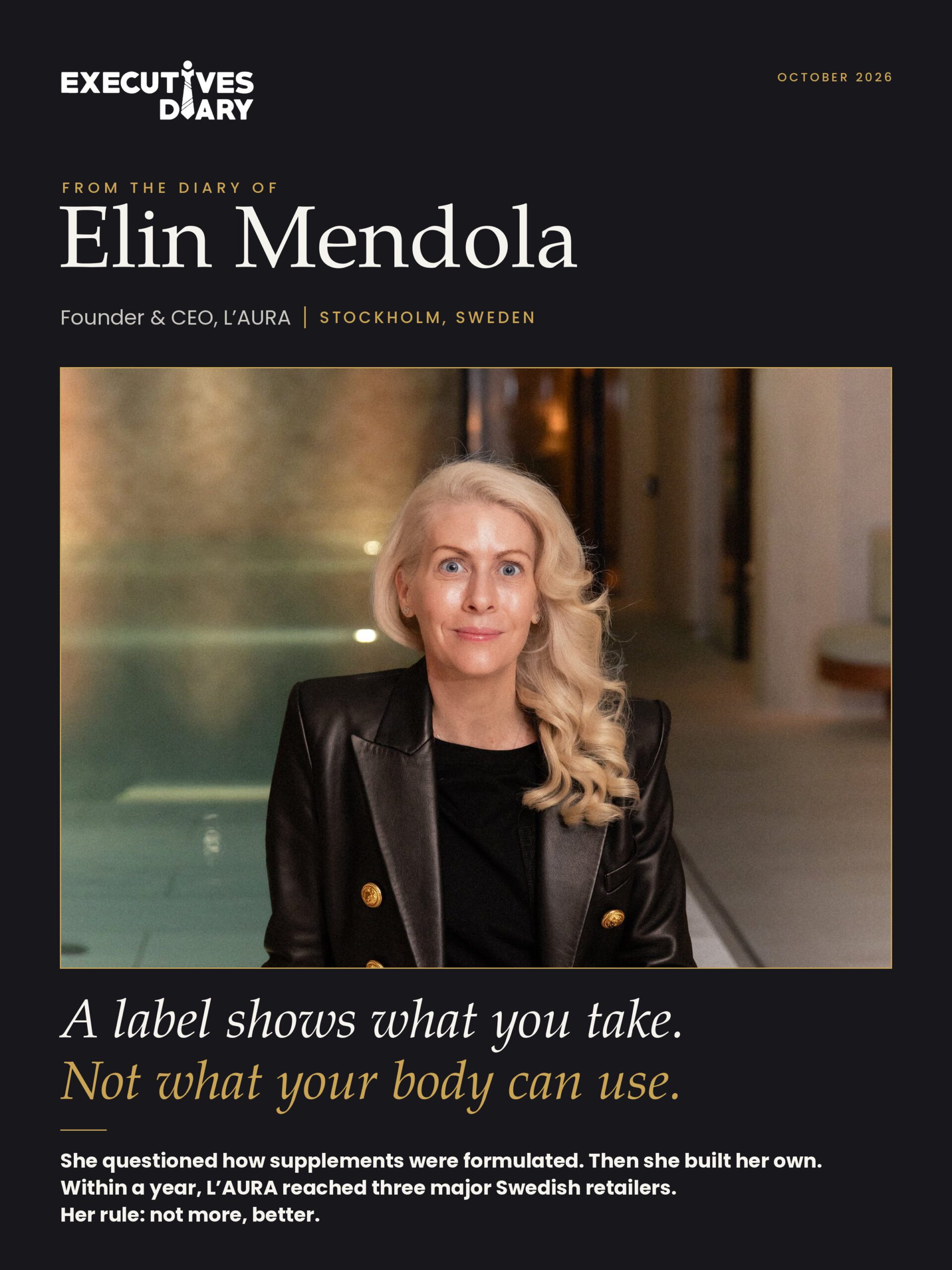
Elin Mendola was taking around ten capsules a day. “That was what made me start thinking about how supplements could be made simpler,” she says. When she started L’AURA, she was, in her words, “thinking very much like a consumer myself,” and at first she looked seriously at gummies. Then she spoke to a manufacturer in Canada about one of the early formulations. “We ended up at four gummies a day just to get the amounts we wanted into the product,” she says. “That didn’t make sense to me. I was trying to simplify the routine, but the format I had chosen was actually making it more complicated. I realised I was starting with the format and trying to make the formulation fit.”
From there she went deeper into formulation, and then into absorption and delivery. She spoke to a lot of different manufacturers, and that was how she found liposomal technology. The way she approached product development changed with it. “Instead of asking what format would be easiest or most appealing,” she says, “I started asking what we actually wanted to deliver, and then how we could make that as simple as possible for someone to take every day.”
L’AURA, the Swedish women’s wellness brand she founded in 2025 and launched in January 2026, develops liposomal supplements for women with a focus on formulation, delivery and simplicity. They come as liquids. Magnesium Complex, one of its two newest products, is a liposomal liquid shot combining three magnesium forms, with 1,510 mg of magnesium compounds providing 185 mg of elemental magnesium, alongside vitamin C. Within its first year the brand has secured listings with three major Swedish health retailers, MEDS, Apohem and Apotea, alongside its own online store, and, she says, “we’re seeing women come back and buy from us again.”
What Goes Into a Liquid Shot
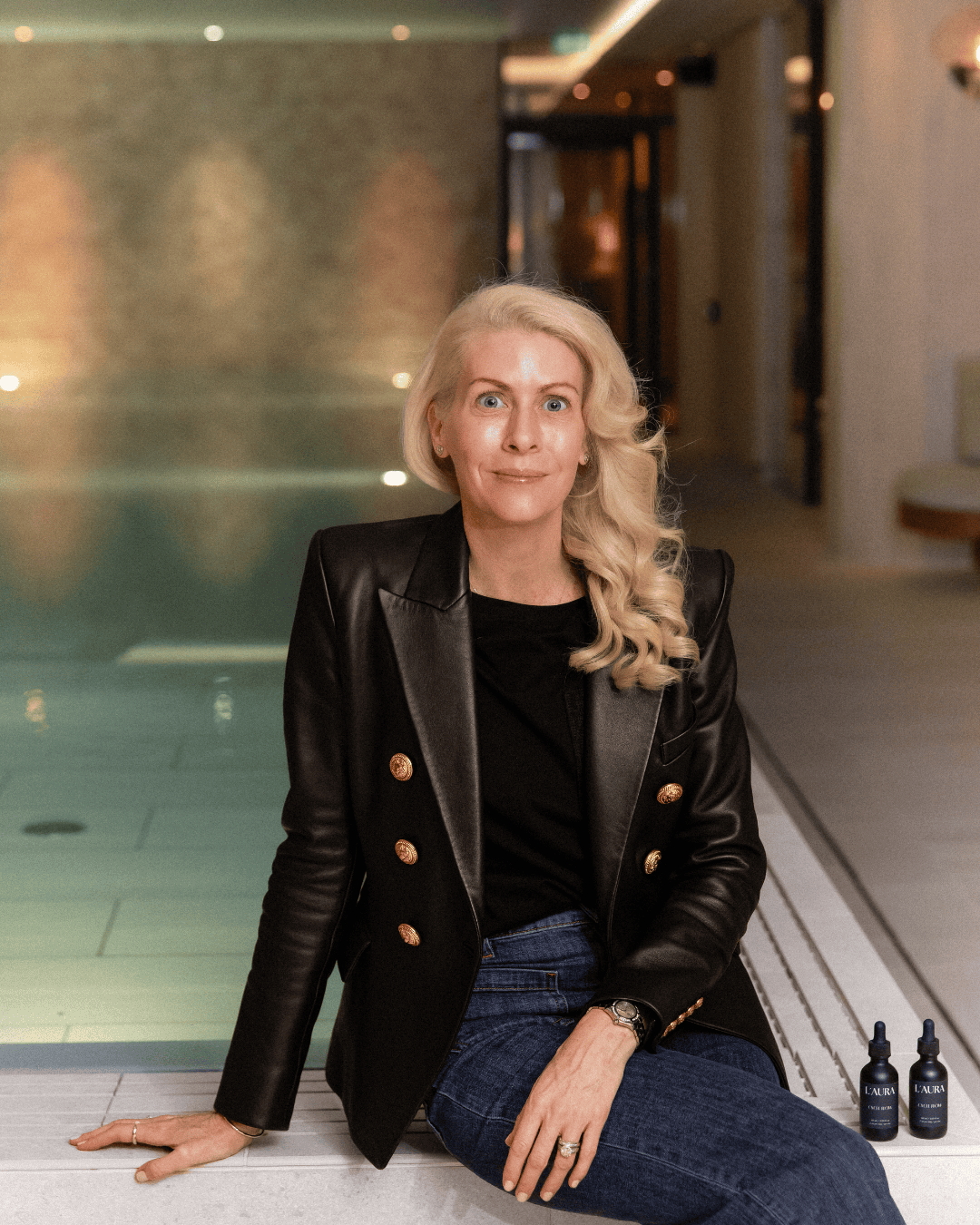
She has described L’AURA as a brand “built around delivery, not just dosage.” In practice, she says, “it starts with understanding what we want the product to do, and then building the formulation around that. I’m not interested in pushing a dose higher just because it looks better on a label. The dose matters, but so do the form of an ingredient, how it is delivered and how the formulation works as a whole.”
The two products that landed in September show what that looks like on a shelf. For Magnesium Complex, she chose a combination of three magnesium forms in a liposomal liquid shot. For D3+K2, she chose vegan algal D3V® together with VitaMK7® K2 MK-7, again in a liposomal liquid format. “Different products. Same philosophy,” she wrote when they launched. “I don’t think the future of supplements is about fitting as many ingredients as possible into one product or chasing the biggest number on the front of the pack.”
I’m not interested in pushing a dose higher just because it looks better on a label.
“With every product, I keep coming back to the same question: are we making this better, or are we simply adding more? That usually tells me whether something belongs in the formulation or not,” she says. In the post announcing the two launches, she put it in three words: “Not more. Better.”
She applies the same argument to the industry she is building in.
What the Front of the Pack Leaves Out
The supplement industry, she has written, is “focusing on the wrong metrics”: more milligrams, more ingredients, higher doses. As she says, “Because what’s on the label only tells you what you take. The more important questions are: what form is it in, how is it formulated, and how much of it can your body actually absorb and use?”
She recognizes that pattern in her own habits. For years, she says, she bought brands she knew and added things to her routine when someone recommended them or she felt she needed something. “I never really questioned the form of an ingredient, the quality or how it was delivered.” Now she notices how often buyers are asked to judge a product by what is easiest to see: how many ingredients it contains, how high the number on the label is, what format it comes in.
Those things are easy to compare, but they don’t necessarily tell you whether a product is well formulated.
Watching gummies grow as a category, she wrote, made her think about a much bigger issue. “I don’t think this is a gummy problem. It’s an industry problem,” she wrote. In her answers she explains what she means. “I don’t think gummies are bad. The problem is when the format, the number or the ingredient count becomes the reason for the product, rather than starting with what you’re actually trying to formulate and why.”
As someone building a supplement brand, she wrote, “I think we have a responsibility here. Not to convince people that one format is always better than another. But to give them enough understanding to ask better questions.” She listed five: “What am I taking? Why am I taking it? What form is it in? What is actually in this product? And why was it formulated this way?”
Behind the fourth question, what is actually in this product, sits the question of quality.
Everything Behind the Label
When she reposted a post about product testing by the US manufacturer NOW Foods, she added a comment of her own. “It’s easy to talk about ingredients, dosages and what looks good on a label. But quality is everything that happens behind it. The formulation. The raw materials. The manufacturing. The testing. The stability.” And: “Consumers should be able to trust that what they’re buying is actually what they’re getting.”
Consumers should be able to trust that what they’re buying is actually what they’re getting.
NOW’s own published results, from vitamin C gummies bought on Amazon.com in June 2026, found that of 25 brands whose labeling raised questions, only 13 met their label claim for vitamin C. The five established brands tested alongside them all passed. In Sweden, the national food agency, Livsmedelsverket, states in its 2023 to 2025 control objective for plant-based supplements that unauthorized substances and plants turn up consistently in supplements on the Swedish market, to a large extent in online sales.
“As a founder,” she wrote, “you have to take responsibility for all of it.” She came to that responsibility from operations, not from supplements.
Before L’AURA
I didn’t come into this category as a supplement expert. I came in as a consumer with years of experience building businesses, leading teams and working with brands and consumers.
Before founding L’AURA, Elin held senior leadership positions at Expedia Group, World’s Sports Group and Baby Mam, where she gained extensive experience in building businesses, leading teams and driving growth.
It was through Women at Expedia’s Leading and Learning initiative that she met Lori Hofmann, who helped shape her approach to leadership, particularly how she makes decisions and considers different perspectives. Lori also became an important source of support when Elin transitioned from the corporate world into startup leadership.
One lesson from that time has stayed with her: “You won’t always know if a decision is the right one when you make it, but you still have to make it and keep moving forward.”
“I’m a first-time founder, but I’m not a first-time operator,” she says. What operations taught her is mostly about what happens after a launch.
I’m a first-time founder, but I’m not a first-time operator
Building Trust After the Launch
“I’ve learned that getting something launched is only the beginning,” she says. “You can build a great product and get it onto a shelf, but then you have to give people a reason to choose it, come back to it and eventually recommend it to someone else. That’s much harder.”
A brand doesn’t build trust because it says the right things. It builds trust by doing what it says, consistently.
The product has to deliver, she says, the quality has to be there, the customer experience has to work, and retailers and partners need to be able to rely on you, “and when something goes wrong, you have to deal with it. That’s the part of brand building I think is often underestimated.”
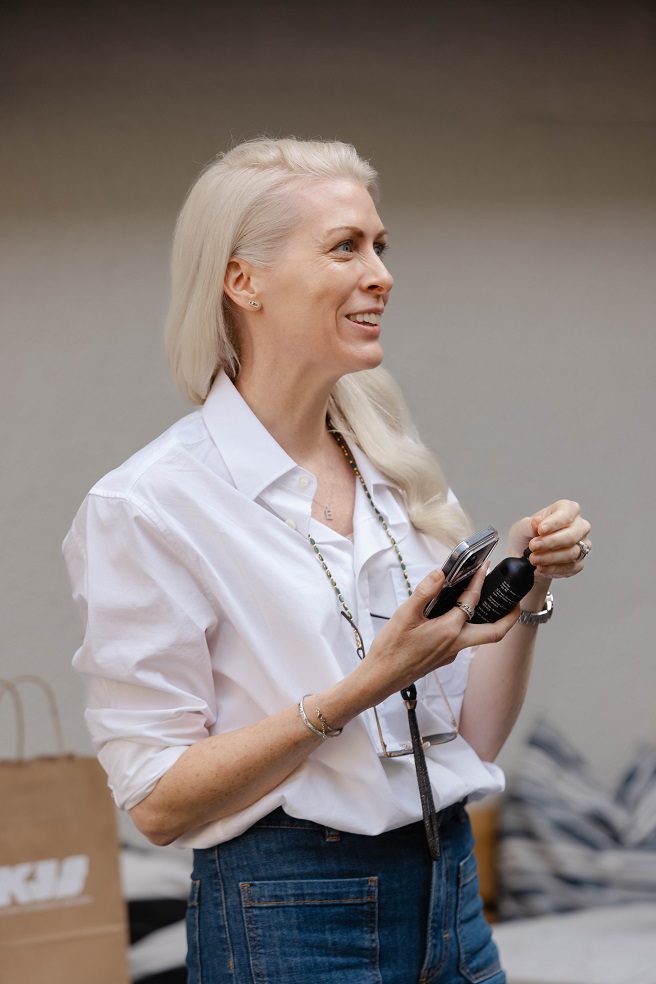
She also spends time with the women she builds for. She brought together 30 women for a morning on the female cycle and how to support it through movement, food, sleep and supplements. “What struck me was that no one was looking for a quick fix,” she wrote afterward. At Your Mind Festival in Stockholm, she spent a day letting people try the products and talking about women’s health, supplements and why absorption matters. “You learn a lot about your brand when you take it offline,” she wrote.
Where Elin Is Now
L’AURA is available through its own online store, MEDS, Apohem and Apotea, and has been featured by Odalisque, ELLE, The Beauty of Innovation and Umenopause. Magnesium Complex and D3+K2 joined the range in September.
“L’AURA launched in January 2026, so I think it’s too early to make big claims,” she says. She counts two early signals: “major retailers see a place for the brand, and consumers are choosing to come back.” Seeing the market begin to validate the idea she started with “is probably the result I’m most proud of so far.”
The next twelve months are about proof. “We’re still a young brand and we definitely don’t have everything figured out,” she says. “Now we need to prove that women choose the products, come back to them, and that what we’re building in Sweden can work in other markets too.” She wants that heard by retailers, partners and investors, “but also the women actually buying and taking supplements.”
Day to day, she says, “I’m very structured. I like routines, lists and knowing what needs to happen next. It gives me the space to focus on the bigger decisions.” Outside work there is her family. “I have two daughters, and life with them is a pretty good counterbalance to founder life.”
A year from now, she says, “I’d like people to see L’AURA as a young brand with a clear point of view, and me as a founder who is willing to question the industry I’m building in.” What comes next, in her own line: “Building L’AURA into a brand that can grow far beyond Sweden, without losing what made us different in the first place.”
Five Lines from Elin’s Diary
- “Not more. Better.”
- “What you take matters. What your body can use matters more.”
- “Why are we constantly asking women to add more?”
- “Building a product is challenging. Building trust is harder.”
- “Four months in, and the questions are getting better. That’s all the signal I need.”
Sources
NOW Foods, NOW Tests Vitamin C Gummy Supplements Sold on Amazon, 2026. https://www.nowfoods.com/healthy-living/articles/now-tests-vitamin-c-gummy-supplements-sold-amazon
Livsmedelsverket (Swedish Food Agency), Otillåtna växter och främmande ämnen i växtbaserade kosttillskott, operativt mål 13, 2023 to 2025. https://www.livsmedelsverket.se/foretagande-regler-kontroll/sa-kontrolleras-ditt-foretag/nkp-webben/hitta-operativa-mal-och-aktiviter/livsmedelsverket/otillatna-vaxter-och-frammande-amnen-i-vaxtbaserade-kosttillskott-operativt-mal-13-2023-2025/

