From the Diary of
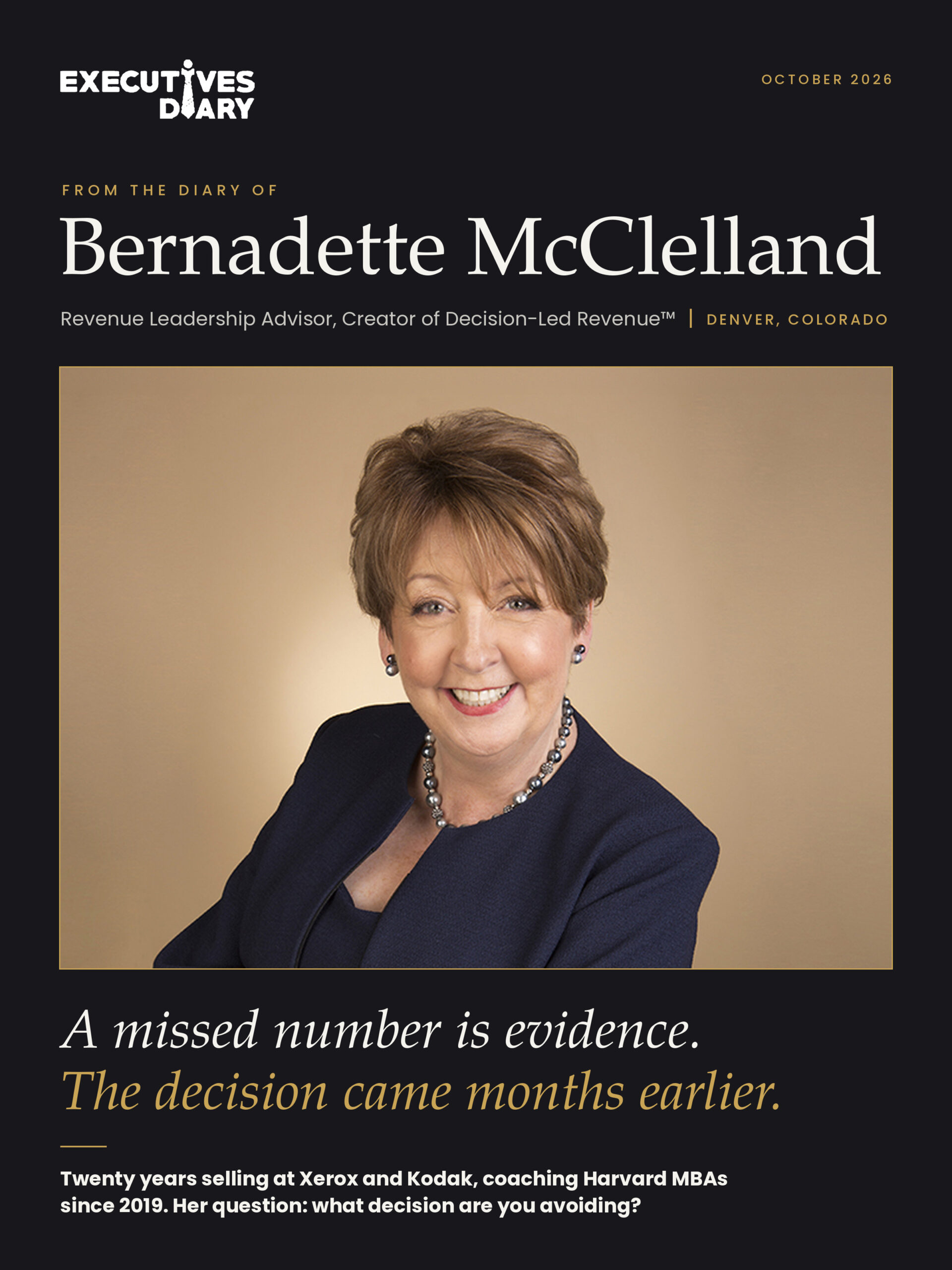
Bernadette McClelland
When a CEO misses the number, the pipeline gets blamed first. Here is the decision that actually broke it.
“Revenue doesn’t start in the pipeline. Revenue follows the leader.”
A CEO who misses the number almost always starts in the same place: the pipeline. Is there enough of it? Is it moving? Can it be trusted? Gartner’s 2020 survey of sales leaders and sellers found fewer than half had high confidence in their own organization’s forecasting accuracy, a gap that has proven durable. Chasing it as a data problem rarely finds the real one.
Bernadette McClelland has coached revenue organizations long enough to know where CEOs look first when a number is missed, and why it is usually the wrong place. “By the time a problem becomes visible in the pipeline, it may have started weeks or months earlier,” she says.
The pipeline is not lying. It is just the last place the truth shows up.
What follows is the diagnostic McClelland now uses instead of “what’s wrong with the pipeline”: a way of tracing a revenue miss back to the decisions, hers, her sales leaders’, her sellers’, and her buyers’, that created it.

What the Pipeline Can’t Tell You
When a number is missed, the instinct is to interrogate the pipeline: is there enough of it, are sellers active enough, has the market shifted. McClelland calls this a reasonable question asked too late in the chain.
Perhaps the business hasn’t made a clear decision about its ideal customer. Perhaps sales and leadership don’t agree on what constitutes a genuinely qualified opportunity. Perhaps sellers are carrying deals they know aren’t real because nobody wants to remove them from the pipeline.
None of that shows up as a pipeline problem until it already is one. McClelland’s read is that revenue is the last domino, not the first. “You can’t actually do revenue,” as she puts it. “What you can do is make the decisions that create it.” A leadership team decides where to focus and what it will tolerate. A sales leader decides who to coach and what belongs in the forecast. Sellers decide which opportunities to pursue and when to walk away. And buyers, she is careful to add, are deciding too, including the decision to do nothing at all.
The Question Behind the Number
McClelland’s answer is a methodology she calls Decision-Led Revenue™, distilled from four decades across sales, sales leadership, business ownership and advisory work. Instead of asking what is wrong with the pipeline, she asks a different question: “What decisions are we making, or avoiding, that are creating the number we’re getting?”
What decisions are we making, or avoiding, that are creating the number we’re getting?
That reframing matters because of what she calls The Gap: the space between something happening and how a leader responds to it. Under pressure, she says, that gap narrows until people react from old patterns and assumptions instead of consciously choosing. The habit she has built to counter it shows up in her own writing practice. Five days a week, she posts what she titles a Revenue Decision Note, a short observation about leadership behavior that ends in a single diagnostic question rather than an answer, the same move she makes with clients in a room.
Truth Over Comfort
The clearest example McClelland gives is a sales organization whose surface problem looked like a pipeline issue. It wasn’t.
As we worked with the team, deals were pulled back from Commit when the buyer evidence didn’t justify them being there. Instead of coaching sellers to defend the opportunity or push it forward, we coached them to better quantify the opportunity and qualify the buyer’s actual level of commitment. That took more time.
For a stretch, the pipeline looked worse, not better. McClelland says that took conviction from the CEO, who chose a smaller, truer number over a larger comfortable one. The payoff, she says, showed up later: results now visible on the board. Her question for leaders in that position isn’t how to grow the pipeline. It’s “what has to be true for an opportunity to deserve to be there.”
The Buyer Nobody Is Coaching For
There is a second decision McClelland thinks most sales training still misses, and it has nothing to do with pipeline hygiene. Working with Harvard Business School MBA candidates since 2019, she has coached students who can build an airtight business case and still lose the deal.
A seller can have the perfect business case and still lose because they haven’t understood how the person sitting opposite them actually makes a decision. What matters to them? What are they protecting? What are they trying to achieve?
The market backs up why that gap has widened. Gartner’s March 2026 sales survey found 67 percent of B2B buyers now prefer a rep-free buying experience, even as a companion Gartner survey the same year found 69 percent still turn to a sales rep to validate AI-generated research before deciding. Buyers may want less selling while still looking to a salesperson to validate what they have learned, a distinction McClelland sees as an opportunity rather than a contradiction. “Sometimes the most commercially intelligent thing you can do is stop trying to convince someone and become curious enough to understand them,” she says.

Forty Years Upstream
McClelland’s case for this work rests on more than one methodology. Her advisory relationship with an Australian manufacturer has run more than a decade, moving over the years from sales positioning into leadership behavior, coaching, and role clarity. The company has posted double-digit growth for five consecutive years and been named Supplier of the Year twice in that span. She is careful about what she claims for it. “I would never claim that one consultant or one methodology caused those results,” she says. “What I can say is that I had a front-row seat to what happens when a business doesn’t wait for growth to break before strengthening the leadership underneath it.”
One client, in a written recommendation, put it this way: “Bernadette has a unique ability to push past surface-level tactics and into the core of what drives real sales conversations and decisions.” Her book on the subject, Sales ≠ Revenue: The Five Leadership Decisions That Do, publishes October 14, 2026, and puts the same argument in front of readers who will never sit in a coaching session with her.
Where Bernadette Is Now
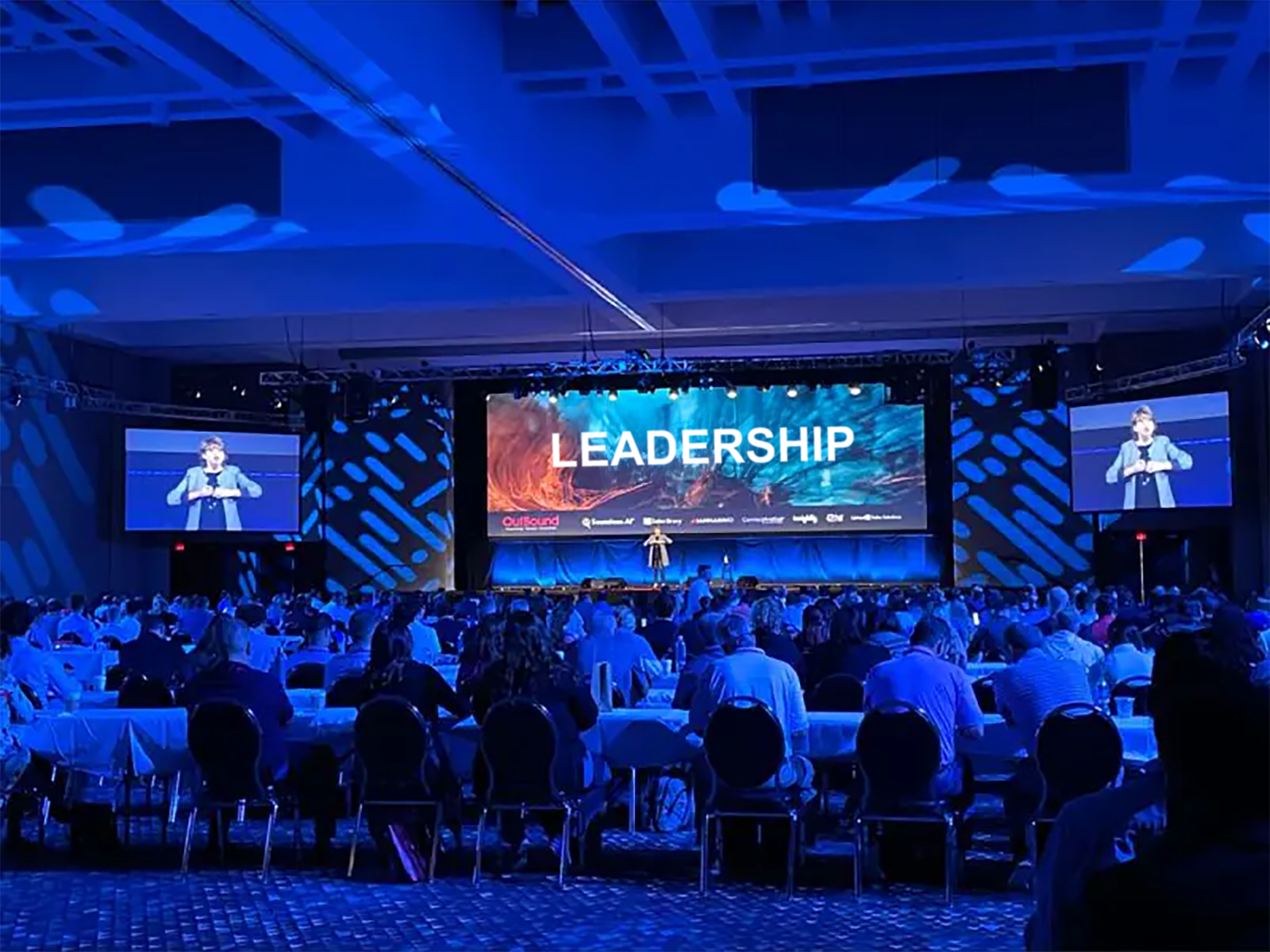
McClelland advises CEOs and revenue leaders while continuing to coach Harvard Business School MBA students on commercial conversations. Outside client work, she hosts The Influence Gap podcast and volunteers as a mentor inside a Colorado state prison’s 32-week reentry program, coaching participants through mock interviews and business-pitch competitions. Her current focus is bringing Decision-Led Revenue™ to a wider audience through her advisory work and her new book, Sales ≠ Revenue.
The Playbook
The Bernadette McClelland Playbook: Diagnosing a Revenue Miss Before It Becomes One
- Ask what decisions were avoided. Before questioning the pipeline, ask what leadership, seller, or buyer decision went unmade upstream.
- Treat the number as evidence. A miss isn’t the problem itself, it’s proof that something happened earlier in the chain.
- Test the evidence before you defend a deal. Have sellers qualify a buyer’s actual commitment rather than argue for why an opportunity should stay in Commit.
- Get curious, not persuasive. Understand what a buyer is protecting and risking before pitching them on value.
- Fix decisions while you’re still growing. The best time to strengthen leadership is before growth breaks, not after a number is missed.