

For healthcare leaders and boards: how to tell when a system that seems to run itself is being held together by its people, and what the organization owes them.
In one service, demand grew faster than the administrative and clinical capacity behind it. Conscientious people made up the difference. They monitored problems after hours, filled gaps and manually prevented failures, and because the work kept getting done, the organization concluded that the model was “basically running itself.” What it missed was that the apparent capacity belonged to the people putting in the extra work, not the system.
Eventually, some of those people left. Others lost their innovative spirit and retreated into rigid “staying in my lane” boundaries: “I will do what I am told, but I am no longer going to work so hard to help you see or understand.” It’s a familiar ending in healthcare. In CDC’s Quality of Worklife data, 46 percent of U.S. health workers reported often feeling burned out in 2022, up from 32 percent in 2018, and 44 percent said they intended to look for a new job, up from 33 percent.
Stephanie Robinson has observed this pattern across healthcare settings in both Canada and the United States. She calls it purpose extraction: what happens when mission-driven organizations continually draw upon the commitment of their most dedicated people until, as she has written, “your belief in the mission and loyalty to the cause becomes a commodity.”
Stephanie Robinson is the co-founder and chief clinical officer of Open Mind Health, a multidisciplinary behavioral-health organization delivering virtual care across more than 30 states.
She has spent more than 25 years as a licensed therapist, educator, consultant and organizational leader across Canada and the U.S., and she now writes about the pattern on Miss Management, her Substack. The readers she most wants are the healthcare executives and board members with the authority to change working conditions. Clinical leaders, she says, will recognize the pattern immediately, but “recognition without the authority to address it can become one more burden they carry toward their own burnout.”
Goodwill in the Staffing Model
The pattern, as she lays it out, starts with a real need. Purpose-driven organizations face urgent needs, limited resources and clients who need them, and the most committed employees step into the gaps because the mission matters to them. “The trouble begins,” she says, “when leadership mistakes what people are willing to do during a difficult period for what the organization is structurally capable of sustaining. Extraordinary effort becomes the baseline, and goodwill quietly becomes part of the staffing model.”
The withdrawal that follows is easy to misread. What is sometimes called “quiet quitting,” she says, “may actually be the visible edge of lost hope and feeling exploited.” When people stop explaining what’s needed to keep going, what’s getting in the way or what might work more efficiently, “the organization has lost more than extra labor. It has lost an early-warning system.” Gallup’s workplace measures point the same way: in the second quarter of 2025, just 28 percent of U.S. employees strongly agreed that their opinions count at work.
The full effect often arrives later, she says, when a key person leaves, is perhaps replaced with two people, and everyone discovers how much judgment, history, relationships and institutional knowledge that person had been holding together. She calls these people “the glue.” But, she adds, “people do not want to be invisible glue, stuck in place simply because that is where they are most needed. They need to know that their part contributes to impact for the whole, is seen and valued by the whole, and that there is room for them to grow.”
“Purpose becomes extractive when an organization treats extraordinary commitment as ordinary capacity and fails to build a sustainable response, through better systems, greater efficiency or additional capacity.”
Stephanie Robinson, MACP, RSW, Co-Founder and Chief Clinical Officer, Open Mind Health
She has come at the pattern from both sides. She has experienced the cost of not seeing it soon enough, she says, “and the different frustration of seeing it but not having the immediate authority to respond effectively or quickly enough.” She has also seen what becomes possible when a mission is translated into infrastructure, and that side of her work goes back to community mental health in Ontario.
From Ontario’s Community Teams to Open Mind Health
Before Open Mind Health, her roles were in Ontario’s community mental health system. At the Canadian Mental Health Association she was a regional service manager, implementing the Flexible Assertive Community Treatment (FACT) interdisciplinary model across mental health, justice and refugee programs. At the Ontario ACT and FACT Association she was first author of the Ontario FACTT Standards, which she describes as helping to “translate the values of multidisciplinary community mental-health care into concrete expectations that programs could implement, assess and improve.”
She spent years developing and observing interdisciplinary teams, and saw firsthand what shared infrastructure, a common language and respect for different disciplines did for people who shared a commitment to high-quality care.
She co-founded Open Mind Health in 2021 and helped scale it to more than 30 states and a peak network of more than 130 providers. She helped build the clinical network, clinical governance, provider systems, quality monitoring and escalation pathways that supported that expansion and care for more than 17,000 clients. The organization reported more than 92 percent good or excellent client satisfaction, with improvements on the PHQ-9 and GAD-7, the standard depression and anxiety questionnaires, comparing favorably with national benchmarks.
To her, those experiences show the distinction at the center of the argument: “commitment may start the work, but governance and systems allow good work to scale and endure and thrive.” Carrying clinical responsibility through that growth also taught her something she separates from what an adviser sees.
Between the Documented Steps
It taught her, she says, “the line where a leader has to dig deep to do what’s right for the people and the organization even when it seems easier and logical to just celebrate the status quo.” The consequences of a weak system or overwhelmed leaders, she adds, do not stay inside a spreadsheet.
“An adviser sees the documented process. The accountable clinical leader sees the work people perform between the documented steps to keep that process from failing.”
Stephanie, Co-Founder and Chief Clinical Officer, Open Mind Health
What appears to be manageable capacity, in her words, “may actually be one person remembering everything the system does not know.” Success can hide the risk, too, because prevention is nearly invisible when it works. She put it this way in a Friday post on LinkedIn: “Congratulations! You survived another week where no planes crashed.” The line she’d most like to be known for comes from the same post: “There are no standing ovations for preventing disasters.”
The hardest moment she describes was realizing that a service was meeting its minimum targets because conscientious people had become the infrastructure. She mapped the invisible work, surfaced the risk and advocated for a more sustainable system. The habit behind that is one she names directly: “I ask what people are doing manually to make a supposedly functioning system work. That is usually where the truth lives.”
Seeing the work is the first half. The second is what leaders do once they’ve seen it.
What Honoring the Effort Looks Like
Her answer starts with naming it honestly, and she offers leaders the words: “This result required extraordinary effort (to hold together, to work around other dysfunction, or to achieve success). It is not our normal capacity, and we will not build future expectations on people continuing to work this way.” From there she sets out four steps, gathered at the end of this piece, with one warning attached: “Do not reward dependability by keeping someone permanently stuck where they are most useful.”
She also asks leaders to become curious when a historically dependable person’s performance or boundaries change. When someone who has spent years catching the balls, including many that were never formally theirs, suddenly drops one, her suggested question is short: “This is unusual for you. What has changed?”
“Curiosity does not remove accountability; it makes accountability more intelligent,” she says. That moment may be an opportunity to re-engage someone. Ethical leadership, in her words, “means doing what is right, not merely what is easiest today,” and over time it produces stronger trust, better retention, preserved knowledge and healthier organizations.
“Extraordinary effort should be recognized, learned from and relieved, not quietly converted into a permanent expectation.”
Stephanie, Co-Founder and Chief Clinical Officer, Open Mind Health
The standard she holds leaders to has two sources she names herself.
Her Father, and Her Clients
Her father often said, “To whom much is given, much is expected.” Leadership taught her to add a line of her own: “when much is given by people, much is also owed to them.”
The other source is her clinical practice with high IQ, gifted and talented high achievers seeking therapy for burnout recovery. She credits them collectively rather than any one person: “their voice has kept me grounded and their commitment to making an impact and transforming experiences into purpose inspires me.”
Asked what colleagues would call very her, she names “bad jokes that cut to the core of an uncomfortable truth.” Their own summary is blunter: “They say I hold their hand and kick them in the ass.”
Where Stephanie Is Now
Stephanie is developing Miss Management, her Substack and leadership identity, into a larger body of work and practical tools for leaders building ethical, sustainable and human-centered organizations. There she explores leadership, organizational culture, purpose extraction and the human patterns beneath workplace life.
Over the next year she wants to give language to a pattern many people recognize but have struggled to name, and to establish purpose extraction as an argument that helps leaders identify and interrupt the pattern before it erodes their culture. She welcomes new readers on Miss Management and new connections on LinkedIn, and she is open to advisory and consulting work with organizations that want to build humane, scalable and operationally sound systems. She would also love to join a healthcare or tech board or advisory.
Outside work, she is happiest near the water, usually writing or reading “and laughing at my own jokes,” or collaborating with interesting thinkers and operational leaders who know how to get things done well.
For the leaders she wants to reach, her case rests on two sentences: “Mission and measurement are not opponents. Good systems protect the mission, and the people carrying it.”
The Stephanie Robinson Playbook: Honoring Extraordinary Effort
Name it honestly. Say that the result took extraordinary effort, that it is not normal capacity, and that future expectations will not be built on people working this way.
Stay curious. Go to the source and seek honest, ongoing feedback.
Make the invisible visible. Identify the system gap and understand exactly what people did to prevent failure or preserve the outcome.
Act. Repair, resource, reprioritize or stop work that cannot be supported, even if that means pausing something that appears successful until the organization can commit to sustaining it.
Recognize and grow. Create meaningful recognition, opportunities or resources, including staffing help or technology, for the people who carried the work.
From the Diary of Stephanie Robinson
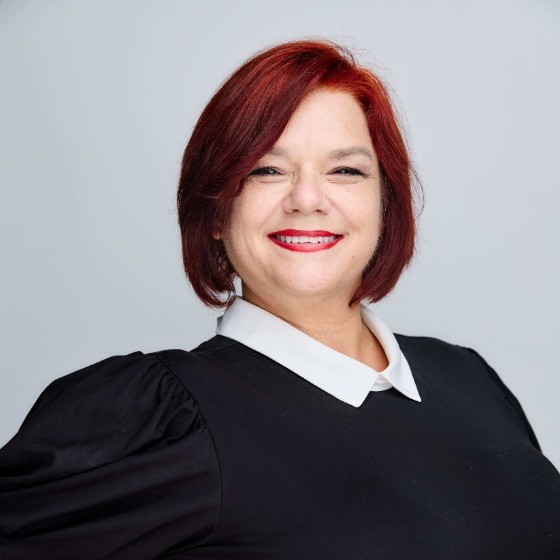
Stephanie Robinson is a Sarasota, Florida-based behavioral health executive and the Co-Founder and Chief Clinical Officer of Open Mind Health.
| Role | Co-Founder and Chief Clinical Officer, Open Mind Health |
| Based in | Sarasota, Florida |
| Previously with | Canadian Mental Health Association (2015 to 2021) |
| Also with | Miss Management, her Substack |
“There are no standing ovations for preventing disasters.”
Editor’s Note
Executives Diary features Stephanie Robinson because she makes an argument about purpose-driven organizations while carrying clinical responsibility herself. She names a pattern many people in healthcare will know, and she tests it against her own record: standards work in Ontario and the clinical systems behind a service in more than 30 states. What convinced the editors is the distinction she draws between the documented process and the work people do between its steps.
Executives Diary, Editorial
