

Why a former Newsweek reporter believes charity communications is a funding job as well as an awareness one, and the platform she’s building for the teams who do it.
In a lot of charities, communications is treated as “nice to have to generate awareness, rather than a central part of the mission to obtain funding.” The founder who wrote that sentence, having worked in non-profit communications herself, says the belief is “costing them greatly.” She has seen what it looks like: communications staff “only hired to write about ‘big moments’ or so overworked that they burn out,” and teams that never have the time to produce storytelling on a consistent basis. She’s seen it most often in small and mid-sized non-profits and social enterprises, and teams at larger organisations have told her they face the same thing.
The sector’s own survey points the same way. In the 2025 Charity Digital Skills Report, almost two-thirds of UK charities named a lack of headspace and capacity as a barrier to moving forward with digital, and 42 per cent said they needed support with storytelling with data.
The founder is Maya Mehrara, a former Newsweek reporter and the CEO and Co-Founder of StoryFoundry AI. With her co-founder and CTO, Agnese Picchio, she’s building a software platform for charity, NGO and public sector communications teams. It’s designed to use AI to strengthen their narratives, verify their claims, track what actually drives engagement and match organisations to the right donors, and it’s being prepared for a pilot programme and launch in the UK. The first thing she’d tell a communications team that can’t prove what it’s claiming is short: “lead with the evidence, and not with the story.” The story still matters. What she means, she says, is that “the stories need to be grounded in truth.”
The Charity That Wanted Smaller Donors
The clearest example Maya gives comes from a charity she worked with, which isn’t named here. Its fundraising strategy ran through one dedicated fundraiser, focused on larger foundations, and the organisation thought that was working. The person Maya spoke with there wanted to shift more weight toward individual and smaller donors, “because that’s where she saw room to build deeper relationships.”
What stood in the way, Maya says, “wasn’t donor interest, but that the storytelling content donors respond to takes significant time and manpower to produce, and the org doesn’t have that capacity.”
What changed was how often the charity published. It began putting out social content about its impact once or twice a week instead of once or twice a month, with one or two blogs a month and, for a period, a monthly newsletter, all in support of its fundraising campaigns. The result, she says, was that both crowdfunding campaigns exceeded their original targets.
It’s the gap she has written about since she started the company: “teams doing extraordinary work with almost no support to communicate it well.”
Stories Grounded in Truth
For Maya, the evidence comes first and the story carries it. “The story is the format in which the evidence is delivered,” she says, “but facts and truth are key to fostering trust with donors (and other supporting stakeholders). As a former journalist, hard evidence that you can back up is what I believe is central to all forms of storytelling in order to foster trust and empathy in audiences.” Leading with the evidence isn’t a case against storytelling. As she puts it, “research has shown storytelling is an effective way of fundraising for mission-driven organisations.”
The regulator’s research sits under the same idea. The Charity Commission’s 2026 study of public trust found that money reaching the end cause is still the strongest driver of trust in charities, and that donors are looking for greater visibility of impact.
That belief is built into StoryFoundry AI. At its core is what Maya calls a claim-evidence architecture, which she says “is something we created based on my background as a journalist.” It’s also the line she most wants to own:
“I am building StoryFoundry AI to simplify communicating with donors by allowing organisations to create evidence-backed stories that are both trustworthy and powerful.”
Maya Mehrara, CEO and Co-Founder, StoryFoundry AI
Her own route to that view ran through several newsrooms.
From London Newsrooms to Charity Communications
Maya moved to London, as she wrote, “at 23 years old with just my two cats, two suitcases, and a dream to create a life for myself in a new country.” Navigating the visa process, building a career in media and making a home “has not been easy,” she wrote, “but it’s been really rewarding.”
She worked across journalism, public relations and digital media, at Pumpkin PR, News Associates and Newsweek, and her bylines include BUST Magazine and MyLondon. As a news reporter at Newsweek in London she published four or five stories a day, moved from the Live News desk to the Global desk within four months, and had a story in print less than six months into the role. As she puts it on her profile, her “transatlantic experiences between the U.S. and U.K.” shape her “research-driven storytelling.”
She then moved from journalism into non-profit communications, and that’s where, as she has written, she saw the gap “up close.” Her freelance communications and PR work for a foundation, from press releases to an annual report, is part of the background she brings to running the company.
Then there is the research.
A Dissertation Written Alongside a Business
The one thing Maya says she does that most people in her field don’t is combine academic, quantitative research with building a business, early on. Her dissertation for her MSc in Marketing and Digital Communications at Queen Mary University of London tested whether interactive storytelling makes people more likely to give than traditional storytelling, and whether that effect differs between Gen Z and Gen X donors. “I was still building the backbone of my business while writing my dissertation and doing my quantitative research,” she says.
The survey was open to people in the UK and the US, and she went back to her network more than once to get it right, including a final call on LinkedIn for more male participants aged 18 to 29 or 46 to 61. It was, she wrote, “one last push to balance my research sample before I close my survey.”
Asking other people for what she doesn’t know is, by her account, how she works everywhere.
Building With Other People
“One thing I do, both in my work and personal life, is collaborate with others whenever I can,” Maya says. “While I have my expertise, I am far from an expert in most subjects.”
At StoryFoundry AI that means Agnese as co-founder and CTO, and two advisers now being onboarded, “so that we can build a team with knowledge of communications for fundraising in different global areas.” It also means customer discovery interviews, which she has kept running while building the platform. She wrote about why:
“Building StoryFoundry AI has taught me that no amount of planning, no perfectly polished deck, no tenth rewrite of the business plan, replaces an actual conversation with the person you’re building for.”
Maya, CEO and Co-Founder, StoryFoundry AI
She says she can’t assume, from her own work in non-profit communications, that she understands every challenge communications professionals face at other organisations, and that “these conversations really shaped how I built the business, and in turn, our product itself.”
The person she names as believing in her before she had earned it is Amarachi Clarke, a mentor she was matched with through Queen Mary. Amarachi connected her to NGO and public sector professionals for customer discovery interviews and for distributing the survey, helped her work out which parts of the proof of concept to build first, and coached her on how to pitch. “Amarachi has been in my corner since day 1, prior to when I earned it,” Maya says, “and I can’t thank her enough for her support.”
Where Maya Is Now
Maya is preparing StoryFoundry AI for its pilot programme and launch, and raising a £250K pre-seed round. She’s part of Cohort 10 of the Female Founders Rise Fundraising Accelerator, an eight-week programme, and says she is “using what I am learning in real time to begin conversations with angel investors, apply for grants, and pitch competitions to secure the funding that we need.”
She has also received endorsement from Innovator International to build StoryFoundry AI in the UK. Her route to the Innovator Founder Visa, she wrote, “was anything but straightforward.” She wrote about the endorsement at the time:
“Everyone in the entrepreneur world has told me not to make your business your baby, but truly, StoryFoundry AI feels like my baby, so this is a big moment.”
Maya, CEO and Co-Founder, StoryFoundry AI
She wants to hear from charity chief executives, heads of communications and investors, and her ask is the one she has already made in public: “If you know a mission-driven org that needs this, or an angel investor who backs founders solving real problems, let’s talk.” What’s next, in her words: “Launching StoryFoundry AI in the UK and onboarding our first customers.”
Outside work, this year has been about balance. “As a workaholic,” she has been making time for reading, journaling and playing music. “It’s hard to do as a founder,” she says, “but so necessary!”
What she hopes a reader takes away is that the mission is genuine: a tool that saves communications teams valuable time, so that, as she puts it, “we will help them gain more funding to focus on doing the vital work they do.”
Five Lines from Maya’s Diary
“Lead with the evidence, and not with the story.”
“The story is the format in which the evidence is delivered.”
“We want to make sure we’re solving real problems, not the ones we assume exist.”
“Every bit of feedback helps us build something that actually earns a place in your workflow.”
“My route to the Innovator Founder Visa was anything but straightforward, and I am so grateful for it.”
From the Diary of Maya Mehrara
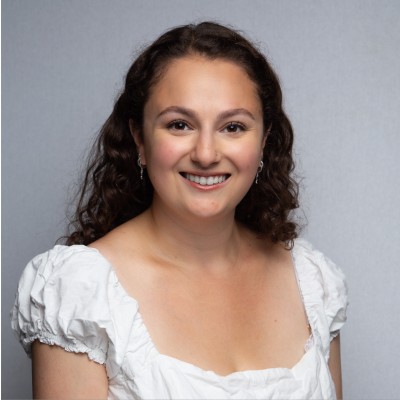
Maya Mehrara is a London-based former journalist and the CEO and Co-Founder of StoryFoundry AI.
| Role | CEO and Co-Founder, StoryFoundry AI |
| Based in | London, United Kingdom |
| Previously with | Newsweek, News Reporter (2024 to 2025) |
| Also with | Female Founders Rise Fundraising Accelerator, Cohort 10 |
“I am building StoryFoundry AI to simplify communicating with donors by allowing organisations to create evidence-backed stories that are both trustworthy and powerful.”
Editor’s Note
Executives Diary features Maya Mehrara because her argument about charity communications comes from two places she has worked: the newsroom and non-profit communications. She is building StoryFoundry AI around that argument while testing a related question in her own research. What convinced the editors is the case she gives, in which the problem was capacity rather than donor interest, and her practice of talking to the people she is building for before deciding what to build.
Executives Diary, Editorial
