

From the Diary of
Michelle Chen, Ph.D.
The medicine works. The system delivering it doesn’t.
“Turning scientific innovation into better therapies, not just smarter algorithms.”
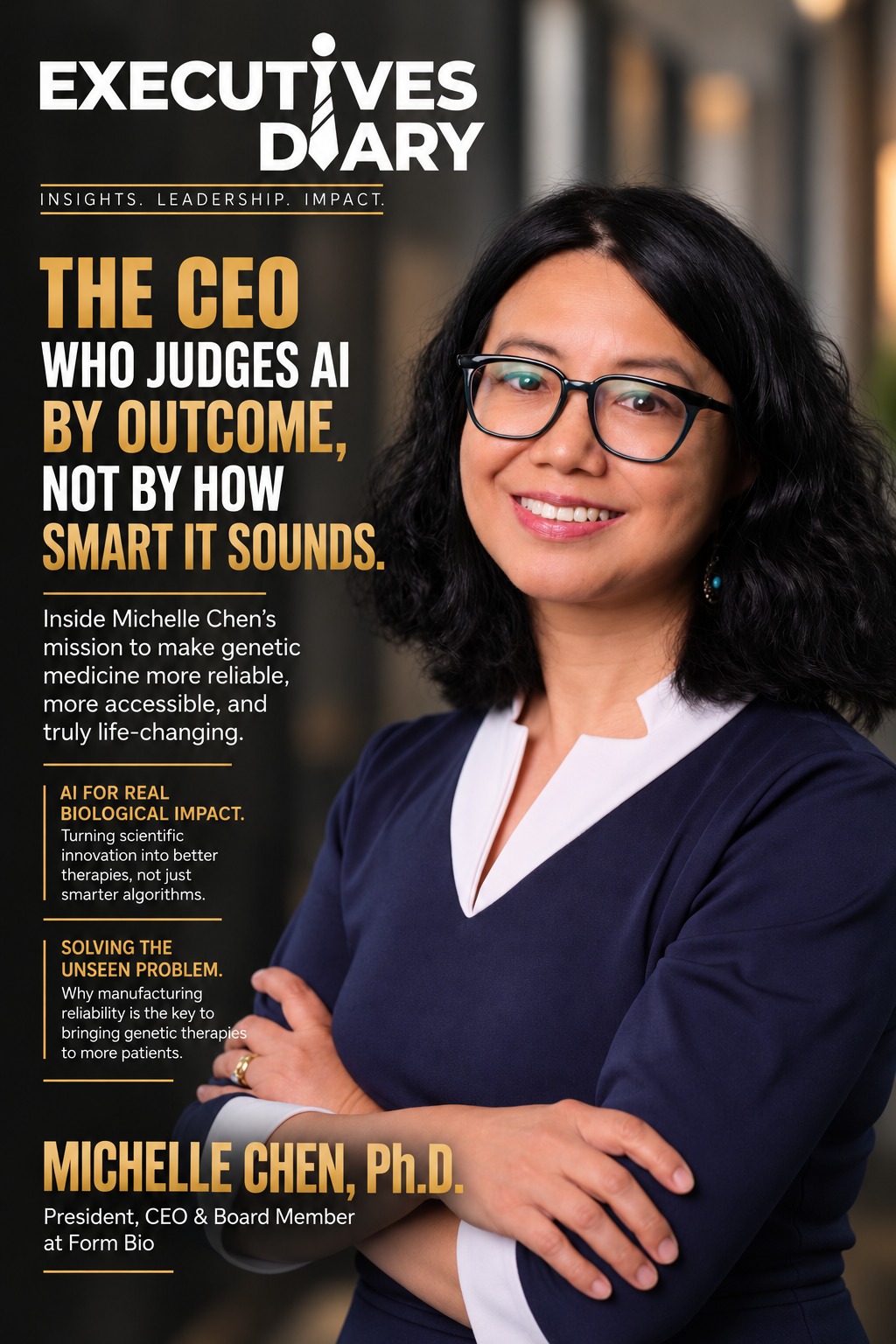
Gene therapies can cost $2 million to $3 million per dose. Yet even at that price, only about 30% of manufactured gene therapy material may be usable, while manufacturing and quality issues account for a significant share of FDA rejections. The challenge is not simply discovering therapies that work. It is designing and manufacturing them consistently enough to reach patients.
That is the problem Michelle Chen, Ph.D. has chosen to confront.
After more than two decades across biotechnology, pharmaceutical development, corporate strategy, and AI-driven drug discovery, Chen has seen the same gap from almost every direction: promising science can still fail when the systems required to design, manufacture, and validate it cannot keep pace. For her, the next breakthrough in genetic medicine will not come from making AI sound smarter. It will come from using it to produce better biological outcomes, improve manufacturing reliability, and reduce the points where good therapies can break down.

Where Rigor Met Its Limits
Chen’s path started the way most scientific careers do, with a question she couldn’t let go of. She earned her Ph.D. in biochemistry at the University of Washington, then completed postdoctoral research at UCSF, training that taught her how to challenge assumptions and trust evidence over instinct.
Then came the part her doctorate never covered. Promoted early to lead an R&D team of scientists more experienced than she was, Chen discovered that expertise and leadership are not the same skill. “Science taught me rigor. Leadership taught me empathy, humility, and the importance of people,” she says. It is a distinction she has carried into every role since.
Science taught me rigor. Leadership taught me empathy, humility, and the importance of people.
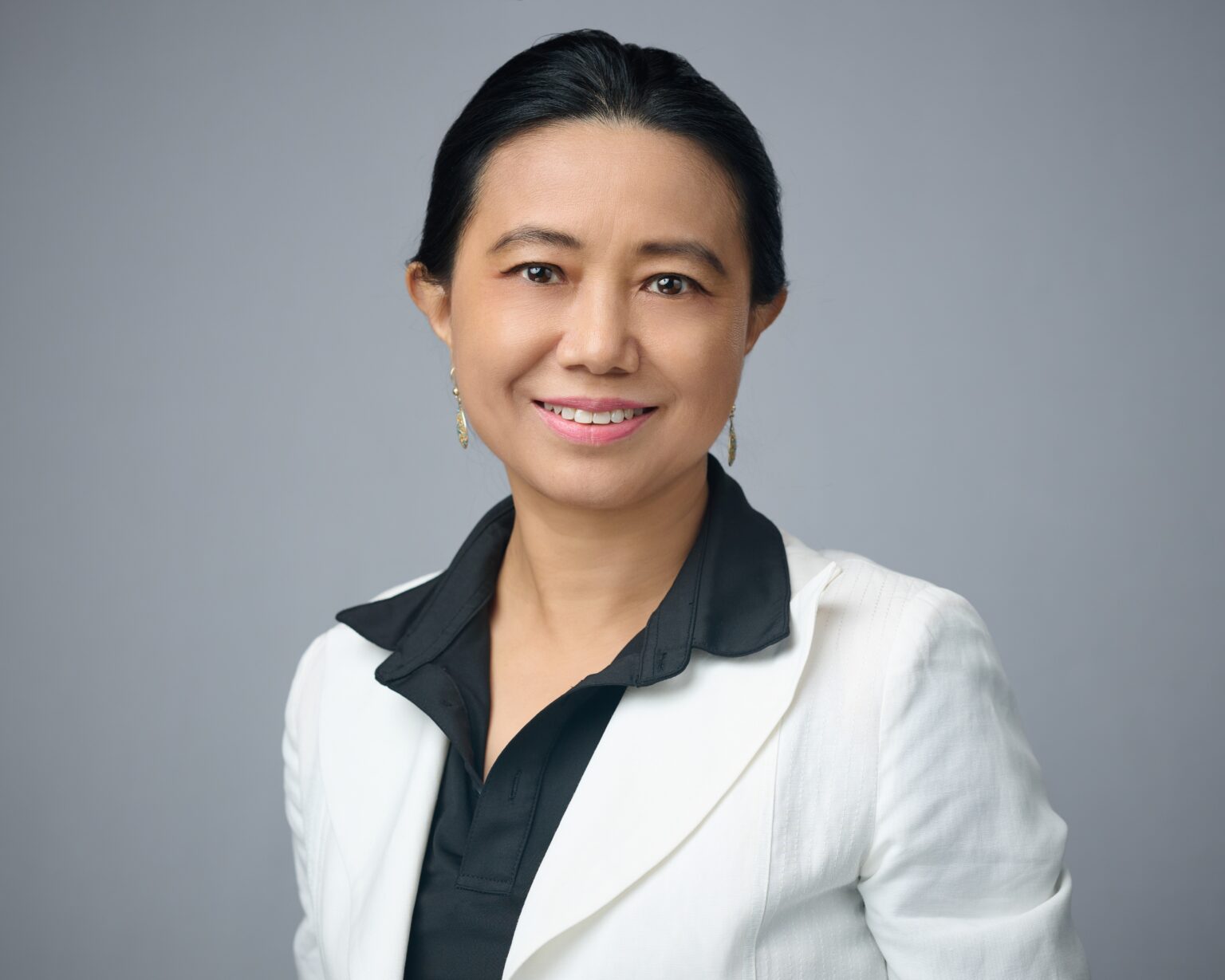
What followed was a tour through nearly every major wave of modern biotechnology. She helped advance fully human antibody technology at Abgenix, worked on DNA microarrays at Agilent, real-time PCR at Applied Biosystems, and rare disease therapies at BioMarin. She moved into business development at Roche and Merck, learning how the buyers of innovation actually think. She helped steer WuXi Biologics through global expansion and M&A, then joined Insilico Medicine as Chief Business Officer during the rise of AI-driven drug discovery, guiding partnerships through the company’s path toward IPO.
Each chapter added a layer. By the time she arrived at Form Bio, Chen wasn’t just a scientist who understood business, or an executive who understood the lab. She was someone who had watched, from nearly every angle, where breakthroughs go to die.
Where the Breakthroughs Actually Die
Ask Chen what’s wrong with her industry and she won’t blame the science. She’ll point somewhere less glamorous. Roughly 74 percent of all FDA rejections trace back to quality and manufacturing failures rather than clinical shortcomings and in gene and cell therapy the pattern is even sharper: among approved CGTs that first received a complete response letter, 86 percent of the individual deficiencies listed were manufacturing-related.
“That’s not a scientific problem. It’s a systems problem,” Chen says, describing why Form Bio built FormManufacturingSuite, a platform that pairs AI-driven construct design with genomic batch analytics so developers can catch failure points in silico, long before a single dose reaches production. It’s a direct answer to a gap she watched swallow promising therapies for years.
That same instinct shapes how she talks about artificial intelligence itself. In an industry racing to announce the next impressive model, Chen keeps returning to a much blunter standard. “We do not measure AI by how sophisticated an algorithm sounds. We measure it by whether it produces better biological outcomes,” she says. Everything else, to her, is noise.
We do not measure AI by how sophisticated an algorithm sounds. We measure it by whether it produces better biological outcomes.
She saw that principle in action at a company hackathon she co-organized last July. Chen walked in expecting the caffeine-fueled, sleep-deprived spectacle she’d always pictured from the outside. What she found instead were scientists, engineers, and AI researchers building working prototypes in 48 hours that would normally take months. “I never imagined that one day I’d be participating in, and judging, a hackathon,” she admits, and the surprise in her voice says as much about her as the story itself does.
Underneath the technology sits a leadership style built on the same lesson she learned as a young manager. “Leadership is not about doing more work yourself. It is about creating a shared vision and enabling an organization to accomplish more than any individual could alone,” she says. At Form Bio, that means treating scientific rigor and human trust as equally non-negotiable, not competing priorities.
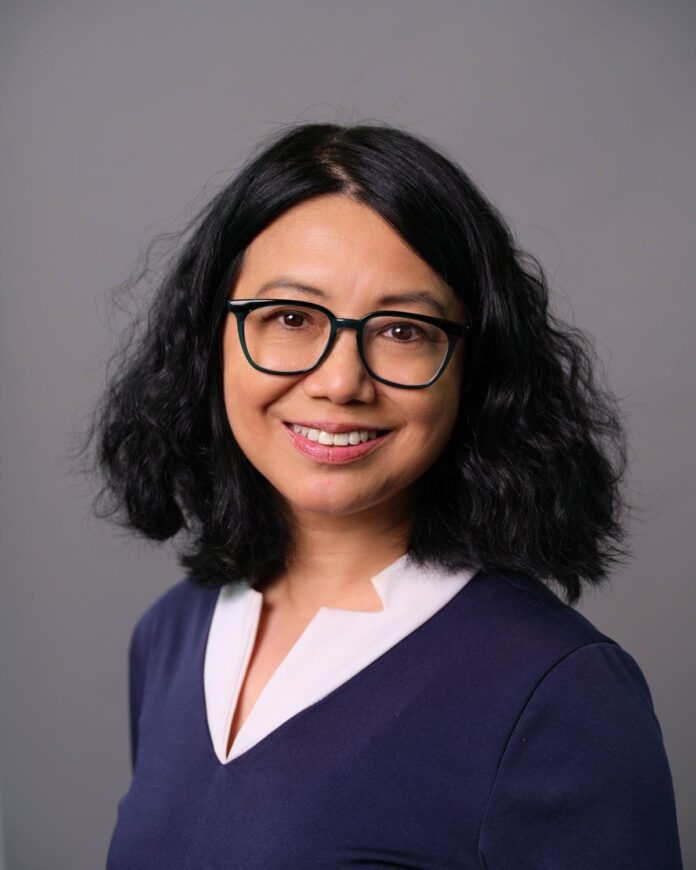
Leadership is not about doing more work yourself. It is about creating a shared vision and enabling an organization to accomplish more than any individual could alone.
The Chen Playbook: 5 Lessons
- Judge the tool by the outcome, not the pitch. An algorithm’s sophistication means nothing if it doesn’t produce a measurably better result in the real world.
- Leadership is a different skill than expertise, and it has to be learned separately. Being the smartest person in the room doesn’t make you the person that room should follow.
- Find the unglamorous point of failure. The biggest breakthroughs are often blocked not by bad science but by the boring systems nobody wants to fix.
- Build teams that speak different technical languages on purpose. The friction between disciplines is where the sharpest solutions tend to appear.
- Stay skeptical of your own hype. The executives who last are the ones willing to change their minds when the evidence tells them to.
Full Circle
Chen has built her career, and now her company, around narrowing that chance down to something closer to certainty. Not by making the science flashier, but by making the unglamorous parts of it finally trustworthy.
The therapies that change lives were never the problem. It was everything standing between the idea and the patient. Michelle Chen has spent more than two decades learning exactly where that gap lives, and she still isn’t finished closing it.
Michelle Chen, Ph.D. is the President and, CEO, and Board Member of Form Bio, based in the San Francisco Bay Area. She leads the company’s AI-driven strategy for genetic medicine design and genome engineering, serving biopharma developers and other partners working across gene therapy, cell therapy, and synthetic biology. To connect with Michelle or learn more, visit her LinkedIn profile
