
Jill Tarallo
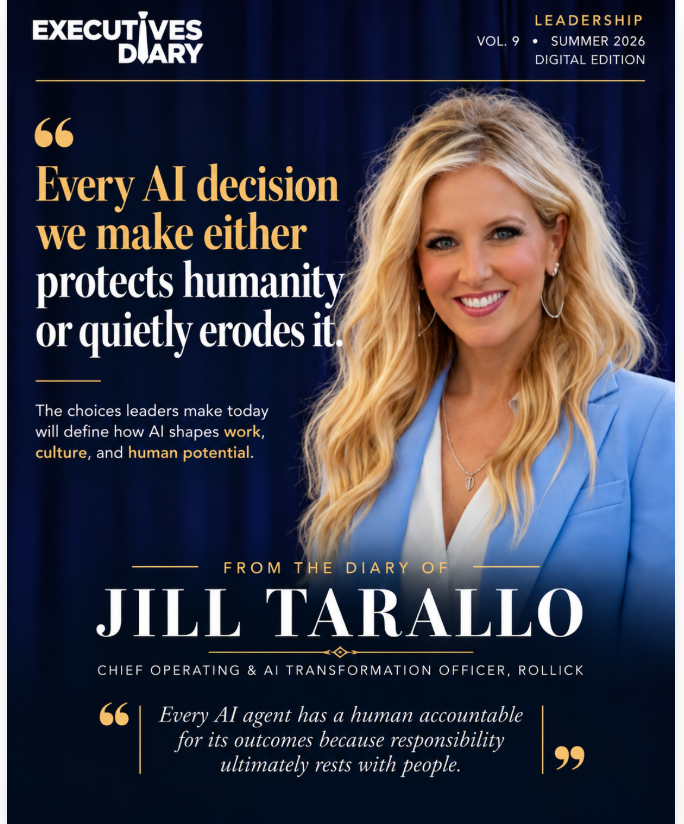
Every AI decision we make either protects humanity or quietly erodes it.Jill Tarallo has put autonomous agents on Rollick’s org chart. Every one of them has a human accountable for its outcomes.
Make the decision, support the decision, or stay outside it entirely. Before an AI agent goes live inside Rollick, it is assigned one of those three roles, and a human is accountable for what it produces. Jill Tarallo built the sequence in that order deliberately. “Most AI transformations start with the technology. Ours began with the work, the actual problem we were trying to solve,” she says. The sequence reflects a core principle in Tarallo’s approach: accountability is designed into the workflow from the beginning.
Jill Tarallo is Chief Operating and AI Transformation Officer at Rollick, a SaaS company named to the Inc. 5000 three consecutive years.
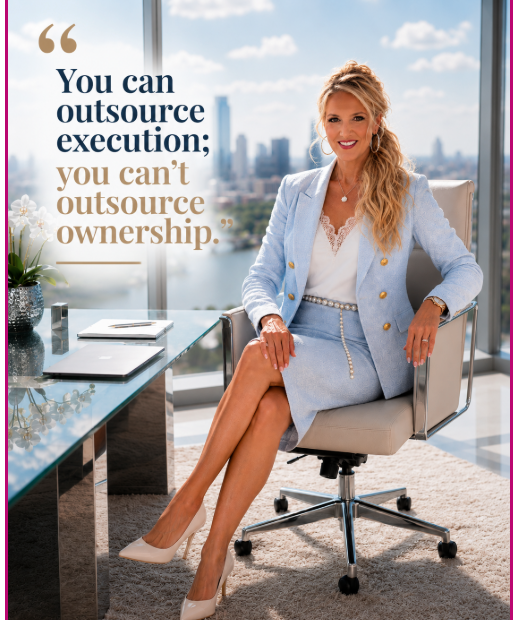
You Can Outsource Execution; You Can’t Outsource Ownership
Capability can be bought. Ownership cannot. That distinction is the load-bearing wall under Tarallo’s operating model, and the clearest test of it at Rollick was a decision about people rather than software.
The company needed engineering capacity, and the conventional route was sitting there: contract the work to a firm that supplies developers on demand. Tarallo does not dismiss that route. “Outsourcing is a valuable strategy when you need specialized expertise, flexibility, or speed. But when a capability becomes central to your competitive advantage, it eventually has to become part of your company,” she says. Rollick built instead, standing up its own technology center in Hyderabad.
What she was building was more than additional capacity. “We didn’t want a team writing code for us. We wanted a team building the future with us.” The mechanism was a deliberate transfer of context rather than a transfer of tickets, and the shift she describes is in what the team became willing to do. “By hiring directly, investing in our people, creating a shared culture, and giving everyone the business context behind the work, they became more than developers. They became innovators, problem-solvers, and leaders who were personally invested in our success,” Tarallo says.
“Institutional knowledge, leadership, culture, and innovation don’t appear on a balance sheet, but they become some of a company’s most valuable assets over time.”
ARCHITECTING HUMAN-AI COLLABORATION
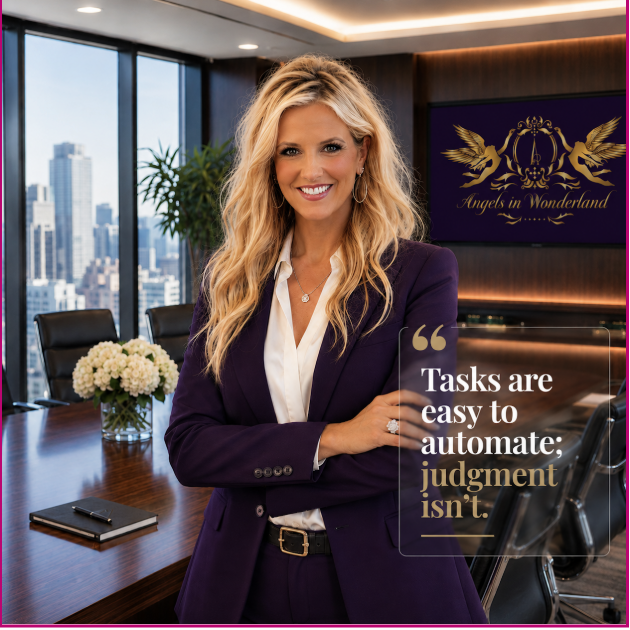
Agents reached the Rollick org chart under that same rule, and the order of operations is what separates it from a tooling rollout. “Before we introduce an AI agent, we break a function down into decisions, not tasks. Tasks are easy to automate; judgment isn’t,” Tarallo says. Only once the decisions are defined do we determine the role AI should play in each: the agent makes the decision, supports it, or stays outside it entirely.
The classification becomes part of the organizational design itself. “Every organization is now architecting three kinds of work: human-led, AI-led, and human-AI collaboration. Competitive advantage comes from intentionally designing for each.”
AI agents are integrated into the organization alongside the people they augment—increasing capacity, accelerating execution, and surfacing insights—while humans provide context, judgment, and accountability. “Every AI agent has a human accountable for its outcomes because responsibility ultimately rests with people,” Tarallo says. That accountability is designed into the organization from the beginning. It is a precondition of deployment.
What a COO Can Learn From an Org Chart That Includes AI Agents
For leaders looking to move AI from experimentation to meaningful business impact, the starting point is intentional design. Determine where work should remain human-led, where AI can lead, and where human-AI collaboration creates the greatest value. Then define the role AI should play in each decision and who remains accountable for the outcome. The following principles provide a practical framework for putting that approach into action.
Key Takeaways / Playbook
- First, decompose the function by decision rather than by task. Tasks are often the most obvious automation candidates, but they don’t reveal where judgment, context, and decision-making shape the work. Start by identifying the decisions that drive the function and the outcomes they influence.
- Second, define AI’s role in each decision and establish human accountability from the start. Determine whether AI should make the decision, support it, or remain outside it entirely. Assigning clear accountability at the same time ensures everyone understands how the decision will be made and who is responsible for the outcome.
- Third, look beyond the immediate problem to understand what produced it. Tarallo uses a single question to shift the focus: “Why did the system produce this outcome?” Solving the immediate issue is important, but the greater opportunity is identifying what needs to change in the underlying process, structure, or decision-making. “Solving today’s issue matters. Improving the system changes tomorrow’s results.” That principle becomes increasingly important as leaders take on greater responsibility. “As responsibility grows, the biggest mindset shift is recognizing that your greatest contribution comes from designing an organization where exceptional people can consistently do their best work.” Systems thinking is part of that responsibility: creating the conditions for better decisions, stronger execution, and better outcomes to happen consistently.
- Fourth, celebrate the behaviors that create success. Tarallo’s Bell Principle recognizes that meaningful wins are rarely the result of one person’s contribution. “The bell isn’t rung because one person closed a deal or completed a project. It’s rung because people across the organization chose excellence together. The bell celebrates the hundreds of decisions, acts of collaboration, and moments of accountability that made the outcome possible,” Tarallo states. “Culture is built in the moments, not the mission statement. What leaders celebrate becomes what teams repeat.”
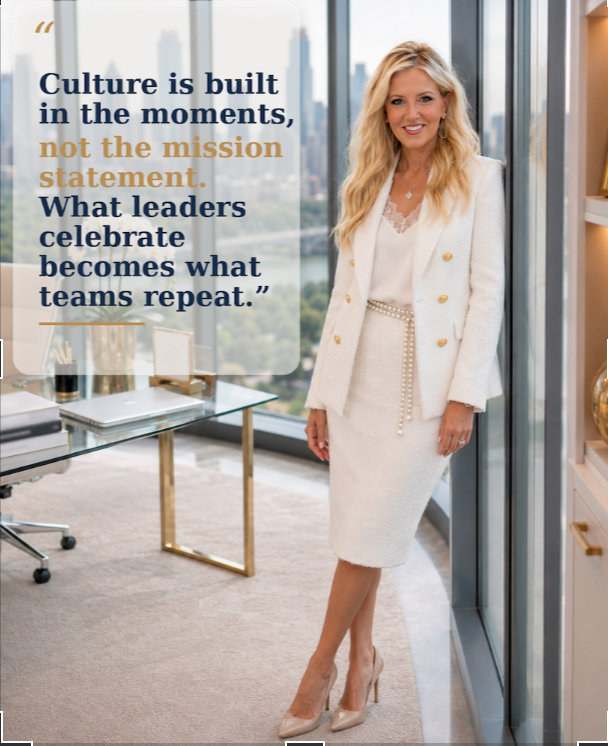
The through line in Tarallo’s approach is that every technology decision ultimately carries a human consequence. “Every AI decision we make either protects humanity or quietly erodes it.”
Who Is Jill Tarallo?
Jill Tarallo is Chief Operating and AI Transformation Officer at Rollick and Founder & CEO of Angels in Wonderland, where she advises CEOs and executive teams on strategy, leadership, organizational design, and AI transformation. With more than 30 years of experience across Fortune 500 companies and high-growth technology firms, she has built a career turning ambitious strategies into disciplined execution and measurable business outcomes.
At Rollick, Tarallo leads enterprise execution across technology, operations, customer success, and human capital while helping architect the company’s transformation for the age of AI. She has led the deployment of autonomous AI agents, developed practical governance frameworks, and helped redesign how work is structured across human-led, AI-led, and human-AI collaboration. Her executive education spans strategy and artificial intelligence through Harvard and MIT, bringing together business strategy, operational leadership, and emerging technology.
An international best-selling author and Executive Member of Forbes Business Council, Tarallo is helping shape what leadership looks like as AI becomes embedded in how organizations operate. Her work centers on a defining principle: as intelligence becomes more accessible, judgment becomes more valuable. She advocates for a future where AI expands human capability, and leaders apply it with intentionality, accountability, and humanity to create lasting enterprise value.