

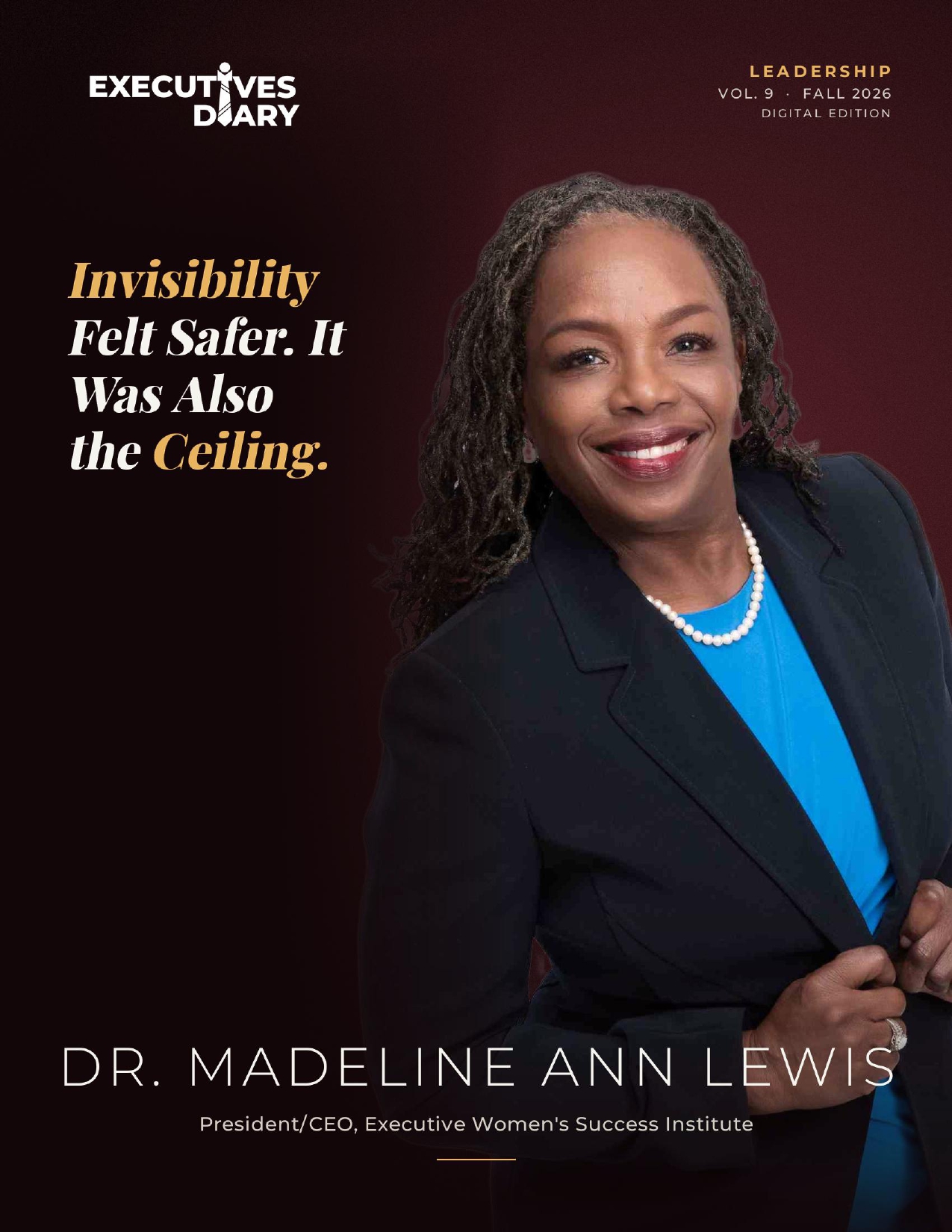
Dr. Madeline Ann Lewis
commanded eighty instructors what helps accomplished women advance, become visible, and lead with confidence.For twenty-two years, Dr. Madeline Ann Lewis wore a United States Army uniform, retiring as a Sergeant Major responsible for eighty instructors across three regional training sites. The women who come to her now arrive with degrees, titles, and records that should have settled the question of whether they are ready to lead. What their field keeps prescribing is one more qualification. “What my years in leadership taught me is that achievement alone does not create confidence,” Lewis says.
Dr. Madeline Ann Lewis is President/CEO of the Executive Women’s Success Institute and the Prince George’s Chamber’s 2025 Business Leader of the Year.
The Diagnostic Dr. Lewis Brought Out of the Army
The gap Lewis works in does not appear on a resume. It sits between what a woman can do and what she will let anyone watch her do. “The gap was between what they were capable of doing and what they were willing to allow themselves to do visibly,” she says of one group of clients. What she hears underneath it is a rehearsal of everything that could go wrong. “What if I fail? What if they don’t like me? What if my idea isn’t accepted? What if I speak up and I’m wrong?” Those questions arrive, Lewis says, at the exact moment a capable woman needs to step forward.
“My military leadership experience taught me the importance of observing before assuming,” Lewis says. As a Sergeant Major responsible for eighty instructors, she did not evaluate her people on paper. She watched them teach and paid as much attention to the atmosphere they created as to the material they knew. The visits were never scheduled. “They never knew when I might observe them, which allowed me to see a more authentic picture of how they performed when they were not preparing specifically for my presence.”
The same sequence runs in her practice now, before any advice does. Where is this woman trying to go? Is the barrier inside her or inside the organization? “Sometimes the answer is development. Sometimes it is better positioning. And sometimes the answer is recognizing that she has outgrown an environment that no longer values what she brings.”
Five of Eight Could Not Speak in Front of a Room
The test case is a six-month cohort Lewis ran for eight women: two CEOs, three managers, one business owner, and two aspiring to management. All of them were accomplished. Five could not speak in front of an audience. One described becoming physically sick before a presentation, certain she would forget everything she meant to say.
Lewis did not run a confidence module. “I wanted them to do more than talk about confidence. I wanted them to experience themselves doing the very thing they feared.” Each of the five picked a topic or cause she cared about, built a fifteen-minute presentation, rehearsed, and delivered it to an audience Lewis invited to listen and give feedback. Three got through it on the first attempt. Two needed a second and came back. “The objective was not perfection. It was helping them move through the fear rather than allowing the fear to make the decision for them.”
One of the five applied for a public relations role inside her company two months before the cohort ended. Lewis ran her through a mock interview; by Lewis’s account, she competed for the position, got it, and later began mentoring other women carrying the fear she once had. Two others were high achievers who pulled back whenever attention landed on them, and Lewis pushed them to become the visible face of projects they were already carrying. Both reported more visibility afterward.
One of the two CEOs had the opposite problem. She came from a military background of her own and ran her company on compliance. “People may comply with a leader they fear, but that is different from choosing to follow a leader they respect and trust.” Over six months, she became less rigid with her employees.
The Client Who Believed Invisibility Was Protection
The cohort ran six months. The client Lewis calls Cassandra took eighteen.
Lewis opens every engagement with the same question: “What if the opportunity you have been waiting for showed up tomorrow? Would you be ready?” In the discovery session, Cassandra kept minimizing what she had already done. Asked about her contact with executive leadership, she said she kept her distance on purpose. Being known to senior leaders, she reasoned, meant being the first name that surfaced when something went wrong.
The strategy she believed was protecting her was also the ceiling she kept hitting. The work took roughly a year and a half, and the turn came when she began to accept that making herself smaller was not a survival tactic.
Cassandra eventually left for another organization and entered it differently. She was accepted into its executive leadership program, completed it, and within three years was running her own division. “I required follow-up meetings with the women until they could definitively say they had moved beyond the primary issue that brought them to me.”
Lewis is careful not to locate every obstacle inside the woman. Cassandra’s resolution was a move, not a repair, and Lewis names organizational culture, bias, and limited opportunity as real constraints. What she argues is portable is the part a person controls: “You may not control every barrier you encounter, but you can take responsibility for how you prepare, how you position yourself, how you use your voice, and what you choose to do next.”
Set the two arcs beside each other, and the constants carry the argument. The scale changed, from eight women to one. The duration changed, six months against eighteen. The resolution changed: some became visible where they already were; one left. What did not change was the diagnosis. Neither presenting problem was a shortage of skill. “What changed was not her intelligence, credentials, or experience. What changed was what she believed about herself and what she was willing to allow other people to see.”
What a Leadership Team Can Steal From Twenty Interviews With Executive Women
The system Dr. Madeline Ann Lewis teaches was assembled from twenty interviews before it was ever taught. She interviewed twenty women in executive-level positions and set what they told her against her own leadership record. The responses are documented in Playing From the Blue Tee: Women in the Federal Government. The result is the 8 Habits of Highly Successful Women, an ordered progression running from discovering purpose, gifts, and talents through career design, barrier strategy, decisive action, mentorship, personal brand, and network use. The eighth habit, Assume the Persona of a Successful Executive, is where the other seven are meant to arrive.
Four moves inside it travel to any leadership team running a development program on a six-month cadence.
Key Takeaways / Playbook
- 1. Diagnose before prescribing: Establish where the person is trying to go, then whether the obstacle is internal, organizational, or a matter of fit. “I don’t want to prescribe a solution until I understand the real problem,” Lewis says. A plan written before that question is answered solves the wrong problem.
- 2. Assign the thing they avoid, and build in a second attempt: The cohort exercise is portable: a fifteen-minute presentation on something the person genuinely cares about, delivered to a real audience assembled to listen and respond. Two of the five needed to come back and do it again, and the design allowed for that. An exercise with one attempt turns avoidance into evidence of failure.
- 3. Make quiet performers the visible face: Make quiet performers the visible face of work they already carry, the projects and meetings where they contribute while somebody else presents.
- 4. Run follow-up until resolution: Run follow-up until the presenting problem is gone rather than until the program ends. Lewis holds meetings with clients until they can state plainly that the issue that brought them has been resolved.
Then the eighth habit, which Lewis distinguishes from performance. “Assuming the persona of a successful executive does not mean pretending to be someone you are not. It means recognizing the leader you have developed into and allowing that woman to show up with confidence, competence, presence, and authenticity.”
She learned what that recognition is worth on the day she left the Army. Her unit held a retirement celebration and handed her something that was not routine: the flag of the 6th Brigade, 8001st Training Detachment, 80th Division, Fort Belvoir, Virginia, which the members had petitioned to have retired and framed for her. “The people I had been responsible for leading were telling me, in their own way, that they had respected my leadership and had been willing to follow me.”
Lewis puts it to the woman who thinks leading means becoming someone else this way. “You do not have to become someone else to lead. You have to stop hiding the value, ability, and leadership that are already within you, and have the confidence to let them be seen.”
Who Is Dr. Madeline Ann Lewis?
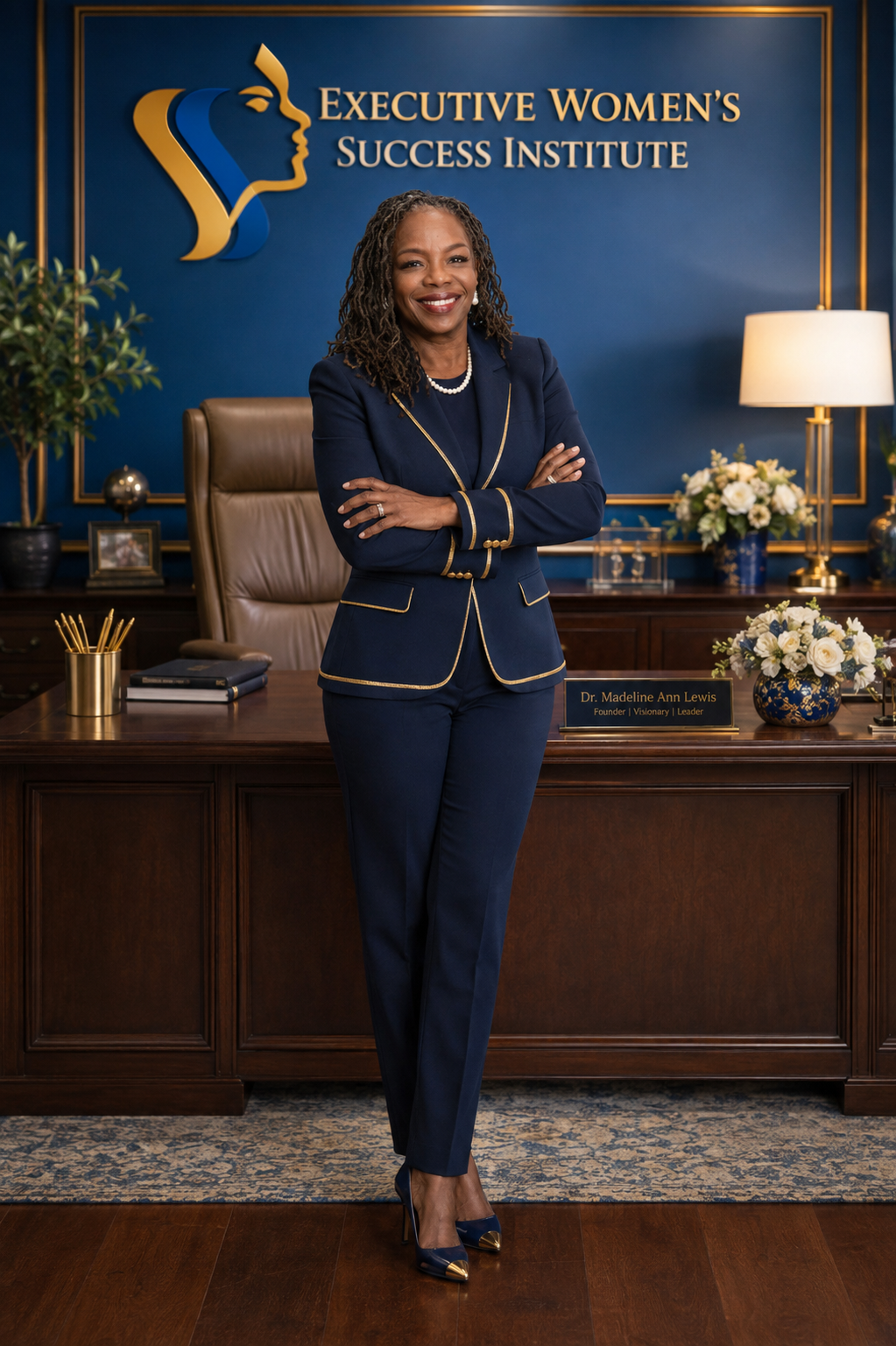
Dr. Madeline Ann Lewis is President/CEO of the Executive Women’s Success Institute in Cheltenham, Maryland, a career and leadership coach for women, and the Prince George’s Chamber of Commerce 2025 Business Leader of the Year.
She spent twenty-two years in the United States Army, retiring in 2007 as a Sergeant Major with the 8001st Training Detachment at Fort Belvoir, Virginia, where she commanded eighty instructors and oversaw three regional training sites. Alongside that service, she built a civilian career across the federal government and corporations as an executive, a coach, and a trainer, and completed a doctorate in organizational leadership at the University of Phoenix in 2006.
She founded the Deline Institute for Professional Development in 2005 and established the Executive Women’s Success Institute in 2012 as a DBA of that company, as her work narrowed to executive leadership, women’s career advancement, and entrepreneurship. Through the Institute, she runs coaching, workshops, seminars, and leadership development programs built on the 8 Habits of Highly Successful Women. She hosts Success 4 Women, which broadcasts live on Thursdays at 2:00 p.m. Eastern on W4WN Radio and Talk 4 TV and is distributed on demand through iHeartRadio, Spotify, Pandora, and more than one hundred other outlets.
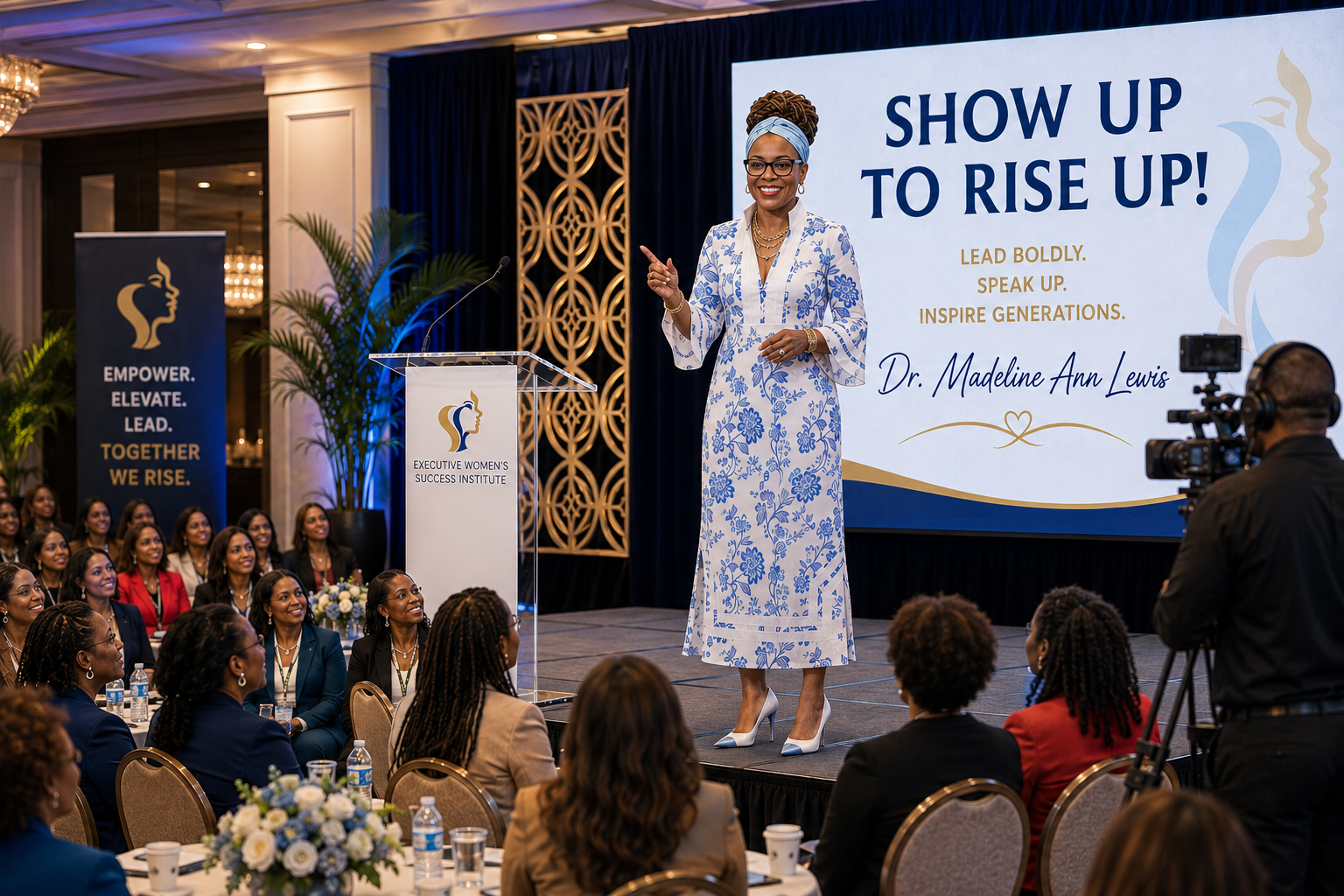
Lewis is the author of three books, Show Up to Rise Up: Explore the Transformative Power of a Positive Mindset, Playing From the Blue Tee: Women in the Federal Government, and Finding Your Best Inside, and the co-author of six more. Her recognitions include the 2024 Presidential Lifetime Achievement Award and the 2025 Top Leaders of Excellence Award from the House of Representatives of the Commonwealth of Pennsylvania, signed by Speaker Joanna E. McClinton. She serves on the Board of Regents of OWNITx Christian University in the Dominican Republic.
The record underneath the coaching is not a theory about hesitation. Dr. Madeline Ann Lewis spent twenty-two years watching people perform when they did not know they were being watched, and the pattern she found later in accomplished women was the same one she had seen in her instructors. Capability was rarely the missing piece. Permission was.