

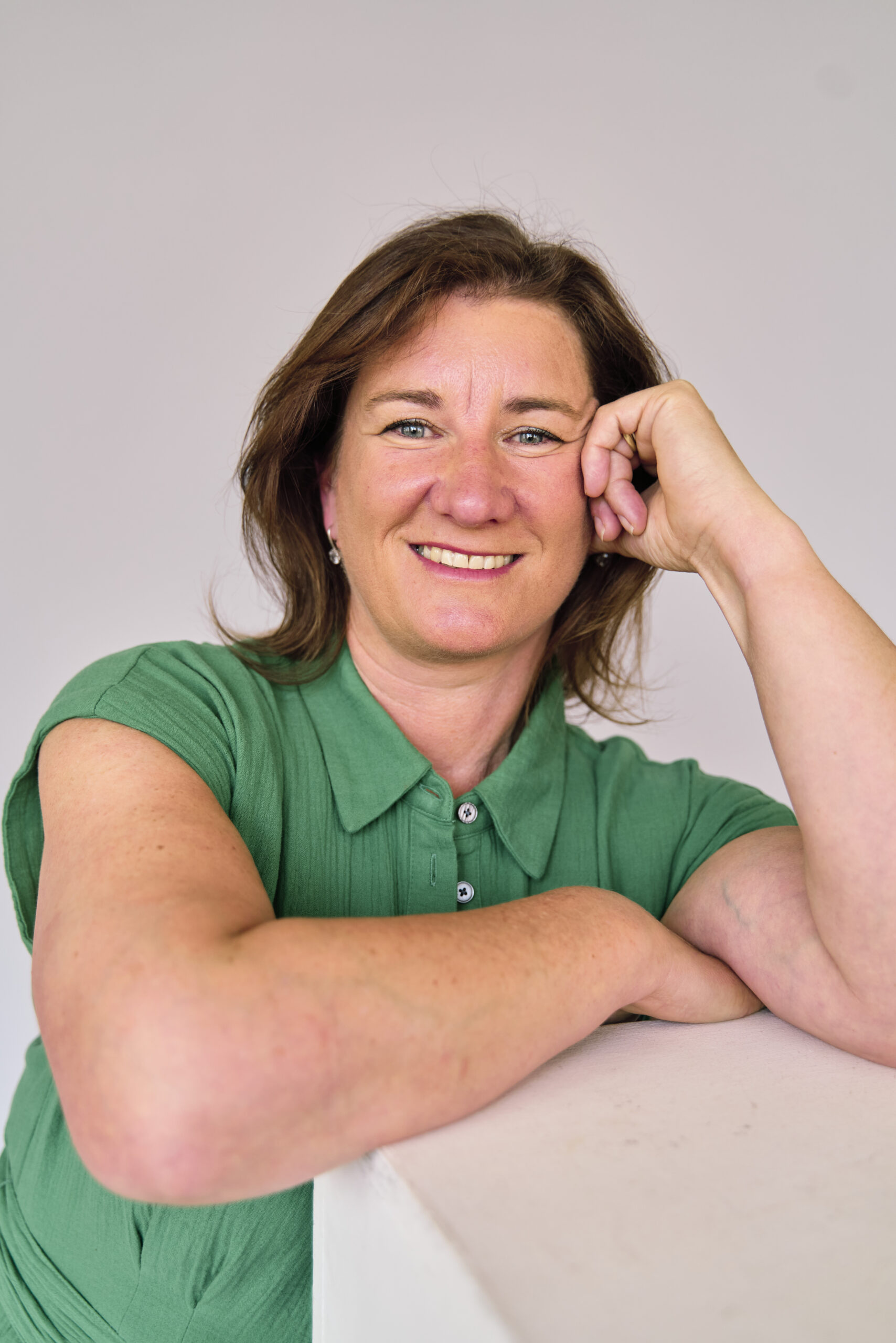
Emma Henderson MBE, is a former airline captain, award-winning international speaker, author, and founder of Project Wingman. Over a 30-year aviation career, she made high-stakes decisions at 39,000 feet and became one of fewer than 500 female airline captains worldwide. Today, she brings those flight-deck lessons into the boardroom, helping leaders make better decisions, communicate clearly, and stay calm under pressure. She is the creator of the A.V.I.A.T.E. decision-making framework and Grounded Leadership philosophy, built around Humanity, Humility, and Humour. In 2020, she helped launch Project Wingman, bringing together 6,500 grounded aircrew to support frontline NHS staff during the pandemic, work that earned her an MBE in the 2021 New Year Honours. Through keynote speaking, workshops, and bespoke leadership programs, Emma turns decades of aviation experience into practical lessons for leaders navigating pressure, uncertainty, and change.
There are moments when leadership stops being about having the right answer and becomes about knowing how to think when there is no perfect answer at all. The pressure rises. Information is incomplete. Time is limited. People are watching. Somewhere between urgency and uncertainty sits a decision that cannot wait.
In aviation, those moments can carry hundreds of lives behind a cockpit door. In organisations, they can determine whether a team fractures or finds its footing, whether a crisis escalates or becomes manageable, whether people freeze or move forward with confidence.
Captain Emma Henderson MBE has spent more than three decades learning what happens when responsibility meets turbulence.
But the philosophy she carries into boardrooms and onto international stages did not begin with a title, an award, or even a career in aviation. It began with a ten-year-old girl watching the Space Shuttle land at Stansted and deciding she wanted to fly. Today, Henderson is an award-winning international speaker, former airline captain, author, TEDx speaker, leadership consultant, and founder of Project Wingman. She works with senior leaders, executive teams, HR and L&D professionals, global organisations and growing businesses through keynotes, workshops, masterclasses and bespoke leadership programmes.
Her message is clear: when the world feels chaotic, structure creates calm.
The Childhood Moment That Changed the Horizon
Long before Henderson was teaching leaders how to make decisions under pressure, she was simply a child looking upward. Originally from Essex, east of London, she grew up in what she describes as a “pretty normal environment,” with a teacher for a mother and an insurance broker for a father. Her grandmother lived in the same town, and childhood was filled with the kind of freedom that now feels almost nostalgic: playing outside, riding horses, sailing boats, playing rounders with the youth group, and cycling everywhere from the family home outside town.
Then came the Space Shuttle.
At ten years old, Henderson’s parents took her to see it land at Stansted. Something clicked. She wanted to fly. Her first ambition was actually to become an astronaut, although growing up in the 1980s, without the internet to research possibilities, she believed astronauts had to be American and male. The astronaut dream changed. The fascination with flight did not. For her eighteenth birthday, she had a flying lesson. She later went to university intending to become a lawyer, but discovering the University Air Squadron altered the trajectory of her life. She joined, learned to fly with the RAF, and experienced aviation wearing a military flying suit and helmet. At the end of her degree, another decision presented itself. She did not join the RAF.
Instead, as Henderson remembers with characteristic humour, “rather than join the RAF I married it.”
She and her husband have now been married for 31 years and have three children. Yet the cockpit was still calling.
The Second Chance That Changed Everything
Some careers are built through a straight line. Henderson’s was shaped by the moments when the line disappeared. In 2003, she and her family were posted to New Zealand on a three-and-a-half-year military exchange. While there, her husband suggested she take up flying again. There was a condition. Henderson was a heavy smoker at the time. The deal was simple: stop smoking and fly instead. She did.
She also began competing in triathlons while raising her children. Her days became an exercise in determination: dropping the children at school or nursery, going flying, collecting them again, and studying in the evenings once they were in bed. That decision ultimately led her back into aviation as a fully qualified commercial pilot. She became an instructor and eventually joined easyJet, beginning a new chapter that would take her toward airline command. But perhaps the most consequential lesson of her aviation career came when she did not get what she wanted. She failed her first attempt at becoming a captain. Command had been the pinnacle of her career. Failure could have become a permanent verdict. Instead, Henderson examined how she had approached the challenge and used the experience to become better. She passed on her second attempt.
The experience helped shape a principle that now sits at the heart of her leadership philosophy: self-trust is not the belief that you will never fail. It is the confidence to confront failure honestly, learn from it, and return stronger. Her values are uncompromising.
“Do the right thing, all of the time, even when no one is watching,” she shares. Integrity matters. So does honesty: “Own your mistakes, and don’t lie.” And perhaps most revealingly, respect: “Treat people as if they are the most important people in the room, they just might be.”
These are not corporate statements created after the fact. They were forged in the flight deck.
When the World Went Quiet
Then, in March 2020, aviation stopped. Henderson landed at Gatwick from Luxembourg. Instead of passengers simply saying goodbye, they wished the crew good luck. It was the final commercial flight she would operate for easyJet. The following morning, she drove empty roads to an empty airport. She took an empty train to Luton, then an empty aircraft home to Inverness. She would not leave home again until July 2021.
For a captain accustomed to movement, the stillness was extraordinary. But grounded did not mean inactive. Henderson had previously been a peer-support mentor at easyJet. From home, she contacted the clinical lead of the easyJet and British Airways peer-support programmes with an idea.
“I think there’s something we can do here as aircrew to support NHS staff.”
The conversation led to Dave Fielding, who had NHS contacts through Whittington Hospital. Henderson had something else: a platform. She had recently appeared in an ITV documentary, and after 30 years in aviation, she had built a network of people who knew and trusted her. Three weeks after that first call, the first Project Wingman lounge opened at the Whittington Hospital.
Then came the Royal Free. Then London.Then the country.
Project Wingman and the Power of Structure
What happened next was extraordinary not simply because of its scale, but because of how quickly Henderson and her colleagues created order inside chaos. Within three days, 750 volunteers had responded to a single call for aircrew to help. Ultimately, 6,500 grounded aircrew across the UK pilots, cabin crew and engineers joined the effort.
Project Wingman established 104 NHS lounges across the country, alongside two in New York, supporting frontline staff throughout the pandemic. It could easily be described as a story of charisma, goodwill and crisis energy. Henderson saw something else. “The thing that scales isn’t charisma or crisis energy. It’s structure.” Project Wingman was organised into six regions, each with implementation and operations leads. Team leaders maintained hospital contacts and coordinated shifts, while regional leads, many of them airline captains worked within clear systems of responsibility. Decision-making authority, budgets and escalation routes were defined. Weekly meetings brought as many as 150 people together.
Henderson’s conclusion was memorable: “We didn’t wing it. That’s the point.”
The rapid growth of Project Wingman became a living demonstration of the philosophy Henderson now teaches. For founding and leading the initiative, she received an MBE in the 2021 New Year Honours, alongside several other aviation and community awards. But Henderson’s own measure of the project is less concerned with trophies. It is what happened when people chose to help people they did not know.
From Crisis Experience to Grounded Leadership
The deeper Henderson’s work goes, the less it becomes about aviation itself. The cockpit is the setting. The subject is leadership. Her philosophy, Grounded Leadership, is built around Humanity, Humility and Humour. It rejects ego, noise and panic in favour of clarity, structure and connection. It is human rather than hierarchical, structured rather than rigid, calm rather than passive, and practical rather than theoretical.
At the centre is her A.V.I.A.T.E. framework, , a structured decision-making process designed to help leaders navigate uncertainty without either rushing into poor decisions or becoming paralysed by competing risks. But her work is increasingly extending beyond the decision itself. She also works with leaders on their FlightPlan, the strategy that sets their direction, and on Cockpit Culture: how they influence not only their immediate team, but the wider network of stakeholders around them. The principle is straightforward: aviation does not leave clarity to chance. Neither should organisations. Explore more here.
Henderson’s work focuses on the realities leaders increasingly face: stress, overload, uncertainty, competing risks, incomplete information, communication breakdowns and the pressure to make the next decision before every answer is available. Her promise is not abstract inspiration. It is measurable impact: faster decisions with fewer reversals, better risk calls and trade-offs, stronger briefing and debriefing habits, greater calm and cohesion under pressure, and leadership that is clearer in both direction and influence.
Where Inspiration Becomes Practice
A keynote can change the atmosphere in a room. Henderson’s wider work is designed to change what happens after people leave it. Her signature topics include “Navigating Turbulence When the World Is on Fire,” “Grounded Leadership,” and“Decision-Making Under Pressure,” delivered in 30- to 45-minute sessions for leadership summits, executive conferences and all-hands events. But the workshops take those ideas further. Discover more here.
Through “A.V.I.A.T.E. in Action,” teams practise structured decision-making through scenarios and collaborative problem-solving. “Communicating Under Pressure” explores clear briefing, speaking up, inviting challenge and psychological safety, while “High-Trust Teams” focuses on cohesion, debriefing and accountability. Increasingly, Henderson also works with leaders on their FlightPlan, turning strategy into a clear path forward, and Cockpit culture, exploring how they influence their teams and wider stakeholders. Her sessions draw on real flight-deck scenarios, aviation-inspired tools and high-performance communication practices.
For organisations facing deeper transformation, Henderson also develops bespoke three- to six-month leadership programmes incorporating diagnostics, masterclasses, simulations, coaching and personalised support. These programmes can bring together decision-making, strategic direction and leadership influence, helping organisations build the clarity, culture and capability needed to perform under pressure.
One client called her “the perfect balance of energy and substance.” Another described her as “the highlight of the event.” GE Aerospace praised her as “a master storyteller,” while UFI told her, “You changed the way some CEOs think, and that’s a real result.”
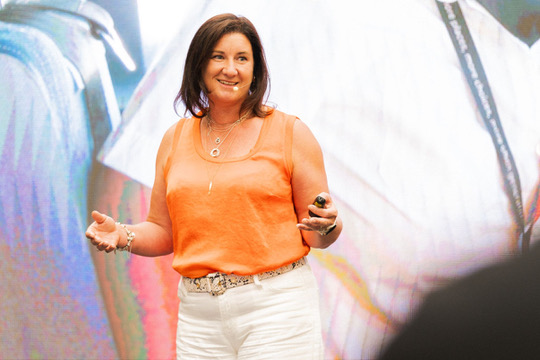
In 2025, Henderson received the Bookers’ Choice Award at The Speaker Awards, with judges recognising her authentic storytelling, natural stage presence and ability to deliver clear, engaging messages.
A Voice for Leadership Beyond the Flight Deck
Henderson’s influence no longer stops when the speaking lights go down. Her work has grown into a broader conversation about what it means to lead, communicate and perform when the stakes are high. She is a published author, including GROUNDED, a bestselling book exploring leadership, humanity and performance under pressure. She is also a TEDx speaker and has built a growing public conversation around decision-making, communication, trust, resilience and leadership.
Her experience as one of fewer than 500 female airline captains worldwide gives her an especially distinctive perspective on women in aviation. Only around 6% of the world’s pilots are women, according to figures presented through her work, with around 3% flying commercially. Fewer than 500 women worldwide have reached the rank of airline captain. Henderson points to a difficult reality: despite enormous changes in aircraft, technology and the wider industry, aviation’s gender balance has barely shifted since the 1980s.
Her response is not to frame leadership as women versus men. It is about expanding possibility. It is about visibility, access, encouragement, confidence and ensuring talented people can see a future available to them. Her own experience of being “the woman on the crew” taught her to earn trust quickly, remain composed under scrutiny and hold authority without ego.
The lesson, ultimately, is universal. Leadership is not about being the loudest person in the room. It is about being someone others can trust when the room becomes difficult.
The Legacy That Matters Most
For all the recognition Henderson has accumulated, her definition of success remains remarkably personal. She does not measure her life primarily through titles, status or possessions.
“It’s never been about me, it has always been about what can I do to make something nicer, better or easier for other people.”
Her broader vision is to leave a legacy that encourages people to do things they do not have to do for people they do not know, when nobody requires them to. She believes people should be generous with their homes, their time, their knowledge and their hospitality. We need money to live, she acknowledges, but we are ultimately custodians of what we have.
If people treated one another that way, she believes, there would be fewer problems in the world. That belief is inseparable from Project Wingman, which has now closed as a charity after fulfilling the specific purpose for which it was created. For Henderson, however, its meaning remains.
“Project Wingman, although it has closed as a charity and was there to do a specific job at a specific time, is the epitome of everything I believe in.”
What Emma Henderson’s Journey Leaves Behind
Perhaps the most compelling thing about Henderson’s philosophy is how little of it depends on aviation. Prepare before the pressure arrives. Know where you are going. Create structure when circumstances become chaotic. Communicate clearly. Make it safe for people to speak up. Understand the influence you have beyond your immediate team. Own mistakes. Treat people with respect. Make decisions even when information is incomplete. And when the opportunity comes, use what you have to make someone else’s experience a little better.
Her career has moved through unexpected turns: the child who wanted to be an astronaut, the young woman who initially planned to become a lawyer, the mother who returned to flying in New Zealand, the aspiring captain who failed before succeeding, the airline captain grounded by a global crisis, and the leader who helped mobilise 6,500 people to support NHS staff.
But beneath those turning points is one consistent idea. Leadership is not the absence of turbulence. It is the ability to remain grounded while moving through it.
The Emma Henderson Playbook: 5 Lessons for Leading Under Pressure
- Choose Structure Over Stress: When pressure rises, replace urgency and reaction with a clear decision-making process that helps people think, prioritise and act with confidence.
- Own the Mistake, Then Learn From It: Henderson’s failed first attempt at command became a lesson in resilience, proving that failure can strengthen leadership when it is confronted honestly rather than hidden.
- Make Clarity a Leadership Habit: Brief clearly, invite challenge, and create psychological safety so people can speak up early, particularly when time, information and certainty are limited.
- Lead With Humanity, Humility and Humour: Grounded Leadership is not about ego or hierarchy. Treat people with respect, communicate with purpose, and give others something solid to stand on when circumstances become turbulent.
- Use Your Position to Serve Others: Henderson’s defining question remains: “What can I do to make something nicer, better or easier for other people?” Leadership becomes most meaningful when influence is used beyond the self.
Editorial Note
Captain Emma Henderson MBE’s journey is ultimately a story about turning pressure into purpose and uncertainty into structured action. From the flight deck to Project Wingman and today’s leadership work, her philosophy remains grounded in calm, clarity, humanity and trust. Her enduring lesson is simple: lead steadily, act with integrity, and use what you have to make a difference to others.
